The first thing that failed was the applause. ECRS had built a network to let retailers and suppliers exchange purchasing information without someone typing the same numbers twice. When it switched the network on, according to founder Pete Catoe’s later account, customer demand was zero. Imagine laying a railway and discovering that everyone rather likes walking.
- The idea: give checkout, online orders, loyalty, and inventory the same transaction rules.
- The evidence: CUB converted 107 stores to CATAPULT in nine months.
- The early gamble: a supplier network arrived before customers wanted it.
- The useful lesson: test automation where you can watch it work, then expand.
The expensive sound of silence
Catoe’s December 2016 retrospective describes an awkward beginning for the service now called Gateway. Retailers eventually wanted perpetual inventory and automatic replenishment. Those ambitions needed supplier information to move automatically. The unloved network had acquired a job.
Its economics were equally unfashionable. Catoe described fixed monthly pricing, a service that essentially broke even, and a contribution of about 2% of annual revenue at the time. His account gives no development bill, but it makes the trade clear: ECRS maintained difficult infrastructure because customers needed it. The connection was more valuable to the larger retail system than its small revenue line suggested.
That willingness to work on the unglamorous joins helps explain ECRS. Founded by Catoe in 1989, ECR Software Corporation took its initials from Electronic Cash Register. The name sounds like a piece of furniture. The company’s ambitions now reach considerably beyond the drawer.
A grocery store has too many versions of the truth
Consider an ordinary shopping trip. Someone buys cheese at the deli, uses a loyalty offer, and later orders groceries online. From the shopper’s perspective, this is one relationship with one store. Behind the scenes, it can involve several systems, each keeping its own account of the item, the price, or the customer. A promotion becomes a small diplomatic negotiation.
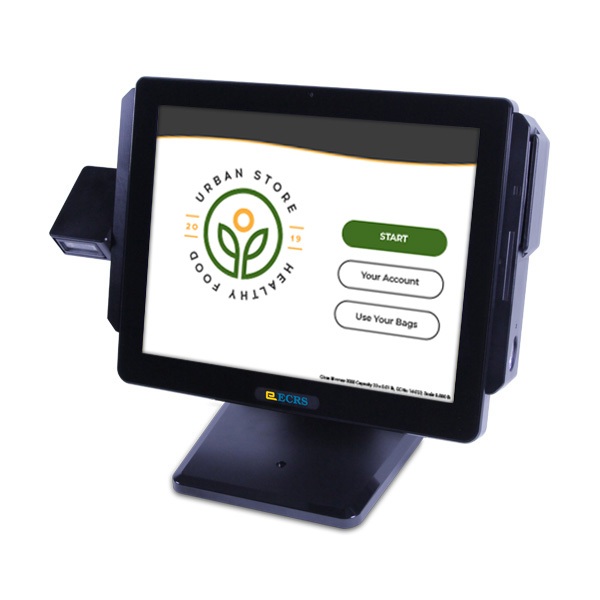
ECRS’s flagship, CATAPULT, addresses that problem through what it calls Unified Transaction Logic. Checkout lanes, self-checkout, deli scales, pharmacy and fuel touchpoints, and online shopping use shared transaction rules. Back-office tools connect those sales to inventory, reporting, customer programs, and multi-store management. The distinction is architectural: functions are designed to behave together, rather than merely exchange a file afterward.
The company sells to supermarkets, natural-food retailers, food co-ops, convenience stores, pharmacies, liquor shops, specialty-food businesses, and micro markets. ECRS reports thousands of installations across the United States, Canada, and the Caribbean. It occupies the part of retail technology where a sale may involve weight, membership, prepared food, or several departments, rather than a single tidy barcode.
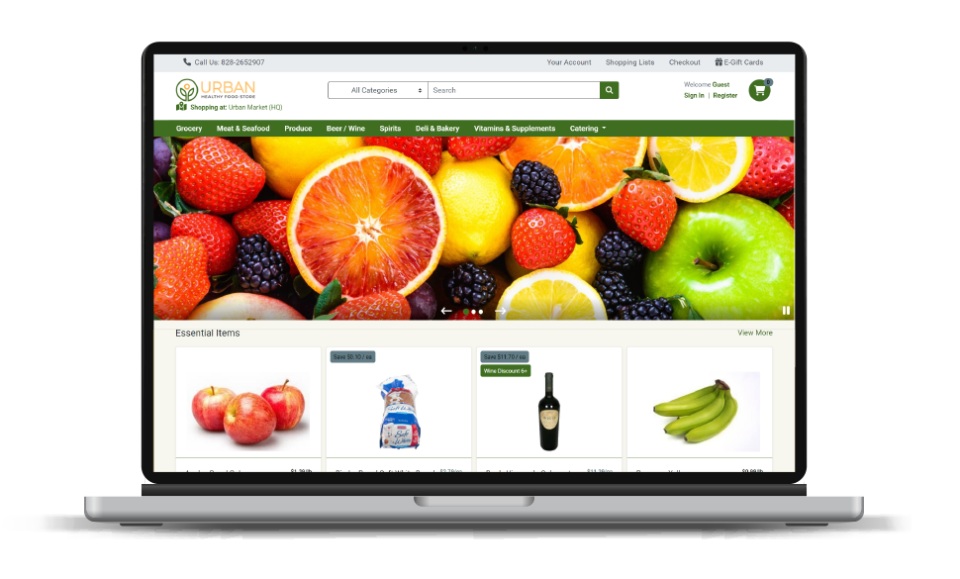
WebCart brings that thinking online. In 2017, Catoe put it neatly: “To us, it’s just another lane.” The customer’s purchase history, loyalty benefits, and coupons belong to the same store relationship. For an independent grocer, keeping that relationship recognizable is a business choice as much as a software feature.
“To us, it’s just another lane.”Pete Catoe on WebCart, 2017
107 stores put the idea to work
A coherent diagram is pleasant. A conversion across a working grocery chain is a more demanding examination. In November 2023, ECRS announced that CUB had moved 80 grocery stores and 27 wine, spirits, and liquor stores to CATAPULT in nine months. The project covered roughly 1,500 checkout lanes and self-checkout terminals.
9 months · about 1,500 terminals
CUB rollout, reported November 2023
CUB wanted faster checkout, reliable promotion execution, and an integrated approach spanning grocery, deli, garden, and pharmacy departments. Six franchisees brought differing requirements. During much of the rollout, the teams converted four stores a week. Those details matter because enterprise software must accommodate people who agree on a brand but do not necessarily agree on every operating decision.
This is the kind of buyer for whom ECRS’s breadth makes sense: an operator paying for inconsistency across multiple places. A small retailer should still ask which parts of that breadth it will actually use.
The deli is part of the equation
Prepared food makes the inventory problem more entertaining, at least for anyone who does not have to count it. A kitchen buys ingredients and sells meals. A rise in onion prices can affect several recipes. A scale must identify and price the finished product. The cash register sees the sale, while the kitchen needs to understand its cost.
ECRS’s prepared-food tools include made-to-order ordering and AutoScale Max, a deli scale working within CATAPULT. In September 2023, it acquired reciProfity, the cloud food-costing and recipe-management business. The stated rationale was continuity between kitchen costing and point of sale. reciProfity retained its brand; the acquisition announcement described future development and CATAPULT integration plans.
On the purchasing side, Gateway exchanges orders, shipment information, invoices, and price or cost changes with suppliers. A 2023 agreement with wholesaler UNFI illustrates the reach: ECRS reported more than 2,000 EDI accounts across UNFI’s retailer network at the time. Replenishment requires knowing both what has left the shelf and what is coming toward it.
Let the shelf do the persuading
The newer layer is CATAPULT Cognition, ECRS’s AI analytics and reporting platform. DemandFill 3.0 applies predictive ordering; its model uses eleven attributes, including demand and weather. Artemis, added to WebCart personalization in February 2025, recommends products, offers, and coupons from shopping patterns. The applications are specific enough to judge: ordering and recommending things people may buy.
In a December 2025 release, ECRS reported that a six-store grocer’s pilot achieved grocery sales growth above 18% year over year while inventory fell 15%. These are vendor-published results from an unnamed retailer, not a controlled estimate of what the software alone caused.
A separate four-store retailer account in that release offers a useful procedure. Start with one grocery aisle. Watch availability. Expand to another aisle, then the store, then the remaining locations. The detail worth copying is the sequence. Give staff something small enough to inspect before asking them to trust it everywhere.
As an operating principle, prediction still needs dependable records. A receiving error or an unrecorded stock adjustment can leave an algorithm reasoning beautifully about the wrong shelf. Buyers should compare sales, stock availability, inventory, and the human work involved, rather than letting one rising number settle the argument.
The bill includes learning
ECRS combines business software with hardware, implementation help, support, and optional services. Its website directs prospective customers to request pricing. A useful comparison therefore begins with a store’s equipment, locations, modules, and rollout requirements. It should count staff time and ongoing services along with the initial purchase.
There is one small public price with a large practical implication: CATAPULT Fundamentals training is listed at $250 per participant. The virtual course provides a practice sandbox and live office hours. People can learn the system without experimenting on their employer’s production database. Even software with a coherent rulebook needs someone who knows how to use it.
Alternatives include IT Retail’s grocery POS and LOC Software’s ThriVersA. They also address grocery operations; LOC markets a unified platform and connects online shopping through partners including Local Express. ECRS’s case rests on its shared transaction architecture and native breadth. Customers should demonstrate their actual promotions, weighted items, supplier workflows, and returns on each candidate.
Integration remains part of ECRS’s world, too. Passport API, prebuilt connections, and custom development accommodate outside systems. The purchasing question is how much coordination the retailer must maintain, and whether the proposed setup removes enough daily work to justify the move.
A company built to keep showing up
ECRS describes itself as family-owned and privately held. It became Certified Evergreen in 2019 and says it intends to preserve independence, reinvest profits, and build long-term relationships. That is an ownership promise rather than a guarantee, but continuity is relevant when your supplier’s software helps open the store every morning.
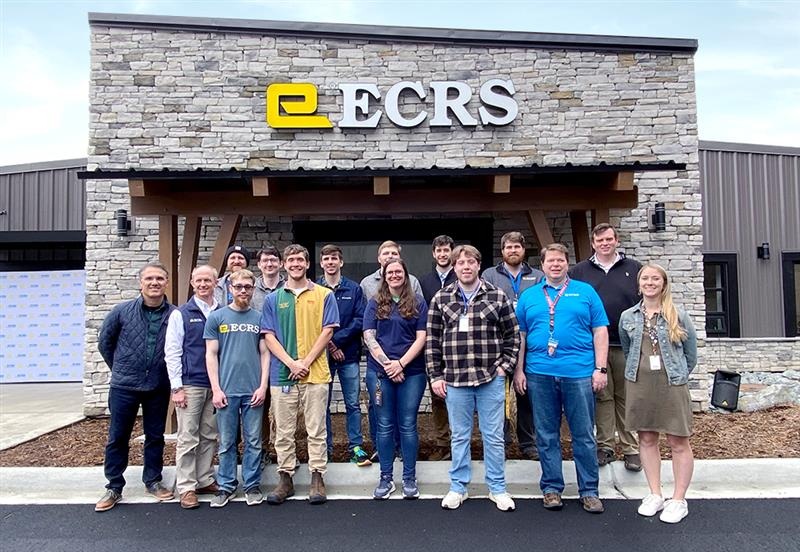
The company’s published values also favor employee autonomy and measurable contributions. Its 2023 deployment center gathers hardware preparation under one roof, sending equipment out ready for CATAPULT. The work includes servers, networking equipment, scales, and terminals. Behind a claim about simplicity sits a team doing quite a lot of preparation.
At Ignite 2026 in Nashville, retailers arrived from 41 states and markets including Canada, Jamaica, and the Bahamas. More than 50 educational sessions and visits to Turnip Truck stores made the conference a place to compare operating habits. The old network lesson reappears: connections become useful when people have a reason to use them.
ECRS’s proposition is easiest to understand at the shelf. A sale should change the stock count. The stock count should inform an order. The order should reach a supplier. The next shopper should find what they came for. There is plenty of technology in that chain. Its value is in how little of the chain the grocer must repair by hand.
Visit the working parts
Explore ECRS, CATAPULT, its news and articles, and retailer stories.