demand-forecasting
(44)
WareGo wants your warehouse to stop losing the plot
A missing stock update can become a missed sale. WareGo connects orders, inventory and fulfillment - with a particular eye on the warehouses doing the work for everyone else.

Yıldız Tech Has a Useful Head Start: Customers in the Family
Built inside Yıldız Holding, the software company turns grocery orders, delivery routes and factory problems into products. Its advantage is access to businesses that can put the code to work.
Peak finds the money hiding on the shelf
The Manchester AI company turns inventory and pricing data into commercial decisions. Now owned by UiPath, it is taking the next step: helping businesses act on them.

Symphony EYC wanted your shopping basket to run the supermarket
EYC turned loyalty data into decisions about what to stock, promote and put on the shelf. Its journey into SymphonyAI shows why knowing the shopper was only half the job.

Fourth Put AI on the Schedule - Now It Wants to Run the Whole Restaurant
The hospitality software veteran already helps millions of workers clock in, swap shifts and count stock. Its bigger bet is that twenty-five years of back-office data can tell every restaurant manager what to do next.

Blue Ridge Wants to Fire the Spreadsheet - Not the Planner
The Atlanta supply-chain company spent nearly two decades turning forecasts into buying decisions. Now its biggest bet is that software should handle the routine 80 to 95 percent - and show its work when humans step in.
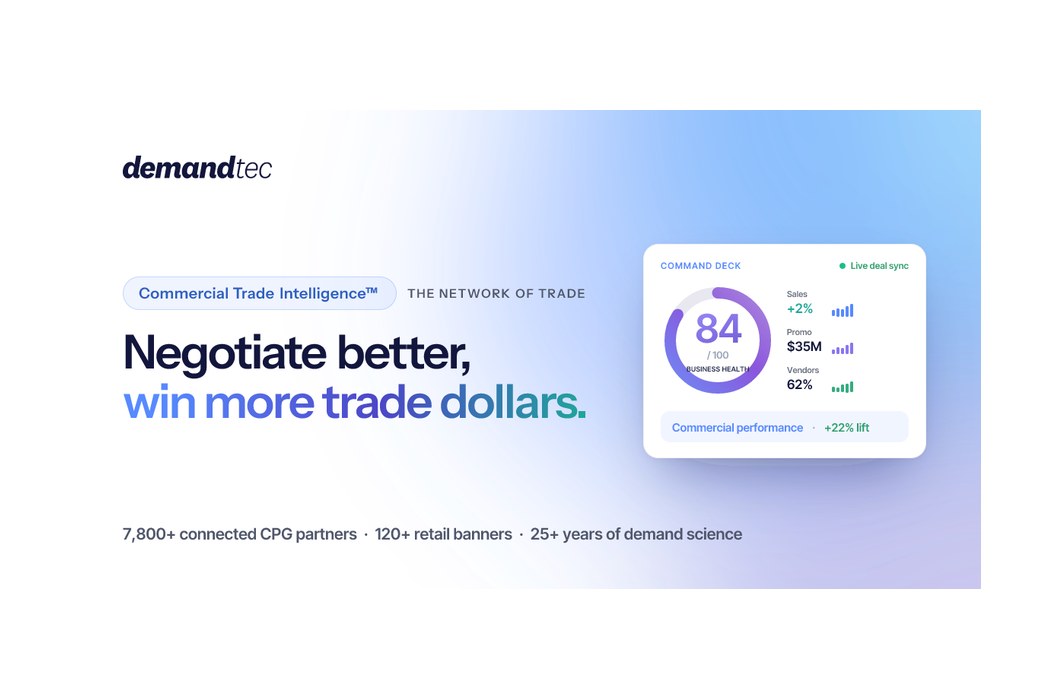
The $440 Million Pricing Brain That Came Back to Run the Grocery Aisle
DemandTec spent 25 years teaching retailers what a price change might do. Now, independent again, it wants retailers and suppliers to stop arguing from different spreadsheets - and put every trade dollar on one shared record.
r4 Technologies Wants to Fix the Most Expensive Part of AI: Nobody Acts Together
Most enterprise AI predicts inside one department. r4's XEM is built for the awkward moment after the prediction - when inventory, pricing, logistics and people all have to move together.
Aera Wants to Turn the Enterprise Dashboard Into an Autopilot
Most enterprise software tells you what already happened. Aera is betting that the valuable layer is what comes next: a governed machine that recommends, executes, and learns from thousands of operational decisions.
ToolsGroup Spent 33 Years Teaching Supply Chains to Expect the Unexpected. Now It Wants Them to Decide for Themselves
The Boston software veteran built its reputation by admitting forecasts are wrong. Its new Decion platform makes a bigger bet: probabilistic AI can help 400-plus customers act on uncertainty without handing the warehouse keys to a chatbot.
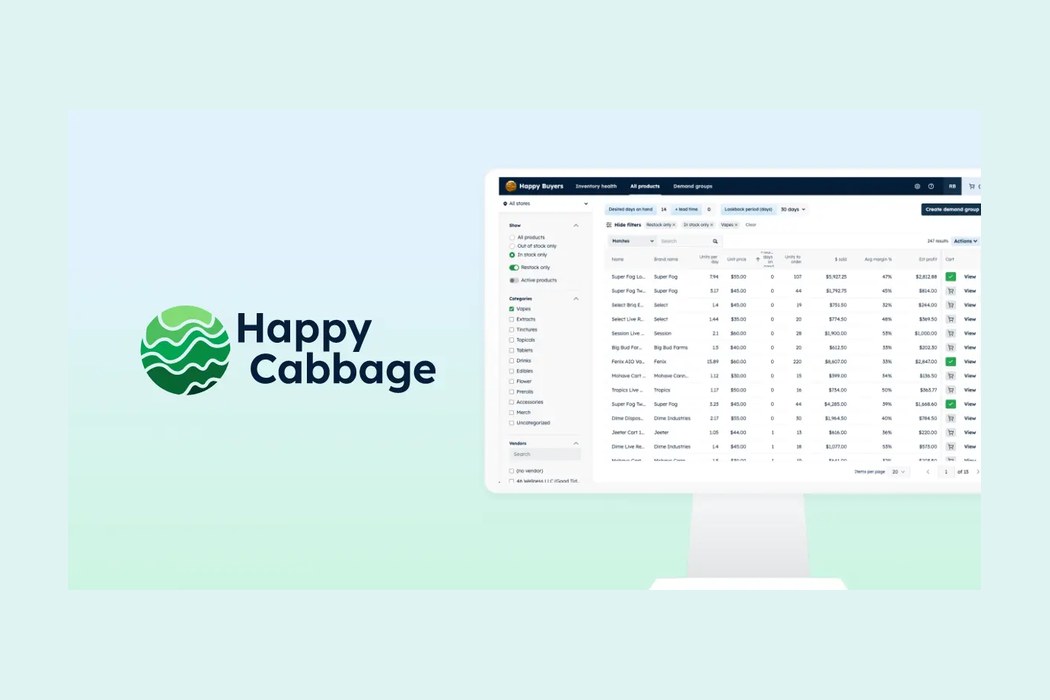
Happy Cabbage Sold Its Marketing Machine to Fix the $150,000 Problem Hiding on Dispensary Shelves
Cannabis shops do not usually run out of data. They run out of clean answers. Happy Cabbage bet that the sharper business is not sending another text - it is stopping cash from going stale in the stockroom.
The Startup That Wants to Kill the Spreadsheet Running Your Warehouse
Selling online got easy. The part after the sale - knowing what to buy, when, and how much - is still run on 1950s math and Friday-night spreadsheets. Flieber is betting AI can finally do the boring part.

The Back Office That Decided Spreadsheets Were the Enemy
Alek Koenig left Affirm to build the financial plumbing for the soda, skincare and snack brands blowing up your Instagram feed. The pitch is boring on purpose: stop reconciling five systems by hand.

Campbell Brown Is Teaching Machines to Read the Room
The PredictHQ co-founder built a business around a stubborn operational question: what happened in the real world that made demand move? A decade later, that question sits at the center of how enterprises want their AI to reason.
Cart.com Wants To Be The Operating System Behind Everything You Buy Online
Founded in 2020, the Houston company stitched together software and a warehouse network to sell brands one thing they rarely get: their orders, inventory and shipping in a single place.
The Software Trying to Run the Whole Grocery Store Before the Lettuce Wilts
Grocers lose money in the gap between a forecast and the person standing in aisle seven. Upshop is building the operating layer that turns scattered data into the next useful action - before an empty shelf, missed order or expiring sandwich becomes a write-off.

The $3.7 Billion Bet on Giving Big Business a Better Memory
o9 Solutions wants to replace the monthly spreadsheet séance with a living model of the enterprise. Its wager: the company that remembers why a plan failed can make the next decision faster - and waste less along the way.
The Quiet Algorithm Behind the Price of a Hotel Room
Before a guest sees a room rate, IDeaS has often weighed the demand, the timing and the cost of saying yes. The Minnesota software company turned an airline math problem into the operating logic of modern hospitality.

The $8.5 Billion Brain Behind the Things on Your Shelf
Blue Yonder is trying to give the global supply chain one shared brain - from the forecast to the forklift to the final return. Its real advantage is less about flashy AI than joining thousands of ordinary decisions before they become expensive surprises.
Afresh
Afresh began with a stubborn observation: a strawberry cannot be managed like a cereal box. Its grocery-native AI now helps retailers order, produce and buy across the whole store - turning perishability, imperfect counts and daily uncertainty into decisions people can actually use.
Truffle (YC S26)
Truffle (now operating as Marble) is a New York-based Y Combinator S26 startup building an AI-native operating system for the restaurant back-of-house. It replaces the patchwork of spreadsheets, clipboards and disconnected point solutions that restaurants, cafes and bars rely on with a single system: computer vision and voice AI capture real-time inventory levels, machine-learning models forecast item-level demand, and AI agents run end-to-end workflows like procurement, invoice reconciliation, scheduling, food prep and menu engineering. Founded by Aakar Khanna (CEO) and Arjun Chaliha (CTO), it targets the billions the hospitality industry loses each year to stockouts, food waste and lost profit.

Glife Technologies Pte Ltd
Glife Technologies is a Singapore-based B2B food and agri-tech company that digitizes the food supply chain across Southeast Asia. It connects farmers and suppliers directly with restaurants, hotels, caterers and retailers through an app-based sourcing marketplace, its own cold-chain distribution network, and an in-house ERP platform called GlifeWare. By cutting out layers of middlemen and aggregating demand, Glife aims to lower costs for buyers, give farmers reliable access to end-buyers, and improve food safety and food security in the region.

Graas
Graas is a Singapore-based, AI-native commerce company that replaces fragmented dashboards and manual workflows with autonomous software agents. Its Agent Foundry lets direct-to-consumer and marketplace brands build custom AI agents that unify data across channels, SKUs and campaigns, then reason and act on it - from SKU recognition and order processing to demand forecasting and ad-spend attribution. Founded in 2022 by Prem Bhatia and Ashwin Puri, Graas supports 2,000+ brands and processes more than $1B in GMV across India and Southeast Asia.

Intelmatix
Intelmatix is a deep-tech enterprise AI company founded by MIT-trained technologists that builds EDIX, an Enterprise Decision Intelligence Platform designed to act as a 'digital brain' for organizations. Using context-aware AI agents, knowledge graphs and generative AI, EDIX lets companies sense, learn, decide and act across functions like demand forecasting, inventory, workforce planning and site selection - without needing an in-house data science team. Headquartered in Riyadh with offices in London and Boston, Intelmatix focuses on the MENA region, training on local context data that global platforms overlook. It raised a $20M Series A in 2024 - the region's largest AI Series A of its kind - and in 2025 became the first Saudi and MENA AI company named a World Economic Forum Technology Pioneer.
KeyData
KeyData (Key Data Dashboard) is a Santa Rosa Beach, Florida based analytics company that turns verified, direct-from-source reservation data into market intelligence for the short-term and vacation rental industry. By integrating directly with property management systems rather than scraping listing calendars, it gives professional property managers, destination marketing organizations, investors and enterprise research teams real-time benchmarks on occupancy, ADR, RevPAR and booking demand. Founded in 2018 and backed by $12.4M in funding, the company reports coverage of millions of properties and thousands of property managers across global markets.
Nory
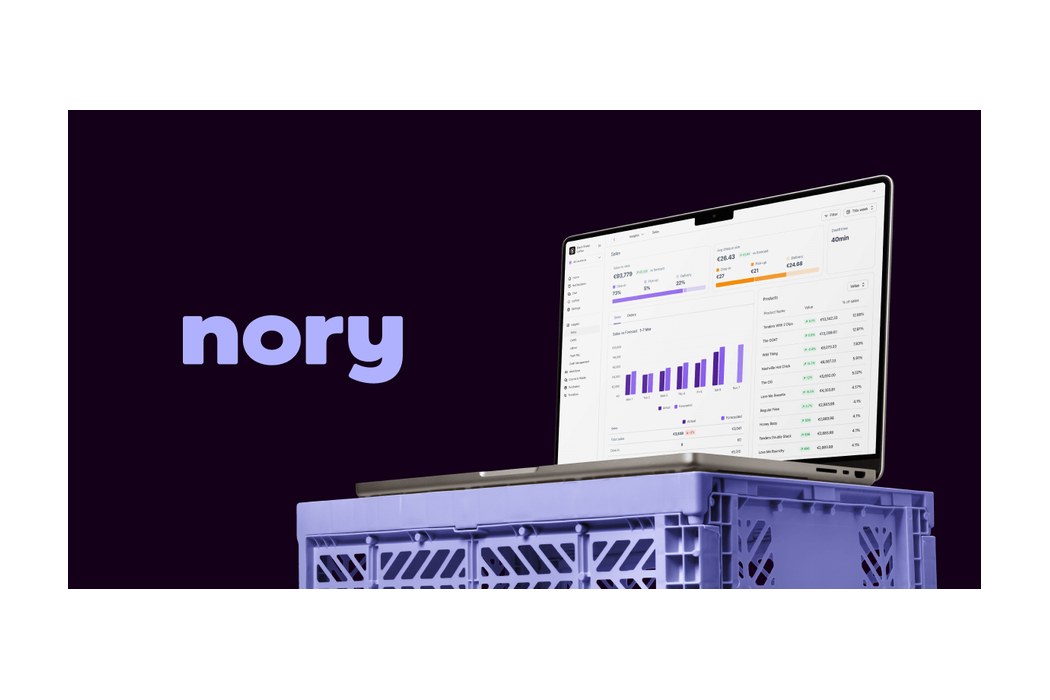
Nory is an AI-native restaurant operating system that unifies business intelligence, inventory, workforce management and payroll into a single control centre for hospitality operators. Founded by restaurateur Conor Sheridan, it plugs into a restaurant's existing tech stack and uses real-time data plus predictive analytics - and a crew of 'agentic' AI assistants - to forecast demand, plan staffing, manage ordering and keep the P&L on track. Operators report cutting operating costs by nearly 20 percent and reducing food waste by up to 50 percent. Backed by $62.6M in funding, Nory serves multi-site groups from Black Sheep Coffee to the Jamie Oliver Group and is expanding into the United States.
Pecan AI
Pecan AI is an Israeli-American software company that builds a predictive analytics platform aimed at business teams rather than data scientists. Founded in 2018 by computational-neuroscience PhDs Zohar Bronfman and Noam Brezis, Pecan combines automated machine learning with large language models - a category it calls Predictive GenAI - so analysts can describe a business problem in plain language and get production-ready predictive models for churn, customer lifetime value, demand forecasting, lead scoring and campaign ROI. The company has raised roughly $127M, including a $66M Series C in 2022 led by Insight Partners with GV and GGV Capital, and in 2025 launched DemandForecast.ai for supply-chain forecasting.

RapidCanvas
RapidCanvas is an Austin-based enterprise AI company that helps businesses move from concept to production-ready AI solutions in weeks rather than months. Founded in 2021 by veterans of Simility (acquired by PayPal), it pairs a proprietary agentic AI platform with human experts through what it calls the Hybrid Approach - AI agents automate data preparation, modeling and workflow execution while human specialists handle strategy and governance. The company targets non-technical business users across manufacturing, financial services, retail, energy and logistics, and has raised over $23.5M including a $16M Series A led by Peak XV Partners.

Style Arcade
Style Arcade is an Australian-founded software company that builds a buying and planning workspace for fashion brands and retailers. Its platform pulls together sales, stock, orders, imagery and web data into one visual source of truth, then uses analytics and AI-driven recommendations to help merchandising teams plan ranges, forecast demand, optimize size curves and reorder inventory. Founded in 2018 by Michaela Wessels and Tristan Hoy, the company serves thousands of teams globally - including Ralph Lauren, David Jones, Princess Polly and Tibi - and positions itself as a faster, more visual alternative to spreadsheets and generic BI tools.
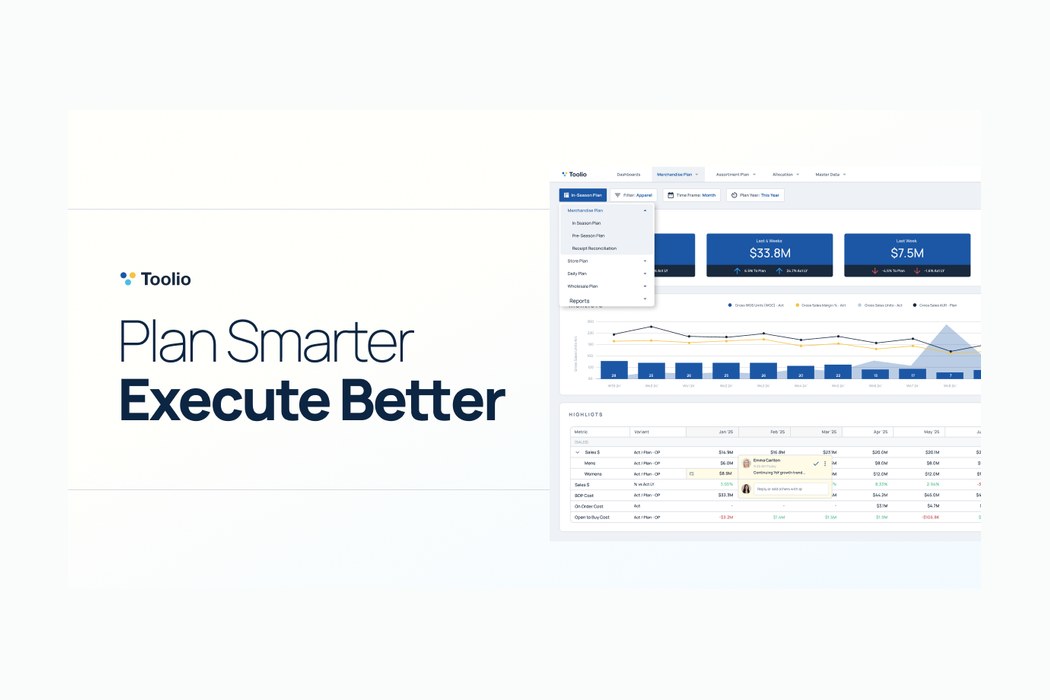
Toolio
Toolio is a New York-based retail technology company that builds cloud-based, AI-powered merchandising software. Its platform replaces spreadsheet-driven planning with connected workflows for merchandise financial planning, open-to-buy, assortment planning, demand forecasting, and allocation. Founded in 2019 by ex-Walmart engineers Eytan Daniyalzade and Berk Atikoglu, Toolio helps modern retailers and direct-to-consumer brands decide what to buy, how much, and where to place it - managing over a billion dollars of inventory across more than 100 retail customers.