A grocery delivery is a surprisingly demanding software brief. The product has to appear in search, carry the right information, survive checkout, reach a picker and fit into a delivery run. Somewhere along that chain, a vehicle needs charging. Somewhere else, a promotion changes demand. Yıldız Tech has built a business around these unglamorous details, where a small improvement can matter every time an order moves.
The company belongs to Yıldız Holding, whose food and retail operations give its engineers something useful: businesses with problems ready to be worked on. Its catalog stretches from forecasting and image recognition to order management and cloud operations. The commercial ambition is to turn solutions developed around group needs into products other enterprises can use.
The grocery basket is a systems problem
Yıldız Holding places the company’s establishment in 2022 in its corporate history. In September that year, Yıldız Tech received an On-Site R&D Center license from Turkey’s Ministry of Industry and Technology. The holding describes a remit covering e-commerce, artificial intelligence, Industry 4.0 and metaverse research, alongside software development for its digital applications.
The early work was concrete. In a 2023 retail discussion, Yıldız Holding’s İlker Küçükil described projects for İsteGelsin and Cepte Şok aimed at improving infrastructure quality, efficiency and customer experience. Data-science work included routing and customer-behavior analysis. His account puts team building and dependable operations near the beginning of the story.
“We focused on building a good team in 2022.”
İlker Küçükil · Yıldız Holding
Translated from Turkish, 2023
That origin explains the breadth. Retail technology has to cross departmental boundaries: a search feature affects shopping, while stock accuracy and delivery execution determine whether the order succeeds. Yıldız Tech’s range follows those connections. Its customers include group businesses and external enterprises, with published examples concentrated in grocery retail and food manufacturing.
A shorter route to a smaller bill
Route+ tackles a deceptively simple question: which vehicle should carry each order, and in what sequence should it visit the stops? The product combines route planning with order allocation and loading decisions. A short journey is useful only when the right goods fit in the vehicle making it.
In an unnamed grocery-chain case, Yıldız Tech reports a 7.5% reduction in logistics costs after improving order planning, loading and routing. The figure describes that deployment. For a buyer, its value lies in the link between a specific operational change and a business measure worth tracking.
Lower logistics costs in a grocery-chain case reported by Yıldız Tech.
One customer case. An operational result, not a quoted implementation price.Locate+ works on another part of the delivery puzzle: where electric vehicles should be placed. It considers range, charging time, capacity, basket size, working hours and store conditions. It even considers whether a location has staff able to operate the vehicles. The algorithm’s world includes people holding the keys.
The company’s Locate+ case study reports a 20-25% reduction in total vehicle distance across a grocery customer’s national operation. Distance and logistics cost are different measures; these results should be read separately. Together, the examples show why delivery optimization needs a detailed picture of the operation before it can suggest a useful change.
The forecast, the freezer and the factory camera
Forecast+ starts upstream, with how much customers are likely to buy. Historical data, seasonal patterns, campaigns and regional information feed its forecasts. The cloud-based product is designed to support decisions about inventory, supply and pricing. In its published food-sector case, Yıldız Tech reports an average improvement in forecast accuracy of more than 15%, alongside campaign and price-sensitivity simulation.
Shelf-IQ turns attention to the shop floor. Its frozen-food customer case uses photographs of product cabinets to check availability and compliance with planned shelf arrangements. A picture becomes a way to spot whether products are present and positioned as intended. The humble freezer cabinet earns its place in an AI portfolio.
Recognize+ brings cameras to production lines. The company describes analyzing visual changes associated with elevated acrylamide levels in food and issuing alerts. Its product description also covers broken or misshapen items. This is a specific application of image analysis to quality-control work, with the production line’s speed forming part of the brief.
HR-IQ applies analytics to employee retention, recruitment and benefits. Its published example concerns a multinational consumer-goods producer, predicting organizational turnover over the following six months. Across these products, the useful thread is the decision each one supports: what to make, what to replenish, what to inspect and where managers might need to intervene.
What happens after “place order”
The e-commerce catalog follows the order from discovery to delivery. Product search supports indexing, autocomplete, personalized results and ranking informed by clicks and conversions. A separate behavior-analysis offering collects website and app journeys, helping teams examine visits, time spent and campaign traffic through a dashboard.
- 01Find itSearch + product information
- 02Order itStock + payment + order management
- 03Pick itAndroid tools for store operations
- 04Deliver itCourier tools + route planning
A conceptual map of Yıldız Tech’s offerings. Individual deployments depend on the customer’s systems.
The product information management system centralizes catalog data, accepts spreadsheet imports and connects with other systems through APIs. It also supports supplier onboarding and richer product content. The order management system covers creation, payment options, stock, invoicing, delivery, cancellations and returns. A misplaced description and a mishandled return are different problems; both belong in the commerce brief.
Native Android applications support picking and courier work. Underneath sit infrastructure services spanning cloud and on-premises environments, database operations, DevOps and site reliability engineering. The published service descriptions include Kubernetes and open-source databases. This combination positions Yıldız Tech as both a software builder and an operator of the systems that software needs.
A customer is a useful kind of partner
Yıldız Tech’s business model is enterprise-facing: products, development, process design and infrastructure services. Its stated vision includes commercial sales beyond Yıldız Holding and growing exports. The market position sits between an internal technology organization and an outside provider, with the group supplying early operating contexts in which to develop and test ideas.
Its startup partnership program offers another route into that environment. The company says it meets more than 100 domestic and international startups annually, assessing their technology, technical competence, maturity and support capabilities. It describes matching ventures with relevant teams across more than 30 holding companies.
The sequence is practical: meet, match, plan and work toward becoming a customer. Planning includes timing, budget and the working arrangement; proofs of concept inform the commercial discussion. For founders, the attraction is access to an operating department that might use their product. The numbers describe the program’s stated reach, rather than a promise that every introduction produces a contract.
Yıldız Ventures belongs in this wider ecosystem as an investment operation. Yıldız Tech’s distinctive role is developing and applying technology. The competitive alternatives depend on the task: an internal engineering team, a systems integrator or a specialist forecasting, routing or commerce vendor. The editorial case for Yıldız Tech is its proximity to real operations and the breadth of work it can connect.
The engineers also teach
The holding’s 2024 sustainability report provides a dated picture of the operation: 96 employees, 12 projects completed in total and seven ongoing. It also records collaboration with 17 institutions during the year. These figures describe a working R&D organization with several projects in motion.
Learning has a visible place in that activity. The same report records 39 employees participating in 25 R&D and innovation training programs. Yıldız Tech also helped deliver the holding’s AI Academy, launched in October 2024. The academy recorded 420 participants across 14 groups and 97% satisfaction. That last measure captures participants’ response to the training, rather than an improvement in company productivity.
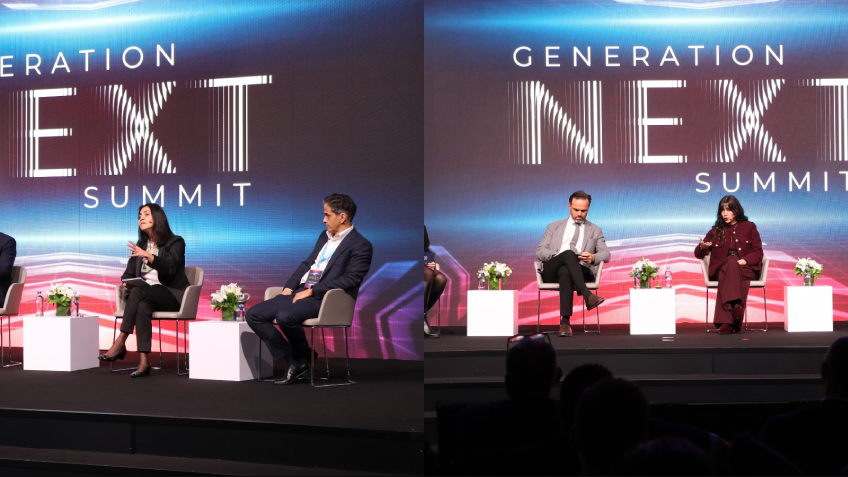
Gül Erol, the holding’s IT president and Yıldız Tech CEO, carries that work into public technology discussions. The holding’s February 20, 2026 summit announcement places her on a panel about artificial general intelligence, economic power and global competition. The engineering team has a quieter public presence on GitHub, including Java demonstration projects for scalable WebSockets and internationalization.
Take the problem seriously enough to measure it
The transferable lesson is to start with a decision someone already has to make. Yıldız Tech’s published process suggests a useful order of work: find the operating team, specify the constraints, agree on the test and examine what changes. A pilot for delivery planning should be judged against delivery operations, with the baseline and measurement period agreed beforehand.
Implementation economics belong in that conversation. A reported saving is only one part of the calculation; a prospective buyer should also count integration, data preparation, training, ongoing service and the staff time needed to use the result. These are purchasing considerations drawn from the scope of the work, rather than a reconstruction of Yıldız Tech’s project spending.
The same logic defines fit. Forecasting needs usable history and a way to respond to its outputs. Routing needs accurate constraints. An organization with few deliveries or little capacity to integrate new tools may find a simpler approach sufficient. Yıldız Tech’s most persuasive proposition is the chance to work from an actual operating problem toward a product someone can use, then measure whether the work was worth doing.