Consider the branded cooler. A consumer-goods company pays to put it in a shop, selects the products that should fill it, and has opinions about where it belongs. Then the shopkeeper gets on with running the shop. Rival products migrate inside. The cooler moves away from the till. A carefully designed sales strategy acquires a rather different life on the floor.
- ParallelDots turns shelf photographs into availability and merchandising checks.
- Its buyers are consumer brands, retailers and the teams visiting their stores.
- The useful output is a correction someone can make before leaving the aisle.
ParallelDots describes precisely this predicament in a confectionery customer case study. Third-party inspections were expensive and slow. ShelfWatch, its image-recognition platform, helped the brand move from monthly to weekly audits and analyze all captured images rather than a sample. The cooler had become readable. More interestingly, someone could respond while still standing beside it.
The shelf has other plans
This is the territory ParallelDots occupies: the distance between the retail agreement and the retail reality. ShelfWatch checks photographs for product availability, share of shelf, price tags, promotional materials and adherence to a planogram, the map specifying where products belong. Its audience includes sales directors, category managers, trade marketers and field representatives. They need to know whether the expensive plan survived contact with Tuesday.
A stock record and a shelf photograph answer different questions. Goods may have reached a store without reaching the position where a shopper expects them. Reading the shelf gives a brand evidence about visibility and execution. It also gives a sales representative a more useful opening than another form to complete.
First, a different kind of reading
The founders once wanted to make news easier to follow. Their earlier publishing product arranged archived articles into contextual timelines. Co-founder Muktabh Mayank later explained its fate plainly: “Monetization in online publishing is hard and thus we had to shut the idea down.” Angam Parashar, Ankit Narayan Singh and Mayank carried their AI expertise into enterprise work.
The current business dates itself to 2017; ShelfWatch launched in 2018. The move toward specialization continued in public. In February 2020, ParallelDots consolidated its retail offering, previously presented under Karna AI, into its main website. It also announced SmartReader’s retirement because adoption had lagged. Market research and experience had persuaded the company to put more attention into retail execution.

The lesson travels well beyond supermarkets. A technical capability can attract many interesting requests without producing a coherent product. Here, the repeated problem had a buyer, a setting and an observable task. A photograph could become evidence. Evidence could become an instruction. The team had found a problem that repeated itself from store to store.
The photograph is only the beginning
Getting there requires more than recognizing a packet. ShelfWatch’s capture tools warn about blur, glare and steep angles. Stitching guidance helps users collect overlapping images without missing products or counting them twice. These sound like housekeeping details. For a field team working through an aisle, they are the difference between usable evidence and another trip to the shop.
- 01 CaptureA usable shelf image
- 02 RecognizeProducts and positions
- 03 MeasureAvailability and compliance
- 04 CorrectA task for the field team
Then the products change. A new SKU, or stock-keeping unit, joins the assortment. Packaging changes. Saarthi, ParallelDots’ no-code training suite, is designed to shorten the work of teaching the system what to recognize. The company advertises new-SKU detection within 48 hours and reduced manual annotation. Training speed matters because a recognition system needs to keep pace with the merchandise it measures.
ParallelDots also offers SmartGaze, which automates coding for physical eye-tracking research. Researchers can define areas of interest, examine heatmaps and export attention data. It is a different question from shelf compliance: where did the person look? The connection is visual measurement, applied to the practical concerns of brands and researchers.
Put the promise in a shop
Trax offers competing shelf-recognition technology, including custom KPIs and integration tools. ParallelDots’ argument therefore needs more substance than the presence of AI. Its emphasis is retail-specific research, faster SKU training and fitting into existing field workflows. A buyer should test those advantages where the work happens.
One company-published personal-care case study describes exactly that approach. A customer ran a like-for-like field pilot against its incumbent vendor. ParallelDots reports SKU-level on-shelf-availability accuracy above 95%, compared with above 85% for the previous system, alongside simpler field use and lower costs. Those are vendor-reported results from one deployment, rather than a universal ranking.
The useful output is a correction someone can make before leaving the aisle.
The method is worth copying: run both systems in comparable stores, check their answers against human-verified shelf conditions, and include the people taking photographs. Count the time spent fixing bad inputs. Decide who receives an alert and who can act on it. Recognition quality has commercial value when the organization can turn it into better execution.
Paying for a clearer picture
In an early interview published in 2019, Parashar described enterprise AI licenses typically costing $25,000 to $30,000 annually, sometimes reaching $50,000. Those were the broader platform’s historical economics. Today’s ShelfWatch is sold through demos and enterprise discussions. The distinction matters when assessing a system whose scope includes deployment, training and integration.
Capital helped fund that work. ParallelDots raised a $4.5 million Series A in 2022, led by Btomorrow Ventures with Multipoint Capital participating. BTV announced another $1.5 million in 2023. As BAT’s venture arm, it also connected the company with a customer’s operational expertise. Separately, a 2022 SPAR partnership brought image recognition into merchandising services.
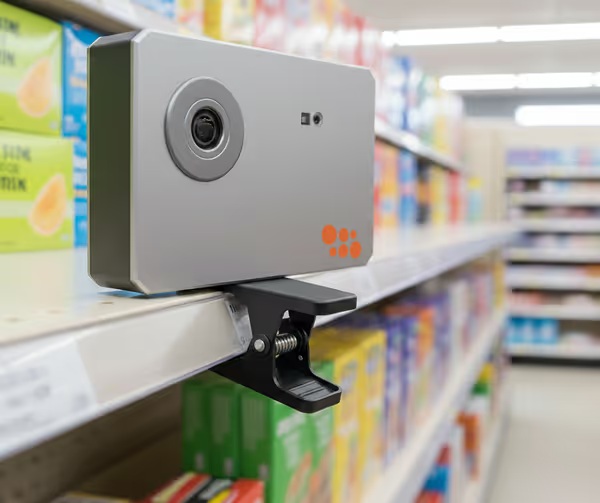
The product now extends to fixed cameras and the ShelfRadar companion app, which sends alerts and lets staff mark issues fixed or unfixed. That changes the observation schedule. It cannot remove every constraint: a hidden product remains hard to inspect, changing packaging needs recognition support, and an empty shelf needs somebody with the stock and authority to refill it. ParallelDots makes the gap visible. The last few feet still belong to people.