Consider a packet of biscuits that has completed every respectable stage of its commercial life. Manufactured. Priced. Promoted. Delivered. Then it sits in the wrong place, or never reaches the shelf at all. The spreadsheet is satisfied. The shopper buys something else. This is the unglamorous territory of retail execution, where MC1 has built its business: helping consumer goods companies see what happens in stores and helping the people visiting those stores do something about it.
- WinTheMarket connects field sales, merchandising, and delivery.
- Shelf recognition runs on the device, even without internet access.
- The buying decision includes integration and training, alongside software.
There is a useful distinction here. Recording a problem is easy to admire in a presentation. Correcting it requires somebody nearby, with enough information and enough time. MC1’s pitch puts those two activities together. Its mobile applications bring store information and recommendations to field teams, while managers receive a view of execution across their operation. The intended customer is the business supplying the shelf, rather than the person browsing it.
The sale that disappears in plain sight
A planogram is a diagram of where products should sit. It sounds like a matter of interior decoration until a brand discovers its agreed space has shrunk. Promotions have similar troubles: a discount negotiated centrally still needs the right price and display locally. MC1’s image recognition tools check product presence, shelf share, pricing, and compliance. The point is to compare the commercial plan with the shop that actually exists.
The wider WinTheMarket platform covers sales and trade marketing workflows, with delivery tools and retailer self-service also advertised. A representative can receive order guidance; a merchandiser can inspect execution; a planner can work with store data. These are related jobs with different incentives. Bringing them together is MC1’s proposition. A perfectly measured shelf would be a rather sterile achievement if nobody could translate the observation into a replenishment order.
An airplane-mode business case
MC1’s most interesting product claim concerns what happens when connectivity disappears. Its IRE application processes shelf images on the mobile device and provides corrective recommendations without requiring a cloud connection. Data synchronizes when internet access returns. That makes the distinction between local intelligence and shared intelligence unusually concrete: the person in the store can receive feedback before the central system receives the visit.
Then sync ↑ when connectivity returns
This is particularly relevant to traditional trade: smaller stores whose layouts and working conditions may be less orderly than a supermarket specification suggests. MC1 markets compatibility with both higher-end and lower-end devices. The design question is sensible. If a field application assumes that every shop has dependable reception and every employee carries an expensive phone, its convenience comes with a fairly selective definition of the field.
A Brazilian company follows the field
Founded in 2003, MC1 came from enterprise mobility. Its co-founders include César Bertini, Fábio Peixoto, and Julio Fabio Chagas. In 2014, a Treecorp-backed merger combined MC1 with MobilePeople. Contemporary reporting described complementary strengths: sales-force automation at MC1, mobile service-order management at MobilePeople. The MC1 name survived. The combination supplied a broader business than today’s shelf-analysis pitch alone might suggest.
Brazil’s downturn helped sharpen the argument for international business. In 2015, MC1 discussed its Miami office and customers overseas, while pitching efficiency to companies under pressure at home. Later, it appointed consumer goods executive Marcos Póvoa as CEO, alongside investment from G5 Evercore and Cassis. The sequence suggests a company moving closer to the commercial routines of its customers, with mobility becoming the means rather than the whole description.

Its 2020 majority investment in Landix extended that logic. Landix served smaller companies and distributors, including businesses connected to MC1’s larger customers. The acquisition announcement said the companies would initially operate independently. A manufacturer’s field process does not end at the manufacturer’s organizational chart. Distribution is where many of the awkward handoffs live.
The bill includes changing habits
The cost of this software is also a question of time. In a 2015 interview, MC1’s commercial director described implementation taking roughly three to four months, depending on integration complexity. He described an adaptation and training year, productivity improvement in the second year, and break-even in the third. Those observations concern an earlier generation of deployments, but they make an excellent antidote to the idea that installation and adoption are synonyms.
By 2023, MC1 emphasized configuration and pre-built enterprise integrations as ways to speed rollout. The same profile reported training 20,000 field personnel for one customer through a train-the-trainer approach. These claims belong together. A configurable product can reduce development work; a training program addresses whether thousands of people can use it consistently. Buyers should budget for both conversations.
“With our configurable app, we can meet the needs of large CPG companies without costly custom development.”Marcos Póvoa · CIO Applications, 2023
From photograph to next order
PepsiCo’s Latin American sales force is a documented WinTheMarket deployment. Other publicly named customers include Heineken, BRF, Kimberly-Clark, and Ferrero. MC1’s territory is therefore enterprise CPG operations, where a store visit is repeated across large networks. Alternatives include shelf-intelligence specialist Trax and overlapping execution vendors such as Involves and TELUS Consumer Goods. MC1’s emphasis is the combination of offline analysis and connected commercial workflows.
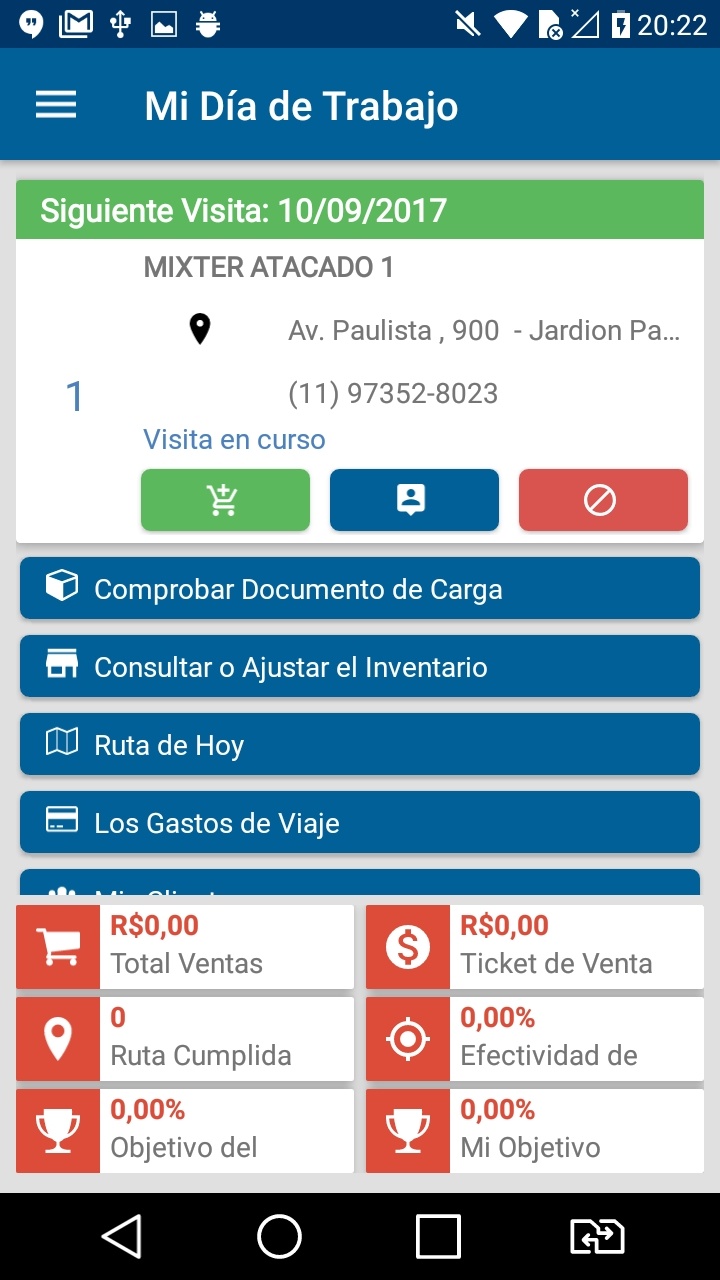
The products keep evolving. Google Play records a June 2026 update to the third-generation WTM3PS pre-sales app, including MenuOCR integration, and an April update to WTM3TM, its trade marketing app. These listings are modest but useful evidence: behind the language of artificial intelligence are maintained applications for specific working routines. The routine is where the software earns its place.
Take the demo to the aisle
The practical lesson is to test the whole visit. Choose representative stores, disconnect the device, photograph real shelves, and measure whether the team completes useful corrective actions. A recognition result needs usable product data, sensible instructions, and somebody authorized to act. If those conditions are absent, faster analysis may simply produce a more punctual list of unresolved problems.
MC1 makes a persuasive case for shortening the distance between noticing and doing. The reader can copy that principle without copying the software: put information where the decision happens, test it under ordinary working conditions, and count completed actions. In a shop, intelligence has a deadline. The shopper is already walking toward the next aisle.