Imagine two shops that each finish Saturday with 100 transactions. One welcomed 500 visitors; the other welcomed 1,000. The sales report gives them the same round of applause. The conversion calculation gives them 20% and 10%. Somewhere in the second shop, a great deal of opportunity walked out wearing its own shoes.
This is an illustrative example, but the missing number is RetailNext’s business. A till records a purchase. It has much less to say about the person who browsed three displays, waited for help, and left. RetailNext puts sensors above the floor, combines their measurements with sales data, and makes that unrecorded part of shopping available for inspection.
- Measure the opportunity: connect visitor counts with transactions, staffing, and shopper behavior.
- One ceiling device: Aurora supplies traffic, behavioral analytics, and video to a shared platform.
- Pay by subscription: sensors and software are bundled; physical installation can add costs.
- The useful habit: compare performance against traffic, then test one operational change.
The denominator changes the verdict
A busy location can sell more simply because more people pass its door. A quieter one can make unusually good use of the customers it gets. Without traffic, a chain can mistake a favorable address for excellent execution. RetailNext’s Traffic Analytics connects visitor measurements to point-of-sale records so managers can compare conversion by location and time period, rather than grading everyone on revenue alone.
The distinction matters to scheduling, too. Yesterday’s sales tell you when purchases happened. Traffic tells you when people needed attention, including the ones who never purchased. Forecasting those visits gives operators another basis for allocating labor. The same count becomes useful to marketing teams checking whether a promotion drew visitors and to managers trying to understand a disappointing shift.
Conversion = transactions ÷ visitors. Hypothetical numbers, not customer results.
Even that apparently simple denominator needs judgment. Employees cross entrances. Families shop together. A group of four may produce one transaction without implying three disappointed customers. Staff exclusion and configurable group counting address these everyday complications. A counter can be precise and still answer the wrong question if a retailer has not decided what counts as an opportunity.
The ceiling has a better view
Aurora, RetailNext’s purpose-built sensor, combines computer vision, behavioral measurement, and high-resolution video in one ceiling-mounted unit. RetailNext quotes people-counting accuracy of 95-99% and says every installation is manually audited. Those are vendor claims; the practical advantage of an audit is that someone checks the actual doorway, rather than trusting a specification written for an ideal one.
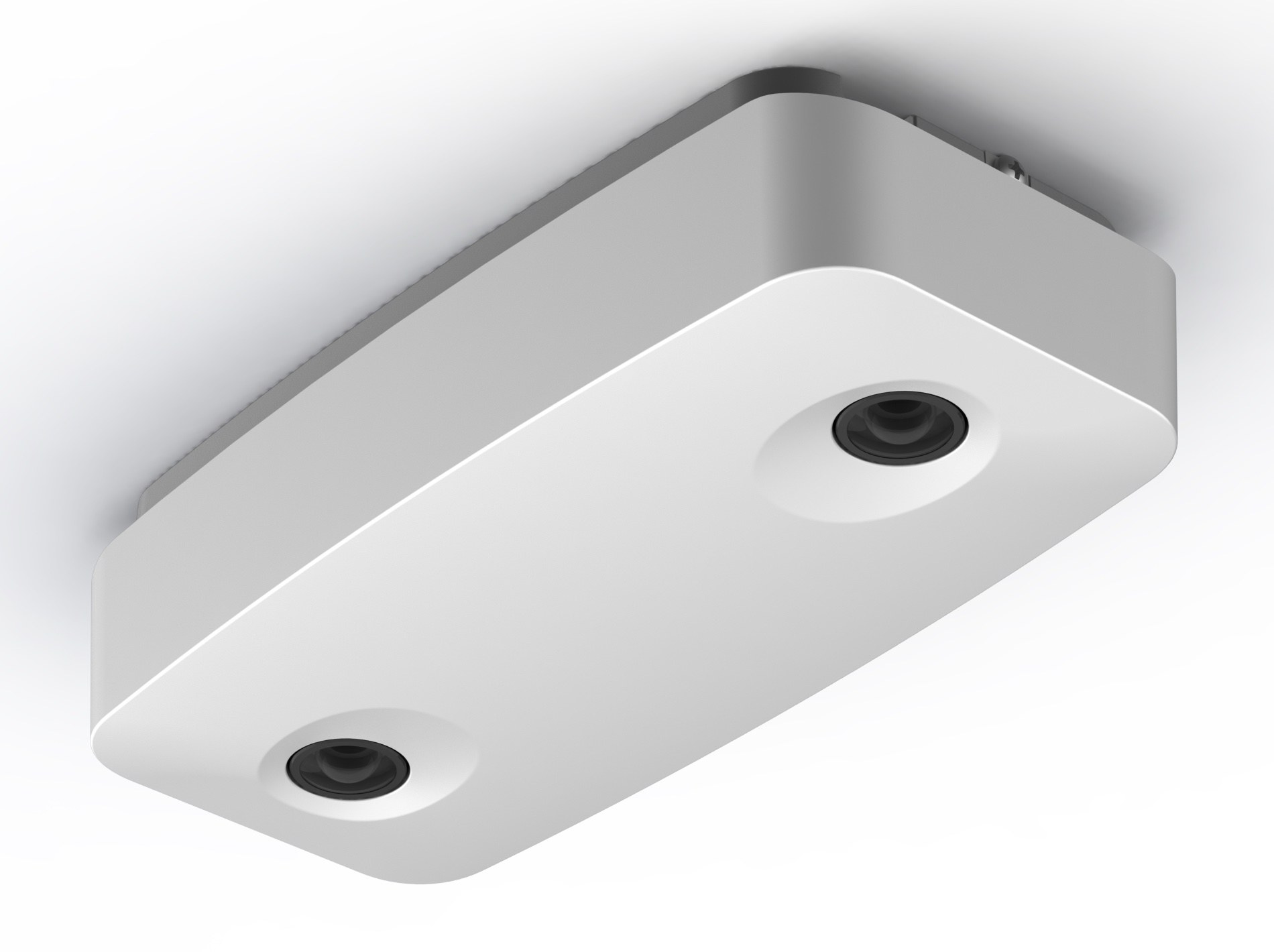
Its onboard analysis reduces the amount of processing that must happen elsewhere. The hardware still needs installation and a suitable network. RetailNext’s own pricing page makes room for ceiling height, electrical requirements, and cabling. A shop is a physical place, and even a cloud subscription eventually meets a ladder.
Above that hardware sit three related products. Traffic Analytics handles counts, conversion, forecasts, and staffing recommendations. Insights maps paths, dwell, and engagement, helping teams examine layouts and displays. Asset Protection brings video, transaction exceptions, and investigation workflows together. It can also work with existing cameras, which matters to a retailer with a functioning surveillance estate.
- 01 / ObserveSensor measures visits and movement
- 02 / ConnectCombine with POS and operating data
- 03 / ActAdjust staffing, displays, or investigations
A menswear chain stops staffing the average
Boggi Milano offers a concrete example. Its RetailNext case study describes a chain with 235 stores across more than 61 countries, looking since 2018 for a better way to allocate labor. The team needed to distinguish high-traffic, low-conversion shops and understand how many shoppers employees handled per labor hour.
It used visit duration and shoppers per labor hour at individual locations, supported by forecasts in 15-minute increments. This made the store itself the unit of planning. A fleet average is convenient; customers seldom arrive at the average store.
Company-published customer outcomes over multiple years; not a controlled estimate of software impact.
The published account reports roughly 40% higher shopper yield, about five percentage points higher conversion, and a 15% reduction in headcount since 2018. These are meaningful reported outcomes, but they span years of business decisions. A buyer should resist turning them into a promised return for a new installation.
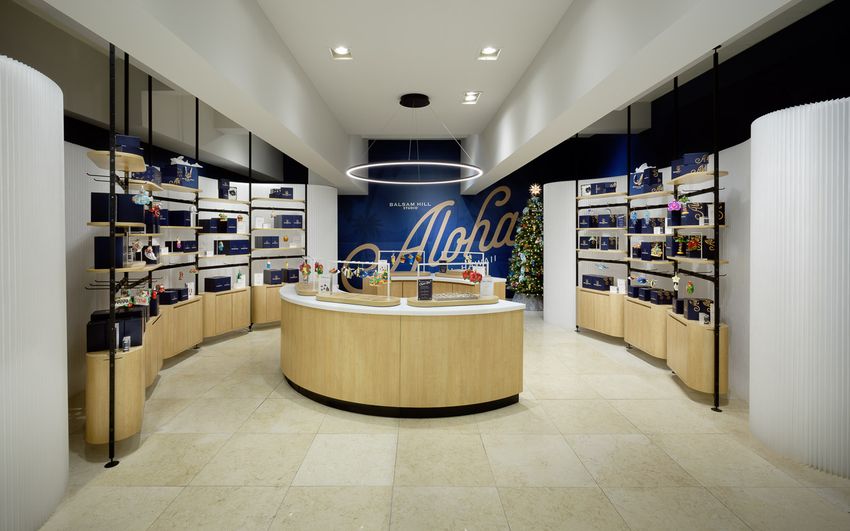
Balsam Brands, the company behind Balsam Hill artificial Christmas trees, took another route: traffic measurement from the beginning of its physical-store expansion. Its case study reports 31% labor savings and an 8-10% year-over-year improvement in entry rates from merchandising tests. Traffic data also helped it reject ineffective marketing and redirect spending. Measurement earns its keep when a team is willing to retire a cherished idea.
The first thing to fail was the count
Sharaf DG wanted to measure the performance of its electronics stores’ “brandboxes,” the spaces assigned to individual brands. According to its case study, two years with competing vendors produced unsatisfactory traffic counts, conversion figures, and shopper-journey information. The appealing reporting idea had run into an unappealing measurement problem.
It selected RetailNext partly for staff exclusion, then combined traffic and journey data with stock, demand, and staffing information in its business-intelligence environment. The lesson travels well: audit the input before dressing up the output. Inventory availability, for instance, can help explain a weak conversion result that a heat map alone cannot.
RetailNext’s October 2023 partnership with MarketDial adds a further step: physical-store testing. Behavioral measurements can inform a hypothesis about a display; a comparison with control stores can help evaluate it. As MarketDial co-founder Johnny Stoddard put it:
“RetailNext brings quality data; MarketDial helps retailers act on it.”Johnny Stoddard / MarketDial
The company had its own measurement problem
RetailNext began in 2007 with Alexei Agratchev, Marlie Liu, and Arun Nair. A 2026 company reflection traces the idea to Agratchev’s conversation with a Target executive while visiting the British Virgin Islands. The original name, BVI Networks, preserved the holiday in the paperwork.

Co-founder and CEO.
Co-founder and COO.
In January 2025, Agratchev described premature expansion, spending before a repeatable sales model, and attention to the wrong metrics. He said such mistakes cost tens of millions of dollars. The company shifted toward subscriptions and profitability, while confronting lockdowns, supply disruptions, and team relocation after Russia’s invasion of Ukraine. His explanation makes an uncomfortable companion to the product pitch: better information still requires better judgment.
Battery Ventures’ majority growth investment, announced that month, backed the next phase. Its amount was undisclosed. An earlier $125 million round in 2015 had financed expansion; Colbeck supplied $42 million in growth capital in 2021. By the Battery announcement, RetailNext reported an average of 1,200 store installations per month during 2024.
The bill includes more than software
Today’s Traffic Analytics subscription bundles Aurora hardware with platform access, software updates, a sensor warranty, and benchmark data. The estimate depends on factors including location count, entrances, region, and existing equipment. Installation, shipping, taxes, specialized mounting, and custom integration can add charges. The sensible comparison is a full deployment quote against the decisions it will improve.
Alternatives include Sensormatic’s ShopperTrak and V-Count. RetailNext’s distinctive proposition is the combination of traffic, shopper behavior, and asset protection around a shared platform and sensor. That breadth is useful when several departments need the same evidence. A retailer seeking a straightforward entrance count should assess whether it needs all that breadth.
A workable pilot starts with a defined question and an audited count. Connect transactions for the same time period, decide how to handle staff and groups, then make a specific change to a shift or display. Poor network coverage, inconsistent inputs, or a team unable to change operations will limit the value. Sensors measure visitors; they cannot conjure available stock or an employee’s spare attention.
Now the question can leave the building
In August 2026, RetailNext described Pulse AI, which lets users question their store metrics in plain language from within the platform. It queries measured data and supplies guidance from product documentation. RetailNext acknowledges imperfect answers and prompts verification. The attraction is access: an occasional user can ask about a weak week without first learning every report.
A September 25 integration with Pine59 adds mobile intelligence about trade areas, demographics, and competitive traffic. It is available for US stores, with UK coverage planned for early 2027. Outside estimates and inside measurements remain different kinds of evidence, but together they help frame a useful question: did this shop stumble, or did the surrounding market slow?
That is where RetailNext fits: between the physical visit and the operating decision. The most useful result may be a manager asking a better question before changing a schedule. A receipt tells a neat little story. A shop has many more visitors than authors.