A shopping basket is a remarkably discreet witness. It will tell you that someone bought a drink mix, but remain silent about the thing they wanted and could not find. It records the winning product. The losing idea leaves no receipt. For a supplier trying to win space at Walmart, that silence can be expensive.
Walmart Data Ventures has made a business out of reducing it. Formed in 2021, the division turns the retailer’s first-party data into products for the companies supplying its shelves. Its main subscription platform, Scintilla, brings together shopper behavior, customer research, digital journeys and operational performance. The person buying the subscription is usually a brand or supplier. The person whose decision matters is often a Walmart merchant.
- The offer: understand what happens across your Walmart business, then decide what to change.
- The edge: transactions, verified shoppers and digital behavior from the retailer itself.
- The catch: a good Walmart answer still needs wider market context and someone able to act.
Three weeks to make a different argument
Consider Jel Sert, the company behind drink mixes. With a Walmart line review approaching, it had roughly three weeks to prepare. Its team classified products by attributes, examined sales and shopper behavior, and surveyed Walmart customers. The useful discovery was an assortment gap: some category segments were losing penetration, and customer feedback helped explain the unmet need.
Jel Sert brought that evidence to its merchant and recommended Pure Kick. Walmart’s published case study says the resulting launch reached 3,500 stores, with 41% of sales coming from customers new to the category. Those are company-reported results, not an independent experiment. The revealing detail is the sequence. A supplier moved from “please stock our new product” to an argument about customers the existing assortment was missing.
The merchant’s change of mind is the commercial point. A shared picture of demand can make a new product easier to evaluate. A buyer still has to judge the proposal; software has not abolished the meeting.
The retailer has the original
Retail research often involves reconstructing a purchase from panels, receipts or surveys. Scintilla’s particular advantage is its proximity to Walmart’s own transactions. Shopper Behavior lets a supplier examine baskets, loyalty, switching and shopper segments using first-party data. Merchants and suppliers can work from common definitions instead of opening a negotiation about whose spreadsheet is correct.
That gives Data Ventures a specific position in the market. NIQ and Circana offer broader market measurement across retailers. Their products can help answer where a category is moving across the market. Scintilla is built around understanding and improving a business inside Walmart. For a brand selling through several chains, these views can complement one another. The depth of the Walmart view does not magically turn it into a census of every checkout elsewhere.
This is also why the division’s expertise matters. Data science sits alongside category analysis, research design and retail operations. A transactional pattern can tell an analyst where to investigate. Explaining it may require a conversation with the customer, or a closer look at inventory.
Illustrative workflow. Each step needs a business decision and a person responsible for it.
The sale that never happened
Digital Landscapes examines an especially useful kind of evidence: shopping behavior before a transaction. It shows traffic sources, product-page visits, cart additions, peak conversion times and category benchmarks on Walmart.com and the Walmart app. Sessions that end without a purchase remain part of the picture.
For a supplier, that creates a practical diagnostic. If people reach the product page but seldom add the item to their cart, attention alone is an insufficient explanation of performance. The team has a reason to examine the listing and the offer. If traffic itself is weak, discoverability becomes the question. These are working hypotheses, not verdicts automatically delivered by a chart.
Customer Perception supplies another angle through the Walmart Customer Spark Community. Suppliers can use surveys, qualitative video feedback and in-home usage tests, with Research Services available for more involved work. The product page advertises survey insights within 48 to 72 hours of launch. The appeal is less the speed of asking than the relevance of the people answering: verified Walmart shoppers.
What fails is often the handoff
Kinder’s provides a less glamorous, more copyable lesson. The company’s case study describes replacing manual weekly exports with automated daily Power BI reporting through Scintilla BI Link. A shorter reporting cycle helped the team see stores where sales were running ahead of expectations and respond through replenishment and reforecasting.
“Use the data to figure out not what the market is, but what it’s missing.”
Jim Hart, Kinder’s Co-CEO and Chief Brand Officer
A weekly spreadsheet can be perfectly accurate and still arrive too late to be useful. That is a familiar business failure: the knowledge exists, but its journey to a decision is slow. Kinder’s example suggests a sensible first project for an analytics buyer. Remove one recurring delay before building an elaborate new reporting empire.
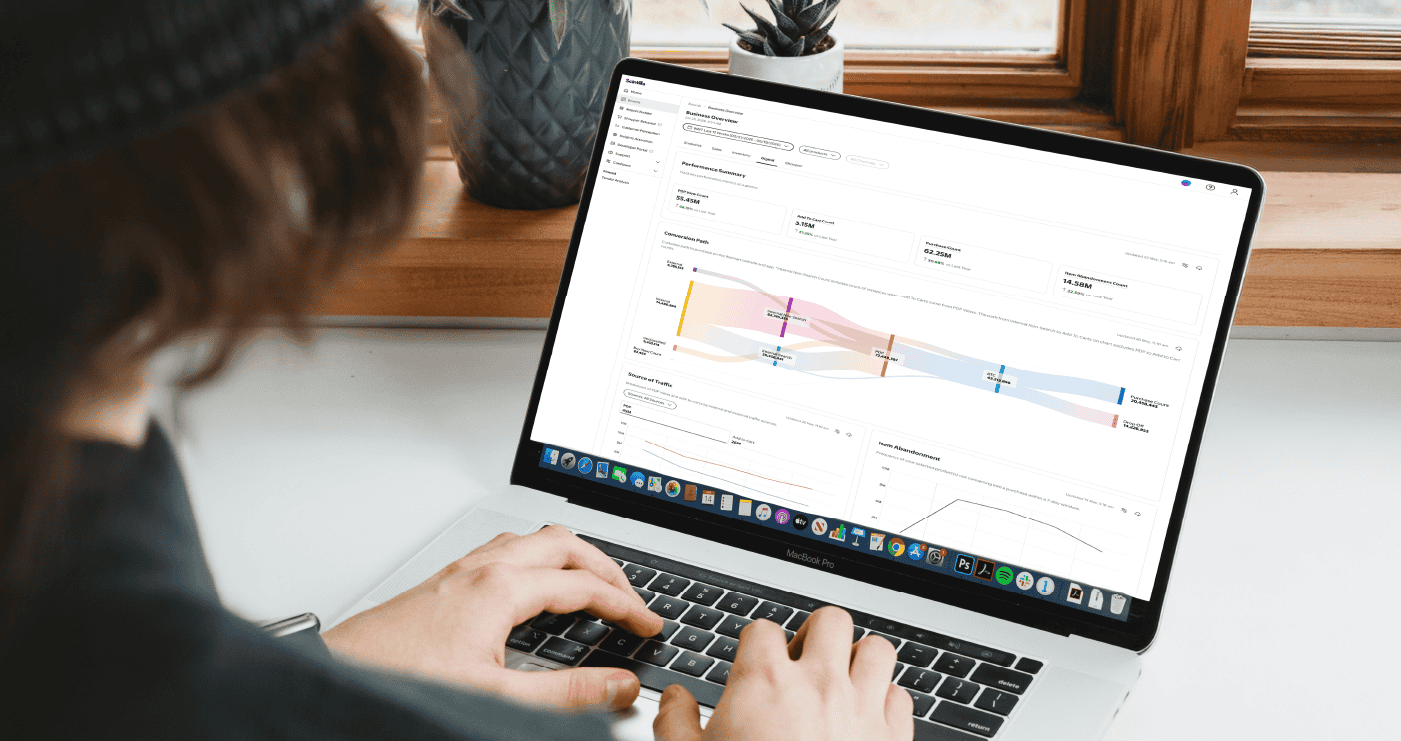
Boards puts related business measures into centralized views. Report Builder lets users customize, schedule and share operational reports. A supplier can begin with an overview, then investigate a change through more detailed tools. The design problem is ordinary and stubborn: a room full of information does not guarantee anybody knows which door to open.
A subscription with work attached
The word “Ventures” suggests a startup pitching investors. This is a Walmart division selling B2B software. In a 2026 investor conference, senior vice president Mark Hardy described Scintilla as a multi-year SaaS subscription. Walmart announced a free Basic tier in 2022, offering a subset of operational insights; Charter is the paid offering with broader capabilities.
The buying calculation also includes the work around the software. Somebody must understand the category, maintain useful product definitions, connect reports to existing systems and act on the findings. A supplier choosing a package should price that work alongside the contract. A dashboard cannot compensate for a team with no time to use it.
Third-party access has rules. Walmart’s Verified Service Provider program vets independent providers for security, compliance and data governance. The published program says participation is required for third parties accessing data through Basic or Charter subscriptions. Permission is part of the product’s operating model, rather than a detail to settle after sending an agency a file.
Now walk the answer into the aisle
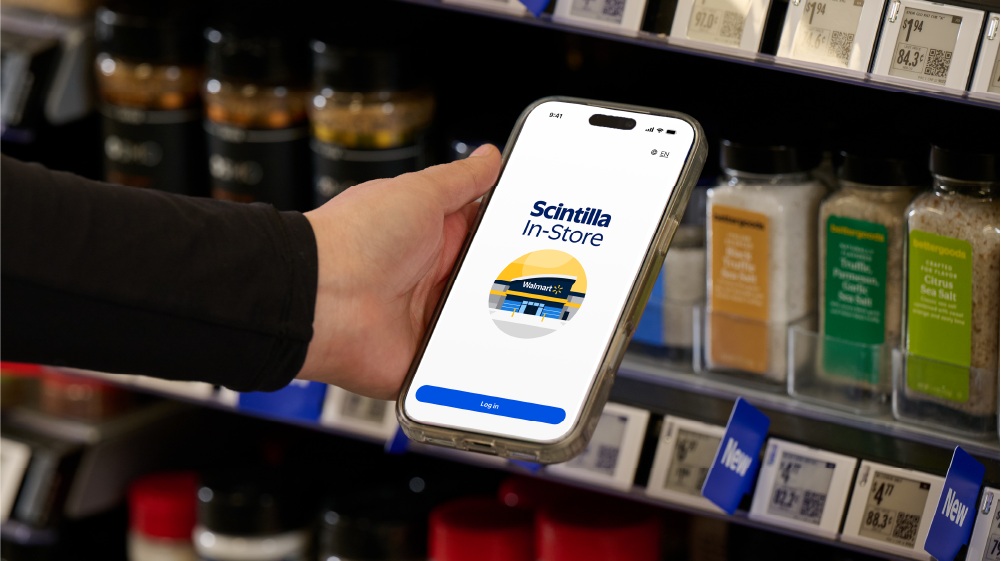
Scintilla In-Store, launched in February 2026, extends the portfolio into fieldwork. It is a separate platform, formerly Volt, combining store insights, item information and supplier tasks in a mobile app. The intended users include supplier retail teams and other eligible field representatives. Walmart acquired Volt Systems in 2022; the new name brings that work under the Scintilla umbrella.
The media connection is developing too. Insights Activation links shopper insights to Walmart Connect campaigns. April 2026’s Media Data Feed gives advertisers a supplier-controlled API route to share retail and operational data with agency and technology partners. The practical ambition is to make advertising decisions reflect the business that the advertising is supposed to help.
A spark still needs somewhere to land
Scintilla means “spark” in Latin. Luminate became Scintilla in February 2025, after Walmart announced international expansion in 2024. The ecosystem now serves the United States, Mexico and Canada. Public recruitment material prizes creative, metrics-driven work; certifications and the Inspire supplier event make applied learning visible beyond the product interface.
The next expansion is already on the calendar. Walmart announced in August 2026 that Scintilla will reach Sam’s Club in 2027. At September’s Inspire event, it outlined future Walmart.com visibility spanning first-party and Marketplace assortments, alongside evolving AI, alerts and customizable boards. Marty for Scintilla already helps users understand platform metrics and features. The broader conversational and action-oriented vision remains a roadmap.
What can another business copy? Begin with one decision. Agree on the product attributes and the measure. Find the gap, ask actual customers, propose a change and watch the result. That method works without Walmart’s scale. Its usefulness falls when the evidence covers the wrong market, the question is badly defined or nobody owns the next action. The basket has spoken. Somebody still has to move the product.
Website · LinkedIn · Boards · Customer research
September 2026 product news · Mark Hardy’s Greenbook interview · Watch: Walmart Data Ventures and dunnhumby