Zippin deploys checkout-free stores at French Open 2024 Series B: $30M raised to scale AI retail globally Krishna Motukuri named SBJ 2024 Tech Awards finalist Zippin named IDC Innovator for Computer Vision 2023 50+ AI-powered stores across four continents Super Bowl, FIFA World Cup, US Open powered by Zippin Aramark and Compass Group partner with Zippin Revenue up 80% in Zippin-powered stores Zippin deploys checkout-free stores at French Open 2024 Series B: $30M raised to scale AI retail globally Krishna Motukuri named SBJ 2024 Tech Awards finalist Zippin named IDC Innovator for Computer Vision 2023 50+ AI-powered stores across four continents Super Bowl, FIFA World Cup, US Open powered by Zippin Aramark and Compass Group partner with Zippin Revenue up 80% in Zippin-powered stores
Profile • Founder • AI Retail

Krishna
Motukuri

CEO & Co-Founder — Zippin

Building the checkout-free future, one stadium snack bar at a time. AI cameras, sensor fusion, and the nerve to tell a trillion-dollar retail habit it's wrong.

AI Retail Computer Vision Series B IIT Delhi Amazon Alumni San Francisco
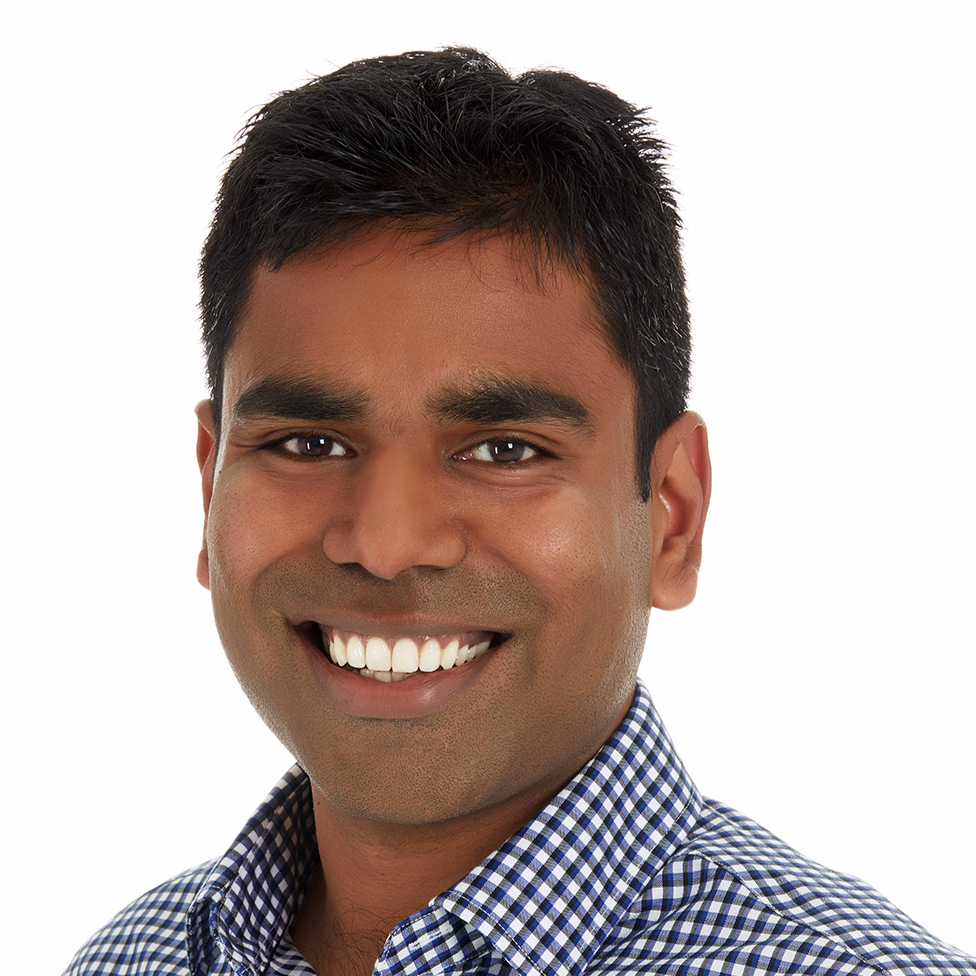
Krishna Motukuri, CEO of Zippin
$46M+
Total Funding Raised

The CEO Who Couldn't Find Organic Milk Fast Enough

Krishna Motukuri didn't set out to reshape retail. He set out to buy organic milk for his toddler. He hit a long checkout line. He bailed and bought whatever was closest. That small domestic defeat became a $46M company called Zippin.

Today, Zippin's AI-powered checkout-free platform runs in more than 50 stores across four continents. You'll find it in sports stadiums where fans grab beers mid-game and tap their phones on the way back to their seat. At the US Open. At Super Bowl venues. At the French Open. At Lawson convenience stores in Japan, and hospital cafeterias across the US. You walk in, grab what you want, and walk out. The AI handles the rest.

That's a sentence that sounds simple. Behind it is computer vision trained on thousands of retail environments, sensor fusion that can track anonymous shoppers as silhouettes without facial recognition, and machine learning models that need to correctly identify which banana you grabbed in a stadium at full capacity on game day. It's technically brutal. Motukuri has been building toward it for a long time.

The frustration that sparked Zippin wasn't rare. Krishna Motukuri just happened to be the person who could do something about it. After seven years at Amazon and a stint building e-commerce companies across two continents, he had the pattern recognition to see what others were calling a minor inconvenience as a systems problem with a technical solution. He co-founded Zippin in 2018 with Motilal Agrawal, and within the year they had a working concept store in San Francisco's SOMA neighborhood.

50+
AI Stores Deployed
4
Continents Active
80%
Revenue Lift in Zippin Stores
25%
Labor Cost Reduction

"With the Zippin Cube, we remove friction from bringing the checkout-free experience to retail stores."

— Krishna Motukuri, Zippin CEO

Cameras, Sensors, and the Art of Knowing What You Grabbed

Zippin's platform doesn't track who you are. It tracks what you took. Overhead cameras map the store in real time, watching shoppers as anonymous silhouettes moving through space. Shelf sensors detect when items are picked up or put back. Machine learning stitches these data streams together into a single coherent picture of the transaction.

No facial recognition. No invasive biometrics. Just physics - weight changes on shelves, movement patterns in the overhead view, and an AI that has seen enough retail footage to know the difference between someone browsing and someone buying.

The Zippin Cube is the packaged version of this: a modular, drop-in store format that can be deployed in a stadium concourse, an airport terminal, or a college dorm lobby. Motukuri's insight was that the hardware needs to be as frictionless as the experience. If installation takes months and costs a fortune, the business case evaporates. Zippin made the footprint small and the ROI obvious.

Zippin Store Performance vs. Traditional Checkout
Revenue IncreaseUp to 80%
Labor Cost ReductionUp to 25%
Checkout TimeNear Zero
Inventory AccuracyReal-Time

Seven Years at Amazon, Two Startups, Two Continents

Motukuri's career before Zippin reads like a deliberate preparation for exactly the problem he'd eventually decide to solve. He started at Amazon, spending seven years working across search, marketing, global expansion, and supply chain. He learned how massive-scale e-commerce thinks about customer friction - and watched Amazon relentlessly eliminate every last bit of it.

In 2006, he left to co-found Ugenie, a next-generation comparison shopping site. Two years later, Ugenie was acquired. He landed at Lulu.com as SVP of Business Development, where he built partnerships with Apple, Google, and McGraw Hill. Then came Naspers Group, where he ran portfolio companies in India and South Africa, scaling e-commerce operations in markets with radically different infrastructure and consumer behavior.

By the time Motukuri turned his attention to retail technology, he'd built things that were acquired, managed teams across continents, and seen what it takes to make commerce move at scale. Zippin didn't emerge from a pivot or a lucky guess. It was built by someone who had been watching checkout inefficiency compound across retail for years and finally decided to address it directly.

Amazon, ~2000-2007
Seven years leading teams in search, marketing, global expansion, and supply chain. Deep inside the machine that would later become the standard for e-commerce at scale.
Ugenie, 2006-2008
Co-founded a next-generation comparison shopping platform. Acquired in 2008 - first exit.
Lulu.com, 2008-2012
SVP of Business Development. Built partnerships with Apple, Google, and McGraw Hill. Learned how publishing and digital distribution scale.
Naspers Group, 2012-2017
Portfolio company CEO. Built and grew e-commerce businesses in India and South Africa. Two continents, two different versions of what "retail friction" means.
Zippin Founded, 2018
Co-founded Zippin with Motilal Agrawal. Opened concept store in San Francisco's SOMA neighborhood. Raised $2M seed from Core Ventures.
Series A, 2019
Raised $12M led by Evolv Ventures (Kraft Heinz's VC arm). Launched the Zippin Cube. SAP, NTT DOCOMO Ventures, and Scrum Ventures joined the cap table.
Fujitsu Partnership, 2020
Named Fujitsu as exclusive Japan distributor. Zippin's checkout-free platform began rolling out across Lawson convenience stores in Japan.
Series B, 2021
Raised $30M. OurCrowd, Maven Ventures, Evolv, and SAP participated. Announced goal of tens of thousands of stores by 2025.
IDC Recognition, 2023
Named IDC Innovator for Computer Vision for Automated and Self-Checkout. Stores now active in stadiums including Super Bowl and FIFA World Cup venues.
French Open, 2024
Zippin debuts at Roland-Garros. Krishna Motukuri named finalist in SBJ's Technology Executive of the Year. Four continents, 50+ stores, still building.

From Super Bowl to Roland-Garros: Sport's New Concession Play

The sports venue deployment is Zippin's most visible bet. When 70,000 fans are trying to get food between plays, traditional checkout is genuinely terrible. Long lines mean missed action, frustrated fans, and revenue left on the floor because people don't bother trying to buy. Zippin removes all of that.

Zippin-powered stands are now at NRG Stadium in Houston, Petco Park in San Diego, and Capital One Arena in Washington D.C. The French Open debuted a Zippin store in 2024. Super Bowl and FIFA World Cup venues were among early deployments. The food service giants - Aramark and Compass Group, the two largest in the world - are Zippin customers.

The business logic is straightforward: faster throughput means more transactions, more revenue per fan, and lower staffing requirements per location. Zippin stores in stadiums have seen revenue increases of up to 80% compared to traditional concession stands at the same venues. That's not an incremental improvement. That's a rethink.

What 50+ Stores and $46M Gets You

01
Deployed Zippin checkout-free stores at Super Bowl, FIFA World Cup, and French Open venues - the highest-stakes, highest-traffic retail environments on earth.
02
Secured Aramark and Compass Group as customers - the world's two largest food service companies, together operating across 40+ countries.
03
Raised $46.7M across Seed, Series A, and Series B, with Kraft Heinz's venture arm leading the A - validation from a company that knows consumer retail at scale.
04
Named IDC Innovator for Computer Vision for Automated and Self-Checkout in 2023. Zippin's tech distinguished in a field with well-capitalized competitors including Amazon's Just Walk Out.
05
Expanded to four continents and multiple verticals: stadiums, airports, campuses, hotels, hospitals, and convenience chains including Lawson in Japan.
06
Built Zippin's AI without facial recognition - a principled technical and commercial choice that separates Zippin from competitors and makes enterprise sales easier in privacy-conscious markets.

Checkout-free technology is not about replacing people - it's about letting people do more meaningful work.

— Krishna Motukuri, Zippin CEO

Six Things That Don't Show Up in the Deck

Zippin's AI tracks shoppers as anonymous silhouettes. No face. No name. Just a person-shaped blob moving through space that the system needs to correctly assign items to. Privacy by architecture, not by policy.

Before Zippin had a name, the underlying vision technology was being built at Vcognition Technologies - a company Motukuri led that laid the technical foundation for everything Zippin would eventually become.

Zippin's first public store opened in San Francisco's SOMA neighborhood in 2018 - a few miles from where the company still operates, in the same city where the organic milk line became the founding story.

When Kraft Heinz's VC arm led Zippin's Series A, it was a signal that legacy consumer goods companies were hedging on the checkout-free future - not just Silicon Valley optimists.

The Zippin Cube is designed to be deployed in temporary venues - outdoor events, pop-up locations, facilities that can't commit to a permanent retrofit. The modularity is a business strategy, not just an engineering choice.

Motukuri ran companies on two different continents under Naspers before founding Zippin. South Africa and India gave him a graduate education in what retail friction looks like when infrastructure is genuinely unpredictable.

What He's Said Out Loud

Motukuri has spoken at length in podcasts and press about how Zippin approaches the checkout-free challenge differently from Amazon's Just Walk Out. His emphasis is consistently on the enterprise deployment model, the privacy-first AI approach, and the specifics of getting stadium and hospitality partners to actually commit. He writes on Medium and contributes to Zippin's Checking In blog - usually on campus foodservice, venue operations, or retail AI trends.

His Stadium Tech Report podcast appearance broke down how checkout-free works in high-traffic sports venues, and the Omni Talk NRF Spotlight interview from 2019 traces the company's earliest thinking on what it would take to bring this technology out of the lab and into real stores.

Media Appearances & Channels
  • PODCAST Stadium Tech Report - Checkout-Free Technology in Sports Venues
  • PODCAST Omni Talk NRF Spotlight - Zippin CEO on founding & technical approach (2019)
  • PODCAST RetailCraft Ep. 04 - Beyond Checkout with Zippin's CEO
  • BLOG Medium @motukuri - personal writing on retail tech and AI
  • BLOG Zippin Checking In Blog - CEO-authored posts on retail and venues
  • TV TV Tokyo - Zippin featured in Japan (March 2019)

Links & Resources

Share this profile