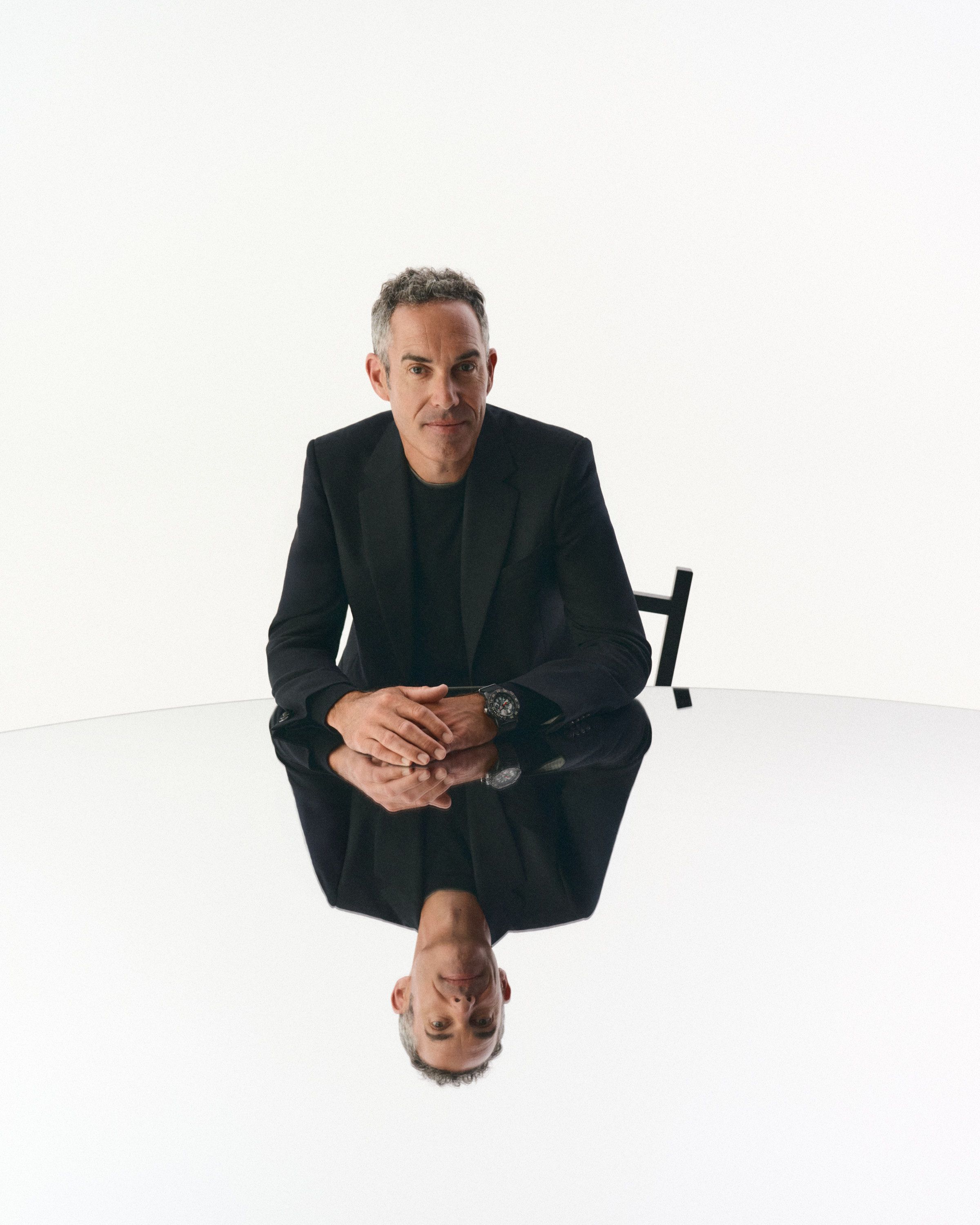
The version of Aaron Katz that waited tables in Tahoe City is easy to forget once you see the company he runs. But the arc is real: UC Davis, 1998. A consulting gig at PeopleSoft, Y2K remediation in Europe, and then a dot-com startup that collapsed in the wreckage of 2001. Every top business school said no. He found work slinging food and drinks at altitude while figuring out the next move.
The next move turned out to be Salesforce, which at the time had around 150 employees and a CEO named Marc Benioff who liked to ask hard questions in interviews. Benioff asked Katz: "Why should I hire you?" The answer was direct: "Because I'm going to outperform everyone else." It was the kind of confidence that could have been embarrassing if it had turned out to be wrong. It did not turn out to be wrong.
Katz spent twelve years at Salesforce - longer than most careers - moving through sales roles into executive leadership across Asia Pacific and EMEA. He helped establish Salesforce's headquarters in the region, expanding into India, Hong Kong, and beyond. By the time he left in 2014, the company's revenue had grown from $20 million to more than $4 billion. He had been inside the machine for the whole run.
Elastic came next, and the job was Chief Revenue Officer. He found a company doing $5 million in revenue and a decade later handed it off at $500 million, having watched it go public on the New York Stock Exchange in 2018. Two companies, two hundred-X revenue trajectories. When you have done that twice, you start to see patterns.
The ClickHouse introduction happened through a chain of contacts in early 2021. Yandex, one of the world's largest internet companies, had a database engine built internally in 2009 to handle the data volume behind Yandex.Metrica. In 2016 it was open-sourced under Apache 2. The project had collected an enormous community - Netflix, Uber, Cloudflare, Spotify were all running on it. Nobody had ever tried to commercialize it.
"I could fire my whole sales team and still hit plan for the quarter."
Aaron Katz - on ClickHouse's product-led growth engineWhat Katz did next was not particularly glamorous. He called up Alexey Milovidov - the original creator of ClickHouse, and one of the most respected database engineers in the world - and convinced him to co-found a company. He did the same with Yury Izrailevsky, a former Netflix and Google engineering leader. Then he had to move twelve engineers out of Russia in the middle of a pandemic, land them in Amsterdam, and turn a beloved open-source project into an enterprise business. The Amsterdam part involved a European headquarters. The pandemic part involved creativity and patience. The twelve-engineers part involved a phone call that was, by all accounts, difficult.
ClickHouse Inc. was incorporated in Delaware in 2021. The $50 million Series A from Index Ventures and Benchmark closed that same year. So did a $250 million Series B at a $2 billion valuation. In 2022, ClickHouse Cloud launched publicly - a managed cloud service that made the world's fastest OLAP database accessible without operating it yourself. The growth from there has been relentless.