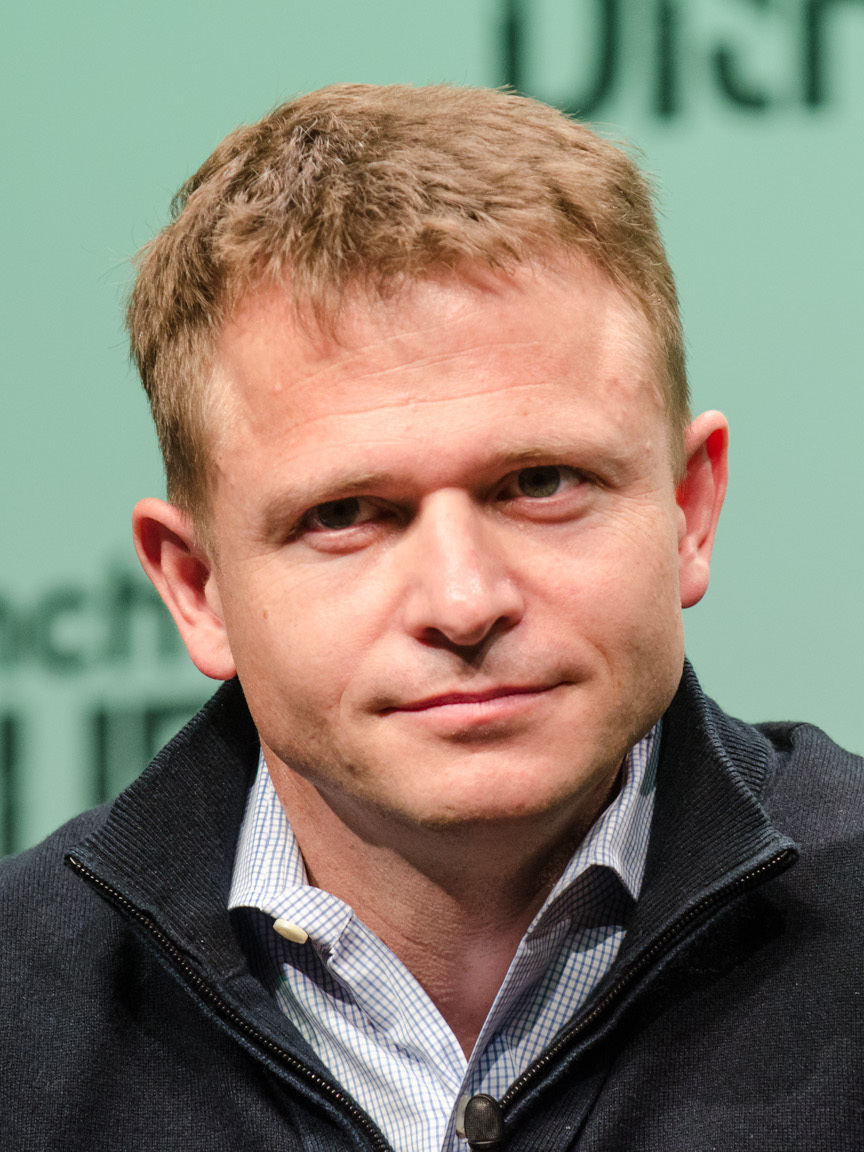
The VC Who Measures Time in Founders
In 1990, a teenager from Palo Alto boarded a plane to northeastern Brazil to dig sanitation trenches in a coastal village. He spoke no Portuguese. He had no career plan. He had never seen poverty at that scale. He returned the following year. By the time he left for good, he had learned a regional dialect of Portuguese, developed a lifelong suspicion of conventional career paths, and quietly become the kind of person who runs toward uncertainty rather than away from it. That teenager was Peter Fenton - and that instinct has never left him.
Today Fenton is a General Partner at Benchmark, arguably Silicon Valley's most influential early-stage venture firm. He has been on the Forbes Midas List every single year since 2007 - reaching #2 in 2015 - and was named VC of the Year at the 2014 Crunchie Awards. He has served on the boards of seven public companies. His portfolio reads like a decade of tech history: Twitter (25 employees at investment), Yelp, Zendesk, New Relic, Hortonworks, Elastic, Airtable. His current bets include Sierra, the AI customer-experience company co-founded by Bret Taylor that just raised $950M at a $15.8B valuation, and Exa Labs, an AI-native search engine Benchmark backed at $85M in 2025. His track record is not explained by luck.
Fenton studied philosophy at Stanford - not computer science, not economics. He was elected Phi Beta Kappa, graduated in 1994, then spent two years at Bain before joining Virage, an early video-technology startup, as an employee and eventually GM of its video business. He returned to Stanford for his MBA, was named an Arjay Miller Scholar (top 10% of his class), and in 2000 joined Accel Partners. In six years at Accel he backed JBoss (sold to Red Hat), SpringSource (sold to VMware), and Zimbra (sold to Yahoo, then VMware). In 2006, he moved to Benchmark - and has not looked back.
If you're investing in a company because of its business model, I'm not so sure I should trust your instincts. If you're investing because of the people, I think we should invest.
- Peter Fenton, on founder-first investingFenton's philosophy is not complicated, but it is precise. He developed what he calls the adoption/risk curve framework: wait until right before a company's rising adoption curve meets the declining risk curve. Not at idea-stage, where risk is high and traction is zero. Not at Series C, where the crowd has arrived and the real upside is already priced in. Right at the inflection - the moment when a company is gaining genuine momentum but still carries enough uncertainty to clear the field. This is easy to describe and extremely difficult to execute.
What makes it executable, in Fenton's case, is his founder-detection system. After 40,000+ first meetings over a career, he claims he can identify exceptional founders within five minutes. The first signal he looks for: authenticity. "The first quality in any entrepreneur, which is visible in the first 90 seconds, is authenticity," he has said. Next: a learning orientation over a knowing orientation. He cites Zuckerberg, Dorsey, and Evan Spiegel as exemplars of what he calls the "learn-it-all" mindset - as opposed to the "know-it-all" posture that kills great companies from the inside. And finally, something he describes as "fearlessness or fearsomeness" - a recklessness and irreverence that signals someone willing to do what incumbents won't.
He asks himself a single closing question: Would I want to work for that person? If the answer is yes, the conversation continues.
His open-source thesis is quieter and more durable. Since the Accel years, Fenton has believed that open-source software eliminates the middleman between creators and users - improving quality, concentrating resources on engineering rather than distribution, and creating the kind of developer love that no marketing budget can replicate. JBoss, SpringSource, Hortonworks, Elastic, ClickHouse, CockroachDB, Docker: the thesis held across twenty years of investment. It still does.
On AI, Fenton is measured. He told Bloomberg in September 2025 that he is not ready to call the current wave a bubble. He expects trillion-dollar AI companies to emerge. But he is not chasing foundational model companies - too capital-intensive, too much like betting on power plants. He focuses on the application and infrastructure layer: Sierra (AI agents for customer experience), Exa (AI-native search), Mercor (AI-powered talent infrastructure). He is in the business of backing the people who build on top of the physics, not the people building the physics.
Venture is a shoe-leather business. You can only be great if you are out looking, engaging, and hustling.
- Peter FentonThere is one thing Fenton says about venture capital that most practitioners won't: that in this profession, unlike most, the older you get, the more your probability of success can go down. Complacency accumulates. Past success breeds overconfidence. The investor who once scrambled for every deal starts waiting for deals to find them. Fenton considers this one of the field's most dangerous patterns and actively guards against it - partly through deliberate intellectual discomfort, partly through the same curiosity that sent a teenager to Brazil with a shovel and no return date.
His father, Noel Fenton, co-founded Trinity Ventures after a career as a startup CEO. Peter grew up watching the same people operate on both sides of the cap table - which may explain why he asks "would I work for this person?" rather than "does this spreadsheet work?" He has four Stanford GSB graduates in his family. He recommends Nonviolent Communication by Marshall Rosenberg as his most useful book - a choice that reveals more about his governance philosophy than any term sheet could.
Peter Fenton is not a VC who explains why tech matters. He is the one who already invested before you could explain it.
Within five minutes - sometimes less - there's a pattern I've learned to recognize.
Great entrepreneurs have a learn-it-all, and not a know-it-all, approach.
Seeks discomfort to awaken purpose. The best founders are running toward something, not away from fear.
The first quality in any entrepreneur, which is visible in the first 90 seconds, is authenticity.
Dispatches From a Non-linear Career
As a teenager, Fenton volunteered twice in rural coastal Brazil doing sanitation work - digging trenches for sewage systems in villages with no infrastructure. He returned after his first year of undergrad to do it again. He learned Northeastern Brazilian Portuguese. He calls it one of the most formative experiences of his life - a first encounter with discomfort chosen deliberately, outside any career trajectory or social expectation.
Two of Fenton's portfolio companies - New Relic and Hortonworks - went public on the same day. Both were significant outcomes. Fenton described it as "one of the most unusual days in venture history." Not many investors have had that problem.
When Benchmark invested in Twitter, the company had 25 employees. Fenton served on the board for years as the platform scaled to hundreds of millions of users and went public in one of the most-watched IPOs of 2013. He left the board in April 2017 - before Elon Musk's acquisition - having seen the entire arc from seed to public market.
Fenton considers passing on a deal purely because of valuation to be "weak thinking." He believes ownership matters more than entry price - a contrarian stance on Sand Hill Road, where price sensitivity often masquerades as discipline. The investor who passed on Twitter at a "high" seed valuation did not do better than the one who paid it.