Running the Agentic Enterprise
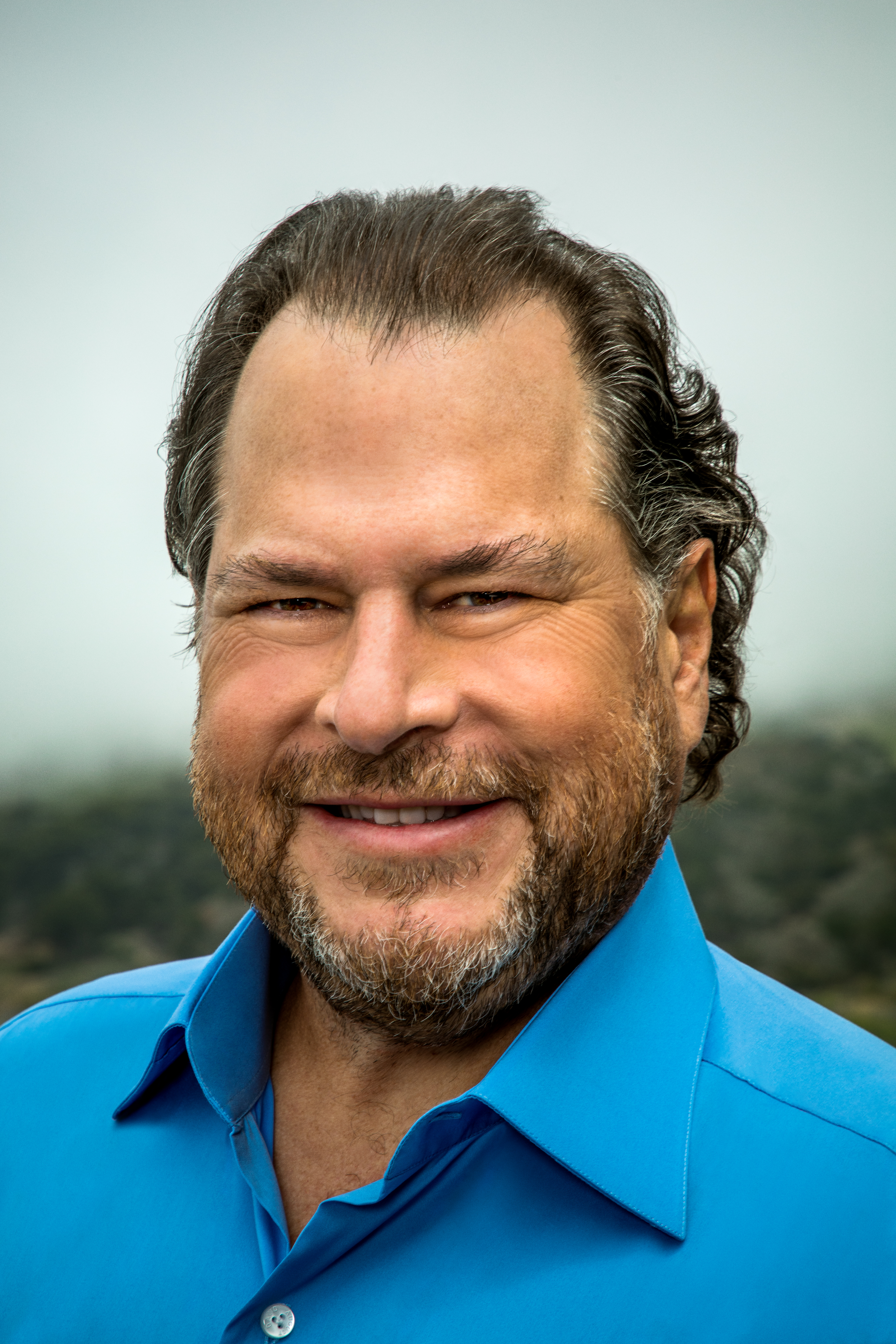
Marc Benioff is 61 years old and still the most restless person in enterprise software. Right now he is steering Salesforce through the sharpest pivot in its history - from CRM vendor to AI agent platform - while simultaneously donating money at a rate that would embarrass most foundations, publicly switching AI assistants and telling the world about it, and quietly planning whether to rename his tower.
The man is not winding down. Agentforce, Salesforce's agentic AI platform, crossed $800 million in annualized recurring revenue in early 2026, which Benioff describes as the fastest product ramp in the company's 26-year history. His target: one billion AI agents deployed. His revenue goal: $60 billion by 2030, nearly double current levels. The company's stock has taken a 30% haircut this year. His response: "People think we have our back against the wall when in fact the opportunity has never been greater."
That kind of composure is earned. Benioff has already survived Oracle, a spiritual breakdown, early Salesforce investors who wanted to fire him, Larry Ellison secretly building a competing product, and a period in 2023 when he laid off 7,000 people and then admitted publicly it was a bad idea. He has the scar tissue of someone who has been badly wrong before and kept going anyway.
"The business of business is improving the state of the world."
- Marc Benioff, Salesforce Core Mission StatementBut before the philanthropy and the stakeholder capitalism speeches, before the Fortune covers and the French Legion of Honour, there was a 15-year-old in Burlingame, California selling a software app called "How to Juggle" for $75. Then came Atari games he coded for $5 an hour. Then came Apple, where he wrote assembly code for the original Macintosh as an intern. Then came Oracle, where he made vice president at an age when most people are figuring out their first apartment.
The Oracle years lasted 13 years and ended in a Hawaii hut. Benioff was burning out. His mentor Larry Ellison - who had hired him, made him the youngest VP in Oracle history, and who would later seed Salesforce with $2 million - told him to take a sabbatical. Benioff went to Hawaii and did something that sounds apocryphal but is not: he swam with dolphins, and the idea for Salesforce came to him in the water. He then went to India, where he encountered Amma, the Hugging Saint - a spiritual figure who literally hugs millions of strangers as a form of devotion. That meeting gave him the model for the Salesforce Foundation: 1% of equity, 1% of product, 1% of employee time, all donated from day one.
At the 2000 Siebel Systems conference in San Francisco, Marc Benioff showed up with hired actors playing protesters, waving signs reading "The Internet Is Really Neat - Siebel Systems Is Obsolete." The local news covered it. The stunt cost a few hundred dollars and earned Salesforce its first 100 customers. Siebel was worth $8 billion at the time. Salesforce had six employees.
He launched Salesforce in March 1999 from a small apartment, with a website, three employees, and a provocative slogan: "The End of Software." The competition was Siebel Systems, a $10 billion company selling CRM on CD-ROMs. Benioff's bet was that no company would want to manage their own software infrastructure forever. He was right. He was also early, which meant he had to be creative.
The fake protest was not a one-off. At a Siebel conference in Nice, France, he rented every airport taxi and used the 45-minute rides into the city to pitch Salesforce to conference attendees. By the time the Siebel sessions started, half the room had already heard his sales pitch in transit. This is someone who treats marketing as performance art and sells from the very first second of contact.
That instinct built something that now employs more people in San Francisco than any other private company. The Salesforce Tower is the tallest building in the city. Every office building has an "Ohana Floor" - a community space with no offices, no conference rooms, just couches and views, open to anyone in the Salesforce extended family. Employees wear Aloha shirts every Friday. The Hawaiian word "ohana" - family - is not a brand campaign. It is the actual operating principle.