agentforce
(44)
ETG Digital fixes the gaps between the clouds
A checkout, a service call, a subscriber ID. ETG Digital builds the connections that make Salesforce useful - and is now taking that work into AI.
Make Salesforce earn its keep.
Myridius x Aethereus built its reputation connecting customer software to the work outside it. A snack maker’s distribution network shows why that matters.

Cloudgaia makes the pieces work together
A Coca-Cola order, a service-station query, a pair of trainers. Behind each sits the same unglamorous challenge: getting business software to cooperate. Cloudgaia has built its business there.
ideaHelix and the art of subtraction
Two thousand products became 165. Inside the Salesforce consultancy betting that better revenue systems begin with less baggage.
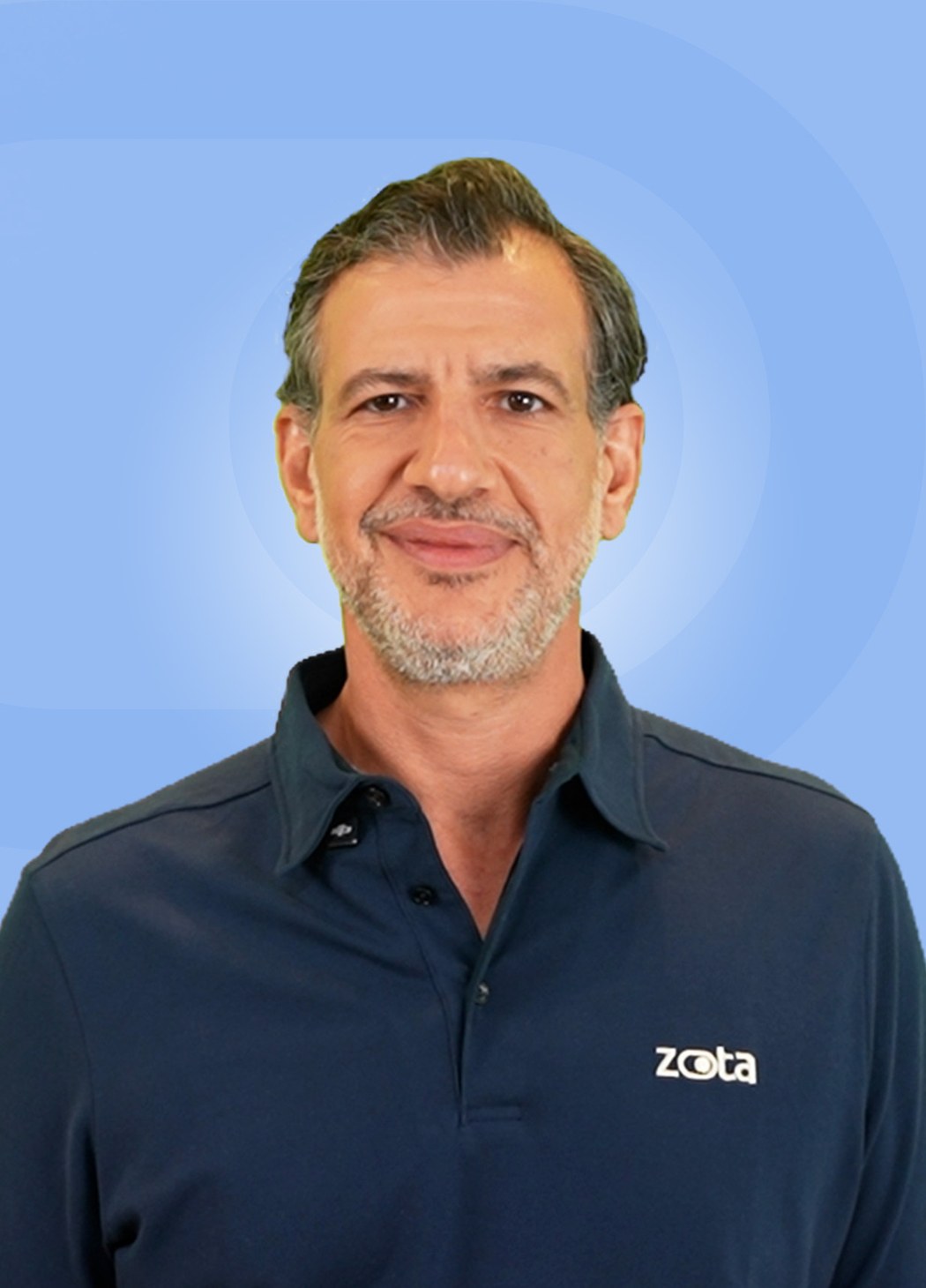
Avner Ziv and the art of making money understood
He studied Mandarin in Kunming, put software in place before hiring his first employee, and built Zota around a single application. Avner Ziv keeps returning to the same problem: getting people and systems to understand one another.

Srini Tallapragada and the work after the demo
He learned to program with punch cards, then helped build Salesforce through successive waves of cloud, data and AI. His recurring question is what happens when the demonstration ends and the customer has to live with the software.

Palni makes the software worth using
The enterprise already has the software. Palni works on the awkward part: connecting the data, fixing the workflow, and getting people to use it.
Astound Digital and the art of removing friction
A seven-page checkout. A service agent missing an order. Astound Digital builds the connections that make buying easier - and its own growing pains explain why the plumbing matters.
NexTurn and the art of fixing the boring stuff
A handwritten date. A missing shipment. Four million student records. NexTurn builds cloud and AI systems around the small operational problems that become very expensive at scale.
NeuraFlash makes AI answer the phone.
The hard part of customer service AI is everything behind the conversation. NeuraFlash built a business connecting those pieces - and Accenture bought it.
The classroom that checks your work.
Salesforce turned learning its software into a trail of small, testable victories. Trailhead’s bigger lesson is how to make a complicated product feel approachable - and keep people coming back.
OSF Digital makes the systems talk
A beauty brand’s shared storefront engine reveals the idea behind OSF Digital: reuse what works, connect what is scattered, and make the next launch less expensive.
Mphasis Silverline and the expensive art of making Salesforce useful
A studio booking, a mobile appointment, a commercial loan: Mphasis Silverline works where Salesforce meets the untidy business of getting things done. Its calendar app offers a surprisingly clear view of the whole enterprise.

Techila Global Services and the art of making Salesforce useful
A missed lead. A technician without the right part. A customer waiting for an answer. Techila Global Services builds Salesforce around the small operational failures that become expensive at scale.

Teqfocus and the expensive art of making systems talk
The enterprise AI boom has a paperwork problem. Teqfocus sells the connections, controls and workflow repairs that help a clever demo become useful work.

Sercante Built a Salesforce Consultancy by Fixing the Software Marketers Already Bought
Andrea Tarrell turned one hurried Pardot project into a global consultancy, then sold it to Trilliad. The playbook was less about shiny software than closing the stubborn gap between marketing, sales and the humans asked to run both.

Voice AI Is Quietly Winning the Customer Service War
Salesforce, Replicant, Rasa and Five9 are betting your next support agent won't be human. Here's who's ahead, what actually changed, and why the phone call became the last battleground.

UJET Wants to Beat Salesforce Without Leaving Salesforce
The contact-center company runs deep inside Salesforce's clouds while betting against its Agentforce land grab. UJET's wager is that no single vendor gets to own the whole customer conversation.

Why Everyone Is Building the HVAC Chatbot
Five AI-native startups and every major field-service platform are racing to build the same product: an AI assistant that sits in a technician's pocket and answers questions about the air conditioner in front of them. The technicians are a proxy. The real contest is whether a thin AI layer on an underserved dataset can survive once the platform that already owns the customer relationship copies the feature for free. HVAC is the smallest, clearest test of a question every vertical AI founder is asking: does depth beat distribution?
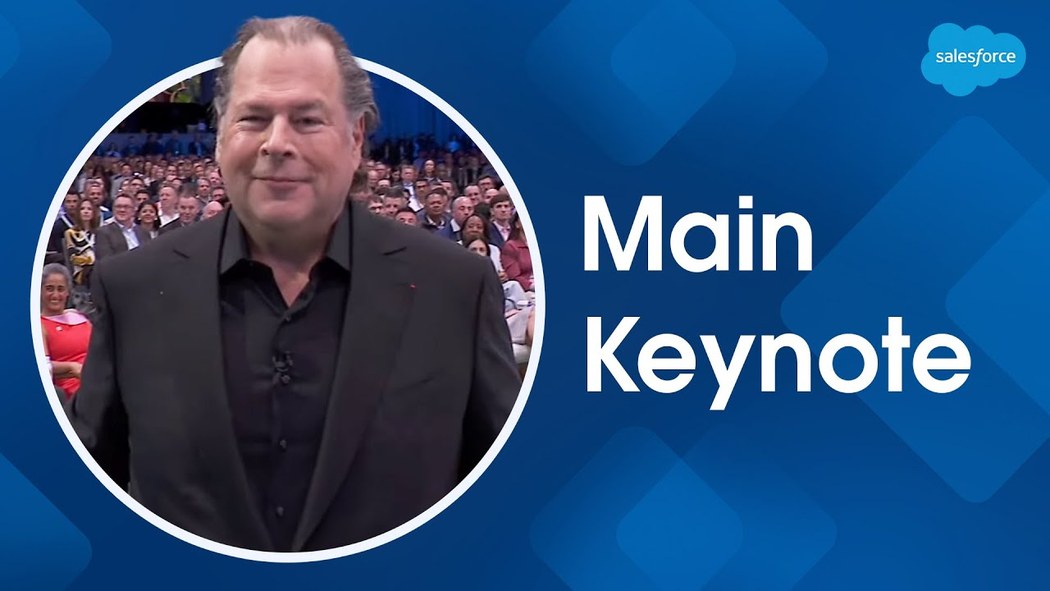
Dreamforce 2025 Keynote: The Agentic Enterprise
At Dreamforce 2025 in San Francisco, Salesforce CEO and Chair Mark Benioff unveiled the Agentforce 360 platform and declared the arrival of 'the agentic enterprise' — a new era where humans and AI agents drive customer success together. The keynote positioned Agentforce as the fastest-growing product in Salesforce history, having handled more than 1.5 million customer service conversations in nine months. Benioff framed the moment around a central choice: whether AI replaces people or elevates them, arguing that AI built on trust and deep data context amplifies human potential. The keynote featured new products including Agentforce Vibes (vibe-coding), Data 360, Agentforce Voice, and Agent Script, alongside five customer stories from Williams-Sonoma, Pandora, PepsiCo, FedEx, and Dell.
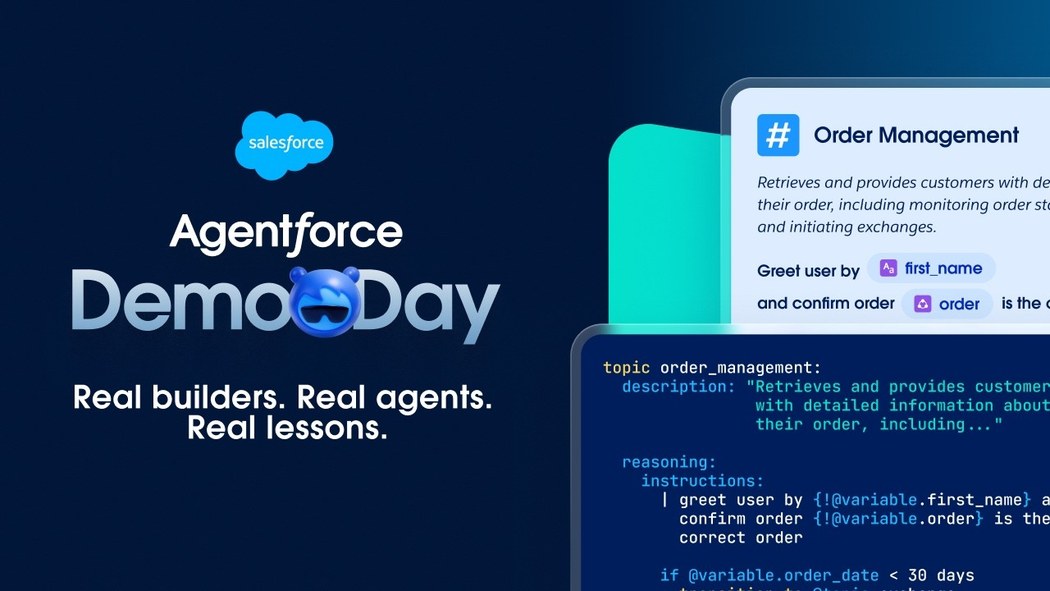
Agentforce Demo Day: Building the Digital Workforce
In this Agentforce Demo Day broadcast from Salesforce HQ in San Francisco, host Leah McGowen-Hare sits down with builders from Indeed, LIV Golf, and SharkNinja, plus Salesforce product leader Nathan Price, to show how they build, test, deploy, and observe AI agents with Agentforce. The episode centers on Agent Script — a newly open-sourced scripting language that blends deterministic logic with the reasoning of large language models — and Headless 360, an open, extensible platform for the full agent development lifecycle. Through live demos, the guests reveal real metrics, best practices like playbooks and human-in-the-loop logging, and the shift toward self-healing agents built with coding tools.
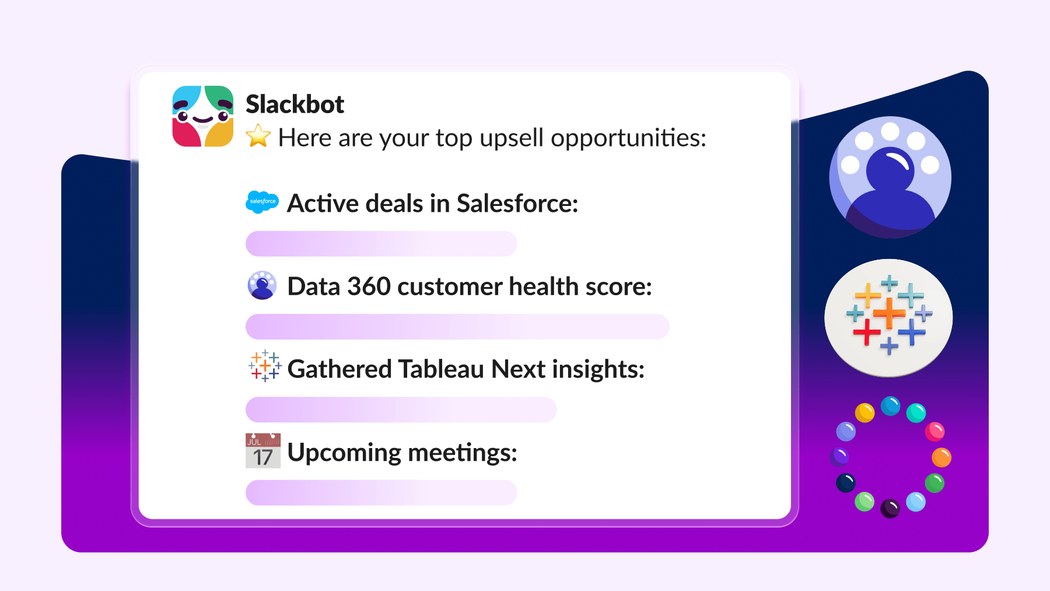
The CRM That Left the Building: Slackbot Just Swallowed Salesforce Whole
Salesforce announced new Model Context Protocol (MCP) servers that connect Salesforce CRM data, Tableau Next analytics, Data 360, and AI agents directly into Slackbot, Slack's built-in personal agent. Users can now query customer records, surface live Tableau visualizations, view unified Data 360 profiles, update pipelines, and trigger workflows across partner apps like Jira, Box, DocuSign, and Zapier — all from a Slack conversation, with no tab-switching, custom code, or separate logins. The Slackbot MCP Client is generally available on any Slack plan that includes Slackbot, and Salesforce-hosted MCP Servers are GA for Enterprise Edition organizations and above, with over 25 compatible partner apps listed in the Slack Marketplace's dedicated MCP registry.
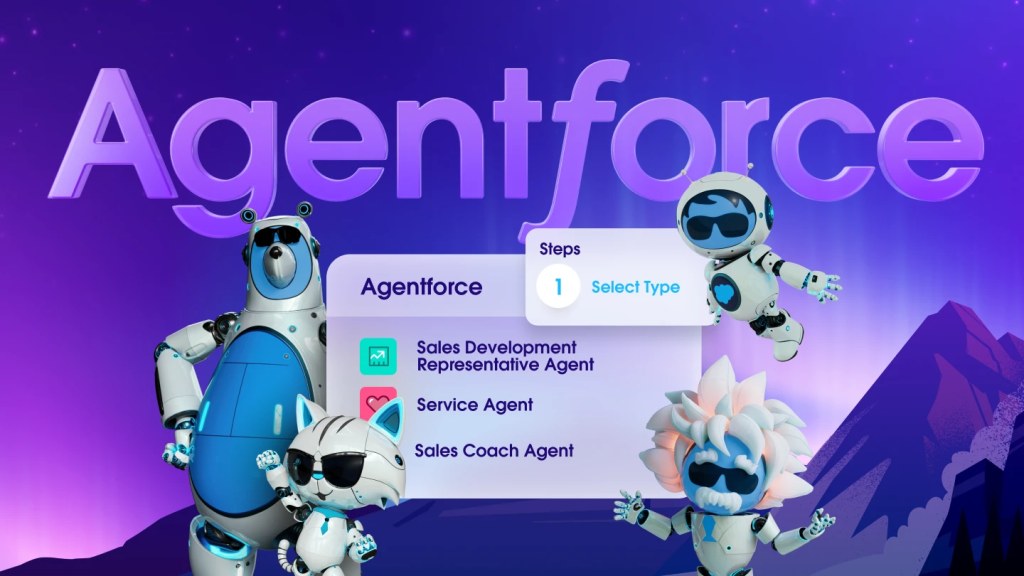
The Workforce That Never Clocks Out
Agentforce is Salesforce's platform for building and deploying autonomous AI agents that work alongside humans across sales, service, marketing, and commerce. Launched at Dreamforce in September 2024 and powered by the Atlas Reasoning Engine, it lets companies stand up agents that resolve customer queries, qualify leads, and complete tasks grounded in their own CRM data. It has become the fastest-growing product in Salesforce history, reaching a $1.2 billion annual recurring revenue run rate by April 2026.
Coastal Cloud
Coastal Cloud is a US-based consulting firm founded in 2012 that helps organizations get more value from Salesforce, data, and AI. A top-tier Salesforce Summit/multi-cloud partner headquartered in Palm Coast, Florida, it delivers strategy, implementation, integration, analytics, and managed services across Sales, Service, Marketing, Revenue/CPQ, Commerce, and Data Cloud, extended by Snowflake, Tableau, and MuleSoft. With roughly 570 employees, thousands of Salesforce certifications, and work spanning healthcare, financial services, education, nonprofit, manufacturing, and the public sector, Coastal was acquired by Tata Consultancy Services in a $700 million all-cash deal announced in December 2025.
Cymetrix Software
Cymetrix Software is a global Salesforce and data analytics consulting firm founded in 2016 that helps enterprises modernize their CRM, data, and AI workflows. With a certified team of 150+ consultants and offices in the USA, India, UK, and Japan, Cymetrix delivers multi-cloud Salesforce implementations, MuleSoft integrations, Tableau and Looker analytics, and applied AI - including Agentforce AI agents built on Salesforce Data Cloud - for clients across manufacturing, retail, BFSI, pharma, healthcare, and nonprofit sectors.
Mirketa Inc
Mirketa Inc is a California-based IT services and consulting firm founded in 2003 that helps organizations run their business on cloud platforms - primarily Salesforce, along with NetSuite, ServiceNow and Oracle. Led by founder and CEO Rajeev Kumar, Mirketa pairs a US head office in Dublin, California with a global delivery center in Noida, India, and specializes in nonprofit, healthcare, education, manufacturing and financial-services customers. Beyond implementation and support services, the company builds its own Salesforce-native products - including Elixir EHR, Finacast, Round Robin Distributor, eCourier and Duplicate Search & Merge - and has layered AI and Agentforce work on top of a Salesforce Crest (Gold) consulting and ISV partnership.

Hubbl Technologies
Hubbl Technologies builds an intelligence layer for Salesforce. Its platform pairs Org Intelligence (audits and monitoring of Salesforce metadata, security and tech debt) with the first process-mining engine built natively on Salesforce, turning live org data into process maps that show how work actually gets done across Cases, Opportunities and custom objects. Founded in 2022 by Salesforce veterans Mike Bogan and Chris Bruzzi and led by CEO Rob Acker, the company raised a $6M Series A led by Salesforce Ventures in February 2026 and serves thousands of Salesforce teams, ISVs, consulting partners and enterprises preparing for AI and Agentforce.
Prodly
Prodly is a Palo Alto-based software company that builds DevOps automation for Salesforce, focused on the parts of the platform that most deployment tools ignore: configuration data. Its AppOps suite handles release management, sandbox seeding, automated regression testing, data migration and compliance reporting so admins and developers can move CPQ, Revenue Cloud and other low-code changes between environments without hand-copying records or breaking production. Founded in 2014 by Max Rudman - who previously founded SteelBrick, the product Salesforce acquired and rebranded as Salesforce CPQ - Prodly raised a $10M Series A in 2021 and positions itself as the tool teams add when relational data deployment is the gap other DevOps platforms leave open.

The Agent Scored a Hat Trick. The Business Still Lost 3-Nil.
A Salesforce editorial arguing that the AI agent conversation has moved past task completion and into 'loop engineering' — handing an agent an objective plus a way to measure progress so it plans, checks its own work, learns, and adjusts. Using a World Cup analogy, the piece contends that a brilliant individual agent (a coding agent shipping pull requests, a service agent resolving cases) means little unless it moves the business forward. Salesforce positions its 27 years of encoded CRM business rules — pipeline stages, service levels, qualified-lead definitions — as the ideal scoreboard for agents to optimize against, supported by four systems (controls, context, traceability, analytics) that form the Agent Development Lifecycle (ADLC). Customers Zing Health, Telepass, and Indeed illustrate agents running the loop at scale.
Pierce Washington
Pierce Washington is an enterprise consulting firm that untangles the messiest part of B2B selling - the journey from quote to cash. Since 2005 it has implemented CPQ, eCommerce, and subscription billing on Salesforce and Oracle platforms, then wired those systems into the ERP backbone so deals price correctly, ship cleanly, and bill accurately. With 100-plus complex CPQ projects behind it and a 'Total Commerce' maturity model guiding clients, the firm helps manufacturers, hi-tech, and life-sciences companies turn slow, error-prone sales processes into self-service revenue engines.