agentforce
(7)
Voice AI Is Quietly Winning the Customer Service War
Salesforce, Replicant, Rasa and Five9 are betting your next support agent won't be human. Here's who's ahead, what actually changed, and why the phone call became the last battleground.

UJET Wants to Beat Salesforce Without Leaving Salesforce
The contact-center company runs deep inside Salesforce's clouds while betting against its Agentforce land grab. UJET's wager is that no single vendor gets to own the whole customer conversation.

Why Everyone Is Building the HVAC Chatbot
Five AI-native startups and every major field-service platform are racing to build the same product: an AI assistant that sits in a technician's pocket and answers questions about the air conditioner in front of them. The technicians are a proxy. The real contest is whether a thin AI layer on an underserved dataset can survive once the platform that already owns the customer relationship copies the feature for free. HVAC is the smallest, clearest test of a question every vertical AI founder is asking: does depth beat distribution?
Dreamforce 2025 Keynote: The Agentic Enterprise
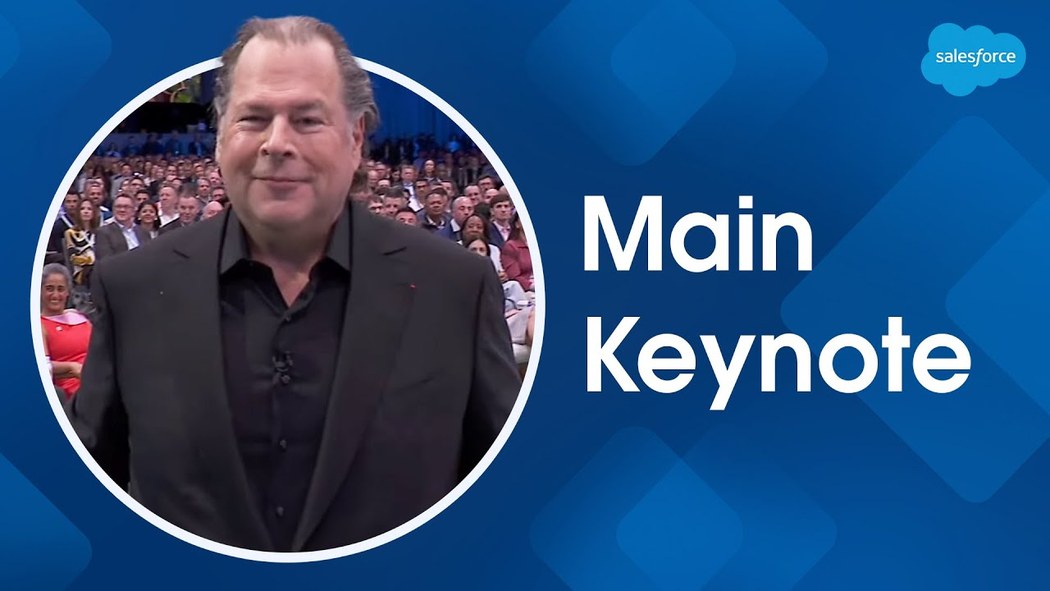
At Dreamforce 2025 in San Francisco, Salesforce CEO and Chair Mark Benioff unveiled the Agentforce 360 platform and declared the arrival of 'the agentic enterprise' — a new era where humans and AI agents drive customer success together. The keynote positioned Agentforce as the fastest-growing product in Salesforce history, having handled more than 1.5 million customer service conversations in nine months. Benioff framed the moment around a central choice: whether AI replaces people or elevates them, arguing that AI built on trust and deep data context amplifies human potential. The keynote featured new products including Agentforce Vibes (vibe-coding), Data 360, Agentforce Voice, and Agent Script, alongside five customer stories from Williams-Sonoma, Pandora, PepsiCo, FedEx, and Dell.
Agentforce Demo Day: Building the Digital Workforce
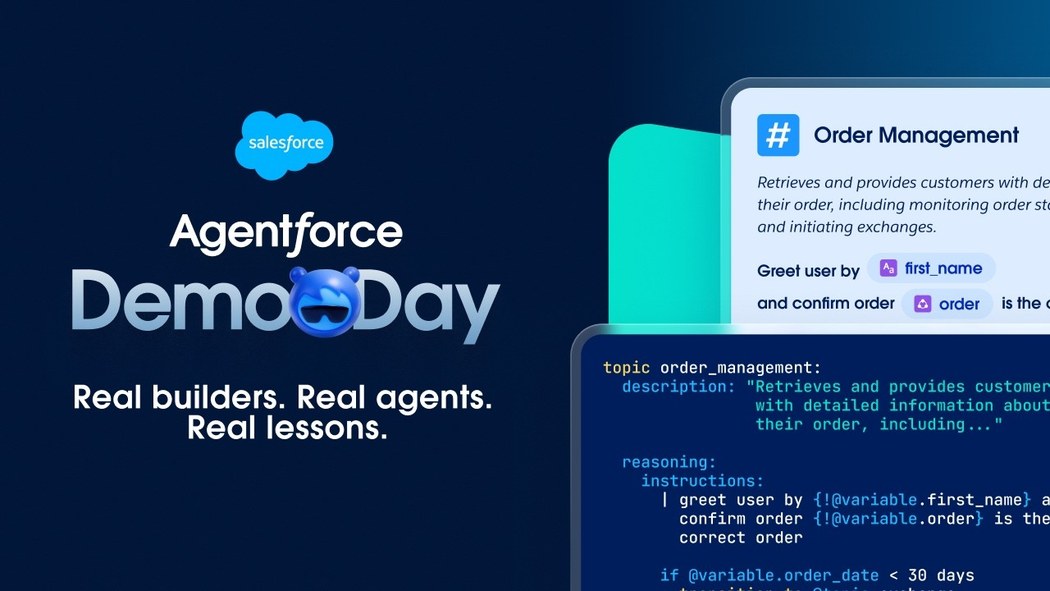
In this Agentforce Demo Day broadcast from Salesforce HQ in San Francisco, host Leah McGowen-Hare sits down with builders from Indeed, LIV Golf, and SharkNinja, plus Salesforce product leader Nathan Price, to show how they build, test, deploy, and observe AI agents with Agentforce. The episode centers on Agent Script — a newly open-sourced scripting language that blends deterministic logic with the reasoning of large language models — and Headless 360, an open, extensible platform for the full agent development lifecycle. Through live demos, the guests reveal real metrics, best practices like playbooks and human-in-the-loop logging, and the shift toward self-healing agents built with coding tools.
The CRM That Left the Building: Slackbot Just Swallowed Salesforce Whole
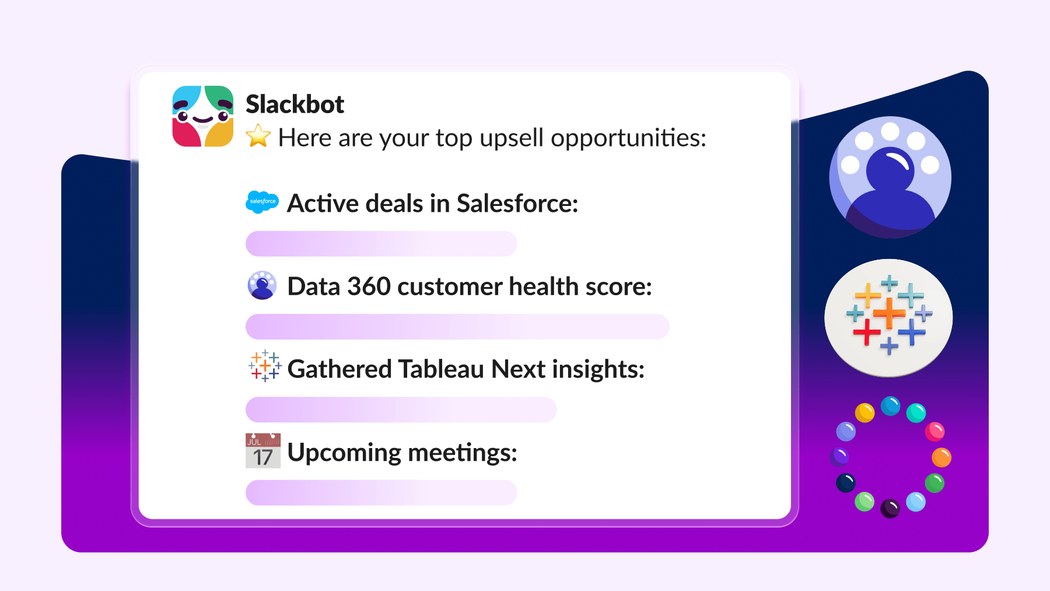
Salesforce announced new Model Context Protocol (MCP) servers that connect Salesforce CRM data, Tableau Next analytics, Data 360, and AI agents directly into Slackbot, Slack's built-in personal agent. Users can now query customer records, surface live Tableau visualizations, view unified Data 360 profiles, update pipelines, and trigger workflows across partner apps like Jira, Box, DocuSign, and Zapier — all from a Slack conversation, with no tab-switching, custom code, or separate logins. The Slackbot MCP Client is generally available on any Slack plan that includes Slackbot, and Salesforce-hosted MCP Servers are GA for Enterprise Edition organizations and above, with over 25 compatible partner apps listed in the Slack Marketplace's dedicated MCP registry.

The Agent Scored a Hat Trick. The Business Still Lost 3-Nil.
A Salesforce editorial arguing that the AI agent conversation has moved past task completion and into 'loop engineering' — handing an agent an objective plus a way to measure progress so it plans, checks its own work, learns, and adjusts. Using a World Cup analogy, the piece contends that a brilliant individual agent (a coding agent shipping pull requests, a service agent resolving cases) means little unless it moves the business forward. Salesforce positions its 27 years of encoded CRM business rules — pipeline stages, service levels, qualified-lead definitions — as the ideal scoreboard for agents to optimize against, supported by four systems (controls, context, traceability, analytics) that form the Agent Development Lifecycle (ADLC). Customers Zing Health, Telepass, and Indeed illustrate agents running the loop at scale.