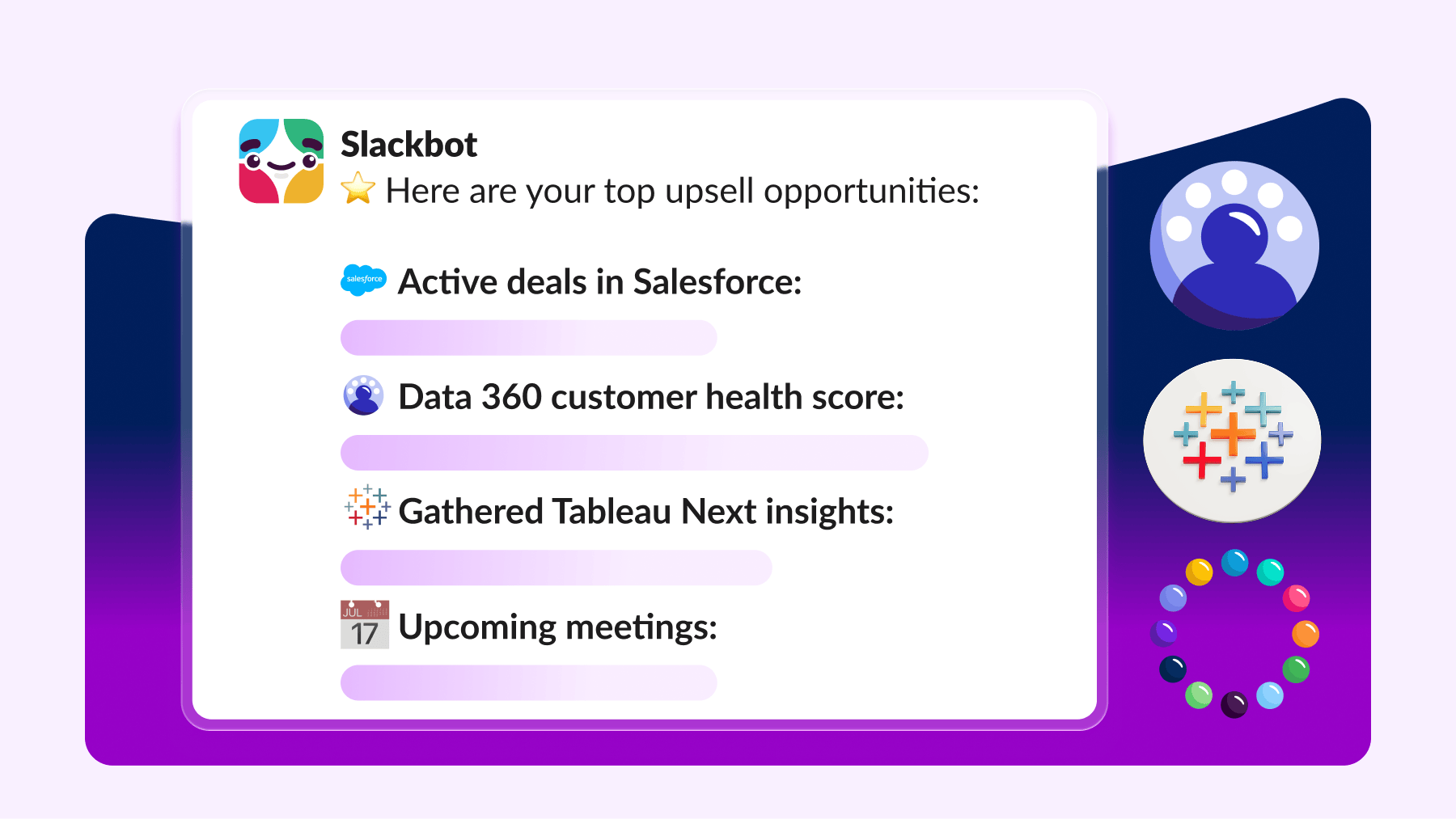
For twenty-five years, the Salesforce record was the atomic unit of the modern sales organization — meticulously configured, endlessly customized, and, if the company’s own executives are to be believed, increasingly unnecessary to look at. This July, Salesforce announced a set of Model Context Protocol servers that pipe its entire platform — CRM data, Tableau analytics, Data 360 customer profiles, and Agentforce AI agents — directly into Slackbot, the personal assistant built into Slack. The implication is difficult to miss: the browser tab that has anchored enterprise selling for a generation may be headed for retirement.
The announcement, published by the Salesforce Newsroom under the cheerfully imperative headline “Slackbot Can Now Do Anything Salesforce Can. Just Ask.,” describes a system in which a salesperson can request a customer’s deal history, receive a live Tableau visualization of pipeline trends, update a CRM record, and trigger a DocuSign approval — all without switching tabs, writing custom code, or logging into a second application. “Real work doesn’t happen in a database or a browser tab,” the company argues. “It happens in team conversations.”
“Everything you’ve built with Salesforce — your data, your workflows, your agents — is now available in Slack the same way you’d talk to a teammate.”
Rob Seaman · Slack, SalesforceThe Protocol Behind the Promise
The technical linchpin is MCP — the Model Context Protocol, an open standard originally introduced by Anthropic that has rapidly become the lingua franca for connecting AI systems to enterprise data. Salesforce’s move pairs a generally available Slackbot MCP Client with a suite of Salesforce-hosted MCP Servers, now GA for all Enterprise Edition organizations and above. The client ships on any Slack plan that includes Slackbot, in workspaces connected to Salesforce.
What distinguishes the offering from a decade of chat-to-CRM bolt-ons is configuration awareness. Slackbot doesn’t merely read and edit records; it understands each organization’s specific setup — custom objects, unique fields, multi-step Flows, and business automations — with no custom integration code. Validation rules and user-level permissions are honored, and admins can discover, install, and govern the servers from a single interface, with authentication handled automatically through the existing Slack–Salesforce connection.
An Always-On Analyst in the Channel
Perhaps the more consequential half of the announcement is analytical. New Data 360 and Tableau Next MCP servers recast Slackbot as what Salesforce calls an “always-on data analyst” — one that respects user permissions and org-wide data boundaries. Ask whether the quarter is on track, and Slackbot returns an answer grounded in Tableau’s governed data layer, complete with interactive heatmaps, trend lines, and breakdowns rendered in the channel itself.
Data 360, meanwhile, supplies unified, real-time business context harmonized across CRM and integrated sources, along with pre-built “Skills” that encode how a business actually operates — the steps to follow, the decisions to make, the verifications that matter. A marketer can pull a customer’s unified profile into a campaign channel, debate it with the team, then have Slackbot update segmentation logic or verify identity data without leaving the thread.
Where the Work Moves — One Slackbot Request, Four Systems
Source: Salesforce, “Slackbot Can Now Do Anything Salesforce Can. Just Ask.” (July 2026)
“Sales Cloud in Slack is the future of how revenue teams work… teams stop chasing context and start driving growth. That shift is happening now, and we’re right at the center of it.”
Kris Billmaier · Sales Cloud, SalesforceMultiplayer Mode
The strategic argument Salesforce is making goes beyond convenience. Most enterprise AI today, the company notes, operates in “isolated, single-player sessions” — one worker, one chatbot, one invisible transcript. By contrast, agents added to shared Slack channels behave like teammates: every action is visible, any colleague can redirect an agent or build on its output. “That’s what makes Slack genuinely multiplayer,” the announcement contends — and, in Salesforce’s telling, it is the difference between “AI that helps one person and AI that moves an organization.”
The ecosystem is arriving in force. Hundreds of partners are bringing AI to Slack — Anthropic, Atlassian, and Box among them — while a roster of more than 25 companies, including Zapier, DocuSign, Lattice, Canva, Lucid, Zoom, and Webflow, have shipped MCP-native apps into a dedicated registry in the Slack Marketplace. MuleSoft’s agent joins as the integration layer’s ambassador, fielding questions about system health and available APIs from inside the channel where an incident is being triaged.
The Customers Testify
Early adopters supplied the announcement’s most concrete numbers. Travel-services firm Engine, which fields more than 800,000 customer inquiries a year, reports that Slackbot now reaches directly into Salesforce so “live customer context and case history are always at hand,” while Tableau Next lets anyone in the company query trusted visualizations conversationally. IBM described consolidating “insights, communications, and operational context” into a single interface, turning processes that once meant navigating fragmented channels into tasks completed “in seconds.” Another customer set a target of completing 75–80 percent of all work inside Slack.
The Consolidation Scorecard — Claims From the Launch
Figures as claimed in Salesforce’s announcement and customer statements; bar lengths illustrative.
“Processes that previously required navigating fragmented communication channels and disparate sources of information can now be completed in seconds.”
IBM · Launch customer statementThe 2 Percent Doctrine
Buried in the marketing language is a genuinely provocative thesis about enterprise budgets. “Slack is that missing layer,” the company writes — “the 2% of your AI and technology budget that determines whether the other 98% delivers. This isn’t a collaboration decision. It’s your highest-leverage AI investment.” It is, of course, the argument one would expect from the company that paid $27.7 billion for Slack in 2021 and has spent the years since searching for the acquisition’s strategic payoff. But it is also a coherent read of the agentic moment: every frontier model and data platform is only as valuable as the interface that connects it to the people running the business.
Skeptics will note what the announcement elides. The full experience requires an Enterprise Edition Salesforce org or above for the hosted MCP servers, and the vision presumes an organization already living in Slack — a bet that Microsoft, with Teams and Copilot, is making in mirror image. Industry observers characterized the release as meaningful but incremental: a serious reduction in context-switching rather than a reinvention of work itself.
What Comes Next
The rollout begins with revenue teams. Agentforce Sales in Slack promises real-time deal updates, cross-channel context, and partner workflows running inside deal channels, with Salesforce pledging that service teams and other lines of business will follow “over the coming weeks.” Free Slack workspaces are now created automatically for new Salesforce customers, and a unified marketplace is emerging from AgentExchange, the Slack Marketplace, and the Agentforce ecosystem.
Whether Slackbot truly becomes the front door to a $300-billion CRM franchise will depend on adoption curves that no press release can guarantee. But the direction of travel is unambiguous. As Salesforce co-founder and CTO Parker Harris put it, with the candor of a man describing his own product’s obsolescence as a feature: why should you ever log into Salesforce again? Maybe, he suggested, you never will. Maybe you will just go into Slack — and ask.