A bottle of Coke is a simple purchase. Replenishing the stock behind it is a different proposition. There are catalogs, customer accounts, repeat orders and enterprise systems keeping score. Cloudgaia’s work on myCoke, the B2B commerce platform refreshed with CONA Services, begins in this less visible world. The useful trick is making all that machinery feel simple to the person ordering.
- Salesforce specialists who build, connect and maintain business systems.
- Consumer goods and retail experience, including CONA Services and Grupo Dexter.
- A growing AI practice focused on data, governance and delivery.
That is a helpful way to understand Cloudgaia. It sells expertise in the space between purchasing a platform and getting a business to run on it. Its territory includes customer relationship management, commerce, marketing and service. Its preferred building material is Salesforce. The customer gets the joined-up operation; Cloudgaia does the joining.
01 / The order is only the beginning
CONA Services supports the 11 largest Coca-Cola bottlers in North America. Cloudgaia worked with its Digital Office, an interdisciplinary product and engineering team, to improve myCoke’s buying experience. The work included multiple storefronts, personalized catalogs, recurring orders, reporting and SAP integration. Consider the consequence of a recurring order: a routine purchase becomes something the system can handle without asking a customer to start over.

The project also clarifies the division of labor. Salesforce supplies the platform. CONA understands the bottling operation. Cloudgaia contributes design, implementation and integration expertise. Nobody gets very far alone. A handsome storefront still needs a dependable route into the systems that manage the business behind it.
“From the very beginning, we had a one team approach.”
Customer testimonial in Cloudgaia’s CONA story
02 / The bottleneck was the handoff
At YPF, the Argentine energy company, the pressure came from a partner and franchisee network spanning more than 1,200 service stations. Its B2B service infrastructure needed to keep pace. Cloudgaia connected Salesforce Service Cloud with enterprise data and service channels, adding a dealer portal, automated email cases and a WhatsApp bot. Its case study reports more than a 50% reduction in manual processes and full self-service adoption for order management.
The revealing detail is YPF’s stated change in priorities: customer feedback and service quality were to take precedence over traditional performance indicators. That asks a different question of software. Can the person seeking help see the order, understand its status and act? Connecting the systems gives that ambition somewhere to live.
reduction in manual processes
Retail introduces another complication: several brands can belong to one group while their customer information remains scattered. For Grupo Dexter, Cloudgaia describes branded storefronts on Commerce Cloud, connections to Marketing Cloud and Service Cloud, and a custom fraud-detection module. The published case headline reports 57% growth in online orders. The practical idea is easy to recognize: let brands keep their shop windows while giving the operation a connected view of the shopper.
At pharmaceutical company Gador, the same connecting work takes a different shape. Cloudgaia describes a B2B platform for pharmacy orders, a link to the distributor handling shipments, and consolidated sales-force information. The customer view has to serve different groups and channels. This is where industry knowledge earns its place in the proposal: ordering medicine and buying sportswear involve different relationships, even when the underlying software shares a name. The implementation must reflect those relationships if the people using it are to get useful information.
03 / Four founders, one platform
Cloudgaia was founded in Argentina in 2016 by Nicolás Orzabal, Francisco Okecki, Santiago Ramos Mejía and Francisco Orzabal. An AEBALL profile traces their Salesforce experience through earlier businesses including Quala, Valuenet, Altergaia and Fielo. The company’s age therefore tells only part of the story. Its founders brought experience from earlier chapters of the same ecosystem.
Today it lists Denver as headquarters and operates across the Americas and Europe. Its position is that of a specialist Salesforce partner. Buyers can also turn to large consulting groups, other specialists or their own technical teams. Cloudgaia’s case rests on familiarity with this particular platform and the commercial processes around it, especially in consumer goods and retail.
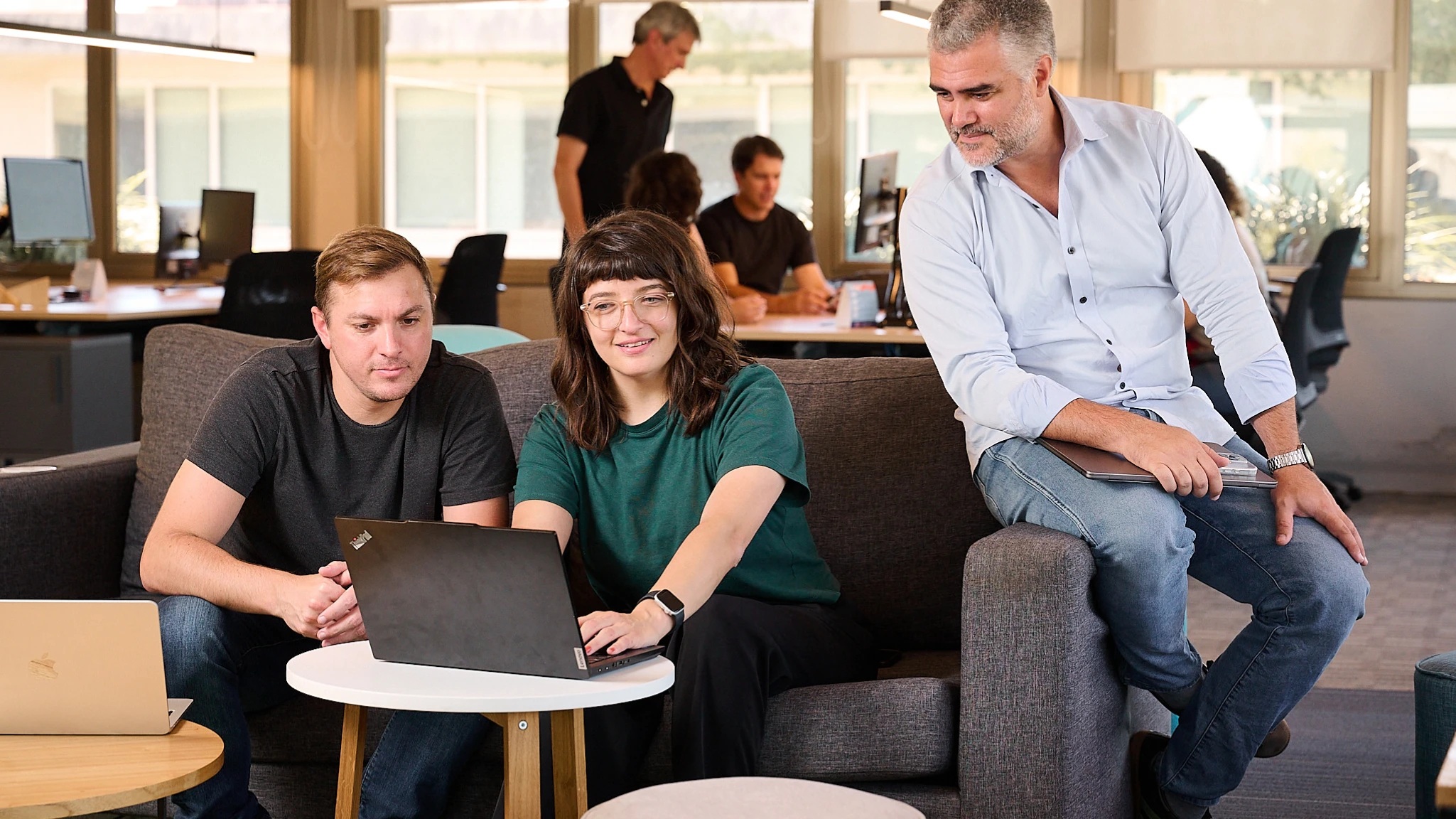
The people proposition is unusually explicit. Its careers page advertises funded Salesforce certifications, English-Spanish classes and flexibility over work location. Its values spell VIBE: Venture, Include, Believe and Enjoy. The relevance to a buyer is practical. A consulting company’s expertise depends on people continuing to learn while the platform beneath them changes.
04 / Before the next implementation
Cloudgaia’s business model follows the customer beyond launch. Initial deployments can use standard features and training; Quick Starts promise usable solutions within weeks. More involved engagements use agile teams or custom end-to-end work. Optimization and managed services cover integrations, maintenance and updates. The commercial relationship can continue as the customer adds clouds, changes processes or needs specialist help.
That continuing work is part of the purchase decision. An implementation leaves behind workflows, permissions and connections that someone must look after. Cloudgaia offers external expertise across that lifecycle. The buyer still needs an internal owner who can decide which requests deserve attention and whether the resulting changes serve the business. Support works better when somebody knows what success should look like.
For a buyer weighing the cost, the first useful exercise is defining the work. Cloudgaia’s Digital Roadmap assesses existing architecture, business objectives, legacy integrations and dependencies before another investment. A narrow deployment and an ERP-connected, multi-brand commerce program demand different scopes. Buyers should make implementation, internal ownership and ongoing support explicit when comparing proposals.
05 / AI meets the existing machinery
Salesforce Ventures invested in Cloudgaia in 2024 to support expansion. In February 2026, Cloudgaia and Swantide announced a partnership to automate implementation activities, including environment preparation and configuration work. Their proposed delivery approach includes impact analysis, risk registers and deployment plans. Those details matter because a faster change still needs to coexist with everything already running.
Then, in July 2026, Samantha Mitchell became co-CEO alongside Orzabal. She had previously been chief digital officer at CONA Services. The appointment puts experience inside a major customer operation alongside the founder’s consulting background.
The lesson a reader can copy is modest: choose a troublesome handoff, map the systems involved and measure whether the work becomes easier. That approach needs usable data, clear ownership and people willing to change a process. A company without a Salesforce commitment should first settle its platform choice. For Cloudgaia’s customers, the opportunity is making an existing investment behave like one coherent operation.