A beauty counter is built to make products look different. Vichy should feel like Vichy. Another brand gets another voice, another audience, another reason to buy. Behind those distinctions, however, much of the machinery repeats. A basket is still a basket. A checkout still needs to work. For L’Oréal Canada, that repetition became an opportunity for OSF Digital.
- Share the machinery. OSF helped L’Oréal Canada build a common commerce core across brands.
- Connect the handoffs. Its work spans customer data, marketing, orders, revenue and service.
- Make AI operational. Its newest practice brings agents into governed business workflows.
One engine, many beauty counters
OSF worked on ACD Core for L’Oréal Canada’s Active Cosmetics Division, adapting LORA, a Salesforce Commerce Cloud solution developed for beauty. The shared hub supported common brand functions in English and French. Mobile-first pages could serve different devices without making each brand invent its own underlying apparatus.
The published case study reports a 70% reduction in capital expenditure and a 75% reduction in time to market. Those are project-specific results reported by OSF. The transferable idea is the architecture: when brands need the same function, build it once. Save the bespoke work for the differences a customer can actually appreciate.
Reductions reported for this engagement, not a forecast for every customer.

“OSF Digital has been working with our internal technology team for many years now”
Florent Dubois / Director Digital, L’Oréal Canada ACD
The software was there.
The conversation wasn’t.
OSF sells the expertise required to make an enterprise’s technology cooperate. Its services include advisory, implementation, managed services and staff augmentation. Customers can bring it a transformation plan, a difficult rollout or an existing Salesforce estate that needs attention after launch. Commerce sits beside marketing, sales, service, data and revenue work.
Consider Vidi, the Brazilian market research company. Its communications problem involved a crowdsourced network of more than 170,000 researchers. It had tools, but siloed data and manual, generic messages prevented a coordinated view. OSF helped select and implement Salesforce Marketing Cloud, integrated it with Vidi’s existing environment and created more targeted journeys.
The useful detail is that Vidi wanted to keep its ecosystem. Integration made existing investments work together. For a buyer, that changes the conversation: which missing connection creates the most friction, and can it be repaired without replacing everything around it?
Bluebeam, which makes software for design and construction professionals, presents another version of the same puzzle. Its June 2026 announcement described disconnected systems and manual workflows affecting forecasting, partner engagement and billing. OSF’s work connected customer data, quoting and online buying, with MuleSoft linking revenue operations to NetSuite. A purchase could belong to a coherent process across departments.
Buying the missing pieces
The business began operations in October 2003, with offices in North America and Europe. Its founding members include Szatvanyi and Alin Dorobantu, now a board member. That cross-border beginning is relevant to the offer today: enterprise customers often need a program delivered across regions, with the same underlying standards and enough local understanding to make it fit.
This is a services business with a reason to remain involved. Advisory leads to implementation; live systems need releases, monitoring and improvement. Customers buy a team’s ability to make the platform useful, while ongoing managed services keep that work moving. Proprietary assets help delivery, but the relationship extends beyond a software download.
OSF’s expansion also followed that logic. The company announced $43 million in funding in May 2021 to support acquisitions. In April 2022, it raised a $100 million Series C led by Sunstone Partners, alongside Delta-v Capital and Salesforce Ventures. At that announcement, OSF said it had completed more than ten acquisitions in three years.
Acquisitions can buy regional presence and expertise faster than assembling every capability from scratch. In OSF’s case, the financing announcements explicitly connected capital to the acquisition roadmap. Its advisers described additions in B2B commerce, marketing and digital experience. The strategic appeal is breadth around a chosen platform.
Buyers also have alternatives: large consultancies such as Accenture, Deloitte and Publicis Sapient operate in the Salesforce services market. OSF’s position is a Salesforce-centered specialist with global delivery and a commerce pedigree. That focus is useful when Salesforce is a central architectural choice. A buyer still needs to judge the proposed team, integrations and operating responsibilities against its own requirements.
The founder changes desks
In January 2025, David Northington became CEO. Co-founder Gerry Szatvanyi took the newly established Chief AI Officer role. It was a visible allocation of attention: an experienced services executive ran the business while its longtime leader concentrated on AI strategy and implementation.
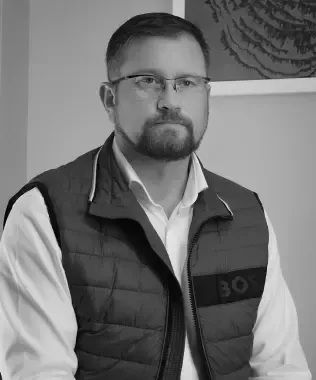
The shift now has an operational form. OSF joined Salesforce’s Forward Deployed Engineering Partner Network in June 2026. In September, it launched a global Agentforce Operations practice. Small specialist pods, reusable process patterns, controls and customer training are part of the offer. The target is work that crosses systems, rather than a demonstration confined to one screen.
The training habit predates this practice. OSF Academy offers online Salesforce and cloud courses with mentorship. In May 2025, the company reported that 81 program graduates had joined OSF. For a consultancy, developing people is part of developing capacity. The new practice similarly emphasizes transferring working methods to customer teams.
Copy the core, keep the differences
The lesson to borrow is precise. Identify repeated functions before commissioning another custom build. Define which system owns the customer record. Pick an outcome, such as launch time or billing accuracy, that the business can measure. Expand after the shared approach proves useful.
There is an organizational decision tucked inside that recommendation. A shared core needs people who can decide which requests belong in it and which should stay local. Otherwise every exception becomes another feature that everyone must carry. The L’Oréal example offers a useful question for a project meeting: is this difference essential to the brand, or have we simply inherited another way of doing the same thing? A shared feature also carries a shared maintenance obligation: every team inherits the complexity that another team asks to add.
Reuse depends on genuinely common requirements. An agent also needs trustworthy data, appropriate permissions and someone responsible when a process needs human judgment. These are architectural conditions, not decorative extras. OSF’s strongest story begins at a beauty counter and ends in that less glamorous place: the arrangements that let a company’s systems work together.