At Henkel, the beauty-care company, a sales representative’s hour inside a store had a peculiar shape. Only ten minutes went to active selling. The rest of the visit was consumed by other work, including the patient business of checking distribution and counting what was on the shelf. The person sent to grow sales had become, in part, an auditor.
- Trax identifies products in shelf images and flags execution gaps.
- Brands use it to find missing stock, misplaced products and missed promotions.
- Its image-recognition business joined FORM in February 2026.
Trax Retail’s proposition begins in that awkward division of labor. Photograph the shelf. Let software identify the products. Give the representative something specific to correct. The appeal is straightforward: a beautifully negotiated retail agreement earns little if the shampoo never reaches the place where someone can buy it.
01 / Ten minutes to sell
Henkel’s operation supplied a demanding test: more than 900 stock-keeping units across 2,500 German stores. A stock-keeping unit, or SKU, distinguishes one sellable product from another. Different sizes and variants multiply the counting problem. Knowing that a brand is present tells you remarkably little about whether the right bottle is available.
In Trax’s published case study, time spent on distribution checks and data collection fell by 50%. Time available for active selling rose by 150%. The company reports a 4.3% reduction in out-of-stocks and a 2.1% sales uplift. Those are vendor-reported customer results, rather than a promise for the next deployment. They do, however, make the mechanism legible: find a missing product, then do something about it.
Indexed comparison. Before = 100. Vendor-reported distribution-check and data-collection time.
02 / Teaching a camera to count shampoo
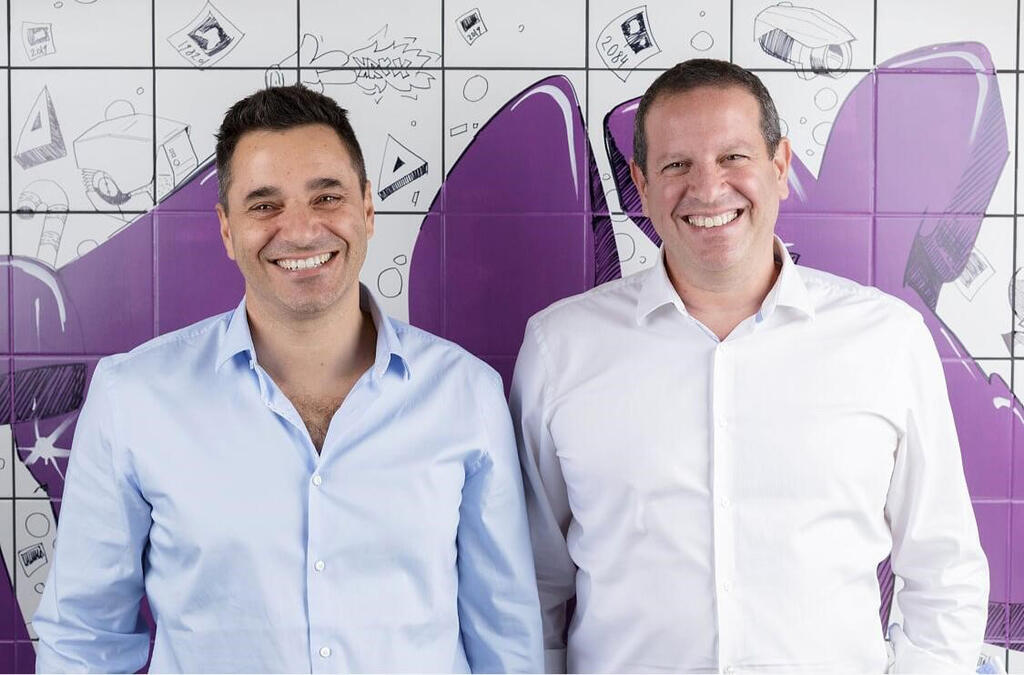
Joel Bar-El and Dror Feldheim founded Trax in Singapore in 2010. In an interview, Bar-El described their complementary backgrounds: his in technology, Feldheim’s in retail execution. The combination explains the company’s unusual concentration. Recognizing a bottle is a computer-vision problem. Knowing which bottle should occupy which space is a merchandising problem.
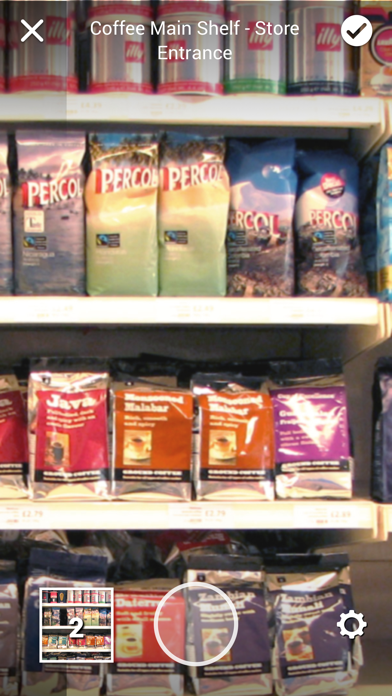
Trax compares captured images with a product database, identifies items and their placement, and measures conditions against the customer’s shelf plans and performance targets. Its expertise includes the unglamorous edge cases: reflective packaging, near-identical variants, poor angles and partly hidden products. The company describes human validation for difficult images alongside machine recognition.
That last detail is instructive. Retail recognition depends on the relationship between a reference catalogue and a changing physical display. A new package can look unfamiliar; two variants can look almost interchangeable. Trax describes capture aids for blur, orientation and lighting, plus dashboards that expose recognition performance. A buyer is purchasing a maintained measurement system, with all the upkeep that implies.
The users include field representatives, merchandisers, category managers and headquarters teams. Customers such as Unilever, AB InBev, Heineken and Sanofi need to understand availability and presentation across many stores. Trax’s historical portfolio also stretched into crowdsourced data collection, on-demand merchandising and shopper rewards through acquisitions including Quri, Survey.com and Shopkick.
In July 2025, Trax launched On-Device IR. Its augmented-reality scanning produces product recognition and corrective guidance without an internet connection. Cloud recognition remains another route. The practical difference is timing: a representative can receive guidance while standing beside the shelf, with the chance to act before leaving the store.
03 / A very expensive change of plan
Building this business required substantial capital. In April 2021, Trax announced a $640 million Series E led by SoftBank Vision Fund 2 and BlackRock-managed funds. The headline combined primary financing with secondary share sales. It therefore should not be read as $640 million placed entirely into the company’s operating account.
By June 2022, Trax was cutting more than 100 jobs, approximately 12% of its workforce. In a subsequent interview, Bar-El acknowledged that the business had hired for product lines that generated revenue without being as profitable. Less accessible capital changed the calculation. Another round of cuts followed in November. The problem he described was the economics of expansion, even after a large financing.
In November 2023, Trax announced $50 million in venture debt from Deutsche Bank to support investment in Signal-Based Merchandising. The direction was practical: use store signals to focus merchandising effort where it could earn a return.
04 / The photograph gets a job to do
February 2026 brought a structural change. Gemspring acquired and combined FORM with Trax’s image-recognition business. The precise scope matters: the announcement identifies Trax IR. FORM contributes mobile task management and workflow capabilities; Trax contributes shelf recognition and analytics. Gemspring says the combined platform serves more than 750 customers globally.
“Dashboards don’t sell products - decisions and follow-through do.”David Gottlieb / February 2026 merger announcement
Competitors including ParallelDots’ ShelfWatch and Vispera also turn shelf images into execution insights. Trax’s case rests on its retail-specific recognition, configurable reporting, international customer experience and, now, the FORM workflow connection. Recognition alone is already a contested market.
- 01CaptureScan the shelf
- 02CompareFind the gap
- 03ActAssign the fix
The combination also clarifies where the software sits. A shelf image records what a shopper could encounter at that moment. A planogram records the intended arrangement. Comparing them makes an execution gap visible. Task software then gives the gap an owner. This is the connection the merger is designed to strengthen, rather than evidence that every customer has already achieved a particular return.
The business sells enterprise software and related services. One public price provides a useful boundary: Salesforce lists the Trax Connector at $50 per user per year, with a 300-user minimum. That implies $15,000 annually for the connector at minimum scale. Separate Trax CPG NXT licenses are required. A connector line item is only one part of the purchase.
05 / Start with the shelf you can fix
A sensible lesson to borrow is to begin with one category, a defined shelf standard and a named person responsible for each correction. Measure time saved and whether availability improves. This is an editorial recommendation, rather than a guaranteed Trax deployment formula. The relevant unit of progress is a corrected shelf, followed by measurement.
For a limited pilot, compare similar stores and record the starting conditions before changing the workflow. Track the alerts that prove wrong as carefully as the gaps that get fixed. That creates a more useful buying conversation than simply counting how many photographs the team uploads.
Trax’s own guidance stresses clean catalogues, accurate SKU labels and consistent performance definitions. Poor inputs can produce false alerts; field teams can lose trust. And identifying a gap cannot supply stock or grant permission to rearrange a display. The useful question for a buyer is wonderfully ordinary: once the camera notices something missing, who can put it back?