A shopper reaches for a drink. The expected bottle is missing, but a neighboring brand has been pulled across to fill the space. The shelf looks respectable. The till records a purchase. Somewhere at headquarters, that purchase becomes evidence about what people want. A small act of tidying has quietly changed the story.
This is the kind of mistake Vision Group Retail wants to make visible. The company sells software that reads shelf photographs, monitors equipment, builds layouts, and models product choices. Its subject is the everyday gap between the store someone planned and the store a shopper actually encounters.
- See: identify missing products, misplaced facings, and equipment problems.
- Plan: turn photographs and PDFs into editable shelf layouts.
- Act: connect the evidence to field tasks, replenishment, and the next assortment decision.
First, find the cooler
Vision Group dates its beginnings to 2014, when it built a cooler-tracking solution using IoT and image recognition. A Coca-Cola Hellenic pilot followed in 2015. That is a wonderfully specific starting point: a valuable piece of equipment, somewhere in the world, whose owner needs to know whether it is doing its job.
The early problem was visibility. Today, its IoT software collects temperature, power, location, stock, and door-opening signals. An equipment issue can trigger an alert before the next scheduled visit. Field teams can prioritize the sites that need attention, rather than discovering trouble after sales have suffered.

The customer base now includes beverage, beauty, food, and health businesses. Coca-Cola, Nestlé, and L’Oréal appear among the company’s named deployments. Category managers, merchandisers, and field representatives use different parts of the portfolio. The common requirement is evidence detailed enough to change a store-level decision.
A photograph becomes a working plan
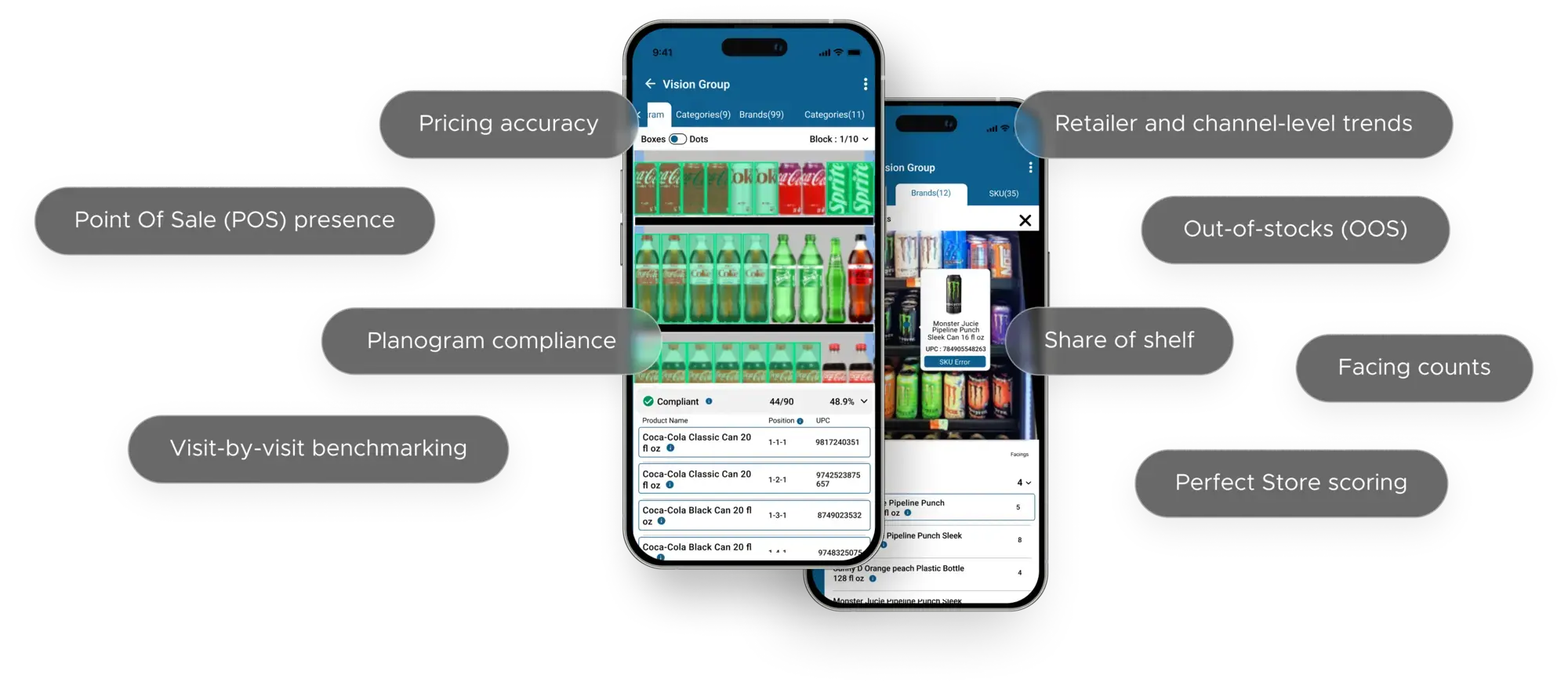
Consider the planogram: the diagram specifying which products belong where. It is retail’s seating chart. Store360 uses computer vision to inspect shelf photos for product presence, pricing, promotional execution, and compliance. Representatives can see issues during a visit; headquarters can work from the same shelf evidence.
Then comes an unusually practical pair of tools. PicToPOG converts a shelf photograph into an editable layout, sometimes called a realogram. PDFtoPOG converts the retailer’s static planogram file into a working one. Put them together and teams can compare what was intended with what exists, without redrawing both from scratch.
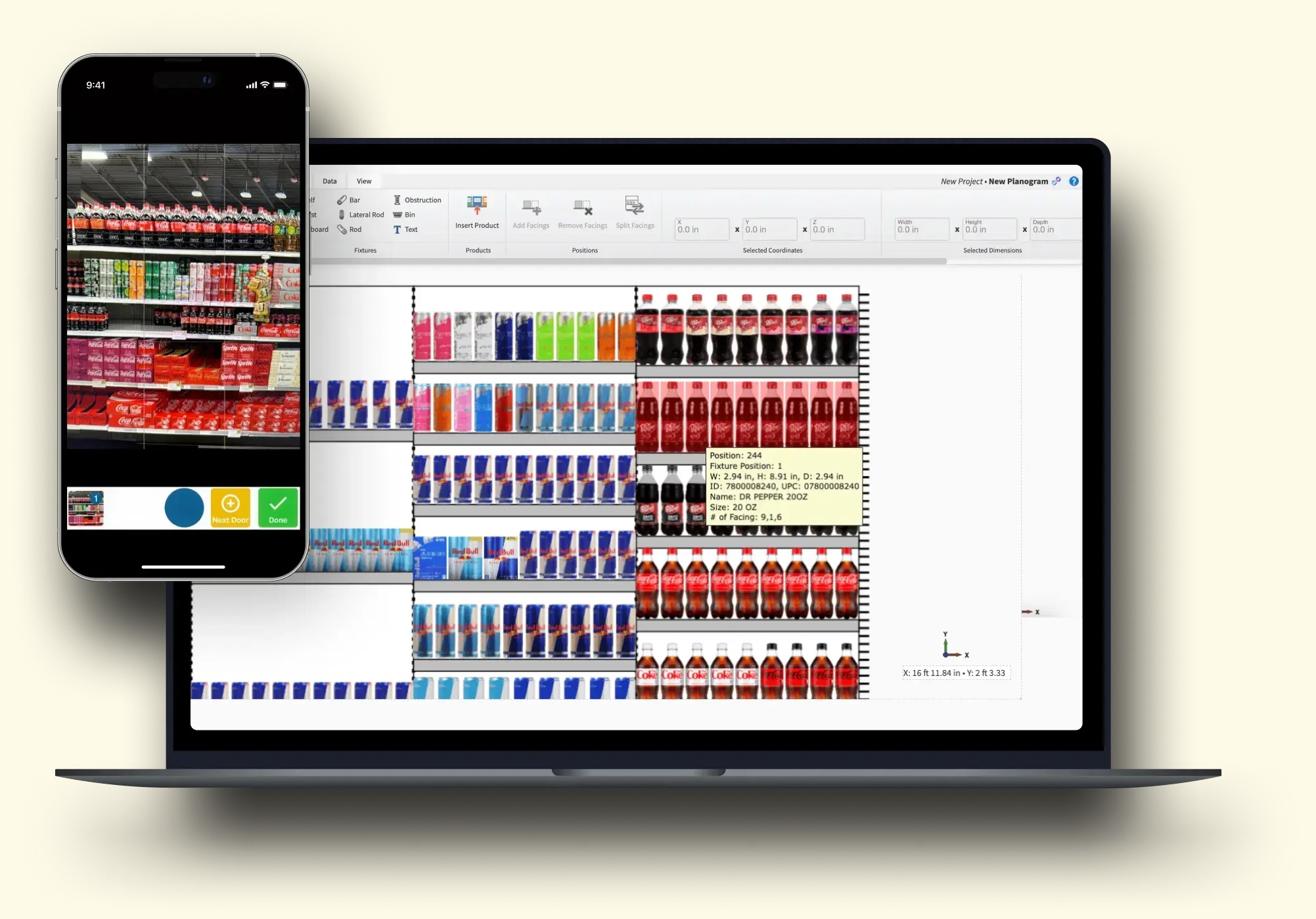
EZPOG supplies the browser-based workspace for creating, editing, and sharing layouts. Product images and dimensions help keep those plans tied to physical objects. Exports to systems including Blue Yonder and RELEX matter, too: a supplier often has to work with the retailer’s existing tools.
- 01CaptureA shelf photo
- 02CompareActual vs. planned
- 03AssignA specific fix
- 04VerifyCheck the result
That breadth is the company’s competitive argument. Buyers considering shelf recognition may also look at Trax, ParallelDots, or Infilect. Buyers choosing planogram tools face another shortlist. Vision Group’s proposition is to connect the work across those boundaries. Whether that connection saves effort depends on the buyer’s actual systems and routines.
The acquisition that looks forward
Seeing a shelf tells you what happened. Choosing its next arrangement asks a different question. Vision Group added Hivery’s assortment technology in a transaction it dates to 2024, announced publicly in January 2025. Hivery’s Curate brought simulation of product mixes and shelf space using store-level data.
“Hivery’s expertise in space-aware assortment optimization perfectly complements our current offerings.”
Karan Bakshi · acquisition announcement, January 2025
Curate’s capabilities now sit within Assortment.AI. Teams can test changes before moving products, including where demand might go when an item disappears. The current portfolio also describes Demand.AI as correcting sales signals for stockouts and execution problems, so missing availability is not mistaken for missing interest.
There is a modest example worth pausing over. In a November 2025 post, revenue chief Jason DeRienzo described a household brand reallocating space toward kitchen bags. The simulation projected a two-percent volume lift and a one-and-a-half-percent revenue lift without adding products. Those were modeled gains. The interesting idea is the reallocation itself.
The price of a better view
The commercial model is business software: licenses, enterprise deployments, product-data access, and supporting services. EZPOG advertises a starting price of $1,299 per license. That figure is an entry point for one tool; a connected deployment also involves decisions about data preparation, integration, training, and field time.
EZPOG’s advertised starting price. Volume discounts available; the published page does not specify a billing period.
Software adoption also asks something of the people stocking shelves. ClickToWin tackles that problem with daily compliance scores from one to 100 and rewards linked to the customer’s incentive program. The company’s stated value of “Clarity Over Complexity” fits the operational challenge: someone needs a useful instruction amid an already busy shift.
Give the alert an owner
The December 2025 brand refresh brought acquired capabilities under one Vision Group name. Its present architecture joins product information, demand, assortment, space, and execution. The company reports more than 340 clients in over 75 countries. Scale makes the proposition interesting; the handoff between those capabilities makes it useful.
A reader can copy the logic without buying the entire stack. Choose one category and one recurring problem. Capture the shelf, compare it with an agreed plan, assign the correction, and check again. Track whether availability improves and whether the workflow earns back the time it consumes.
The conditions matter. A camera cannot replenish a product that never arrived. A layout cannot create shelf space a retailer has not agreed to provide. Recognition needs usable images and current product information; simulations need relevant sales and store data. Above all, an alert needs an owner with permission to act. The shelf photo starts the conversation. Someone in the aisle still has to finish it.
Take a closer look
Explore the company website, follow Vision Group on LinkedIn, or read its Notes From the Shelf blog.