turkey
(18)
Erciyes Teknopark Starts Before the Startup
In Kayseri, a university-linked technology park helps founders find an idea, build a prototype and meet investors. Its most revealing feature is how much work happens before there is a company to rent an office.

Yıldız Tech Has a Useful Head Start: Customers in the Family
Built inside Yıldız Holding, the software company turns grocery orders, delivery routes and factory problems into products. Its advantage is access to businesses that can put the code to work.

Game Factory wants your game to become a business
A working prototype is only the beginning. The Istanbul incubator connects developers with coaches, publishers and platform partners to tackle the harder job: keeping a studio alive.
Tech Istanbul Opens the Door to a City-Sized Customer
Free support is the easy part to explain. Tech Istanbul’s more interesting offer is a chance to test a startup’s product inside the machinery of Istanbul’s municipal services.

Lonca’s pitch: a bank that might become your customer
Kuveyt Türk’s startup accelerator offers grants without taking equity. Its more interesting proposition is a chance to put a young company’s technology to work inside the bank.
Cube Incubation puts a clean room between the idea and the investor
At Teknopark İstanbul, founders can borrow the expensive parts of building a technology company: laboratories, specialist equipment and access to industrial customers. The harder assignment is turning that access into a business.
BUBA Ventures: A good idea still needs a way in
An alumni angel network grew into a meeting point for founders, investors, banks and even orchard technology. BUBA’s history shows what startup support looks like when the introductions come with homework.
ebebek Built a Baby Business by Letting Parents Touch the Merchandise
A Turkish parenting website became a chain of more than 300 stores by listening to what a screen could not answer. Its next test is making that formula pay abroad.

Kariyer.net has 40 million CVs. Its next job is making them count.
Turkey’s recruitment veteran built its business on job ads. Now it is selling the work around the hire, from finding candidates to rehearsing the interview.

Migros One Wants the Whole Shopping List
Groceries, dinner, pet food: Migros One is gathering the household shop into one app. Behind the screen, the Turkish retailer is putting its stores, software and delivery network to work together.

arabam.com wants more than your next car sale
The Turkish car marketplace now buys vehicles, supplies dealers and sells motor oil. Its bigger bet is on the years between one car purchase and the next.

The Turkish Word for Owner Became a Verb
Turkey's biggest marketplace started with 2,700 classified ads in 2000. A quarter century later, 'sahibinden' is how the country buys a house, sells a car, and rents an apartment - so much so that the name stopped being a website and started being a habit.
Butterball
Butterball is the largest producer of turkey products in the United States, selling more than 1 billion pounds of turkey a year from its headquarters in Garner, North Carolina. Jointly owned by Seaboard Corporation and Maxwell Farms, the company makes whole turkeys, turkey cuts, ground turkey, turkey bacon, sausage and deli meats for grocery, foodservice and export - and runs the Turkey Talk-Line, the Thanksgiving cooking hotline that has answered questions from anxious cooks every holiday season since 1981.

Jay Jandrain
Jay Jandrain is the president and CEO of Butterball, the largest turkey producer in the United States. A Cornell-trained food scientist who joined Butterball in 2002 running product R&D, he climbed through sales, strategy and operations to take the top job in 2018. In 2025 he was elected chairman of the National Turkey Federation, and each November he becomes the country's most quoted voice on the price and preparation of the Thanksgiving bird.
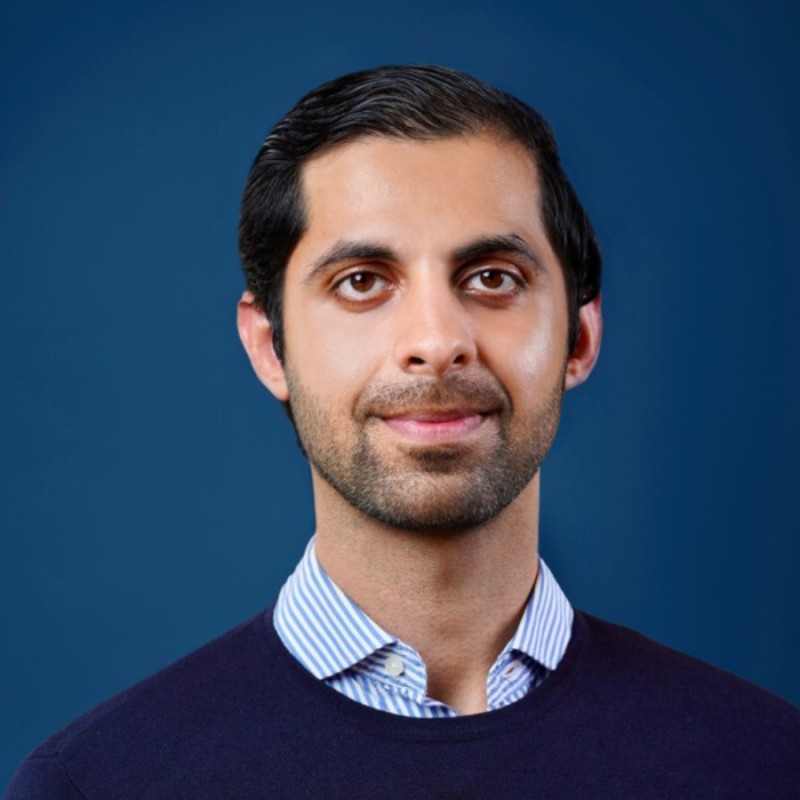
Ibrahim Hafeez
Ibrahim Hafeez is a Pakistani-born venture capitalist and Forbes 30 Under 30 honoree (2026, Games) who joined Anfa as an Investor in early 2026 after four years as a Principal at Griffin Gaming Partners, one of the world's largest gaming-focused VC firms. He helped deploy over $150 million across 30+ investments in game studios, platforms, and gaming infrastructure, and pioneered Griffin's push into emerging markets like Turkey and the Middle East. Before VC, he worked on global licensing strategy at EA Sports during the historic FIFA-to-EA Sports FC split. He also founded Women Venture Capitalists (2023) and Onto Global (2021).

Alper Memis
H. Alper Memis is the Co-Founder and CEO of Picus Security, the company that pioneered Breach and Attack Simulation (BAS) technology. A mathematician-turned-financial-analyst-turned-cybersecurity-CEO, Memis co-founded Picus in 2013 in Ankara, Turkey alongside two university friends — combining a rare background in sovereign debt management, financial risk, and a CFA designation with the mission to replace assumption-based security with continuous, evidence-based defense validation. Under his leadership, Picus has raised $80M in total funding (including a $45M Series C in 2024), serves 500+ enterprise customers including Mastercard, Visa, and Vodafone, and has simulated over one billion cyberattacks.
Yigit Ihlamur
Yigit Ihlamur is the co-founder and General Partner of Vela Partners, an AI-native quantitative venture capital firm based in the San Francisco Bay Area. A former Google Senior Program Manager and Oxford-trained AI researcher, he has pioneered the concept of 'Ventech' — using proprietary AI systems to evaluate and fund seed-stage AI founders at speed. Vela Partners issues $100K–$500K checks with commitments in 2–7 days, has backed 40+ AI startups, and earned a NeurIPS 2025 Best Poster award for its startup success forecasting research. Raised in Turkey by an entrepreneur father and mathematician mother, Yigit started coding at age four and competed as a top-10 national chess player before bringing that same obsessive discipline to venture capital.

Magdalena Yesil
Magdalena Yesil is a Silicon Valley pioneer who arrived in the US at 17 with two suitcases and $43 to her name, earned three degrees from Stanford, and went on to become the first outside investor and founding board member of Salesforce. A serial entrepreneur who co-founded CyberCash (one of the internet's first secure payment systems) and MarketPay, she spent eight years as a General Partner at US Venture Partners before co-founding Informed.IQ, an AI-powered document processing platform that has enabled over $350 billion in consumer loan originations. Author of 'Power UP: How Smart Women Win in the New Economy' and co-founder of Broadway Angels, she sits on the boards of SoFi Technologies, Smartsheet, and Zuora.