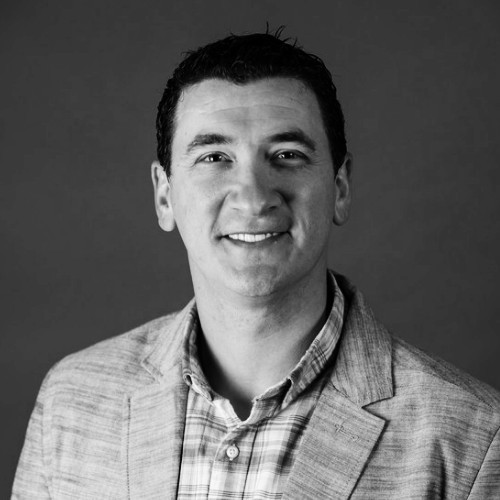
Daniel (Dan) Wagner is a medical device and biotechnology executive who leads Otolith Labs, the Washington, DC company building the OtoBand, a non-invasive wearable that uses patented non-invasive Vestibular Resonance Therapy (nVRT) to address chronic vertigo. With more than two decades of commercial experience spanning 60-plus countries and roles at Spark Biomedical, Olympus Corporation, HeartSciences and Signature Biologics, Wagner advised Otolith for over five years before joining full-time as Chief Commercial Officer in 2024 and now serves as Chief Executive Officer, steering the company's go-to-market strategy toward a planned market launch.
AcuityMD is a Boston-based commercial intelligence platform built specifically for the medical device (MedTech) industry. It translates large volumes of healthcare claims and procedure data into intuitive workflows, AI-powered insights, and recommendations that help medical device sales and marketing teams find high-value physicians and care sites, size and segment markets, manage territories, and accelerate product adoption. Founded in 2019 by former MedTech and consulting operators, the company serves hundreds of device makers - including a majority of the largest MedTech firms - and raised an $80M Series C in 2026 at a near-$1B valuation.
Alafair Biosciences is an Austin, Texas commercial-stage medical device company that makes bioresorbable, plant-based hydrogel implants to protect healing soft tissue after surgery. Built on its patented VersaCore hydrogel technology - a collagen-free, dye-free blend of naturally derived hyaluronic acid and alginate - the company's VersaWrap Hydrogel Sheet and VersaCoat Flowable Hydrogel create a non-constricting gliding interface around tendons, ligaments and peripheral nerves to limit postoperative tethering and help patients regain function. More than 40,000 VersaWrap implants have been used across orthopedic, spine, hand and plastic/reconstructive procedures.
CairnSurgical is a clinical-stage medical device company in Lebanon, New Hampshire, building patient-specific surgical guidance for breast cancer lumpectomy. Its Breast Cancer Locator (BCL) System pairs a 3D-printed, bra-like form molded to each patient's anatomy with an interactive 3D Visualizer derived from supine MRI, giving surgeons a precise blueprint of a tumor's size, shape, depth and edges. The goal is to cut the 20 to 25 percent re-excision rate in breast-conserving surgery toward zero. Spun out of Dartmouth College and Dartmouth-Hitchcock Medical Center in 2015, the company reported 94 percent margin-negative resections in a European study and filed for FDA De Novo clearance in 2026.
CardioRenal Systems is a Milford, Massachusetts medical device company developing RenalPro (marketed as RenalGuard outside the US), an automated fluid-management system that prevents acute kidney injury in high-risk hospital settings. By monitoring urine output in real time and matching IV hydration in milliliter increments, the system keeps patients balanced during cardiac surgery, catheter procedures, and ICU care. RenalPro holds FDA Breakthrough Device Designation and a CE Mark, and in a 220-patient randomized UK trial cut AKI by 52% versus standard care.
Conformal Medical is a Nashua, New Hampshire medical device company developing the CLAAS AcuFORM System, a next-generation left atrial appendage occlusion (LAAO) implant that uses a proprietary foam matrix to seal the left atrial appendage and reduce stroke risk in patients with non-valvular atrial fibrillation. Its design conforms to a wide range of anatomies with only two device sizes, and is intended to make LAAO a same-day, single-operator procedure that can avoid general anesthesia and transesophageal echocardiography. In February 2026 the company became a wholly owned subsidiary of W. L. Gore & Associates.
CurvaFix, Inc. is a Bellevue, Washington medical device company that developed the CurvaFix IM Implant - the first new intramedullary technology for pelvic trauma in three decades. Its curved, steerable rodscrew follows the natural shape of the pelvis, enabling strong internal fixation through a single small incision. The device is designed to reduce pain, support early weight-bearing, and speed recovery for patients with high- and low-energy pelvic fractures, including the growing population of elderly patients with fragility fractures of the pelvis.
Evident Vascular is a San Jose-based medical device startup building an AI-powered intravascular ultrasound (IVUS) platform designed for peripheral vascular interventions. Founded in 2023 and led by CEO Howard Rosen, the company aims to fix the long-standing trade-off between image quality and clinical workflow that has limited IVUS adoption, targeting FDA 510(k) clearance ahead of a U.S. launch. It raised a $35M Series A from Vensana Capital and closed an undisclosed Series B in 2025.
GT Medical Technologies is a Tempe, Arizona medical device company that developed GammaTile, an FDA-cleared bioresorbable radiation therapy implant for operable brain tumors. Founded by brain tumor specialists from the Barrow Neurological Institute, the company places collagen tiles embedded with Cesium-131 seeds directly into the tumor cavity at the time of surgery, delivering immediate, targeted radiation while sparing healthy tissue. Backed by a $100M Series E led by Viking Global Investors, GT Medical has treated more than 2,000 patients and is pursuing randomized trials to establish GammaTile as a standard of care.
H1 is a New York-based healthcare data and technology company that maps the world's healthcare professionals, clinical trials and provider networks into a single platform. Founded in 2017 by Ariel Katz and Ian Sax, H1 aggregates billions of data points - peer-reviewed publications, clinical trial records, medical claims and provider directories - so pharmaceutical, biotech, medtech, health-plan and digital-health customers can find the right doctors, run better clinical trials, engage key opinion leaders and keep provider information accurate. Its stated mission is to create a healthier future by making healthcare information and evidence-based medicine accessible globally.
Huma is a London-based digital health technology company that builds a regulated, modular software platform used by hospitals, pharmaceutical companies and governments to run remote patient monitoring, 'hospital at home', companion apps and decentralized clinical trials. Founded in 2011 as Medopad and rebranded to Huma in 2020, it combines predictive algorithms, digital biomarkers and real-world data with a no-code Huma Cloud Platform so partners can launch regulated, disease- and device-agnostic health apps. Its Software as a Medical Device holds EU MDR Class IIb, US FDA Class II and UK MHRA registrations, and its technology has reached thousands of hospitals and tens of millions of patients worldwide.
IgniteData is a healthtech company automating the transfer of clinical trial data between hospital electronic health records (EHRs) and sponsors' electronic data capture (EDC) systems. Its flagship platform, Archer, is a cloud-based, system-agnostic 'Virtual Research Assistant' that uses HL7 FHIR and SMART on FHIR APIs to move clinically validated data securely and automatically, cutting manual transcription, reducing source data verification, and helping treatments reach patients faster. Founded in the UK and now operating on both sides of the Atlantic, IgniteData works with pharmaceutical sponsors like AstraZeneca and research hospitals including UCLH, Cambridge University Hospitals, and Memorial Sloan Kettering Cancer Center.
Interscope, Inc. is a Northbridge, Massachusetts medical device company that develops the EndoRotor, a flexible, powered endoscopic resection system that dissects, resects, and collects tissue in the gastrointestinal tract without thermal energy. Founded in 2011, the company created the first flexible microdebrider designed for the digestive tract and holds the first and only FDA marketing authorization for Direct Endoscopic Necrosectomy (DEN) in walled-off pancreatic necrosis. Interscope sells to interventional gastroenterologists and hospitals, and distributes the EndoRotor system through a partnership with Micro-Tech Endoscopy.
Otolith Labs is a Washington, D.C. medical device company building the first wearable to treat vertigo, motion sickness and virtual-reality sickness. Its patented non-invasive Vestibular Resonance Therapy (nVRT) uses precisely tuned bone-conduction vibrations to interact with the motion sensors of the inner ear, quieting the faulty balance signals that cause dizziness. The head-worn OtoBand has been tested on hundreds of subjects, carries an FDA Breakthrough Device Designation, and is pursuing FDA clearance through the De Novo pathway.
Pearl Diagnostics is a Baltimore-based in vitro diagnostics company spun out of Johns Hopkins University that develops non-invasive urine tests to detect life-threatening lung infections. Its proprietary Smart Antibody technology identifies circulating microbial extracellular vesicles, and its lead product, the MycoMEIA Aspergillus Assay, became the first urine-based test to win FDA 510(k) clearance for aiding diagnosis of invasive aspergillosis. The company raised an $11.2M Series A in March 2026 to commercialize in the US and expand across Europe.
Presidio Medical is a clinical-stage medical device company in San Mateo, California, developing a proprietary Ultra Low Frequency (ULF) neuromodulation platform. By delivering very low frequency biphasic electrical currents through leads implanted in the epidural space, Presidio's spinal cord stimulation system reversibly blocks the conduction of pain signals along nerves without damaging tissue. Its first target is chronic nociceptive low back pain, a large and underserved indication with no approved SCS therapy. Backed by Deerfield Management and others, the company raised a $72M Series C in 2023 and received FDA IDE approval in 2025 to run its global pivotal FULFILL trial.
Proprio is a Seattle medical technology company building an AI-powered surgical navigation platform, Paradigm, that uses light field imaging, computer vision, and machine learning to give surgeons a continuous, radiation-free 3D view of anatomy during spine surgery. Spun out of the University of Washington in 2016, the company fuses live intraoperative sensing with preoperative scans - a capability it calls Volumetric Intelligence - to improve precision, capture surgical data, and build a foundation model for surgery.
Wandercraft is a French robotics company that builds self-balancing walking exoskeletons and, more recently, industrial humanoid robots. Founded in Paris in 2012 by engineers - some with personal ties to degenerative mobility disease - it created Atalante X, a hands-free clinical exoskeleton now used in more than 100 rehabilitation centers, and Eve, the first self-balancing personal exoskeleton designed for home use without crutches. In 2025 the company extended its gait-control expertise into Calvin, a family of industrial humanoids developed with Renault Group and NVIDIA. Wandercraft's stated aim is to blend frontier AI with high-performance hardware to help people work and walk.
Eric Gornstein is the Chief Executive Officer of Pearl Diagnostics, a Johns Hopkins spinout in Baltimore that makes MycoMEIA, the first FDA-cleared urine test for invasive aspergillosis. A biopharma commercialization veteran with more than 25 years leading product launches, partnering and deal-making across therapeutic areas, he joined Pearl in late 2025 to take the company from FDA clearance to the market and into Europe. Earlier he helped launch Radius Health's first product, Tymlos, and worked in business development and cell therapy partnerships at companies including bit.bio and Talaris Therapeutics.
Gabriel Jones is the co-founder and CEO of Proprio, a Seattle medtech company building AI-powered surgical navigation. Its FDA-cleared Paradigm platform combines light-field imaging, real-time AI, and 3D visualization to give surgeons dynamic spatial awareness during spine procedures. Jones took an unusual path to medtech - engineering study in Japan, civil engineering at Taisei, Wall Street M&A, and work with the Bill & Melinda Gates Foundation - before co-founding Proprio in 2016 with a neurosurgeon, a robotics professor, and a computer vision specialist. He frames the mission around a single question: is it possible to do well and do good?
Galia Rosen Schwarz is the cofounder and CEO of C8 Health, a New York-based clinical resource management platform that centralizes hospital protocols, guidelines and policies and pushes the right clinical knowledge to the right clinician at the right time. A former researcher and go-to-market leader with a PhD in strategy from the Technion and a visiting professorship at NYU Stern, she has grown C8 Health to more than 100 US hospitals, including leading academic medical centers, on the back of an $18 million total raise.
Howard Rosen is the CEO and co-founder of Evident Vascular, a San Jose medtech startup building an AI-powered intravascular ultrasound (IVUS) platform for peripheral and coronary interventions. A 30-year cardiovascular device veteran, he spent 21 years at Boston Scientific before helping guide Intact Vascular and its spinout Vesper Medical through acquisitions by Philips. He launched Evident out of stealth in 2023 with a $35 million Series A led by Vensana Capital and closed a Series B in 2025. He is known for a disciplined 'go slow to go fast' company-building philosophy.
Manisha Shah-Bugaj is the CEO of Activ Surgical, a Boston-based medical technology company building hardware-agnostic surgical software and its ActivSight Intelligent Light imaging module. A medtech executive with more than two decades of experience, she previously built Olympus's U.S. gynecology business from the ground up, rising to General Manager and Global Vice President, before joining Activ Surgical as COO in January 2022 and becoming CEO that December.
Heartflow is a Silicon Valley medical technology company that uses AI and computational fluid dynamics to turn a standard coronary CT scan into a personalized, color-coded 3D model of a patient's heart. Its FFRCT, Plaque and RoadMap analyses help cardiologists diagnose and manage coronary artery disease non-invasively, reducing the need for invasive angiograms. Founded in 2007 and headquartered in San Francisco, Heartflow has analyzed hundreds of thousands of patients across more than 1,500 U.S. hospitals and went public on the Nasdaq (HTFL) in August 2025.
Model N is a Redwood City-based enterprise software company that builds cloud revenue-management systems for pharmaceutical, medtech, semiconductor, and high-tech manufacturers. Its Revenue Cloud automates pricing, quoting, contracting, rebates, incentives, and regulatory compliance - the commercial machinery that governs how life sciences and high-tech companies book and protect their top line. Founded in 1999 and taken public in 2013, Model N was acquired by Vista Equity Partners in 2024 for $1.25 billion and now serves 150+ leading brands across more than 120 countries.
Alio is a Broomfield, Colorado medical technology company that builds a non-invasive, continuous remote patient monitoring platform for people with chronic conditions. Its flagship SmartPatch - the world's first non-invasive potassium monitor - is worn over a patient's vascular access site and tracks metrics such as potassium, hemoglobin, hematocrit, heart rate, skin temperature and auscultation sounds, sending clinician-ready data to care teams via a bedside hub, cloud and portal. Founded in 2012 (originally as Graftworx) by David Kuraguntla and Samit Gupta, Alio focuses first on end-stage kidney disease and dialysis patients, aiming to replace infrequent blood draws with continuous data and cut avoidable hospitalizations.
Apreo Health is a clinical-stage medical device company in Menlo Park, California developing the BREATHE Airway Scaffold, a bronchoscopically delivered, self-expanding nitinol implant that relieves lung hyperinflation in patients with severe emphysema. Unlike existing valve and surgical treatments that collapse or remove lung tissue, the scaffold gently tents open damaged airways to release trapped air while sparing healthy tissue, aiming to expand who can be treated. The company raised a $130M Series B in August 2025 to run its pivotal BREATHE-3 trial and prepare for early commercialization.
Chipiron is a Paris-based medical-imaging startup building a compact, low-cost MRI scanner that runs at an ultra-low magnetic field (below ~30 millitesla, roughly 1,000x weaker than a hospital MRI). Its patented low-Tc SQUID quantum detection system plus AI noise cancellation and reconstruction are designed to recover clinical-grade image quality without a shielded room, without helium, and at a fraction of the cost, size, and infrastructure of conventional machines. The company's stated aim is to make MRI accessible everywhere, starting with breast imaging, and eventually reach patients, clinics, and remote settings that today's scanners can't serve.
EchoPixel is a Silicon Valley medical visualization company that turns ordinary CT, MRI and ultrasound scans into life-size, interactive 4D holograms of a patient's own anatomy. Its FDA-cleared True3D platform and Holographic Therapy Guidance (HTG) let surgeons and interventional cardiologists reach in and manipulate a digital twin of a heart or organ - no headset or glasses required - to plan and guide complex, minimally invasive procedures.
Elixir Medical Corporation is a privately held Milpitas, California medical device company building implantable technologies to treat coronary and peripheral artery disease. Its flagship DynamX Coronary Bioadaptor is a metal implant with a resorbable polymer coating that dissolves over roughly six months, 'uncaging' the artery so the vessel can pulse and move naturally rather than remaining permanently rigid like a conventional stent. Founded in 2005 by Motasim Sirhan, Elixir has produced a lineage of coronary devices - the DESolve bioresorbable scaffold, the DESyne family of drug-eluting stents, the LithiX intravascular lithotripsy system, and the DynamX bioadaptor - and has reported two consecutive randomized trials showing reduced long-term cardiac event rates versus current drug-eluting stents.