Tagged: techbio
12 results
Antiverse
Antiverse is a UK-based AI-driven biotech that designs functional therapeutic antibodies against targets long considered 'undruggable' - notably G-protein coupled receptors (GPCRs), ion channels, and other transmembrane proteins where conventional antibody discovery routinely fails. Its platform pairs generative AI models, trained for years on the hardest antibody targets, with a proprietary 'lab-in-the-loop' wet lab using engineered cell lines and deep sequencing, taking a target to an optimized antibody in roughly four months. Founded in 2017 and headquartered in Cardiff, Wales, the company works through pharma partnerships and licensing (e.g. Nxera Pharma) alongside its own internal pipeline and non-profit collaborations such as the Cystic Fibrosis Foundation.

Murat Tunaboylu
Murat Tunaboylu is the co-founder and CEO of Antiverse, a Cardiff- and Boston-based AI-native biologics company designing de novo antibodies for historically undruggable targets like GPCRs and ion channels. A software engineer who spent years automating gene synthesis at Thermo Fisher and building lab robots for cancer research before starting a company that uses generative models to design antibodies, he raised a $9.3M Series A in March 2026 and struck a research deal with the Cystic Fibrosis Foundation the same week.

Ann Lin
Ann Lin is the co-founder and CEO of Cromatic, an AI-native RevOps platform that helps life-science companies find and manage contract research organizations (CROs). A Stanford genetics PhD and Forbes 30 Under 30 (Science, 2020) honoree, she made her name in the lab of Jason Sheltzer at Cold Spring Harbor, where her team showed that a celebrated cancer drug did not hit its supposed target. After scientifically co-founding the drug-discovery startup Meliora Therapeutics, she turned a Google Sheet of outsourcing complaints into a company, raising a $5.3M seed round in 2023 to fix the notoriously opaque market for biotech R&D vendors.

Bexorg, Inc.
Bexorg is a New Haven techbio company that perfuses donated, postmortem human and pig brains with custom-made artificial blood to restore their molecular and metabolic activity, turning whole organs into living-tissue testbeds for drug discovery. Its BrainEx wet-lab platform and XO Digital AI engine generate petabyte-scale human brain datasets that let pharmaceutical partners test therapies in human-relevant tissue before costly clinical trials - a direct response to the roughly 95% failure rate of central-nervous-system drugs.

LASE Innovation Inc.
LASE Innovation Inc. is a Boston-area techbio company commercializing LP™ Optical Cell Barcoding, a laser-particle technology that tags individual cells with narrowband light signatures tuned across more than 1,000 wavelengths. Spun out of the Wellman Center at Massachusetts General Hospital and MIT, the platform lets researchers run multiple passes of flow cytometry on the same sample, track the same cells over time, and connect single-cell data across flow, imaging and sequencing. The company is turning a long-standing limitation of flow cytometry - that you generally read a cell once and lose it - into a repeatable, trackable measurement.

Brian Hotchkiss
Brian Hotchkiss is the Chief Business Officer of Bexorg, a Yale University spinout building the first integrated AI and whole-human-brain platform for central nervous system drug discovery. A chemical engineer turned biotech dealmaker, he spent nearly seven years at Stealth BioTherapeutics shaping corporate strategy and helping land a transformative Alexion collaboration, then served as Chief Business Officer at Protego Biopharma before joining Bexorg. He pairs four graduate-level degrees in engineering, biology, and business with a career spent translating hard science into partnerships, capital, and commercial strategy.

Sheldon Kwok
Sheldon J.J. Kwok is the CEO and co-founder of LASE Innovation, a Boston-area techbio company turning microscopic lasers into cellular barcodes. He spent his PhD at MIT and Massachusetts General Hospital building particles that emit pure laser light from inside living cells, then spun the work into a company aiming to give every cell a trackable identity and add a time dimension to flow cytometry.

Steve Worland
Steve Worland, Ph.D., is the CEO of Numerion Labs, the AI-native drug discovery company that grew out of Atomwise. A medicinal-chemistry lifer with three decades behind him, his bench work fed the discovery of Paxlovid and Inlyta, and his operating record runs from Agouron through a Roche acquisition to a SPAC. Now he is betting that deep-learning surrogates plus GPU enumeration can search billions of molecules in seconds.

Elucidata
Elucidata is a TechBio company building Polly, a data-centric ML-Ops platform that harmonizes messy biomedical data into AI-ready datasets for pharma R&D. Founded in 2015 by Abhishek Jha and Swetabh Pathak, the company powers drug discovery work at Pfizer, Genentech, Janssen and dozens of biotechs from offices in San Francisco, Boston and Delhi.

insitro
insitro is a machine-learning-driven drug discovery and development company that uses high-content human data, cellular models and AI to find better targets and design better medicines. Founded in 2018 by Daphne Koller, the company runs its own therapeutic pipeline and partners with large pharma on programs in ALS, metabolic disease and oncology.

Stuart Peterson
Stuart Peterson is the Founder and Managing General Partner of ARTIS Ventures, a San Francisco-based venture capital firm he launched in 2001 that coined and trademarked the term 'TechBio.' A 2017 Forbes Midas List honoree, Peterson led early-stage investments in YouTube (acquired by Google) and StemCentrx (acquired by AbbVie for $10.2 billion - the largest-ever venture-backed life sciences acquisition), and has since focused ARTIS at the convergence of computer science and life science, closing a $200 million TechBio II Fund in December 2023 to back next-generation health and medicine companies deploying AI, machine learning, and deep learning to transform human health.
Omri Amirav-Drory
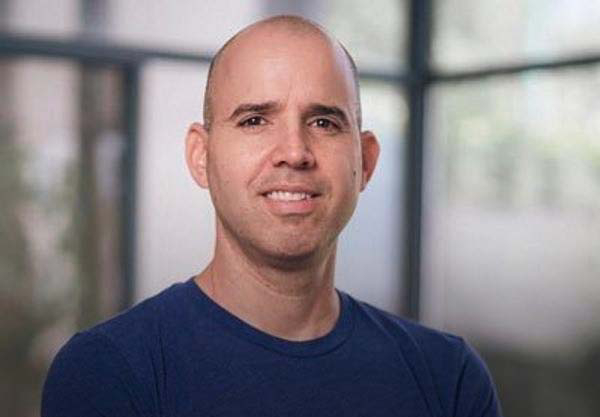
Omri Amirav-Drory, Ph.D., is a General Partner at NFX leading NFX Bio, a pre-seed and seed venture fund focused on scientist-founders at the intersection of technology and biology. A former Fulbright Scholar and Stanford postdoc turned biotech entrepreneur, he co-founded Genome Compiler (acquired by Twist Bioscience), launched Tech.Bio, and now backs breakthrough life sciences companies while co-founding Renewal Bio - a longevity company building synthetic embryo-derived tissues to combat aging. His stated mission is ending involuntary death.