Tagged: deeptech
30 results
Groundup.ai
Groundup.ai is a Singapore-based industrial AI company that helps asset-heavy operators prevent unplanned machine downtime. It pairs proprietary, magnetic-mount IoT sensors - which capture vibration, temperature and sound - with an agentic AI platform called GINA to move maintenance from reactive firefighting to a predictive, self-monitoring discipline it brands as Cognitive Maintenance. Founded by serial entrepreneur Leon Lim, the company serves manufacturing, maritime, defense, oil & gas and infrastructure clients across Asia and the Middle East.
Zero-Error Systems (ZES) Pte Ltd
Zero-Error Systems (ZES) is a Singapore deeptech semiconductor company and Nanyang Technological University spin-off that builds radiation-hardened integrated circuits, radiation-tolerant system-on-modules, and irradiation testing services. Its patented radiation-hardened-by-design technology protects low-cost commercial-off-the-shelf (COTS) electronics from radiation effects such as single-event latchup, letting satellite and space-system makers achieve space-grade power reliability and data integrity at a fraction of traditional rad-hard cost.

Chipiron
Chipiron is a Paris-based medical-imaging startup building a compact, low-cost MRI scanner that runs at an ultra-low magnetic field (below ~30 millitesla, roughly 1,000x weaker than a hospital MRI). Its patented low-Tc SQUID quantum detection system plus AI noise cancellation and reconstruction are designed to recover clinical-grade image quality without a shielded room, without helium, and at a fraction of the cost, size, and infrastructure of conventional machines. The company's stated aim is to make MRI accessible everywhere, starting with breast imaging, and eventually reach patients, clinics, and remote settings that today's scanners can't serve.

Diffraqtion
Diffraqtion is a Somerville, Massachusetts deeptech company building what it calls the first quantum camera for satellites and telescopes. Spun out of research at MIT and the University of Maryland, its photon-counting sensors paired with AI aim to extract far more information from incoming light than conventional CMOS or CCD sensors, letting smaller, cheaper optics see beyond the diffraction limit. The company targets space domain awareness, defense, and Earth observation, and raised $4.2M in pre-seed funding in January 2026 alongside a DARPA SBIR contract.

Neuralzome Cybernetics
Neuralzome Cybernetics is a Bengaluru-based deeptech startup building teachable, no-code AI agents that let ordinary off-road vehicles drive themselves through messy, GPS-denied places like orchards, farms and job sites. Its flagship autonomy stack, NeuralPilot, fuses vision, SLAM and GPS with a layered safety system and learns from human demonstration, while its RedPill simulator trains robots on photorealistic digital twins before they ever touch dirt. Founded in 2023 by Mohan Sivam and Aditya Shriwastava, the company sells autonomy as a service to labor-intensive industries and raised $2.4M in pre-seed funding in August 2025 to expand into North America and Europe.

Tidal Metals
Tidal Metals is a Trenton/Hamilton, New Jersey deep-tech company that extracts primary magnesium metal from seawater and desalination brine using nothing but renewable electricity and physical processes - no ore mining, no carbon emissions, and no waste stream. Founded by three plasma-physics PhDs who met at the Princeton Plasma Physics Laboratory, the company aims to rebuild a domestic U.S. magnesium supply chain currently dominated by China, serving aerospace, defense, and next-generation automotive manufacturing.

XTRIUM
XTRIUM is an Austin-based deeptech startup building an AI-powered intelligence layer for the material world. Its platform helps manufacturers, product developers, and procurement teams choose the right materials, discover new applications for existing ones, and diversify suppliers - compressing sourcing timelines from roughly 12 months to about 5 days. Using graph neural networks and combinatorial matching, XTRIUM aims to be the central hub of a materials research, development, and sourcing ecosystem.

Arago
Arago is a Paris and Palo Alto deeptech startup building a photonic AI accelerator that uses light instead of electrons to run AI workloads, targeting 10x lower energy consumption than today's leading GPUs at equivalent performance and cost while staying compatible with PyTorch and standard hardware ecosystems.

Atinary Technologies
Atinary Technologies is a Swiss-American deeptech startup whose no-code SDLabs platform pairs machine learning with lab robotics to run Self-Driving Labs - closed-loop experiments that learn and adapt on the fly, accelerating R&D in chemistry, materials, pharma and climate tech by orders of magnitude.

Chronicle Studios
Chronicle Studios is an AI-driven entertainment company building the growth platform for global franchises. It reverses the traditional Hollywood development model - instead of betting on a script and hoping audiences show up, its agentic AI platform finds emerging creators and IP, tests audience demand early, and automates audience discovery, distribution and monetization across social platforms. Founded in 2025 by tech entrepreneur Aaron Sisto and former DreamWorks Animation president Chris deFaria, the company raised an oversubscribed $11.6M seed round to back creators across animation, gaming, music, comedy and podcasts.

RIIICO
RIIICO is a Düsseldorf-based deeptech startup turning LiDAR scans of real factories into intelligent, editable 3D models. Its AI segments and classifies every object on the shop floor, exports it as OpenUSD, and plugs into NVIDIA Omniverse and Siemens Tecnomatix so planners can redesign brownfield plants in a fraction of the usual time.

Alexandre Pasquiou
Alexandre Pasquiou is the CEO and co-founder of Neuralk-AI, a Paris deeptech building tabular foundation models - AI designed natively for the spreadsheets, SQL tables and product catalogs that run real businesses. A CentraleSupelec engineer with a PhD in computational neuroscience from Inria, he spent his doctorate measuring how well language models like GPT-2 and BERT predict human brain activity, then turned that obsession with structured signal into a company. Founded in 2023 with Antoine Moissenot, Neuralk raised a $4M seed in early 2025 led by Fly Ventures, backed by angels including Hugging Face's Thomas Wolf and Mirakl's Philippe Corrot, and works with retailers like E.Leclerc and Auchan.

Georg Caspary
Georg Caspary is the founder and CEO of HarvestAi, a Potsdam-based deeptech company that uses machine learning and computer vision to forecast harvest dates and yields in commercial greenhouses growing tomatoes, peppers and strawberries. A former World Bank economist and fundraising lead with degrees from Oxford, the LSE, Sciences-Po Paris and MIT, he spent two decades on environmental and agricultural finance across more than 20 countries before turning his attention to the unglamorous but high-stakes problem of knowing exactly how many tomatoes a greenhouse will produce, and when. HarvestAi has raised over $3 million, won first prize in Food/Agritech at Slush, and runs pilots in Germany, the Netherlands and Canada.

Hiranjith H
Hiranjith H (also Hiranjith GH) is the Chief Business Officer of Algorithmic Biologics, a Bengaluru-founded deeptech startup that embeds algorithms inside test tubes to make molecular testing dramatically cheaper and faster. Based in the San Francisco Bay Area, he leads the company's commercial operations and US expansion. He spent more than a decade scaling MedGenome's research-services business in the US and earlier built commercialization and analytics strategy for life-sciences clients at Novartis, ZS Associates, and Accenture Management Consulting.

Howard Yuh
Howard Yuh is a plasma physicist turned founder who is trying to break China's grip on magnesium by pulling the metal out of the ocean. As CEO and cofounder of Tidal Metals, the New Jersey deeptech he spun out of his earlier desalination venture GreenBlu, he uses an adsorption temperature-swing vapor pump - a trick borrowed from fusion research - to extract magnesium salt from seawater with only electricity, no mining, and no waste. The company raised $8.5M in seed funding led by DCVC in 2024 and won the World Economic Forum's Sustainable Mining Challenge the same year.

Mohan Sivam
Mohan Sivam is the founder and CEO of Neuralzome Cybernetics, a Bengaluru deeptech startup teaching robots to drive themselves across orchards, farms and job sites no GPS map can describe. His pitch is deceptively plain: robots should learn by watching a human do the job once, not by waiting on a team of PhDs to code every turn. Neuralzome's NeuralPilot autonomy stack, RedPill simulation engine and rugged Jeeno platform aim to put off-road robots to work where labor is scarce and the terrain is unforgiving. In August 2025 the company raised $2.4M in pre-seed funding led by 8X Ventures. A serial builder who previously co-founded Flo Mobility and ran GAMASOME, Sivam describes his mission with a phrase that sticks: making robots sentient.

Murari Ramkumar
Murari Ramkumar is the founder and CEO of Vimano, a deeptech materials startup building PFAS-free, ion-conductive membranes for flow batteries, green-hydrogen electrolyzers and fuel cells. A materials scientist trained at NITK Surathkal and the University of Pennsylvania, he co-founded the company in 2019 with Dr. Nagesh Kini and is chasing an audacious goal: to put a Vimano membrane inside one of every two large-scale energy storage devices, electrolyzers and fuel cells on the planet. In 2025 Vimano raised roughly $2.9 million in seed funding led by Ankur Capital.
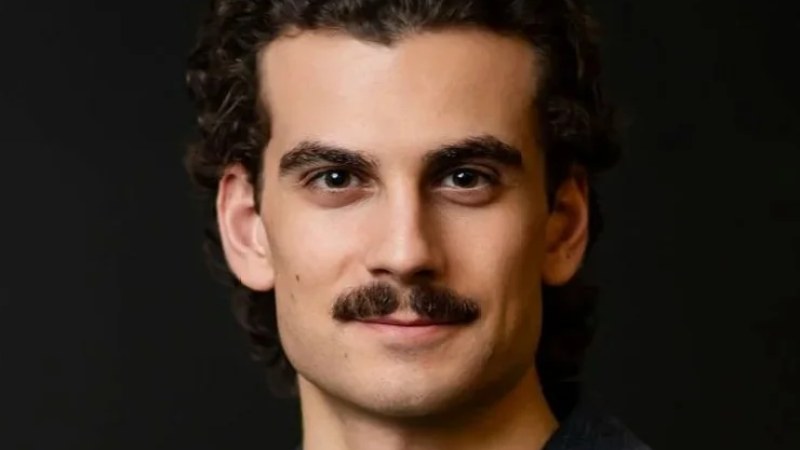
Raphael Certain
Raphael Certain is the founder and CEO of Clarity, a Franco-American neurotechnology company building a wearable virtual-reality headset that delivers personalized light and sound stimulation at gamma frequencies to support the aging brain. A self-taught entrepreneur who pivoted from marine biology to neurophysiology, he turned a master's thesis at the Neurodegenerative Diseases Institute in Bordeaux into a venture-backed company. By 24 he had raised more than $1.3 million, assembled an international team of 20-plus people across Paris and San Francisco, and built partnerships with leading universities in the US and UK.

NodeShift
NodeShift is a decentralized cloud platform that aggregates spare compute, GPU and storage capacity from independent data centers and web3 networks, then resells it through one simplified UI and a single API. By tapping underused infrastructure instead of building hyperscale data centers, NodeShift offers developers and enterprises GPUs, virtual machines and storage at prices it claims are up to 70-80% cheaper than traditional cloud providers - positioning itself as a 'sovereign AI cloud' for teams that want affordable, distributed, compliance-friendly compute.

General Radar Corp.
General Radar Corp. is a Menlo Park deep-tech company building high-resolution, software-defined phased-array (AESA) radar systems for aerospace, defense, wind energy, autonomy, and weather markets. Founded in 2016 by former NASA/JPL engineer Dmitry Turbiner, the company pairs a GaN AESA front-end with digital beam-forming and GPU supercomputing to deliver radars it says are dramatically higher resolution and roughly 20x cheaper than legacy aerospace radar - largely from commercial off-the-shelf parts. It raised a $22M Series A in 2022, bringing total funding to roughly $47.5M.

Cheri Ackerman Araromi
Cheri Ackerman Araromi is the cofounder and CEO of Concerto Biosciences, a Cambridge, Massachusetts biotech that reads the social lives of microbes the way a producer reads a band. Using kChip, a droplet screening platform she helped build during her postdoc at the Broad Institute, Concerto tests how thousands of microbial combinations interact and assembles the winning ensembles into products for skin health, agriculture, and beyond. A Hertz Fellow with a Berkeley PhD in chemical biology, she frames the future of medicine as building healthy ecosystems rather than killing bad cells with toxins.

Dmitry Turbiner
Dmitry Turbiner is the founder and CEO of General Radar Corp., a Silicon Valley deep-tech company building what it calls the world's first 100% commercial AESA phased-array radar with defense-grade performance. An MIT-trained electrical engineer who designed flight-grade satellite antennas at NASA's Jet Propulsion Laboratory, Turbiner left a Stanford master's program to start the company in 2016. General Radar has raised more than $47 million across seed and Series A rounds from backers including Kleiner Perkins and Octave Ventures, and pioneered a 'Radar-as-a-Service' model that aims to deliver high-resolution, long-range threat detection in a fraction of the usual time and cost.

Matthias Wagner
Matthias Wagner is the German-born co-founder and CEO of Flux, the San Francisco-based AI hardware design platform that turns text prompts into production-ready circuit boards in a single browser tab. Before Flux, he produced the Crazy Frog 'Axel F' ringtone that accumulated nearly 3.8 billion YouTube views, led product teams at Facebook for Moments, AR ads, and Oculus VR, and built digital signage company 42 media group out of a friend's garage at age 24. He founded Flux in 2019 out of frustration that hardware tooling had not evolved in decades, and by 2026 had grown the platform to over 1 million sign-ups and raised $37 million in funding led by 8VC.

Yuyo Llamazares Vegh
Yuyo Llamazares Vegh is the CEO and Co-Founder of Stämm, a San Francisco-based biotech company reinventing biomanufacturing through miniaturized 3D-printed microfluidic bioreactors. A native of Argentina with a background in agricultural engineering and bioprocesses from the University of Buenos Aires, Yuyo co-founded Stämm in 2016 alongside his cousin Federico D'Alvia Vegh after spotting a fundamental gap between biology's potential and the outdated tools available to harness it. Stämm's platform - desktop-sized, modular, and scalable - is designed to make the production of biologics, cell therapies, and gene therapies accessible and repeatable at any scale. The company has raised over $17 million including a Series A led by Varana Capital with participation from Draper Associates and SOSV's IndieBio, and has attracted former Merck KGaA CEO Stefan Oschmann to its board. Yuyo was selected as an Endeavor Entrepreneur in 2023.

Alex Hartz
Alex Hartz is a General Partner at Shine Capital, a New York seed-stage venture firm with about $435M across three funds. He came up at SciFi VC over eight years, trained as an applied physicist at Caltech, and writes checks into ambitious founders working at the intersection of hard sciences, financial infrastructure, and applied AI.

Aymerik Renard
Aymerik Renard is a General Partner at HCVC (formerly Hardware Club), a community-driven venture firm investing in hardtech startups out of San Francisco and Paris. With more than two decades in venture capital - including stints at Innovacom, Orange, PCH International, SanDisk and Western Digital Capital - he backs founders working on robotics, space, biotech, defense and climate technology in Europe and North America.

Charlotte He
Charlotte He is a General Partner at Cardinal Ventures, the student-led accelerator at Stanford backing early-stage tech and bio startups. She studies Biology and Data Science at Stanford and fences saber for the Cardinal varsity team. Foster City native; National Merit Scholar; Pan American Cadet silver medalist.

Enrico Carbone
Enrico Carbone is a Brazilian-born General Partner at Reaction, a Palo Alto-based impact venture fund co-founded by 150+ Stanford alumni across 45 countries, focused on improving one billion lives within a decade through health technology and climate innovation. After a 22-year career in global investment banking at firms including Credit Suisse, Merrill Lynch, and BR Partners, he transitioned to venture capital and now also serves as Founding Managing Partner of Irukandji Capital (IKJ Capital), an early-stage healthcare technology fund. He is a Stanford Executive Program (SEP '18) graduate, a recognized GSB Centennial Alumni Catalyst, and a board member of Health in Harmony, an NGO serving indigenous communities in Indonesia, Madagascar, and Brazil.

Jake Storm
Jake Storm is a General Partner at Felicis, the early-stage venture firm behind companies like Shopify, Fitbit, and Canva. He focuses on AI, DevTools, cybersecurity, and deeptech — investing from pre-seed through Series B — and brought to Felicis a track record from IVP where he backed Lyra Health, Whoop, and CircleCI. A Forbes 30 Under 30 honoree in Venture Capital (2023), Storm grew up across multiple U.S. regions and Brazil, giving him a cross-cultural perspective he credits as foundational to how he evaluates founders and markets.

Raj Singh
Raj Shekhar Singh is the Founder and General Partner of z21 Ventures, a community-first, operator-led early-stage VC firm investing at the pre-seed and seed stages across AI, fintech, enterprise software, and healthcare. An IIT Kharagpur BTech graduate with a PhD from UC Berkeley, Singh built his career from McKinsey to founding executive roles at Innovaccer (now a $3.5B healthtech unicorn) before launching z21 in 2022. The firm's $5M Fund I backed 26 startups and has already achieved two exits; Fund II closed its first $20M tranche with WestBridge Capital as anchor investor and is targeting $40M total.