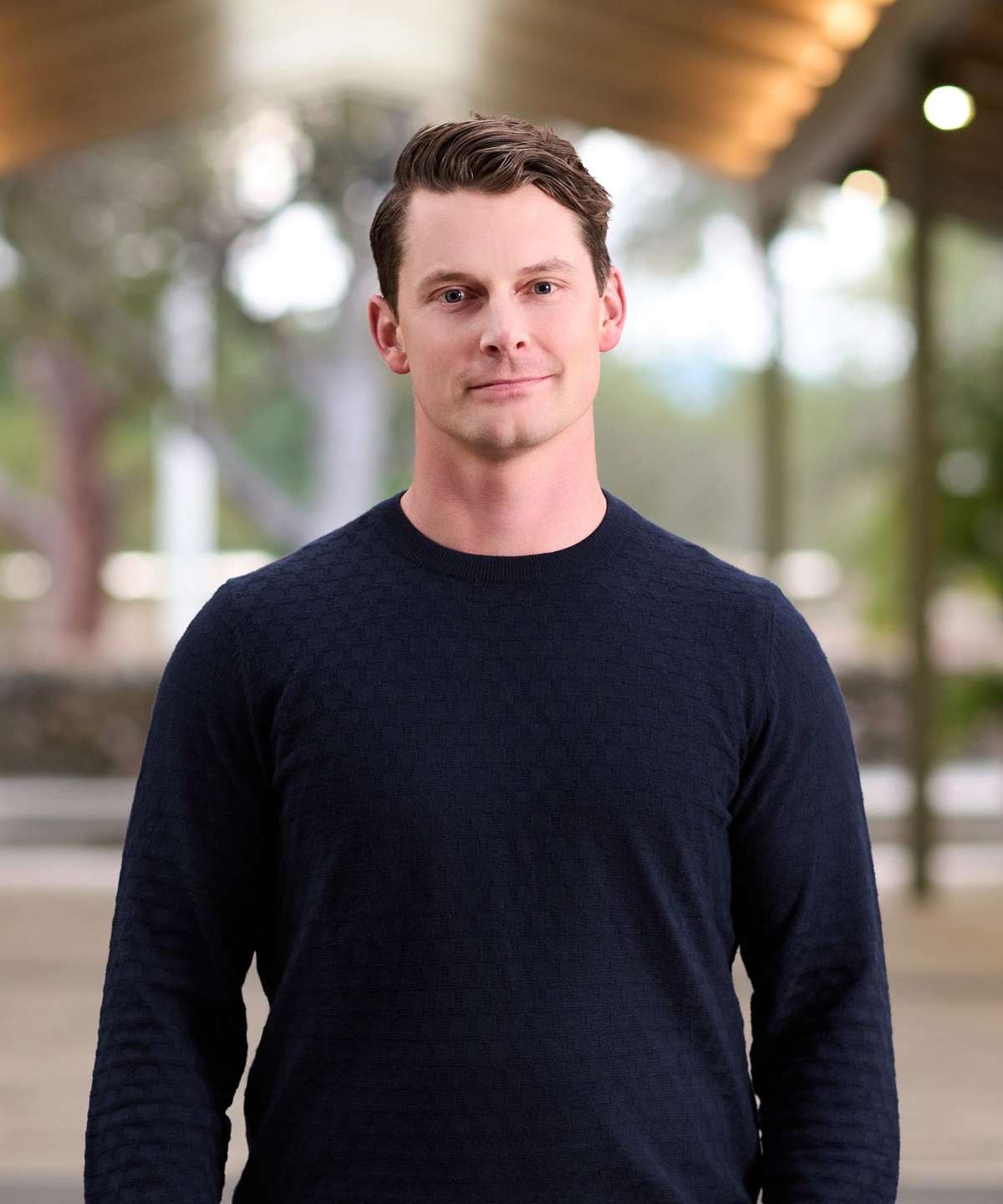
The guy who once cold-called SaaS deals at Qualtrics now writes the checks that fund the companies people cold-call about. General Partner at Felicis. Forbes 30 Under 30. Focused on AI-native security, developer infrastructure, and the founders who talk to customers first.
There is a particular kind of VC who knows what a cold call feels like from the other end of the phone. Jake Storm is that kind. Before he was a General Partner at Felicis - the firm that backed Shopify, Fitbit, and Canva before any of those names were inevitable - Storm was running enterprise software deals at Qualtrics, then Zuora, then Doba. He knows the exhaustion of quota and the discipline of pipeline. That is not a footnote. That shapes everything.
Storm grew up moving. Multiple U.S. regions, then Brazil. The experience is one he cites directly as formative: it trained him to find common ground across radically different contexts, to push boundaries, and to take nothing for granted. He came back to the U.S. for a finance degree at Brigham Young University's Marriott School of Management, then stepped immediately into enterprise sales before making his pivot to finance proper.
The pivot was deliberate. Two years of technology investment banking at Jefferies - executing deals, reading models, learning how capital actually flows through tech ecosystems - gave Storm the quantitative framing his sales years had not. Then came IVP, one of the most respected growth-stage firms in the Valley, where he spent three years partnering with breakout companies: Papaya Global, Lyra Health, Whoop, and CircleCI. These were not bets on slide decks. These were bets on companies mid-stride, with real users and real problems.
In August 2021, Felicis came calling. Storm joined as VP - and within three years had risen to General Partner, the kind of promotion that requires more than hustle. It requires being right often enough, early enough, on companies that other people weren't yet paying attention to.
"The best founders spend time with customers, stay humble, and move quickly with focus. Big outcomes usually come from that combination."
Jake Storm — General Partner, FelicisStorm's investment thesis sits at the intersection of two forces that are reshaping enterprise technology simultaneously: AI is multiplying both the attack surface and the defenders' toolkit at unprecedented speed, and the developer toolchain is being rebuilt from the ground up to handle it. He invests in both sides of that equation.
His cybersecurity bets - Tines, ConductorOne, Dig Security, Corridor, Terra Security, Observo AI - are not bets on compliance theater. They are bets on the companies solving the problems that actually keep practitioners awake. Security is non-optional, he has said. Organizations cannot opt out of it. The problems are technical, complex, and constantly evolving.
His developer tools bets (Depot, Runlayer, Artemis) reflect the same practitioner-first logic: real developers spending real time on build bottlenecks that a focused infrastructure company can eliminate. On Depot alone - a build acceleration platform - he noted that it could help developers run their CI/CD pipelines up to 40x faster.
The check size range runs from $500K to $15M, with a sweet spot around $7.8M. Pre-seed through Series B. He leads deals. That combination - early entry, hands-on involvement, follow-on capacity - is the Felicis model applied with Storm's specific operator lens.
ESTIMATED PORTFOLIO DISTRIBUTION BASED ON KNOWN INVESTMENTS
"Security is mission critical. Organizations cannot opt out of it. The problems are technical, complex, and constantly evolving. And AI is fundamentally changing how software is built and how attacks happen."
Jake Storm — On the AI Security Investment ThesisMost venture capitalists at elite firms come up through finance or consulting. The deal mechanics are second nature. The sales floor is foreign territory. Storm reversed the sequence. He spent years doing enterprise software sales before a single dollar of capital was ever his to deploy. That reversal matters enormously for the founders he backs.
When a founder tells Storm that they are struggling with their go-to-market, he is not translating from a textbook. He ran pipeline. He knows what it means to stare down quota with a product that is not yet clearly differentiated. When he says he values founders who stay close to customers, it is a principle he built from lived experience rather than sourced from pattern recognition on other people's war stories.
That background informs his investment criteria in a specific and unusual way: he is drawn to founders who are grounded in real practitioner challenges rather than theoretical technology trajectories. The question he is asking is not just "is this market large?" It is "is this founder's understanding of the problem built on the bedrock of having talked to the people who actually have it?"
The Brazil years add a second layer. Growing up across distinct cultural contexts - well before Sand Hill Road made "global perspective" a standard VC talking point - taught him to build trust across vastly different settings. That cross-cultural fluency is increasingly relevant as Felicis expands its global footprint and Storm backs companies with international ambitions.
The security category Storm has built at Felicis is not a theme play. It is a specific thesis about what happens when AI enters both sides of the attack-defense equation at the same time. He has made this argument clearly and publicly: AI multiplies the number of attack vectors while simultaneously creating the best new defensive tooling practitioners have ever had. The firms that can sit in the middle of that dynamic - building products that are both AI-native and security-first - are where his convictions are concentrated.
Observo AI, which raised a $15M round in January 2025, is illustrative. The pitch was direct: every new AI agent, every application, every model generates exponentially more telemetry. That data creates chaos for DevOps and security teams whose tooling was not built for AI-scale volume. Observo is building the pipelines to make sense of it. Storm led the charge.
Terra Security, backed in early 2025, addresses offensive security at scale - the kind of continuous testing that AI-native development cycles require but that legacy pentesting firms cannot deliver at speed or price. The logic is consistent across the portfolio: find the problem that practitioners feel most acutely, back the founder who built their understanding of it from the ground up.
"The best founders spend time with customers, stay humble, and move quickly with focus. Big outcomes usually come from that combination."
On Founder Qualities"Security is mission critical. Organizations cannot opt out of it. The problems are technical, complex, and constantly evolving. And AI is fundamentally changing how software is built and how attacks happen."
On the AI Security Thesis"Every new AI agent, application, and model generates exponentially more data, and the result is chaos for DevOps and security teams."
On Observo AI Investment, January 2025"Depot is scaling the build acceleration platform that will revolutionize developer productivity in all environments."
On the Depot Investment, August 2025Felicis was founded by Aydin Senkut in 2006 and has established itself as one of the most consistent early-stage firms in venture capital. The portfolio before Storm joined already included Shopify, Fitbit, Canva, Credit Karma, and Adyen - companies that collectively returned significant multiples across multiple fund vintages.
The firm is based at 2460 Sand Hill Road in Menlo Park, the address that has become shorthand for venture capital itself. The Fund IX close in 2025 - the $900M round listed in Storm's profile - brought total capital raised across Felicis funds above $2.4 billion. The firm has around 90 employees and an annual revenue of approximately $3.5M.
Storm's role as General Partner means he sits at the table for fund strategy, not just deal execution. He sources, leads, and follows companies from pre-seed through Series B - and his cybersecurity and AI infrastructure focus gives the firm a specific and differentiated thematic wedge in an area where deployment pace is accelerating fastest.