Breaking
HARVESTAI wins 1st prize Food/Agritech at Slush $3M+ raised for greenhouse forecasting Pilots running in Germany - Netherlands - Canada Founder Georg Caspary - ex World Bank economist Degrees from Oxford - LSE - Sciences-Po - MIT Named to Germany's 40 under 40 HARVESTAI wins 1st prize Food/Agritech at Slush $3M+ raised for greenhouse forecasting Pilots running in Germany - Netherlands - Canada Founder Georg Caspary - ex World Bank economist Degrees from Oxford - LSE - Sciences-Po - MIT Named to Germany's 40 under 40
Profile - Founder & CEO, HarvestAi

Georg
Caspary.

He moved ninety million dollars for the planet at the World Bank. Then he sat down to solve a smaller, stranger problem: how many tomatoes will this greenhouse produce, and on exactly which day?

AgritechMachine LearningComputer VisionClimate TechPotsdam
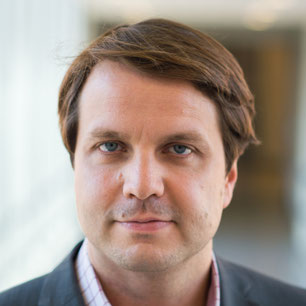
Georg Caspary, founder and CEO of HarvestAi

Georg Caspary. The economist who traded balance sheets for a greenhouse - and a question about ripeness.

The Story

A crystal ball for the produce aisle

Walk into a high-tech tomato greenhouse and you will find heat, humidity, and a quiet kind of anxiety. The grower has signed contracts. The supermarket wants a fixed number of crates on a fixed Tuesday. The plants, meanwhile, answer to the sun. Getting the forecast wrong by a week means empty shelves or rotting fruit. This is the gap Georg Caspary decided to live inside.

His company, HarvestAi, builds software that watches plants the way an obsessive head grower would - except it never sleeps and never blinks. Cameras feed images into computer-vision models. Sensor streams feed machine-learning models. Out the other end comes something growers have wanted for a century and never quite had: a credible answer to when the harvest lands and how big it will be. Tomatoes first, then peppers, then strawberries.

It sounds narrow. It is supposed to. Caspary spent two decades on the largest stages in development finance, and what he learned there was that the biggest problems usually hide inside the most specific ones. Food security is abstract. A pepper that ripens three days late is not.

"True innovation in indoor farming emerges when experts from different fields come together to solve real-world farming challenges."

That conviction shapes the company he assembled. HarvestAi is deliberately interdisciplinary: plant biologists sitting next to data scientists, physicists next to greenhouse veterans. His head of experiments and data science holds a PhD in neuroscience. His operations lead is an industrial engineer turned sustainability specialist. The point is not to hire AI people who dabble in farming. It is to build a room where the farming and the AI argue with each other until something true falls out.

HarvestAi runs from Potsdam, just outside Berlin, with a test greenhouse in the Netherlands and pilot growers stretching to Canada. The company has raised more than three million dollars, added EUR 1.58 million in cross-border European co-financing, and - in the kind of validation that makes investors lean forward - took first prize in Food and Agritech at Slush, the largest startup gathering in Europe.
20+
Countries worked
$3M+
Raised for HarvestAi
4
Universities attended
1st
Food/Agritech at Slush
Before the greenhouse

From the World Bank to the watering can

Caspary did not arrive in agritech by accident, and he did not arrive young. For roughly twelve years he worked at the World Bank as an economist and team lead, ultimately running fundraising for the environment portfolio. The number attached to that work - around ninety million dollars mobilized - is the kind of figure that gets a person comfortable. He collected World Bank awards for project quality and led multicultural teams of around thirty people across several continents.

Before and around that, he advised on environmental regulation at the OECD, did stints with the IFC, and taught - he has lectured in graduate programs and published peer-reviewed work on energy economics and renewable energy. He is, on paper, an academic's academic: degrees from Oxford, where he studied economics and philosophy as a National Merit Scholar, the London School of Economics, a doctorate in infrastructure and environmental economics from Sciences-Po Paris, and an MBA in clean-tech management from MIT.

And yet the through-line is not finance. It is the environment, and increasingly the unglamorous machinery of how the world feeds itself without cooking the planet. In 2019 he founded Scaletech in Potsdam, a vehicle for bringing clean technologies to market. He picked up patents along the way - in energy management and, tellingly, in tracking emissions from indoor farms. A year later, HarvestAi was born.

He treats farming as an engineering problem. The greenhouse is a system. The plant is a process. The harvest is an output you should be able to predict.
University of Oxford
Economics & Philosophy - National Merit Scholar
LSE
London School of Economics
Sciences-Po Paris
PhD, Infrastructure & Environmental Economics
MIT
MBA, Management / Clean Tech
By the numbers

A career measured in scale

Four numbers that map the arc - from a global institution moving serious capital, to a focused startup proving that the smallest forecast can carry the biggest stakes.

~12 yrs
World Bank tenure
20+
Countries
3
Pilot countries
~12
HarvestAi team
In his words
"Finding the right strategy and the right growth path is make-or-break for the company."
Georg Caspary, on his job as founder
What he is actually building

Three ideas inside HarvestAi

01 / The Eye

Computer vision that counts

Cameras read the crop the way a seasoned grower reads a row - spotting fruit, gauging maturity, estimating volume. Except the model looks at every plant, every day, and never gets tired.

02 / The Forecast

Machine learning for ripeness

Sensor streams and historical data train models that predict harvest dates and yields. Growers get scenario planning instead of gut feel, and can match supply to what the market actually wants.

03 / The Team

Biology arguing with AI

Plant scientists, a neuroscience PhD, physicists and greenhouse hands in one room. The bet: real innovation shows up only when the disciplines collide instead of politely coexisting.

The timeline

How the path bent toward the greenhouse

2000s

OECD, Paris

Advises on environmental regulation, building the policy fluency that later separates him from typical tech founders.

~2007-19

The World Bank

Economist, team lead and environment fundraising lead - mobilizing around $90M and leading teams across continents.

2019

Scaletech GmbH

Founds his Potsdam company to bring clean technologies to market, and starts filing patents.

2020

HarvestAi is born

Turns the lens on greenhouses - applying AI and computer vision to crop growth and yield prediction.

2023

Funding & partners

Runs a seed crowdinvesting round via Companisto; partners with Canobi AgTech and German growers; wins at Slush.

2025

MIT STEX Demo Day

Returns to MIT's orbit to present HarvestAi's forecasting technology to industry.

Why this, why now
Working on "some of the most important topics of our time, at the interface between climate change and food security."
Georg Caspary, on why he builds HarvestAi
Fun & telling

Five things that explain him

He collected degrees from four institutions - Oxford, the LSE, Sciences-Po Paris and MIT - then went to work in a greenhouse.

He holds patents on indoor-farm emissions tracking. To him, farming is an engineering discipline waiting for better instruments.

His company's whole pitch is answering one humble question precisely: when, exactly, will this fruit be ripe?

He made Germany's "40 under 40" list - recognition earned in cleantech, long before agritech was fashionable.

The lab is a test greenhouse in the Netherlands; the customers reach as far as Canada; the HQ is quiet Potsdam.

Find him

Links & sources