The Present Tense
A farming company that happens to fly drones
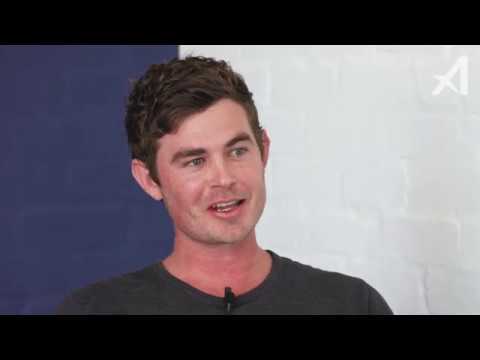
James Paterson runs Aerobotics, and he will correct you if you call it a tech company. "We're not a tech company doing agriculture - we're a farming company enabled by tech," he told AgFunderNews. The distinction is not marketing. It is the whole thesis. Aerobotics points drones and satellites at orchards, then runs the imagery through machine-learning models that describe the health, fruit count and yield potential of individual trees. Not fields. Not blocks. Trees. The grower opens an app called Aeroview and sees which specific plant, in which specific row, is quietly failing.
That granularity is the product. A farmer with 100,000 trees cannot walk every row. An algorithm can look at all of them before breakfast and flag the sick ones. Today the company's reach is heaviest in the United States - its largest market - where its models read a sizeable slice of the Florida citrus crop. The headquarters, though, sits in Cape Town, on the same continent where Paterson learned that a bad season is not a spreadsheet. It is a real thing that happens to real fruit.
TREE-LEVEL, NOT FIELD-LEVEL: Aerobotics builds a digital model of each plant - tracking growth, fruit size, fruit count and irrigation efficiency across hundreds of thousands of trees.
The Strange Specific
The kid who built a machine to clean irrigation lines
Before the funding rounds and the Fast Company lists, there was a boy on a fruit farm near Cape Town with a problem and a toolbox. Drip-lines clog. Someone has to clean them. Paterson, instead of accepting the chore, designed and built a mechanised drip-line cleaner. He built citrus trailers too. This is the tell. Long before he knew the words "precision agriculture," he was already doing the thing precision agriculture does: looking at a stubborn farm problem and reaching for a machine.
The farm gave him something no engineering degree can hand out - the felt sense of unpredictable weather, pests that arrive without warning, and margins thin enough to see through. When he later insisted that agritech has to "solve real problems for farmers," he was not theorizing. He had lived on the other side of the sale.
"Farming is a specialized industry that requires one to fully understand its intricacies to succeed in serving that niche."
- James Paterson
The Training
From UCT robots to MIT rockets
Paterson studied Mechatronics Engineering at the University of Cape Town, where he collected awards for building aerial and ground robots. Then he went to MIT for a masters in Aeronautics and Astronautics. The projects there read like a shopping list for the company he had not yet started: gimballed rocket control, an optical-flow localisation system, and autonomous collision avoidance and path planning for unmanned aerial vehicles. He was, in other words, teaching flying machines to see where they were and avoid hitting things - which is most of what a farm drone needs to do before it can count a single orange.
The neat trick of his biography is that the two halves fit. The farm taught him the problem. MIT taught him the flying, seeing, deciding machines. Aerobotics is what happens when those two things meet in the same person.
THE NAME IS THE BIOGRAPHY: "Aerobotics" welds aerial robotics to the orchard - the two obsessions Paterson carried from Cape Town to Cambridge and back.
The Build
A prototype flown over his own trees
In 2014, Paterson teamed up with Benji Meltzer, a computer-vision specialist and Imperial College London graduate who became Aerobotics' CTO. Paterson brought the farm-savvy; Meltzer brought the algorithms. Their first testbed was not a lab. It was Paterson's family farm, where they flew drones over citrus blocks looking for early stress signals in the trees. The orchard that raised him became the orchard that trained the models.
What came out of those flights was Aeroview, the platform that turns high-resolution drone and satellite imagery into AI-driven insight, paired with the Aeroview Scout app that puts the data in a grower's pocket. The company expanded from South Africa into the US, standing up teams in Florida and California. Backed early by Nedbank, it kept climbing.
"The most important thing is that you have to solve real problems for farmers and tie into what's most important to them."
- James Paterson
Milestones
The road, marked
Childhood - the family farm
Grows up on a citrus farm near Cape Town; builds a mechanised drip-line cleaner and citrus trailers.
University of Cape Town
Earns a BSc in Mechatronics Engineering, winning awards for aerial and ground robots.
MIT
Completes a masters in Aeronautics and Astronautics; works on gimballed rocket control, optical-flow localisation, and autonomous UAV collision avoidance.
2014
Co-founds Aerobotics with Benji Meltzer to fuse aerial imagery and machine learning for farmers.
2018
Rolls out new precision-agriculture products including Aeroview and the Aeroview Scout app; expands into the US.
December 2020
Closes a Series B of nearly $17M led by Naspers Foundry, with FMO, Endeavor Catalyst and Cathay AfricInvest Innovation.
Today
Leads Aerobotics as CEO, serving farming groups across roughly 18 countries with the US as its biggest market.
What He's Really After
Put a data scientist on every branch
Strip away the drones and the funding and Paterson's aspiration is almost old-fashioned: help the grower grow more, waste less water, and lose fewer trees to problems caught too late. The technology is spectacular; the goal is practical. He wants tree-level intelligence to be as normal for a fruit farmer as a weather forecast - useful, trusted, and boring in the best way. And he keeps the company pointed at that by refusing the easy identity. Not a tech company chasing agriculture. A farming company that learned to fly.