drones
(40)
The Robot in the Gas Main: How ULC Turned Fewer Holes in the Street Into a $40 Million Business
Utilities do not buy robots because robots are charming. They buy fewer excavations, shorter closures and safer work - and ULC Technologies learned to sell exactly that outcome.

The 18th Street Camera Shop That Refused to Become a Website
A Holocaust survivor opened a camera counter on 34th Street in 1974. Fifty years later his shop is a rental house, a photo lab, a B2B supplier and a YouTube school - and it still keeps the lights on at one address in the Flatiron District.

How a Dorm-Room Drone Project Became the Company That Owns the Sky
Frank Wang built his first flight controller in a Hong Kong dorm. Two decades later DJI sells most of the drones on Earth - and Washington is trying to decide whether to let it keep selling them here.

The Accelerator That Bets on Atoms, Not Apps
Everyone wanted to fund the next app. N15 built a workshop for the people who make things you can hold - and turned Korea's biggest electronics market into a startup factory.

Vector Sells the Pentagon a Subscription to Modern Warfare
A 14-month-old drone maker out of Salt Lake City wants to sell the U.S. military warfare the way Adobe sells Photoshop - as a service, updated constantly, billed like a subscription.

The VC Firm Where the Founders Salute First
Justin Nahama and three partners are betting that the discipline that runs toward gunfire also builds companies. Their first fund is oversubscribed, their portfolio has raised over $350 million, and a $50 million second fund is now open.

Alex Fink
He watched his parents tune into Voice of America at 4 a.m. Decades later he is building the software brain for drone swarms - and an app to clean up the news. The through-line is simpler than it looks.

Nine Fives
Nine Fives builds modern radio-frequency (RF) test equipment for manufacturers of wireless devices in cellphones, drones, and satellites. Founded by two former SpaceX engineers, the company replaces slow, driver-heavy legacy instruments with driverless, touchscreen, network-connected modules that share a single machine-readable API (REST and SCPI) and ship AI-readable documentation. The pitch: get RF test off the critical path and cut a hardware team's production-readiness timeline from months to minutes.

Rebulk
Rebulk is a Y Combinator (S25) startup that measures and monitors bulk inventory - feed, sand, grain, logs, biomass and other materials that never fit into boxes or barcodes. Using fixed cameras, drones, LiDAR and computer vision, Rebulk stitches 2D imagery into 3D volumetric models to give industrial teams precise, repeatable volume and weight data instead of rough estimates and manual checks. Founded in Olathe, Kansas by Warren Wang and Cole Robertson, the company pivoted from video transcription (as dScribe AI) to bulk inventory tracking and now runs pilots with partners including Cargill and Charm Industrial.

Sam Dai
Sam Dai is the co-founder and CEO of Enpower Greentech, a battery cell maker building semi-solid-state, lithium-metal, and silicon-rich cells. Trained as a physicist at Tsinghua and a materials scientist at UT Austin under Nobel laureate John B. Goodenough, he started the company in 2012 with fellow post-doc Che Yong. The company has shipped over 3 million solid-state cells, holds more than 100 patents, and runs facilities across the US, China, Japan, and Germany. Dai was selected for Unreasonable Impact Asia Pacific 2024.
Unleash live
Unleash live is a Sydney-based enterprise computer vision company that turns live video and imagery from drones, CCTV, IP cameras and mobile devices into real-time, actionable insights. Its cloud and edge platform runs a library of AI models to inspect critical infrastructure - power lines, wind turbines, solar farms, rail, roads and industrial sites - detecting faults, corrosion and equipment wear so utilities, transport authorities and resource companies can inspect assets faster and safer. Alongside the core platform it offers Autofly for automated drone and robot inspections and an AI App marketplace for building and deploying custom vision models.

NODA AI
NODA AI is an Austin-based defense technology company building an AI reasoning engine that orchestrates fleets of autonomous systems across vendors and domains. Founded in 2024 by Marine Corps veterans, its platform lets operators command desired effects rather than individual machines, coordinating mixed fleets of manned and unmanned assets from air to subsurface. NODA raised a $25M Series A led by Bessemer Venture Partners in February 2026, with backing from Booz Allen Ventures, and works with the U.S. Department of War, the UK Ministry of Defense, and defense primes.

Scanifly
Scanifly is a New Jersey-based B2B software company that helps solar contractors design and survey photovoltaic systems using drone imagery, photogrammetry, and AI. Its cloud platform turns a five-minute drone flight or remote satellite/LiDAR data into a to-scale 3D model accurate to within 1-3 inches, then generates layouts, shading reports, and permit-ready plan sets. Contractors use it from pre-sale proposals through post-sale final design to cut survey and design time by as much as 90% and reduce costly change orders on install day.

Swarmer
Swarmer builds combat-proven, hardware-agnostic autonomy software that lets a single operator command hundreds of drones - across air, sea and ground - as one coordinated swarm. Born out of the war in Ukraine and founded in 2023, its STYX, MINAS and TRIDENT products translate human objectives into autonomous action while keeping people in control of life-or-death decisions. The company's software has supported more than 100,000 real-world combat missions, raised a record $15M Series A, and went public on the Nasdaq in 2026 under the ticker SWMR.

Jason Steinberg
Jason Steinberg is the CEO of Scanifly, a drone-based software platform that lets solar companies survey rooftops, build 3D models, run shading analysis, and produce permit-ready designs without repeated site visits or dangerous roof climbs. A CFA charterholder who once installed solar panels on New Jersey rooftops, he spent years financing renewable energy projects at Bloomberg New Energy Finance and CohnReznick Capital before taking the helm at Scanifly in 2018. He hosts the podcast 'When Life Gives You Lumens,' where he digs into how the solar industry can scale through better technology, safety, and workforce development.

Ivan Lvov
Ivan Lvov is the CEO of TraceAir Technologies, a Seattle-founded construction site intelligence platform that uses drone data and AI to help homebuilders and land developers measure, verify, and manage grading and earthwork from land acquisition through finished lots. He joined TraceAir in 2016 as Chief Strategy Officer and stepped into the CEO role in September 2025, succeeding co-founder Maria Khokhlova. Before TraceAir he spent years scaling a digital mapping and navigation franchise (2GIS) to 16 offices and 450 employees, and he holds an MSx degree from Stanford Graduate School of Business.

Chariot Defense
Chariot Defense is a South San Francisco defense-technology company building hybrid-electric power systems for the battlefield. Its Amphora platform delivers quiet, high-density, software-controlled power to distributed military hardware - drones, sensors, radios, electronic-warfare and directed-energy systems - so that energy never becomes the limiting factor in a fight. Founded in 2024 by former Anduril and Archer engineer Adam Warmoth, the company raised a $34M Series A led by Andreessen Horowitz in February 2026, bringing total funding to roughly $41-42M, and has fielded its systems with the U.S. Army and the Defense Innovation Unit.

Enpower Greentech Inc.
Enpower Greentech is a battery maker building the next generation of lithium-metal and solid-state cells. Founded in 2012 by two post-docs from Nobel laureate John Goodenough's lab, the company designs semi-solid, quasi-solid, and all-solid-state batteries with energy densities pushing past 500 Wh/kg. Its cells power industrial drones, eVTOL aircraft, high-altitude pseudo-satellites, and electric vehicles, and it says it has shipped more than 3 million cells across its SWIFT, FLEET, and KOSMOS platforms from facilities in the US, China, Japan, and Germany.
Todd Graetz
Todd Graetz is the co-founder and CEO of Aerolane, a Texas aviation startup building autonomous towed cargo gliders called Aerocarts, which let ordinary planes tow extra payload for only a marginal increase in fuel burn. Before Aerolane he spent his career at BNSF Railway, where he co-founded the railroad's uncrewed aircraft systems program and helped launch some of the first long-range beyond-visual-line-of-sight commercial drone flights in the U.S. under the FAA Pathfinder program. He is an active private pilot, an AUVSI board member, and a veteran of multiple FAA advisory and rulemaking committees.

HYFIX
HYFIX (HYFIX Spatial Intelligence) is a Santa Clara semiconductor startup building an American-made autonomous systems chip that fuses high-precision GNSS positioning, inertial sensing, flight control, encrypted communications and onboard AI into a single system-on-chip. Emerging from the GEODNET decentralized positioning network, HYFIX aims to give U.S. drone and robotics makers a domestic alternative to Chinese-dominated supply chains, with centimeter-accurate location that resists jamming and spoofing.

PRENAV
PRENAV digitizes the world's critical infrastructure with drones, LiDAR, 3D analytics, and deep learning. Its web-based platform, PRENAV.XYZ, combines photogrammetry with AI to turn drone imagery into detailed 3D digital twins, then scans them for cracks, corrosion, and structural damage - resolving surface features smaller than 0.2mm. Founded in 2013 in Redwood City, the company replaces dangerous rope-and-scaffold inspections of cell towers, wind turbines, bridges, dams, and even nuclear reactors with automated, precise, GPS-independent drone flights.

Roboto AI
Roboto AI is a Seattle-based analytics platform for robotics and Physical AI teams. It ingests multimodal robot logs - ROS bags, PX4/ULog, MCAP, Parquet, video - and uses AI agents plus a Python SDK and CLI to automatically search, analyze, and surface edge cases, anomalies, and failures across entire robot fleets. Founded in 2022 by former Amazon Robotics leaders Benji Barash and Yves Albers-Schoenberg, the company spun out of the Allen Institute for AI and raised a $4.8M seed to help robotics developers stop digging through petabytes of sensor data by hand.

James Paterson
James Paterson is the co-founder and CEO of Aerobotics, a Cape Town-based precision agriculture company that turns drone and satellite imagery into AI-powered, tree-by-tree insights for fruit and nut growers. Raised on a family citrus farm and trained as a mechatronics engineer at the University of Cape Town before a masters at MIT, Paterson pairs first-hand farming instinct with aerospace-grade robotics. Since founding Aerobotics with Benji Meltzer in 2014, he has grown it into a global player that now analyzes a large share of the Florida citrus crop and has raised roughly $30 million, insisting the company is 'a farming company, enabled by technology' rather than a tech company that dabbles in farming.

Jia Xu
Jia Xu is CEO of SkyGrid, the Austin, Texas company building high-assurance airspace integration software for autonomous and unmanned flight. With a PhD from Stanford, dual master's degrees from Imperial College London and the London School of Economics, and career stints at the RAND Corporation, Airbus, General Atomics, and Honeywell Aerospace, Xu brings rare cross-disciplinary depth to one of aviation's hardest problems: teaching machines to share the sky. Under his leadership since August 2023, SkyGrid pivoted from generic airspace software to become a specialized third-party services provider for advanced air mobility - and was acquired by Wisk Aero (a Boeing subsidiary) in June 2025.
PowerLight Technologies
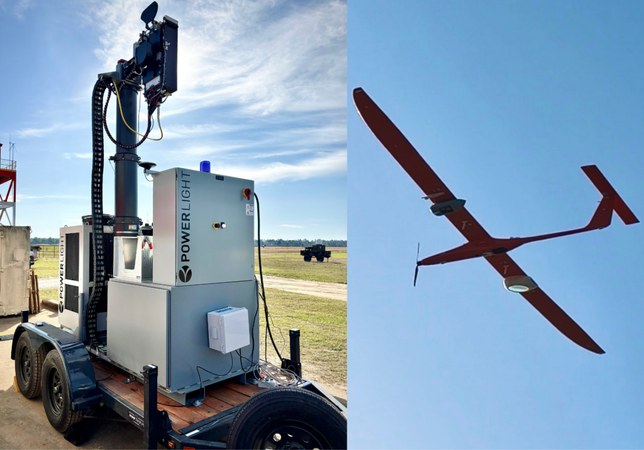
PowerLight Technologies is a Kent, Washington-based engineering company that transmits electricity through the air using lasers. Spun out of the original LaserMotive (founded 2006 by Tom Nugent and Jordin Kare), PowerLight builds end-to-end power beaming systems that keep drones flying for hours, relay energy across kilometers of free space, and underpin DARPA initiatives for terrestrial, aerial, and lunar power transmission.
Valtec
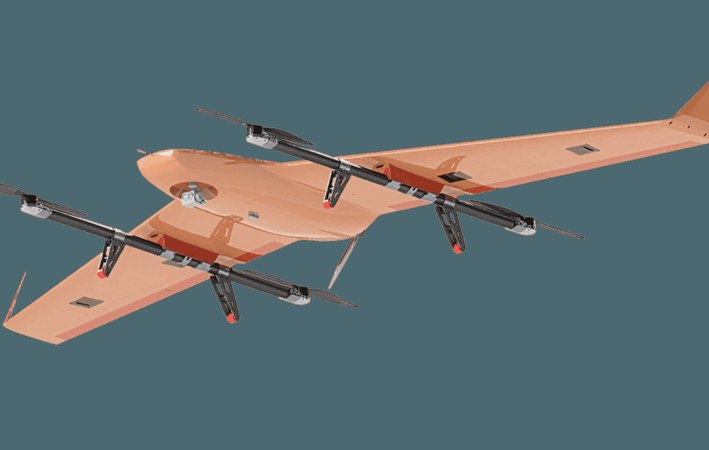
Valtec is a San Diego-founded maritime intelligence company turning ocean data into real-time decisions. Its Larus VTOL fixed-wing hybrid drone launches straight off moving fishing vessels - no runway, no shore infrastructure - and its Fulcan AI vision stack reads the water below for fish, vessels and threats. Built first for commercial tuna fleets in Taiwan and the Philippines, Valtec's pitch is blunt: cut a month at sea down to two weeks, burn less fuel, and see what's happening in waters no one else is watching.

David Zagaynov
David Zagaynov is the CEO and co-founder of Poseidon Aerospace, a San Francisco aerospace startup building unmanned, runway-independent cargo aircraft. A UC Berkeley computer science graduate and former Amazon software engineer, he co-founded the company in 2023 with Parker Tenney and Isaac Baumstark around a shared obsession with the ekranoplan, a Soviet Cold War boat-plane that skimmed just above the water. Poseidon is developing the Heron seaplane and the Egret short-takeoff aircraft, each designed to haul up to two tons of cargo over 1,500 miles. The company raised an $11 million seed round in November 2025 led by Tamarack Global, after a $1.4 million pre-seed led by Starship Ventures.
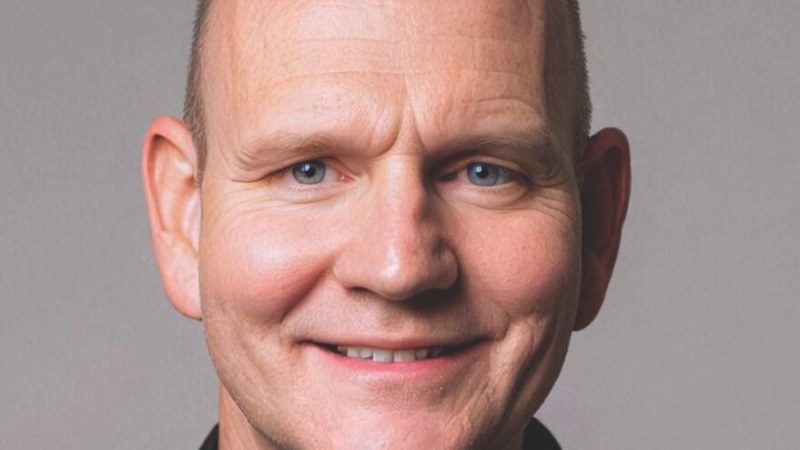
Mike Horton
Mike Horton is an American engineer and serial deep-tech founder who turns physics into products. He co-founded Crossbow Technology in 1995 out of UC Berkeley, commercialized MEMS motion sensors, and sold the company for about $50 million. He later built GEODNET, a blockchain-incentivized network of roughly 21,000 ground stations that has become the world's largest decentralized GNSS reference network, and now leads HYFIX Spatial Intelligence, a Santa Clara startup that raised a $15M seed led by Craft Ventures to build American-made positioning-and-autonomy chips for drones and robots.

Nathan Schuett
Nathan Schuett is the founder and CEO of PreNav, a Redwood City company that builds drones guided by computer vision to inspect the infrastructure most people never look at - cell towers, wind turbines, bridges, smokestacks. The idea started as a half-serious plan to fly coffee across a cafe and grew into a navigation system precise enough to fly a robot within centimeters of a steel structure without a GPS signal or an expert pilot. A Stanford computer-music graduate who detoured through video games and robotics, Schuett now also lists himself as founder of Forming AI, the next chapter of turning the physical world into analyzable 3D data.

ACEINNA
ACEINNA is a Massachusetts-based MEMS sensor company building high-performance, low-cost inertial measurement units (IMUs), GNSS/RTK precision-navigation systems, current sensors, and flow sensors. Spun out of MEMSIC in 2017 with a roughly $50M investment, ACEINNA is best known for its open-source OpenIMU platform and for shipping centimeter-accurate positioning solutions for autonomous vehicles and ADAS at a fraction of the price of legacy systems.