uav
(17)
Vadym Melnyk Built a Drone That Knows When to Come Home
A teenage exchange year, an unfinished degree and one stubborn engineering question led from Ukraine to Poland to North Carolina. Along the way, Melnyk learned that the useful robot is the one that can finish the boring job without asking for applause.

Steve Zeets Measures the Ground From the Sky
A rodman learned to fly, an FAA webpage blinked, and an Iowa surveyor built a career around one stubborn question: can drone data be trusted on the ground?
Dronehub Crashed the Demo. Then It Built the Part of Drone Autonomy Everyone Else Forgot
A failed flight nearly emptied the order book. The comeback was a sharper idea: stop selling every part of the drone dream and own the two-minute turnaround that makes autonomous inspection practical.
Vector Sells the Pentagon a Subscription to Modern Warfare
A 14-month-old drone maker out of Salt Lake City wants to sell the U.S. military warfare the way Adobe sells Photoshop - as a service, updated constantly, billed like a subscription.
The Austin Drone Company Betting the Air Force Will Ditch the $30,000 Helicopter Hour
Skyways flies cargo drones nobody steers - no joystick, no remote pilot - between air bases and out to oil rigs. Now it wants to turn a hand-built aircraft into a production line.

Kite Aero
Kite Aero is an Australian uncrewed-aviation company building a globally deployed drone logistics platform. It pairs the long-range Kite aircraft with AXIOM, a cloud-based flight operating system and digital twin that lets a single pilot supervise up to 30 aircraft. Formed after acquiring the assets of medical-delivery pioneer Swoop Aero in 2025, Kite Aero operates a drone transport network with more than 40,000 autonomous flights and 20,000 flight hours across humanitarian and commercial supply chains, and is opening its AI platform to drone manufacturers, logistics providers, governments and enterprises with last-mile delivery needs.

Marakeb Technologies
Marakeb Technologies is a Sharjah-based UAE company specializing in platform-agnostic autonomy for marine, ground, and aerial vehicles. Its patented MAP Pro conversion kit turns almost any manned vehicle - from boats to cars to drones - into a remotely operated or fully autonomous system. With roots in GRP boat building since 2007, the company now builds unmanned surface vessels, ground control stations, and combat management systems for defense, security, oil and gas, environmental, and transportation customers, and is majority-owned by Tawazun's Strategic Development Fund.
Unleash live
Unleash live is a Sydney-based enterprise computer vision company that turns live video and imagery from drones, CCTV, IP cameras and mobile devices into real-time, actionable insights. Its cloud and edge platform runs a library of AI models to inspect critical infrastructure - power lines, wind turbines, solar farms, rail, roads and industrial sites - detecting faults, corrosion and equipment wear so utilities, transport authorities and resource companies can inspect assets faster and safer. Alongside the core platform it offers Autofly for automated drone and robot inspections and an AI App marketplace for building and deploying custom vision models.

SeekOps Inc.
SeekOps is an Austin-based climate-technology company that mounts a NASA-derived laser methane sensor, the SeekIR, onto enterprise-grade drones to detect, locate, quantify, and report methane emissions for energy, renewable natural gas, and waste operators. Spun out of NASA's Jet Propulsion Laboratory in 2017, its drone-agnostic Leak Detection and Quantification (LDAQ) systems help operators meet regulatory frameworks such as OGMP 2.0, EPA rules, and the EU Methane Regulation, and have been deployed onshore and offshore for majors including bp, Shell, TotalEnergies, and Equinor.

Swarmer
Swarmer builds combat-proven, hardware-agnostic autonomy software that lets a single operator command hundreds of drones - across air, sea and ground - as one coordinated swarm. Born out of the war in Ukraine and founded in 2023, its STYX, MINAS and TRIDENT products translate human objectives into autonomous action while keeping people in control of life-or-death decisions. The company's software has supported more than 100,000 real-world combat missions, raised a record $15M Series A, and went public on the Nasdaq in 2026 under the ticker SWMR.

Jackie Wu
Jackie Wu is the founder and CEO of Corvus Robotics, a company that builds fully autonomous drones that fly indoors and count warehouse inventory without beacons, GPS, Wi-Fi, or a human at the controls. A Northwestern-trained roboticist who spent time inside warehouses on four continents, he grew tired of watching people climb ladders with clipboards and barcode guns, and decided to teach a drone to do it instead. Corvus designs and manufactures its drones in California, went through Y Combinator, and raised a Series A in 2024 to push warehouses toward a lights-out future.
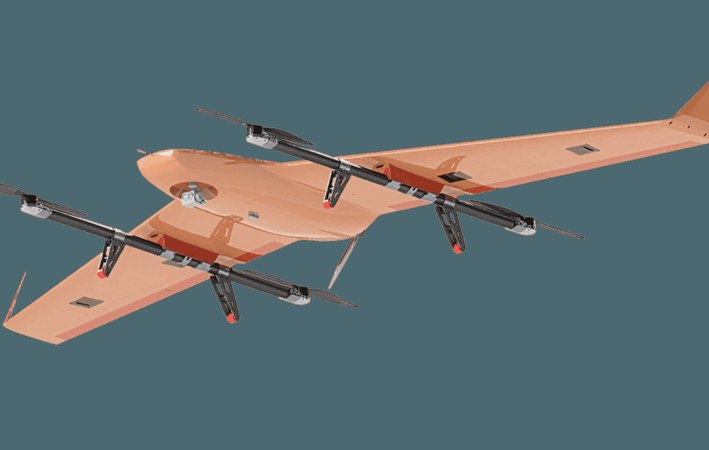
Valtec
Valtec is a San Diego-founded maritime intelligence company turning ocean data into real-time decisions. Its Larus VTOL fixed-wing hybrid drone launches straight off moving fishing vessels - no runway, no shore infrastructure - and its Fulcan AI vision stack reads the water below for fish, vessels and threats. Built first for commercial tuna fleets in Taiwan and the Philippines, Valtec's pitch is blunt: cut a month at sea down to two weeks, burn less fuel, and see what's happening in waters no one else is watching.
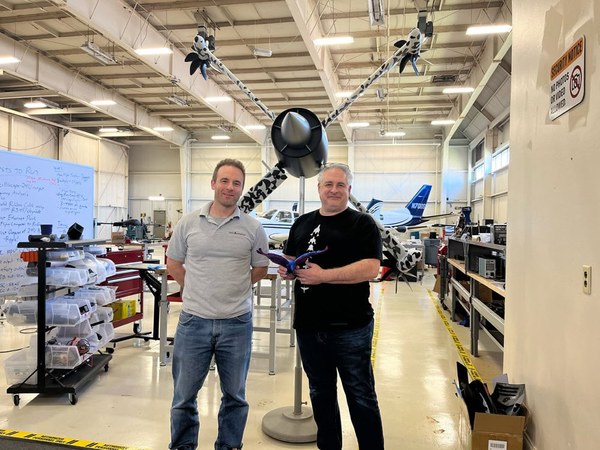
Mark Strauss
Mark Strauss is the co-founder and CEO of WaveAerospace, a Stratford, Connecticut drone manufacturer building unmanned aircraft engineered to fly in the wind, rain and snow that ground everyone else. A Yale chemistry graduate, airplane racer and pilot who flew before he could legally drive, Strauss teamed with aerospace engineer Steve Bofill to design a new class of all-weather UAS - from the wind-beating Falcon II to the 300-mph Huntress turbojet - sold to police, emergency services, militaries and foreign governments including Ecuador. The company closed an oversubscribed Series A in 2023 at a $40 million pre-money valuation.

WaveAerospace
WaveAerospace builds unmanned aircraft that fly when nothing else can. Based in Stratford, Connecticut, the company designs heavy-weather drones, UAVs and hybrid VTOL aircraft for police, emergency services, offshore operators and the military - machines rated to operate in wind, rain and snow that ground conventional drones. Its lineup includes the all-weather Falcon II multicopter, the GPS-contested Nyx, the heavy-lift Mule, and the Huntress Turbojet, a hybrid jet that reaches roughly Mach 0.4.

Kyle Moore
Kyle Moore is co-founder and Software Fellow at Pyka, the Alameda, California company building the world's largest commercially-approved autonomous electric aircraft. A self-taught programmer who started writing code at age 11 from rural Washington, Moore brought firmware and robotics expertise from Google X to help design Pyka's Pelican — a 1,320-lb autonomous electric aircraft now spraying crops across four continents and delivering cargo for the U.S. Air Force. Pyka has raised $95M in total funding and achieved back-to-back FAA authorizations for the largest uncrewed aircraft systems in U.S. commercial history.

Michael Norcia
Michael Norcia is the Co-Founder and CEO of Pyka, the world's first FAA-certified autonomous electric aviation company. Based in Alameda, California, Pyka builds large-scale autonomous electric aircraft for agricultural crop protection and cargo logistics. Norcia — a UC Davis applied physics grad who cut his teeth engineering firmware and power systems at Zee Aero, Joby Aviation, and Kittyhawk — founded Pyka in 2017 (Y Combinator S17) with a pragmatic thesis: skip the flying cars, solve the problems aviation already has. Today Pyka's Pelican aircraft spray hundreds of acres per hour across the US, Costa Rica, Honduras, and Brazil, and the company is expanding into defense with a new platform called DropShip.

Pyka
Pyka builds large autonomous, all-electric aircraft for crop protection and cargo logistics. Headquartered in Alameda, California, the company designs its own airframes, batteries, flight computers, and autonomy stack, and flies them commercially across four continents for customers in agriculture, freight, and defense.