Tagged Content
Everything on the platform tagged with aerospace.
Nominal builds the software stack that lets hardware engineering teams test, validate, and operate complex physical systems - fighter jets, nuclear reactors, satellites, rockets, robots - as fast as software teams ship code. Its platform unifies high-frequency telemetry, logs, video, and simulation data so teams can analyze and trust every test. Founded in 2022 by veterans of the U.S. Navy, Anduril, Palantir, and Lockheed Martin, Nominal reached a $1 billion valuation in 2026 and now counts four of the five largest defense contractors among its customers.
Northwood Space is an El Segundo, California company building the ground side of the space economy: rapidly manufactured, software-defined phased-array ground stations that pull data down from satellites. Its flagship product, Portal, electronically steers beams to track many satellites at once instead of mechanically pointing a single dish, which the company argues removes the bottleneck choking modern satellite constellations. Founded in 2023 by CEO Bridgit Mendler, CTO Griffin Cleverly, and head of software Shaurya Luthra, Northwood has raised $136.4M total, including a $100M Series B in January 2026, and holds a $49.8M U.S. Space Force contract to modernize the Satellite Control Network.
Arena Physica is a New York-based AI company building 'electromagnetic superintelligence' - AI systems grounded in applied physics that accelerate the design, testing, and optimization of advanced hardware. Its Atlas platform and Heaviside foundation model predict electromagnetic behavior from geometry in milliseconds, claiming roughly 800,000x faster results than commercial solvers, and are used by hardware leaders across semiconductors, aerospace, automotive, medical devices, and defense.
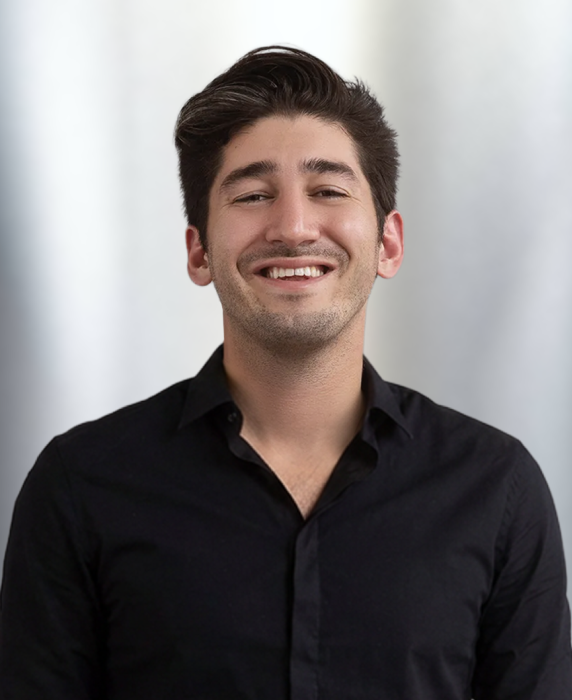
Axion Ray (operating as Axion) builds an AI 'observability command center' that helps the world's largest manufacturers catch product quality and safety problems months before they turn into recalls. Founded in 2021 by former McKinsey AI strategist Daniel First, the company fuses fragmented, unstructured field data - service tickets, dealership notes, call-center transcripts, sensor telemetry - into early-warning intelligence for engineering teams. Backed by Bessemer Venture Partners, RTX Ventures, Amplo and Inspired Capital with $25M raised, Axion works with manufacturers across aerospace, automotive, medtech and consumer goods.
Cofactr is a New York-based software and logistics company that automates electronics procurement and supply chain operations for hardware manufacturers. Its cloud platform takes a team from bill of materials (BOM) to build by combining AI agents with ITAR-registered warehouses to handle sourcing, ordering, traceability, storage, kitting, and delivery. Cofactr is built for high-compliance, fast-moving industries such as aerospace, defense, robotics, and medical devices.
Steve Hoover is the CEO of Impossible Objects, the Northbrook, Illinois company commercializing CBAM (composite-based additive manufacturing), a from-the-ground-up 3D printing process that bonds carbon fiber and other composites into parts that are stronger, lighter and more heat-tolerant than conventional prints. A mechanical engineer with a Carnegie Mellon doctorate, he spent roughly two decades at Xerox, rising to corporate CTO and running PARC as CEO, before a stint leading RIT's Global Cybersecurity Institute and co-founding the art-recognition startup Artify.ai. He took the Impossible Objects helm in March 2023 to push composite 3D printing from prototypes into high-volume manufacturing.
Zack Eakin is the co-founder and CEO of Layup Parts, a Huntington Beach startup that wants to make ordering custom carbon-fiber and fiberglass parts as easy as ordering from Amazon. A composites engineer who started in IndyCar bodywork at Chip Ganassi Racing, became the first engineer at Elon Musk's The Boring Company, and led mechanical engineering on Anduril's Roadrunner drone, Eakin launched Layup in 2024 to attack a problem he kept hitting himself: composite parts that take weeks and cost a fortune. With software-driven manufacturing and standardized stock materials, Layup compresses some jobs from weeks to hours. In June 2026 the company raised a $42 million Series A led by Marlinspike, on top of a $9 million seed from Founders Fund.
Matthew Haber is the co-founder and CEO of Cofactr, a New York-based platform that automates procurement and logistics for electronics hardware teams in aerospace, defense, medtech and robotics. A theater-designer-turned-engineer, he built tours for Coachella acts and escape rooms before co-founding an experiential R&D firm (BeSide) that sold to agency MAS in 2018. He launched Cofactr in the Y Combinator W22 batch; in December 2024 the company raised a $17.2M Series A led by Bain Capital Ventures, bringing total funding to roughly $28.8M.
Sath Sivasothy is VP of Sales and Marketing at Vyrian Inc., a Houston-based electronic components distributor and government defense contractor he co-founded in 2011. With a background in electrical engineering and over two decades in the semiconductor and electronics industry - including a stint as a Product Development Engineer at Texas Instruments and a run as VP of Sales at Silicon Valley burn-in testing firm CEIBIS Inc. where he doubled gross sales to $7M in 24 months - Sivasothy has built Vyrian into an Inc. 5000 multi-year honoree with 130+ employees across 12 global offices.
Alan Zhang (Rongyu Zhang) is a San Francisco-based founder, aerospace engineer, and YouTube creator who built the first human-carrying eVTOL drone assembled by a high schooler — a 280kg-thrust electric aircraft completed in 327 days with 17 classmates in a Diamond Bar garage. Now at UC Berkeley's MET program (Management, Entrepreneurship & Technology), he is building Prototype 3 of his passenger drone and running a stealth startup, while his YouTube channel @alanzeekk documents his journey building interesting machines.
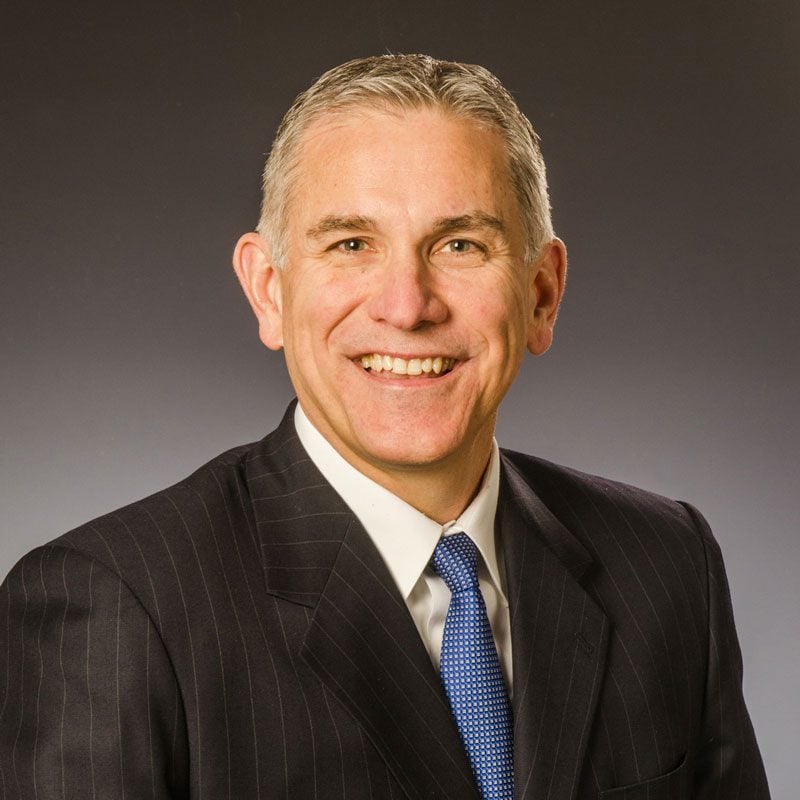
Bob McCollum is the long-serving CEO and driving force behind R.S. Hughes Co., Inc., an employee-owned industrial distributor headquartered in Sunnyvale, California that has grown into a $527 million enterprise spanning North America. A University of Michigan alumnus and former college quarterback, McCollum spent decades building RS Hughes into one of North America's top 50 industrial distributors, known for its culture of integrity and genuine care for employees. He has been recognized for significant philanthropic contributions to the University of Michigan athletics program, endowing the quarterbacks coaching position with a $2 million gift in 2022.
Astranis builds small, software-defined geostationary communications satellites - about the size of a washing machine - that deliver dedicated broadband to underserved regions and governments. Founded in 2015 in San Francisco, the company designs, manufactures and operates its MicroGEO platform entirely in-house at Historic Pier 70.
Loft Orbital is a San Francisco-based space infrastructure company that flies customer payloads on standardized satellites - selling space access the way AWS sells compute. Customers skip the spacecraft-building part and ship hardware, software, or on-demand data tasks to orbit on Loft's YAM satellites.
Muon Space is a Mountain View-based end-to-end space systems company that designs, builds, and operates mission-optimized satellite constellations for climate, defense, and Earth intelligence customers. Its Halo platform pairs the modular MuSat spacecraft bus with MuOS middleware and the MuSim digital twin, anchoring high-profile programs like Google's FireSat wildfire constellation and a $44.6M U.S. Space Force environmental monitoring agreement.
Frank Mycroft is the co-founder and CEO of Booster, the tech-driven mobile energy delivery platform that dispatches custom mini-tankers directly to fleet and consumer vehicles - eliminating the gas station entirely. A Princeton-trained aerospace engineer who worked at NASA, Boeing, and an asteroid-mining startup before parenthood inspired him to reinvent how America fuels its cars, Mycroft has raised over $242 million and built Booster into a platform serving Amazon, UPS, PepsiCo, and hundreds of fleets across the U.S.
John Gedmark is the CEO and Co-founder of Astranis Space Technologies, a San Francisco-based aerospace company building next-generation geostationary satellites. He previously helped shape the commercial space industry as co-founder and executive director of the Commercial Spaceflight Federation, where he influenced President Obama's 2010 decision to use commercial space transportation for NASA missions - a shift worth over $10 billion to the industry. At Astranis, he has led the company from a Y Combinator startup to a $2.8 billion valuation with a $1+ billion backlog, operating a fleet of MicroGEO satellites that bring dedicated broadband to underserved regions across Alaska, the Philippines, Mexico, and beyond.
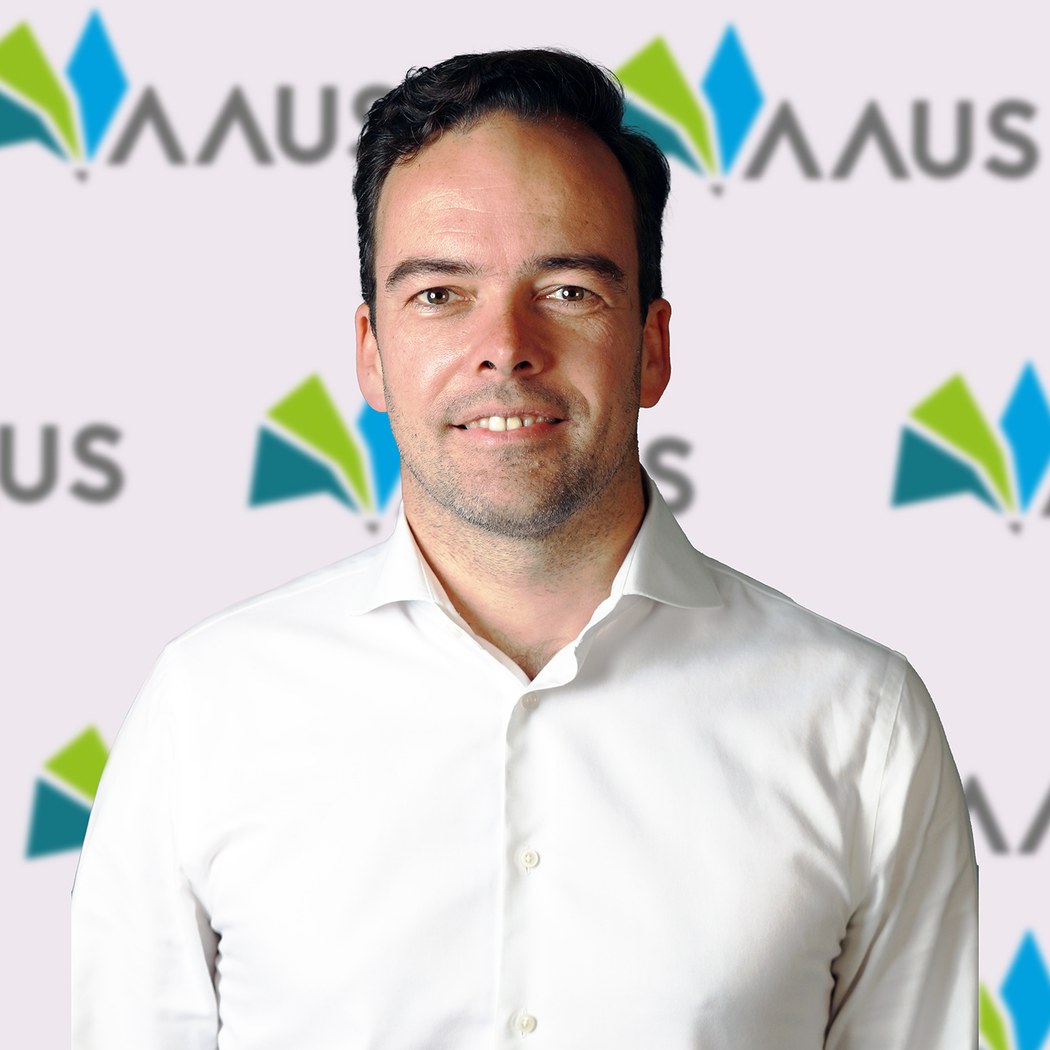
Jon 'Irish' Hawkins is an Australian Defence Force veteran of 25 years, SAS-trained officer, and the founder of Omni Executive - one of Australia's fastest-growing sovereign defence companies. Starting from an idea at his kitchen table in 2012, he built Omni into a 400+ person operation spanning aerospace, consulting, security, maritime and vetting, with around $100 million in annual turnover. A fierce advocate for truly Australian-owned defence capability, he stepped back from the CEO role in February 2026 to serve as Chair of Omni's Board.
Jonny Dyer is the Co-Founder and CEO of Muon Space, a Mountain View-based end-to-end satellite constellation company building mission-optimized spacecraft for Earth intelligence, wildfire detection, and national security. A Stanford mechanical engineer who pitched varsity baseball and co-authored rocket propulsion models, he turned Skybox Imaging into Google's $500M acquisition, ran Google Maps' data collection fleet, led Lyft's autonomous vehicle platform, and then founded Muon in 2021. The company has raised $146M in Series B funding and operates a growing constellation including FireSat - a 50-satellite wildfire-monitoring system developed with Earth Fire Alliance.
Joris Poort is the co-founder and CEO of Rescale, the cloud high-performance computing platform that became the world's first unicorn in cloud HPC. Born in Nijmegen, Netherlands, and educated at the University of Michigan, University of Washington, and Harvard Business School, Poort spent years at Boeing engineering the 787 Dreamliner before co-founding Rescale in 2011 through Y Combinator. Under his leadership Rescale has raised over $284 million—including a $115M Series D in April 2025—and now serves the world's leading aerospace, automotive, energy, and life sciences enterprises with 1,250+ simulation applications across 500+ global cloud datacenters.
Kyle Moore is co-founder and Software Fellow at Pyka, the Alameda, California company building the world's largest commercially-approved autonomous electric aircraft. A self-taught programmer who started writing code at age 11 from rural Washington, Moore brought firmware and robotics expertise from Google X to help design Pyka's Pelican — a 1,320-lb autonomous electric aircraft now spraying crops across four continents and delivering cargo for the U.S. Air Force. Pyka has raised $95M in total funding and achieved back-to-back FAA authorizations for the largest uncrewed aircraft systems in U.S. commercial history.
Manu Sharma is the CEO and Co-founder of Labelbox, the leading AI data infrastructure platform that powers training data pipelines for frontier AI models. Born in Roorkee, India, he studied aerospace engineering at Embry-Riddle and Stanford before building CoPilot at DroneDeploy and leading data analytics at Planet Labs. In 2018, he co-founded Labelbox with former colleagues Brian Rieger and Daniel Rasmuson, raising $188.9M through a Series D led by SoftBank Vision Fund 2. Labelbox now serves as the command center for AI teams building and scaling production machine learning systems, from annotation and RLHF to evals and synthetic data generation.

Michael Norcia is the Co-Founder and CEO of Pyka, the world's first FAA-certified autonomous electric aviation company. Based in Alameda, California, Pyka builds large-scale autonomous electric aircraft for agricultural crop protection and cargo logistics. Norcia — a UC Davis applied physics grad who cut his teeth engineering firmware and power systems at Zee Aero, Joby Aviation, and Kittyhawk — founded Pyka in 2017 (Y Combinator S17) with a pragmatic thesis: skip the flying cars, solve the problems aviation already has. Today Pyka's Pelican aircraft spray hundreds of acres per hour across the US, Costa Rica, Honduras, and Brazil, and the company is expanding into defense with a new platform called DropShip.
Pierre-Damien Vaujour is the co-founder and CEO of Loft Orbital, the San Francisco-based company that turned satellite deployment from a multi-year aerospace engineering odyssey into something closer to provisioning a cloud server. A French aerospace engineer by training — ISAE-SUPAERO class of 2008, master's from University of Michigan — he cut his teeth at ESA, NASA, the Google Lunar X PRIZE, and was among the first hires at Spire Global before co-founding Loft Orbital in 2017 with Alex Greenberg and Antoine de Chassy. Under his leadership, the company reached unicorn status in January 2025 with a $170M Series C, surpassed $500M in cumulative bookings, and is now building the default AI execution layer for orbital infrastructure.
Ryan McLinko is the co-founder and CTO of Astranis Space Technologies, a San Francisco-based company building compact, software-defined geostationary satellites to bring affordable broadband to underserved regions worldwide. An MIT-trained aerospace engineer who cut his teeth on cubesats at Planet Labs and the Dream Chaser spaceplane at Sierra Nevada, McLinko co-founded Astranis in 2015 with CEO John Gedmark. The company has since launched five satellites, secured over $1.2 billion in funding including a $450M Series E in May 2026, and been named Prime Contractor for multiple U.S. Space Force programs — all while being valued at $2.8 billion.
Pyka builds large autonomous, all-electric aircraft for crop protection and cargo logistics. Headquartered in Alameda, California, the company designs its own airframes, batteries, flight computers, and autonomy stack, and flies them commercially across four continents for customers in agriculture, freight, and defense.
Rescale is a San Francisco-based digital engineering platform that turns high-performance computing into an on-demand cloud utility. Founded in 2011 by ex-Boeing engineer Joris Poort and Adam McKenzie, it gives scientists and engineers at companies like Samsung, Arm, General Motors Motorsports, and the U.S. Department of Defense a single workbench for simulation, AI physics, and multi-cloud orchestration.
AeroVect builds AI-powered autonomous driving software for airside ground support equipment (GSE) - the tractors, dollies and tugs that move bags, cargo and aircraft around airport ramps. Founded in 2020 by Harvard grads Raymond Wang and Eugenio Donati, the company turns existing OEM vehicles into self-driving machines with its hardware-agnostic AeroVect Driver platform, and is deployed with partners including dnata, GAT and Delta Air Lines.
Akash Systems is a San Francisco deep-tech company building chips and systems cooled by lab-grown diamond. Its patented GaN-on-Diamond technology pulls heat away from transistors at the nanometer scale, powering everything from CubeSat radios that beam data at 5 Gbps to AI servers that run cooler at higher density. Backed by Khosla Ventures, Founders Fund and the U.S. CHIPS Act, the company is building a 40,000 sq ft diamond-semiconductor fab in West Oakland.

Astro Digital designs, builds and operates small-satellite systems delivered as turn-key 'Mission-as-a-Service' offerings - covering spacecraft bus, payload integration, launch, ground network and mission operations - for earth observation, communications, science and in-orbit demonstration customers from LEO to GEO.
Code Metal is a Boston-based AI startup building a verifiable code translation platform for mission-critical industries - aerospace, defense, automotive, semiconductors and robotics. Founded in 2023 by AI researchers Peter Morales and Alex Showalter-Bucher, the company combines large language models with formal verification so engineers can write software once and ship it - safely - to any chip.