immunology
(75)
AbbVie planned for life after Humira.
Its biggest medicine was heading for a sales cliff. AbbVie spent years building the businesses that would have to catch it - and learned how expensive a wrong bet can be.
Incyte: One molecule. Two worlds.
A blood-disorder pill and a skin cream share an active ingredient. Inside Incyte, that unlikely pairing explains both the business and the hard limits of a good scientific idea.

Bambusa Therapeutics wants to stop the itch at both ends
The Boston biotech is putting two antibody targets into one medicine, aiming to quiet inflammation and itch together. Its first patient results are intriguing; the next test is whether they hold up at scale.
Magnet Biomedicine wants to give difficult proteins a useful introduction
Some proteins resist a drug’s advances. Magnet Biomedicine is recruiting a second protein to help - a molecular matchmaking strategy that has attracted $50 million in venture funding and an oncology agreement with Lilly.
The Bet on Two Switches
Navigator Medicines bought a promising two-target antibody, raised $100 million to develop it, and now faces the question no laboratory can settle: will blocking two inflammatory pathways help patients more than blocking one?
The Map Was Never the Medicine
Immunai set out to map the immune system. The harder business was teaching drugmakers what to do with the map - and proving a pattern in cells can survive contact with a patient.

The Biologist Should Not Have to Wait for the Bioinformatician
MiLaboratories began with a tool for reading the immune system. Its bigger wager is that the people asking biological questions should be able to follow the data all the way to a decision.
The $350 Million Bet on Turning Down an Immune Fire
Electra Therapeutics is testing whether a precise antibody can quiet a deadly inflammatory spiral by removing the cells that feed it. A tiny early trial opened the door; a public offering has made the next test much larger.
The Second Handshake Changes Everything
Dualitas is betting that the most useful thing an antibody can do is not merely bind twice, but force the right two proteins into the same conversation. Roche just paid $36.5 million upfront to test that idea at industrial scale.

Vir Biotechnology’s Second Act Comes With a Mask
After COVID antibodies and a failed flu trial, Vir is betting on hepatitis delta and cancer drugs designed to switch on inside tumors. Its comeback has partners and cash. The decisive clinical tests are still ahead.
The Startup Rebuilding the Organ That Quietly Ages You
Most of biotech chases the diseases you can see. Thymmune went after the organ almost no one thinks about - the thymus - and built a way to grow it from stem cells.
The Biotech Fund That Likes the Awkward Middle
Agent Capital invests where molecules, milestones and money collide. Its small team backs healthcare companies across the development curve, then stays close enough to help science become a financeable business.
Novartis Cut Away an Empire to Bet on Five Ways of Making Medicine
The Swiss giant spent years shedding businesses until only innovative medicines remained. Now its growth depends on turning five scientific platforms into treatments that health systems will pay for - and patients can actually reach.
Johnson & Johnson
It stopped making the Band-Aid. What is left is a $94-billion bet that the future of Johnson & Johnson is written on a prescription pad and a robotic arm.
Eli Lilly and Company
The company that mass-produced insulin now runs on a molecule that helps people lose weight. Inside the 150-year-old Indianapolis drugmaker that became a trillion-dollar bet on metabolism.
Sanofi
The 53-year-old French drugmaker is narrowing its bets to immunology, vaccines and a faster pipeline. The wager is that better biology, selective dealmaking and factory-scale AI can turn scientific focus into repeatable growth.
UCB
UCB spent decades shedding its industrial past to become a specialist in the brain and immune system. Now five medicines, two ambitious acquisitions and a new Georgia factory are testing whether focus can scale.
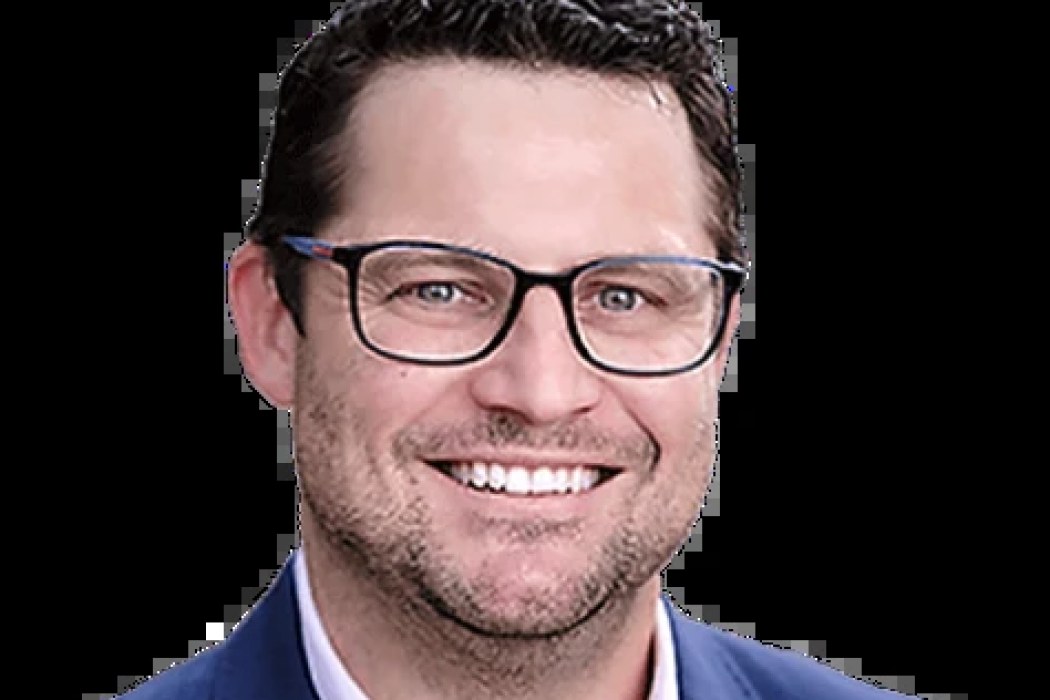
Daniel Getts
Daniel Getts, PhD, is the co-founder and CEO of CREATE Medicines (formerly Myeloid Therapeutics), a Cambridge, Massachusetts biotech building RNA-based in vivo immune programming therapies that reprogram T cells, NK cells and myeloid cells directly inside the body. An immunologist trained at the University of Sydney with an MBA from Western Michigan, he previously founded Cour Pharmaceuticals and served as VP of Research at TCR2 Therapeutics. He has more than 45 peer-reviewed publications, multiple issued patents, and a track record of large pharma partnerships, including Takeda's $420M licensing deal for TIMP-GLIA. In May 2026 CREATE closed a $122 million Series B to advance its in vivo CAR pipeline across autoimmune disease and oncology.

Merida Biosciences
Merida Biosciences is a Cambridge, Massachusetts biotechnology company developing a new class of engineered Fc biotherapeutics that selectively bind and eliminate the disease-causing antibodies behind autoimmune and allergic diseases, while sparing the protective antibodies the immune system needs. Launched publicly in April 2025 with a $121 million Series A, the company aims to treat conditions such as Graves' disease, IgE-mediated allergy and primary membranous nephropathy by clearing pathogenic antibodies and suppressing the B cells that make them - without the broad immunosuppression that limits many existing therapies.
NextRNA Therapeutics
NextRNA Therapeutics was a Boston-based biotechnology company pioneering small-molecule drugs that target long non-coding RNAs (lncRNAs) - a vast, largely undrugged region of the genome that regulates gene expression. Built on the science of Dana-Farber's Carl Novina and led by co-founder and CEO Dominique Verhelle, the company developed a proprietary discovery engine to map disease-relevant lncRNA-protein interactions and drug them with selective small molecules across oncology and immunology. NextRNA raised roughly $56 million in seed and Series A financing and signed a collaboration with Bayer worth up to $547 million before winding down operations in August 2025 amid a difficult biotech market and a missed partnership milestone.
Paratus Sciences
Paratus Sciences is a biotechnology company decoding the extreme biology of bats to discover first-in-class medicines. Bats live long, tolerate viruses, resist cancer, control inflammation and thrive on high-sugar diets - traits they evolved over roughly 65 million years. Paratus integrates cell biology, comparative genomics and informatics to translate these adaptations into drug targets for inflammatory and cardiometabolic diseases. Launched in 2023 with a $100M Series A and dual sites in New York and Singapore, its lead program PS-1001 is a first-in-class pan-inflammasome inhibitor.
Prolium Bioscience
Prolium Bioscience is a New York-based, clinical-stage biotechnology company developing PRO-203, a bispecific CD20xCD3 T-cell engager designed to deplete disease-driving B cells as an off-the-shelf therapy for severe autoimmune diseases, starting with systemic sclerosis and lupus. Founded in 2025 and backed by RTW Investments, the company in-licensed global non-oncology and ex-Asia oncology rights to the antibody from China's InnoCare Pharma and KeyMed Biosciences, and launched publicly in March 2026 with a $50 million Series A alongside first-patient dosing.
Rapafusyn Pharmaceuticals
Rapafusyn Pharmaceuticals is a Baltimore-based, clinical-stage drug discovery company spun out of Johns Hopkins University. Its RapaGlue platform designs non-degrading, cell-permeable macrocyclic molecular glues that modulate hard-to-drug intracellular and transmembrane targets - drawing on a proprietary DNA-encoded library of more than 8 billion compounds and machine learning for target selection. The lead program, RAP-0001, is a selective ENT1 inhibitor advancing toward IND-enabling studies for the prevention of acute kidney injury in cardiac surgery patients, with a broader pipeline spanning oncology, immunology, and pain.
SEED Therapeutics
SEED Therapeutics is a clinical-stage biotechnology company pioneering rationally designed molecular glue degraders to treat diseases driven by proteins long considered undruggable. Powered by its proprietary RITE3 discovery platform - which pairs disease-causing target proteins with the most suitable of more than 600 human E3 ligases - SEED reprograms the cell's own ubiquitin-proteasome system to destroy harmful proteins rather than merely block them. Founded in 2020 by CEO Lan Huang and a group of protein-degradation pioneers including Nobel laureate Avram Hershko, the company advanced its lead oral RBM39 degrader ST-01156 into first-in-human Phase 1 trials in early 2026, with a broader pipeline spanning oncology, neurodegeneration, immunology and virology backed by partners Eli Lilly and Eisai.
Stablix, Inc.
Stablix, Inc. is a preclinical biopharmaceutical company pioneering targeted protein stabilization (TPS), a new therapeutic modality that does the opposite of protein degraders. Its RESTORE platform generates heterobifunctional small molecules called RESTORACs that recruit deubiquitinase enzymes (DUBs) to selectively remove ubiquitin from disease-relevant proteins, restoring deficient proteins to therapeutic levels or correcting aberrant protein function. Co-located in New York City and Boston and founded on science from Columbia University, Stablix has raised roughly $78M and is developing programs in cancer, rare diseases and immunological disorders, including a strategic collaboration with Vertex Pharmaceuticals.
Eddine Saiah
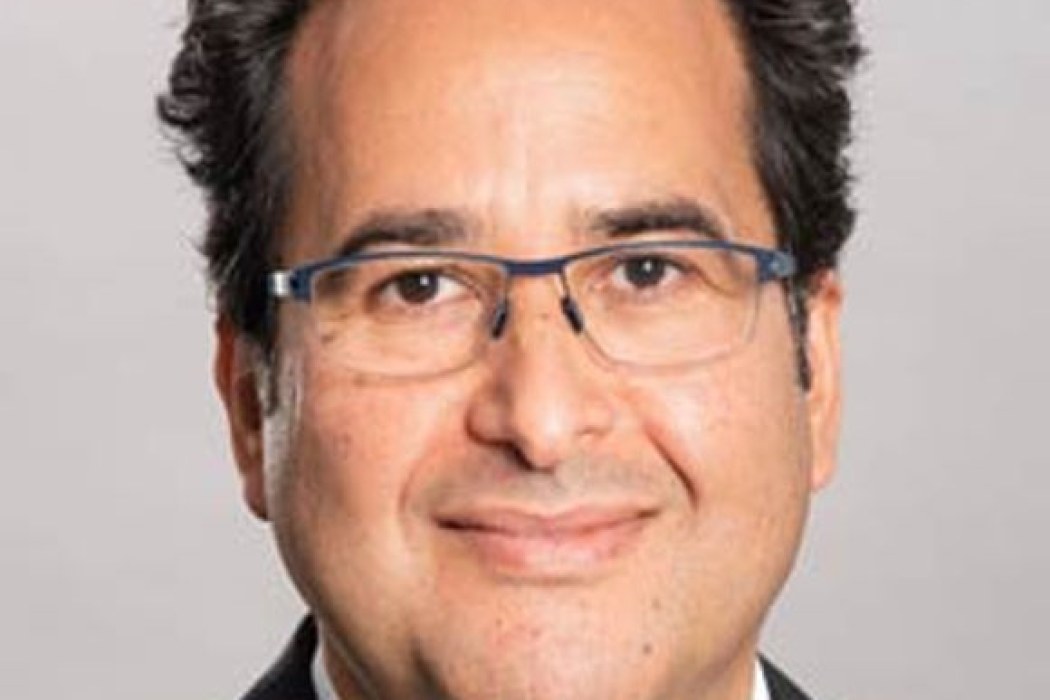
Eddine Saiah, Ph.D., is the CEO and President of Stablix, a preclinical biotechnology company pioneering targeted protein stabilization (TPS) as a new class of small-molecule medicines. A medicinal chemist and drug hunter with more than 25 years of experience, he joined Stablix as Chief Scientific Officer in 2022 and moved into the chief executive role in 2025. His career spans big pharma research leadership at Pfizer and Wyeth, an entrepreneur-in-residence stint at Atlas Venture, and CSO duties at Navitor Pharmaceuticals. He is a co-inventor and author on more than 120 patents and publications, and has helped advance more than a dozen small-molecule candidates into clinical trials.

Enveda
Enveda is a clinical-stage biotech that uses artificial intelligence to read the chemistry of the natural world and turn it into new medicines. Founded in 2019 by Viswa Colluru, the company built PRISM, a foundation model trained on more than a billion mass spectra, to decode the structure of natural molecules that traditional methods leave invisible. That platform has produced a pipeline of small-molecule drug candidates - led by ENV-294, an oral anti-inflammatory now in Phase 2 trials for atopic dermatitis and asthma. Backed by more than $700M in funding and valued as a unicorn, Enveda operates out of Boulder, Colorado and Hyderabad, India.
IgGenix, Inc.
IgGenix is a clinical-stage biotechnology company in South San Francisco developing fully human, allergen-specific antibody therapeutics for severe food and environmental allergies. Its proprietary SEQ SIFTER single-cell RNA-sequencing platform isolates the rare IgE-producing B cells behind allergic reactions and re-engineers them into protective IgG antibodies designed to block the allergic cascade. The lead candidate, IGNX001, is in a Phase 1 trial for peanut allergy.
Nuvig Therapeutics
Nuvig Therapeutics is a clinical-stage biotech in the San Francisco Bay Area developing next-generation immune modulators for chronic autoimmune and inflammatory diseases. Founded in 2022 on research from The Rockefeller University, its lead candidate NVG-2089 is a first-in-class recombinant Fc fragment that engages type II Fc receptors to recapitulate the anti-inflammatory benefits of IVIg without immunosuppression or the supply constraints of plasma-derived products. The company raised a $161M Series B in December 2024 to push NVG-2089 into Phase 2 for CIDP and other indications.
Tony Kingsley
Tony Kingsley is a biopharmaceutical executive who runs Stablix, Inc., a New York biotech betting that you can treat disease by protecting proteins instead of destroying them. He took the CEO seat in February 2022 after a career of running one drug company after another - Scholar Rock, TARIS Bio, The Medicines Company - and heading global commercial at Biogen, with a McKinsey partnership and a stint in medical devices before that. In July 2025 he joined the board of Indivior. He holds a Dartmouth degree and a Harvard MBA.