agriculture
(30)
West Coast Advisors knows where the decision gets made
A water agency needs a voice in Sacramento. A dairy coalition needs to explain methane. West Coast Advisors works where technical problems become political decisions.

Honey knows what makes a brand worth a second helping
The Sacramento studio turns food, farming, and a sense of place into brands people can recognize and use. Its work runs from the salsa shelf to school lunch, local news, and the next train home.
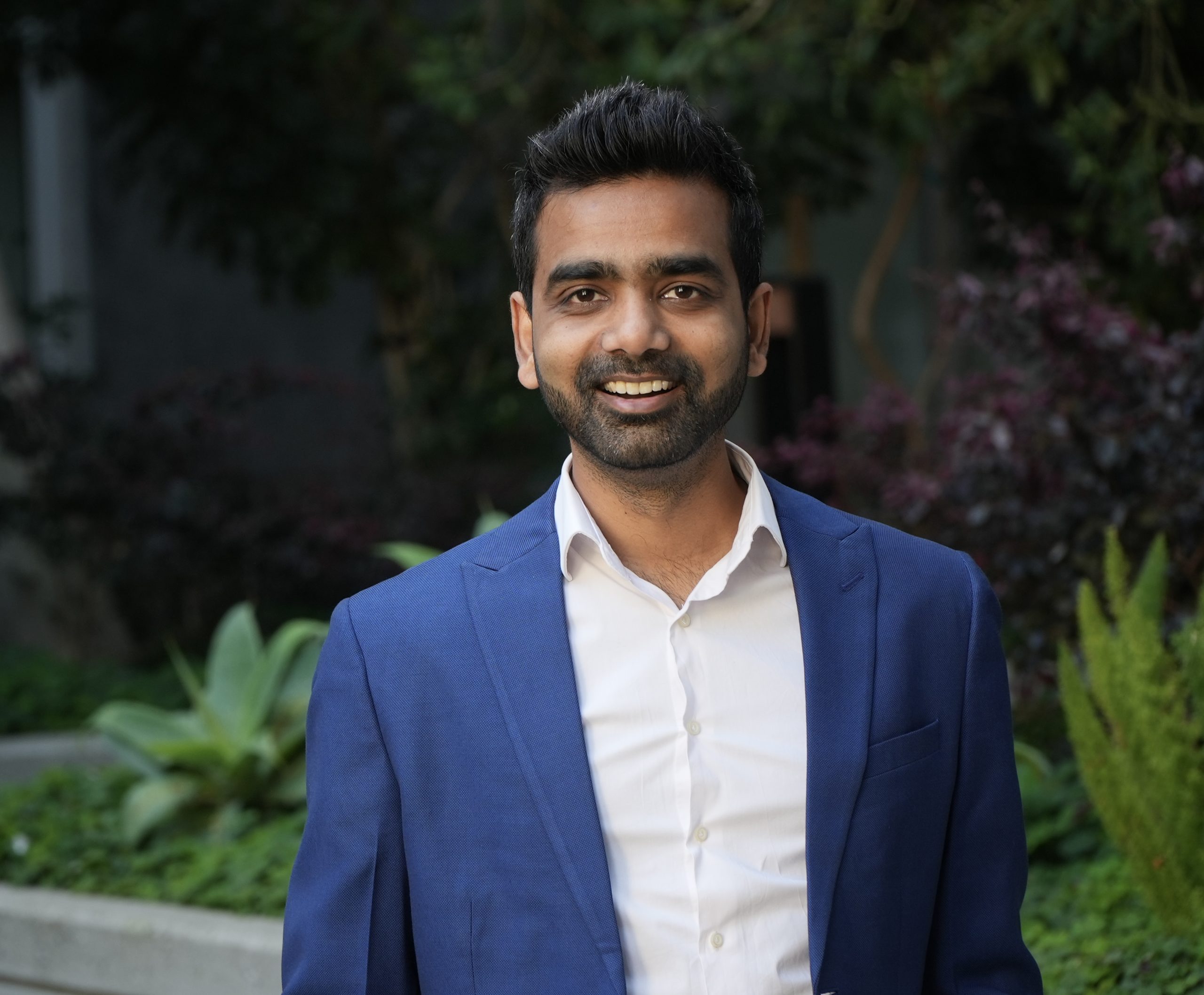
Himanshu Gupta Is Teaching Business to Read the Weather
The ClimateAi co-founder moved from wiring smart-grid hardware to modeling national energy policy. Now he wants companies to treat climate forecasts as decisions waiting to be made.

Len Kahn Keeps Finding the Next Move
After building, selling and rebuilding agricultural marketing firms, Len Kahn has taken his farm-bred instincts into agtech. His career is a case study in staying close to the customer, saying the useful thing out loud and always keeping one move in reserve.

How Egg Farmers of Canada Runs a 937 Million Dozen-Egg Balancing Act With 85 People
It does not own the hens, grade the cartons or sell you breakfast. It runs the rules, forecasts and trust marks that help 1,270 regulated farms keep a perishable national market supplied - even when disease, demand and trade all move at once.

The Family Office Buying Everything From Ice Cream to the Pittsburgh Penguins
Hoffmann Family of Companies has assembled more than 200 brands without choosing a single industry. Its real product is patient ownership - and a portfolio designed to make unlikely neighbors useful to one another.

The Feed Company That Built an 800-Acre Laboratory
KENT Nutrition began with a blunt promise - no filler. Nearly a century later, the family-owned Iowa business tests feed on an 800-acre research farm and sells hundreds of formulas for animals ranging from feedlot cattle to backyard rabbits.
Bayer
Bayer is trying to make one science company work at three speeds: the long clock of drug discovery, the seasonal rhythm of farming and the everyday urgency of self-care. Its turnaround will depend on whether that range becomes an advantage rather than a burden.

Vietnam Blockchain Corporation
Vietnam Blockchain Corporation (VBC) is a Ho Chi Minh City-based science and technology company founded in 2016 that builds and deploys practical blockchain solutions for enterprises and government. Its flagship platform, Agridential.vn, brings digital traceability and supply-chain transparency to agriculture, while its Blockchain-as-a-Service offering serves manufacturing, logistics, e-commerce, fintech, and smart-city projects. VBC positions itself as a hub for blockchain expertise in Southeast Asia, with more than 50 projects and 180+ partners and customers.
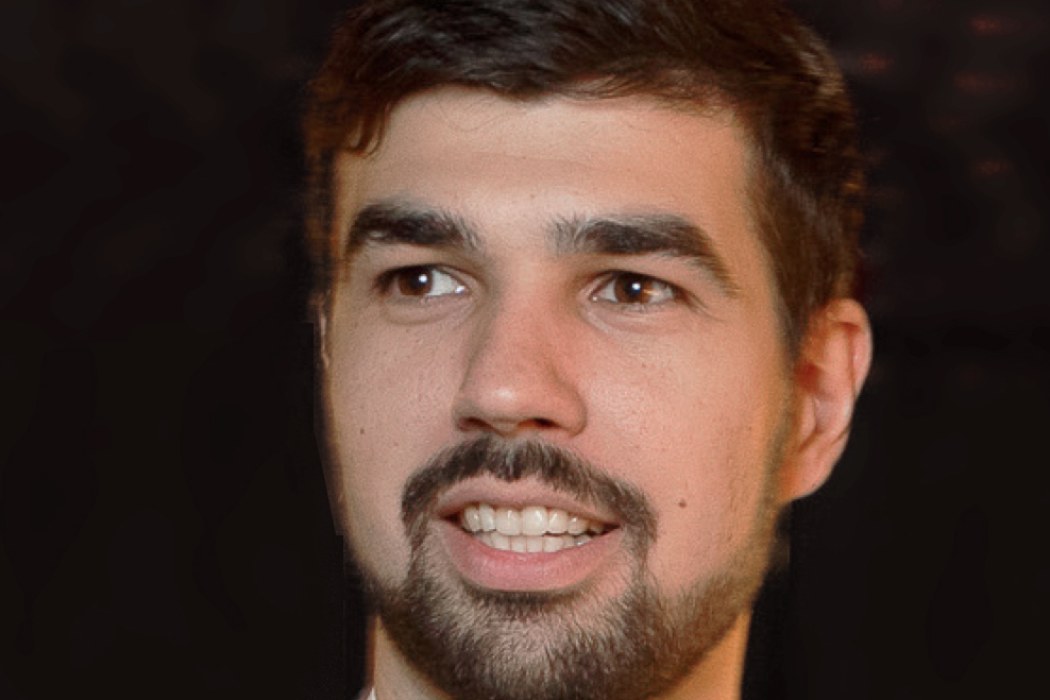
Egor Kirin
Egor Kirin is the founder and CEO of Agro.Club, a full-stack B2B agriculture marketplace that connects input manufacturers, distributors, farmers, and grain buyers across Europe, South and North America. After nearly a decade of executive roles at Monsanto and a stint leading marketing at EuroChem, he left corporate agriculture at 31 to build a technology and embedded-finance platform aimed at making the grain supply chain more efficient, transparent, and secure.
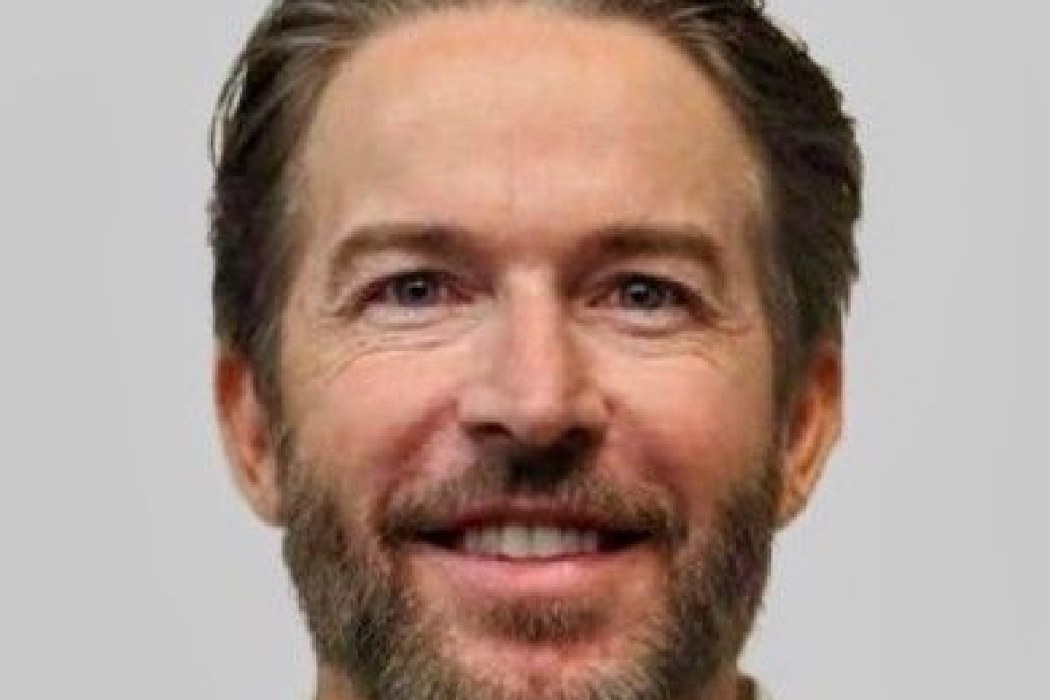
Jamie Strachan
Jamie Strachan is the CEO of Nabaco, a San Marcos, Texas agricultural-science company building natural, clay-based barrier coatings that extend the shelf life of fresh produce and cut food waste. A produce-industry executive with more than 20 years in the business, he previously ran Green Giant Fresh (Growers Express) and founded and chaired the leafy greens marketing effort in California. At Nabaco he is commercializing a patented, tasteless and odorless protection technology across pre-harvest, packaging, and post-harvest applications, including a distribution partnership with AgroFresh.

ClimateAi
ClimateAi is a San Francisco-based climate-tech company that builds an AI-powered climate resilience platform. Founded at Stanford in 2017 by Himanshu Gupta and Max Evans, its ClimateLens platform combines patented machine-learning models with physics-based climate and weather data to forecast risk from weeks to decades ahead. Food, agriculture, and water-dependent companies - including Dole, Suntory, Oatly and McCain - use it to protect sourcing, planting, and procurement decisions against a more volatile climate.
Jorge Heraud
Jorge Heraud is a Peruvian-born engineer and serial agtech founder who co-founded Blue River Technology — sold to John Deere for $305 million in 2017 — and is now CEO of TerraBlaster, a Redwood City startup using NASA-pioneered laser spectroscopy to give farmers real-time soil nutrient data, aiming to cut fertilizer waste and transform how agriculture feeds the world.
Kris Poulson
Kris Poulson is the CEO of FarmQA, a Fargo-based digital agronomy platform that helps growers and crop advisors manage scouting, soil sampling, and prescription writing. He co-founded Sentera (acquired by John Deere in 2025), where he helped drive 1800% revenue growth and an expansion into 50+ countries. He grew up on a family farm near Casselton, North Dakota, and chairs the NDSU Agricultural Economics Advisory Board.

Matter Intelligence
Matter Intelligence is a remote sensing and AI company building the world's first sub-meter hyperspectral and thermal satellite sensors paired with a foundational 'Large World Model' that lets machines understand the physical world at a molecular level. Founded by former NASA JPL engineers, the El Segundo startup emerged from stealth in October 2024 with $12M in seed funding to deploy sensors across satellites, drones, and aircraft for agriculture, defense, energy, and environmental monitoring.

Webee
Webee is a Silicon Valley industrial IoT and AI company that lets manufacturers, food and beverage producers, and agriculture operators connect their machines, sensors, and data without writing code. Its no-code IIoT platform pairs wireless sensors and LoRaWAN connectivity with an AI engine called SOFIA to deliver real-time monitoring, predictive maintenance, OEE tracking, and sustainability analytics - taking projects from proof-of-concept to production around 10x faster than traditional integrations.

Meiogenix
Meiogenix is a French-American agricultural biotech company that re-engineers one of nature's oldest tricks - meiotic recombination, the gene-shuffling that happens when plants make seeds. Instead of editing single genes like CRISPR, its proprietary SpiX and dCas9-SPO11 platforms steer where chromosomes cross over, unlocking 'cold' regions of the genome that conventional breeding can never reach. The result: breeders can mix desirable traits, break unwanted linkage, and shrink crop development cycles from 10-plus years to as few as three, all without introducing foreign DNA. Founded in 2010 as a spin-off from Institut Curie and INRA, the company targets the $50B+ commercial seed market across corn, wheat, rice, tomato and soybean, and licenses its technology to partners including Bayer.

Moleaer Inc.
Moleaer is a California-based cleantech company that pioneered the industrial-scale production of nanobubbles - gas bubbles roughly 2,500 times smaller than a grain of salt. Its patented nanobubble generators inject oxygen and other gases into water with extreme efficiency, helping farms, fish operations, wastewater plants, lakes and industrial sites use less water, fewer chemicals and less energy. Founded in 2016 and led by CEO Nick Dyner, Moleaer has deployed thousands of systems across more than 55 countries and raised about $61 million through a 2022 Series C led by Apollo funds, followed by a 2025 global partnership and strategic investment from water-tech giant Xylem.

Zeromatter
Zeromatter builds the simulation infrastructure that autonomous-systems companies use to develop, test and validate their products before they ever touch the real world. Founded by former Tesla Autopilot simulation lead Ian Glow, its platform combines high-fidelity sensor simulation, automatic environment generation, multi-agent co-simulation frameworks, execution infrastructure and developer tooling into one system - aimed at making simulation a default tool for autonomy, aerospace, automotive, agriculture, drones and green energy.
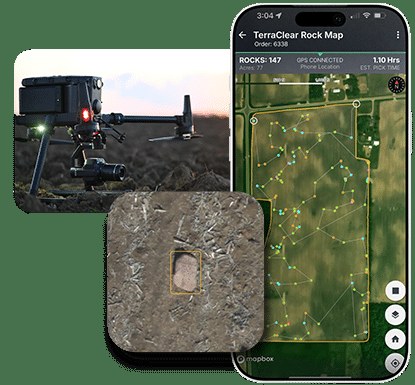
TerraClear Inc
TerraClear builds AI-powered machines that take one of farming's oldest, most miserable chores - picking rocks out of fields - and make it fast, precise, and increasingly autonomous. Founded in 2017 by serial entrepreneur and farm-raised Brent Frei, the Issaquah, Washington company pairs drone-based mapping, machine vision, and a robotic rock picker that clears hundreds of rocks an hour. In 2026 it launched TerraScout, a fully autonomous field-scouting robot that scans up to 1,000 acres a day for rocks, weeds, and more, turning images into real-time prescriptions for existing farm crews and equipment.
Chris Abbott
Chris Abbott is the Chief Executive Officer of Pivot Bio, a Berkeley-based agricultural biotechnology company pioneering microbial nitrogen solutions that replace synthetic fertilizers. A Minnesota native and University of Minnesota graduate, Abbott built his career at the intersection of agriculture finance and agtech investing - from Wall Street sell-side research at Piper Jaffray to co-leading Continental Grain's Conti Ventures. He joined Pivot Bio's board in 2018, and in August 2023 stepped up as CEO, guiding the company past $100 million in annual revenue while scaling its gene-edited microbes to over 5 million acres. Under his leadership, Pivot Bio achieved 60% year-over-year revenue growth and has helped farmers reduce synthetic nitrogen use by over 129,000 metric tons.
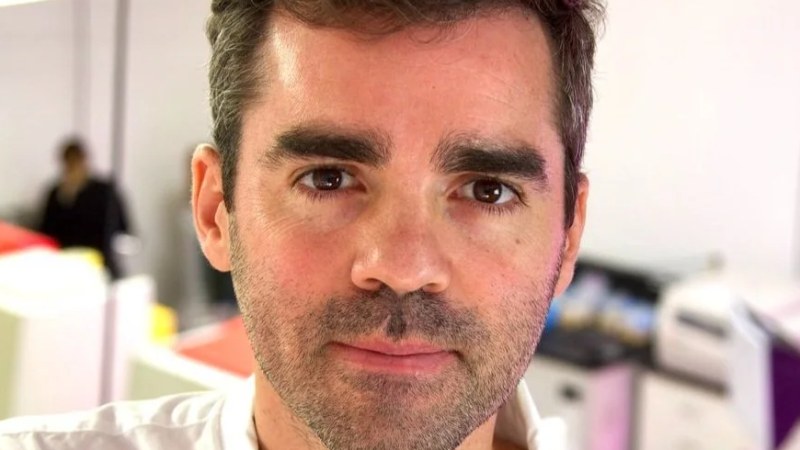
Gonzalo Fuenzalida-Meriz
Gonzalo Fuenzalida-Meriz is a Chilean-born entrepreneur and CEO & Co-Founder of Andes, a California-based climate tech company that deploys beneficial soil microbes via seed coatings to permanently lock atmospheric CO2 into soil minerals. A former investment banker turned biotech founder, he led development of the world's first Microbial Carbon Mineralization (MCM) Methodology — validated under ISO 14064 — and has raised $41M+ to scale a platform that simultaneously improves farm yields and generates durable carbon credits.

Kyle Moore
Kyle Moore is co-founder and Software Fellow at Pyka, the Alameda, California company building the world's largest commercially-approved autonomous electric aircraft. A self-taught programmer who started writing code at age 11 from rural Washington, Moore brought firmware and robotics expertise from Google X to help design Pyka's Pelican — a 1,320-lb autonomous electric aircraft now spraying crops across four continents and delivering cargo for the U.S. Air Force. Pyka has raised $95M in total funding and achieved back-to-back FAA authorizations for the largest uncrewed aircraft systems in U.S. commercial history.

Michael Norcia
Michael Norcia is the Co-Founder and CEO of Pyka, the world's first FAA-certified autonomous electric aviation company. Based in Alameda, California, Pyka builds large-scale autonomous electric aircraft for agricultural crop protection and cargo logistics. Norcia — a UC Davis applied physics grad who cut his teeth engineering firmware and power systems at Zee Aero, Joby Aviation, and Kittyhawk — founded Pyka in 2017 (Y Combinator S17) with a pragmatic thesis: skip the flying cars, solve the problems aviation already has. Today Pyka's Pelican aircraft spray hundreds of acres per hour across the US, Costa Rica, Honduras, and Brazil, and the company is expanding into defense with a new platform called DropShip.

Pyka
Pyka builds large autonomous, all-electric aircraft for crop protection and cargo logistics. Headquartered in Alameda, California, the company designs its own airframes, batteries, flight computers, and autonomy stack, and flies them commercially across four continents for customers in agriculture, freight, and defense.

WindBorne Systems
WindBorne Systems is building a planetary nervous system for Earth's atmosphere. The Redwood City company operates a constellation of autonomous long-duration balloons that gather high-resolution atmospheric data from remote and ocean regions previously invisible to weather models - then feeds that data into WeatherMesh, its in-house AI forecasting model that has surpassed Google DeepMind's GraphCast as the world's most accurate medium-range global weather forecast. With backing from Khosla Ventures, the Gates Foundation, and U.S. military contracts, WindBorne is making a credible run at replacing century-old weather infrastructure.

James Wang
James Wang is the General Partner of Creative Ventures, a San Francisco-based deep tech venture capital firm managing a $50M fund focused on AI, robotics, hardware, industrial automation, healthcare, agriculture, energy, and climate. With a background spanning Bridgewater Associates, Google X (Makani), co-founding the femtech startup Lioness Health, and a career in West African microfinance, Wang brings a rare combination of finance, engineering, and social-impact instincts to early-stage investing. He is also the author of 'What You Need to Know About AI' (2025) and publishes the 'Weighty Thoughts' Substack to over 3,000 subscribers.

Jim Kim
Jim Kim is the Founder and General Partner of Builders VC, a San Francisco-based venture firm deploying capital into the unglamorous corners of the economy - agriculture, industrial technology, healthcare IT, and real estate - where pen and paper still govern billion-dollar decisions. A product of MIT and Columbia Business School, Kim has logged stints at GE Capital (where he built the company's venture arm), Khosla Ventures, and Formation 8 before launching Builders with a thesis that the most interesting returns live in sectors most investors won't touch. Three funds and $368M+ later, his portfolio spans synthetic biology (Bolt Threads), precision cattle data (Performance Livestock Analytics), construction tech (Fieldwire), and de-extinction biotech (Colossal). He practices kung fu, tends a Cabernet vineyard, and has been waiting his whole career for the U.S. soccer team to win a World Cup.

Hiro Iwanaga
Hiro Iwanaga is the Co-Founder and CEO of Talus Renewables (TalusAg), the company behind the world's first commercial modular green ammonia production system. A Stanford-trained engineer-turned-investor-turned-builder, Iwanaga spent years at hedge funds like Baupost Group and Silver Point Capital before channeling a decade of philanthropic green ammonia research into a full commercial venture. His technology - containerized units that turn air, water, and renewable electricity into fertilizer - is now operating in Kenya and Iowa, cutting farmer fertilizer costs by 30-50% and proving that decentralized, zero-carbon ammonia production is not a distant dream but a deployable reality.
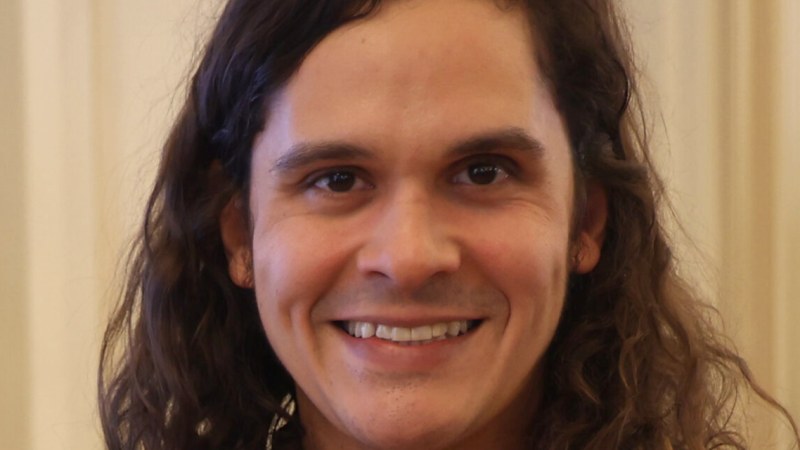
Jason Aramburu
Jason Aramburu is the cofounder and CEO of Applied Carbon, a Houston-based climate tech company building the world's first mobile, in-field biochar production machines that convert agricultural crop waste into permanent carbon storage - and improved soil - in a single pass. A Princeton-trained ecologist who first encountered biochar during field research in Panama, Aramburu has spent two decades building at the intersection of soil science, robotics, and carbon markets. Before Applied Carbon, he founded re:char (smallholder biochar in Kenya, backed by Gates Foundation) and Edyn (smart irrigation, Y Combinator W14), then invested in AI and energy startups at Baidu Ventures and Saudi Aramco Energy Ventures before returning to his original mission. Applied Carbon raised a $21.5M Series A in July 2024, backed by Microsoft Climate Innovation Fund, Congruent Ventures, and the Grantham Foundation, and won the $500,000 Wilkes Climate Launch Prize in September 2024.