Jorge Heraud joins TerraBlaster as CEO - May 2025 Blue River Technology acquired by John Deere for $305M TerraBlaster closes $4M seed round led by Khosla Ventures Laser-based soil sensing: analysis in under one millisecond Former John Deere VP leads 12-person agtech startup in Redwood City Named Chairman at Dogtooth Technologies - March 2025 LIBS technology: originally developed for NASA space exploration "Farmers are making fertilizer decisions blind" - Jorge Heraud TerraBlaster raises oversubscribed pre-seed from Khosla + OCP Group's Bidra Jorge Heraud joins TerraBlaster as CEO - May 2025 Blue River Technology acquired by John Deere for $305M TerraBlaster closes $4M seed round led by Khosla Ventures Laser-based soil sensing: analysis in under one millisecond Former John Deere VP leads 12-person agtech startup in Redwood City Named Chairman at Dogtooth Technologies - March 2025 LIBS technology: originally developed for NASA space exploration "Farmers are making fertilizer decisions blind" - Jorge Heraud TerraBlaster raises oversubscribed pre-seed from Khosla + OCP Group's Bidra
Jorge Heraud, CEO of TerraBlaster
Profile / Agtech Pioneer

Jorge
Heraud

CEO, TerraBlaster · Co-Founder, Blue River Technology

A Peruvian engineer who grew up pulling weeds on his grandfather's farm now shoots lasers at soil at the speed of light. Between those two facts sits a $305M exit, 15 years at a Fortune 500, and a conviction that agriculture's biggest problem isn't water or land - it's data.

Redwood City, CA Stanford MS x3 $305M Exit Khosla-Backed Seed Stage
$305M Blue River Technology exit (John Deere, 2017)
<1ms TerraBlaster laser soil measurement time
90% Herbicide reduction achieved by See & Spray tech
6x Average investor return from Blue River

The man who taught tractors to see is now teaching soil to speak

Summers on a Peruvian tomato farm near the beach. Chores in the morning, cousins in the ocean by afternoon. That is where Jorge Heraud's story actually starts - not at Stanford, not at Trimble, not at John Deere. The grandson of a farmer learned early that agriculture runs on patience, observation, and an almost stubborn faith that the work you put into the ground comes back to you.

His father, a Stanford-trained engineer, returned to Peru to build an industrial automation company. That combination - hands in the soil, head in the circuitry - planted something that took four degrees, a 15-year career at a navigation company, and a $305 million exit to fully express itself.

Building Blue River, One Rejection at a Time

In 2011, Heraud co-founded Blue River Technology with Stanford PhD student Lee Redden. The pitch was audacious: use computer vision and machine learning to identify individual weeds in a farm field and spray only them, cutting herbicide use by up to 90%. At Series A, he collected somewhere between 25 and 30 rejection letters before Khosla Ventures said yes.

There was a detour. The deep learning capabilities needed for weed detection at scale didn't quite exist yet. So Blue River spent years thinning lettuce - a less glamorous but cash-positive pivot that kept the company alive while GPU technology caught up with the vision. That patience, that willingness to wait out the technology curve rather than hype a promise, is the through-line of Heraud's career.

"At Series A, I probably got 25 or 30 'No's before I got my first 'Yes' from Khosla." - Jorge Heraud

When the AI moment arrived, Blue River was ready. The See & Spray system became one of agriculture's most-watched innovations - a tractor attachment that could think, or at least distinguish a weed from a crop row with enough confidence to act on it. The technology eventually saved one farmer alone from $90,000 in annual chemical costs.

The $305M Question

John Deere acquired Blue River Technology in September 2017 for $305 million - unanimous board approval, Silicon Valley office kept intact. Heraud describes the deal with characteristic directness: "John Deere acquired Blue River just a week and a half ago... I'm very happy. They're a leading company... and they're acquiring us to accelerate us."

For the next seven years, he stayed inside the machine. As Vice President of Automation and Autonomy at John Deere, Heraud led a team of more than 600 engineers - a scale that few startup founders ever experience from the inside. He watched how a $50 billion company moves, where it gets stuck, and what a scrappy 12-person startup can do that a corporate team of hundreds genuinely cannot.

Lasers at the Speed of Light

He transitioned to an advisory role in 2024, quietly taking on board and advisor positions at Rootwave, Agtonomy, and Dogtooth Technologies - a harvesting robotics company where he now chairs the board. Then came TerraBlaster.

TerraBlaster, formerly named SoilCode, uses Laser-Induced Breakdown Spectroscopy (LIBS) - a technology originally developed for NASA's Mars exploration - to measure soil nutrients in real time. Nitrogen, phosphorus, potassium: the critical elements that determine whether a farmer over-applies fertilizer, under-applies it, or wastes thousands of dollars on a blunt guess. Heraud joined full-time as CEO in May 2025.

The problem he's targeting is specific and large. Between 30 and 50 percent of fertilizer applied to fields ends up in waterways. The reason is both economic and technological: soil testing is slow, expensive, and done at scales that miss field-level variation. "Farmers are making fertilizer decisions blind," Heraud says. "Soil sampling is every farmer's least favorite task in their already busy schedule."

TerraBlaster's answer: a laser pulse that takes less than one millisecond to fire and less than one millisecond to return a nutrient reading. "It is done at the speed of light," Heraud notes. The company raised a $4M oversubscribed seed round led by Khosla Ventures - the same firm that backed Blue River through its rocky early days - alongside Bidra (OCP Group's corporate venture arm), The Reservoir, and Trailhead Capital.

The De-Risker

Heraud has a phrase for his approach to new ventures. He describes himself as someone who "de-risks" before acting - not the founder who jumps out of a plane and figures out parachutes on the way down. He studies the problem, builds expertise, tests the thesis against reality, and only then commits. It's a philosophy shaped by the mistakes he's willing to name out loud: a business pivot at Blue River that chased a market with only three major buyers, losing leverage when one customer copied the technology internally and another changed leadership mid-relationship.

That methodical streak hasn't made him slower. It's made him selective. He has three stated goals for TerraBlaster: reduce wasted fertilizer while increasing farm yields, achieve an agtech IPO, and build a company where employees genuinely love working. In that order, on that timeline, with that specific ambition about the exit.

From a tomato farm near the Peruvian coast to a laser startup in Redwood City: the arc is strange, long, and entirely consistent. Heraud has spent his whole career at the intersection where the biological and the technological rub against each other. He keeps finding the spot where the two are furthest apart, and closing the gap.
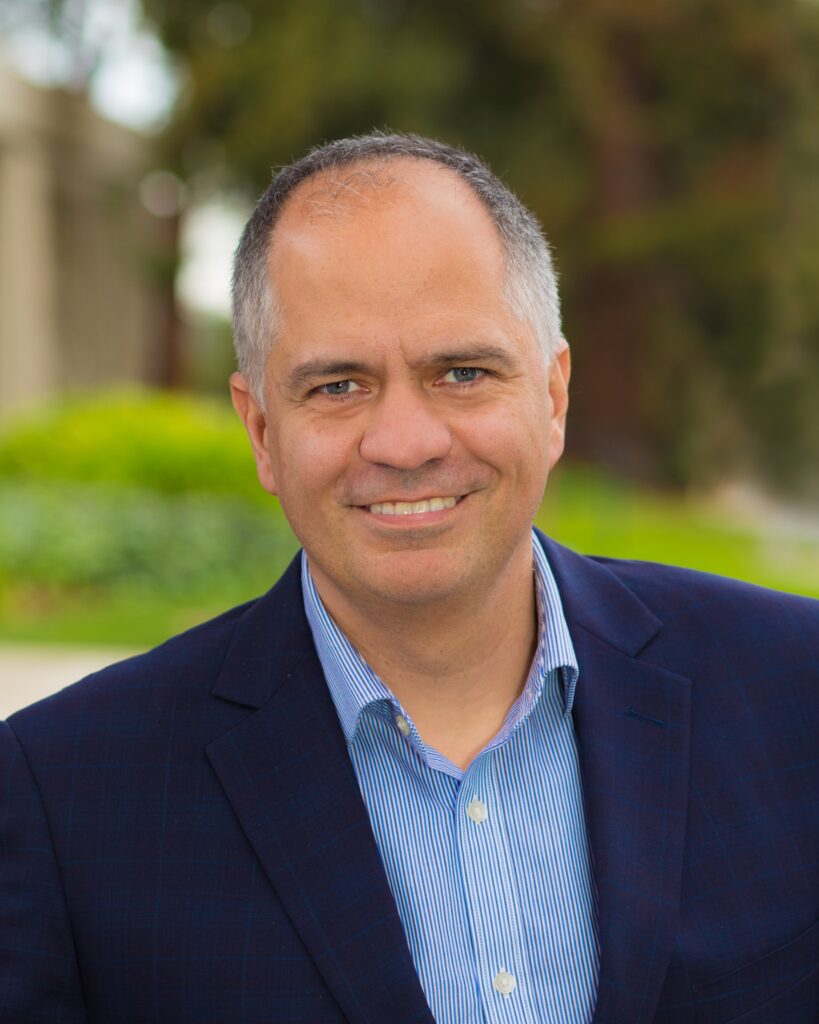
"I like opportunities that are huge in both financial impact and environmental impact. This is the number one opportunity in agtech right now."

Jorge Heraud on TerraBlaster - AgFunder News, 2025

From GPS to See & Spray to Laser Soil Sensing

1990s - 2011

Trimble Navigation (15 years) - Joined as an engineer and rose to Director of Engineering and Business Unit Director for Precision Agriculture. Led GPS and automated steering product lines, oversaw four acquisitions, and ran the precision agriculture business unit.

2011

Co-founded Blue River Technology - Left Trimble to start a computer vision robotics company with Stanford PhD student Lee Redden. Early pivot to lettuce thinning while waiting for deep learning to mature; raised $30M+ from Khosla Ventures, Innovation Endeavors, Monsanto, and Syngenta.

2017

John Deere acquires Blue River for $305M - See & Spray technology attracts one of agtech's largest acquisitions. Blue River continues as an independent subsidiary in Silicon Valley.

2017 - 2024

VP, Automation and Autonomy at John Deere - Led a 600+ person engineering team driving autonomous machine development across Deere's global product line.

2024

Advisory portfolio - Stepped back from John Deere to advise Rootwave, Agtonomy, Dogtooth Technologies, and TerraBlaster across robotics and sensing in agriculture.

March 2025

Chairman, Dogtooth Technologies - Named board chairman of the UK-based dexterous fruit-harvesting robotics company, backing their push to scale commercial deployments.

May 2025

CEO, TerraBlaster - Joins full-time as CEO; company closes a $4M oversubscribed seed round led by Khosla Ventures. TerraBlaster (formerly SoilCode) begins preparing five prototype LIBS devices for field testing in Iowa.

Soil at the Speed of Light

🔧
LIBS Spectroscopy NASA-Developed <1ms Analysis N, P, K Detection Real-Time AI

Laser-Induced Breakdown Spectroscopy: From Mars to Your Field

NASA's Curiosity rover uses LIBS to analyze the mineral composition of Martian rocks. TerraBlaster uses the same physics - a focused laser pulse vaporizes a tiny sample, and the resulting plasma's light spectrum reveals exactly what elements are present - to analyze soil on Earth, at tractor speed, in real time.

The laser fires. The soil speaks. The AI interprets. The farmer knows whether to apply 80 lbs of nitrogen or 110 lbs - before the spreader even starts. That decision, made field-by-field rather than county-average, is where the yield gains and pollution reductions live.

TerraBlaster's system measures nitrogen, potassium, phosphorus, and other key nutrients on the fly. It integrates with a farm's existing equipment. No lab. No waiting. No blunt averages masking field-level variability.

< 1 millisecond per soil measurement - laser pulse to nutrient reading

A Career Built on Problems Worth Solving

🌿

See & Spray Pioneer

Co-created the technology that lets a tractor identify individual weeds and spray only them - cutting herbicide use by up to 90% and rewriting the economics of large-scale crop protection.

💵

$305M Exit

Negotiated and closed Blue River Technology's acquisition by John Deere in 2017, generating nearly 6x average investor returns - one of the largest exits in agtech history.

👨‍💼

Corporate Scale Leadership

Ran a 600+ person Automation and Autonomy division at one of the world's most iconic industrial companies, bridging Silicon Valley speed with century-old manufacturing scale.

🔮

TerraBlaster Launch

Co-founded and now leads TerraBlaster through a $4M oversubscribed seed round with Khosla Ventures, targeting the fertilizer waste problem that costs farmers billions and pollutes waterways globally.

🌎

Climate ROI Focus

Both major ventures target the intersection of farm profitability and environmental impact - the rare investment thesis where "good for the planet" and "good for the P&L" point in exactly the same direction.

🆕

Serial Khosla-Backed Founder

One of a select group of founders trusted with Khosla capital across multiple independent ventures - a signal of the firm's confidence in Heraud's judgment and sector expertise.

What Jorge Heraud Actually Says

"Farmers are making fertilizer decisions blind. Soil sampling is every farmer's least favorite task in their already busy schedule."

On TerraBlaster's core problem

"It is done at the speed of light. The laser takes less than a millisecond, and the measurement takes less than a millisecond."

On LIBS soil analysis

"Thirty to fifty percent of fertilizer ends up polluting waterways. We can change that."

On the environmental stake

"This one particular farmer can go from $100,000 on over-the-top applied chemicals to about $10,000."

On Blue River's economic impact

"At Series A, I probably got 25 or 30 'No's before I got my first 'Yes' from Khosla."

On Blue River fundraising

Small Stories, Big Character

01

The Peruvian beach farm. Heraud grew up spending summers at his grandfather's tomato farm near the coast. The deal was morning chores first, then afternoons free - cousins, ocean, sun. The farm woke him early; the beach kept him curious. That rhythm, discipline plus delight, shows up in everything he builds.

02

His wife's reaction. When Heraud told his pregnant wife he was leaving a stable career to start a robotics startup in Silicon Valley, she paused and said: "Can you say that a little bit slower and again for me. You're planning on doing what?" He did it anyway. Blue River sold for $305 million six years later.

03

The lettuce detour. Blue River couldn't build the weed-detection AI it wanted in 2011 - the GPU technology simply wasn't there. So they spent years running a lettuce-thinning business. Not glamorous. Not the mission. But it kept the company alive and the team sharp while the technology world caught up with the vision.

04

The customer who'd been dreaming. When Blue River demoed its See & Spray technology to an early customer, the farmer's reaction stopped Heraud cold. "That's literally what one of the customers told me: 'I've been dreaming about a machine that works like that.'" He retells it not as validation, but as a reminder of why the problem matters more than the technology.

"I've been dreaming about a machine that works like that."

An early Blue River Technology customer - recounted by Jorge Heraud

Share This Profile

A Peruvian engineer who grew up on a tomato farm is now using NASA laser technology to fix agriculture's fertilizer problem.