Tagged Content
Everything on the platform tagged with climate-tech.
Adden Energy is a Harvard spinout building dynamically-stable, self-healing solid-state lithium-metal batteries designed to make electric vehicles charge in minutes, last a million miles, and never catch fire. Headquartered in Waltham, Massachusetts, the company is scaling its lab breakthrough into commercial pouch cells on a roll-to-roll pilot line and shipping samples to automakers for validation.
CREW Carbon is a Yale-spinout water and climate technology company based in Hamden, Connecticut. It retrofits municipal and industrial wastewater treatment plants with a closed-system enhanced-weathering process: dosing alkaline minerals into wastewater to convert dissolved CO2 into stable bicarbonate. The approach lowers operating costs and improves treatment performance for utilities while permanently and measurably removing atmospheric carbon, which it sells to corporate buyers as durable carbon removal credits.
Andes is a climate-tech and agricultural biotechnology company using beneficial soil microbes - applied as a seed coating on corn, soybean, canola and wheat - to convert atmospheric CO2 into stable soil inorganic carbon. Founded in 2016 by Gonzalo Fuenzalida and Tania Timmermann and headquartered in Alameda, California, Andes pairs microbial biology with field-scale measurement to deliver permanent, low-cost carbon removal across millions of acres of working farmland.
Archive is the technology platform behind brand-owned resale. It builds and operates customized secondhand storefronts for fashion and lifestyle brands - including The North Face, New Balance, Oscar de la Renta and Dr. Martens - so they can keep products in circulation, capture a new revenue stream, and meet customers who increasingly refuse to buy new.
Equilibrium Energy is a San Francisco-based clean power company building PowerOS, an agentic AI platform purpose-built for the power industry. Its flagship product, EQ Mission Control, optimizes battery storage and renewables portfolios across US power markets, blending grid physics, market modeling, and AI copilots.
Glacier builds AI-powered robots that sort recyclables inside Material Recovery Facilities (MRFs). Their compact, conveyor-mounted robots use computer vision trained on billions of recycling images to identify and pick more than 70 material categories, while also generating real-time data on what flows through the waste stream - data that brands and recyclers use to prove and improve circularity.
Heirloom Carbon Technologies is a San Francisco-based direct air capture company that uses limestone's natural CO2-absorbing properties to pull carbon dioxide permanently out of the atmosphere. Their process accelerates a geological phenomenon that normally takes thousands of years into a 3-day cycle: calcium oxide powder absorbs CO2 from ambient air, becomes limestone, gets heated in a renewable-energy-powered electric kiln to release the captured CO2, and repeats. The captured CO2 is then stored permanently underground or embedded in concrete. Founded in 2020, Heirloom opened America's first commercial DAC facility in Tracy, California in November 2023 and has raised over $354 million to expand capacity toward their goal of removing 1 billion tons of CO2 by 2035.
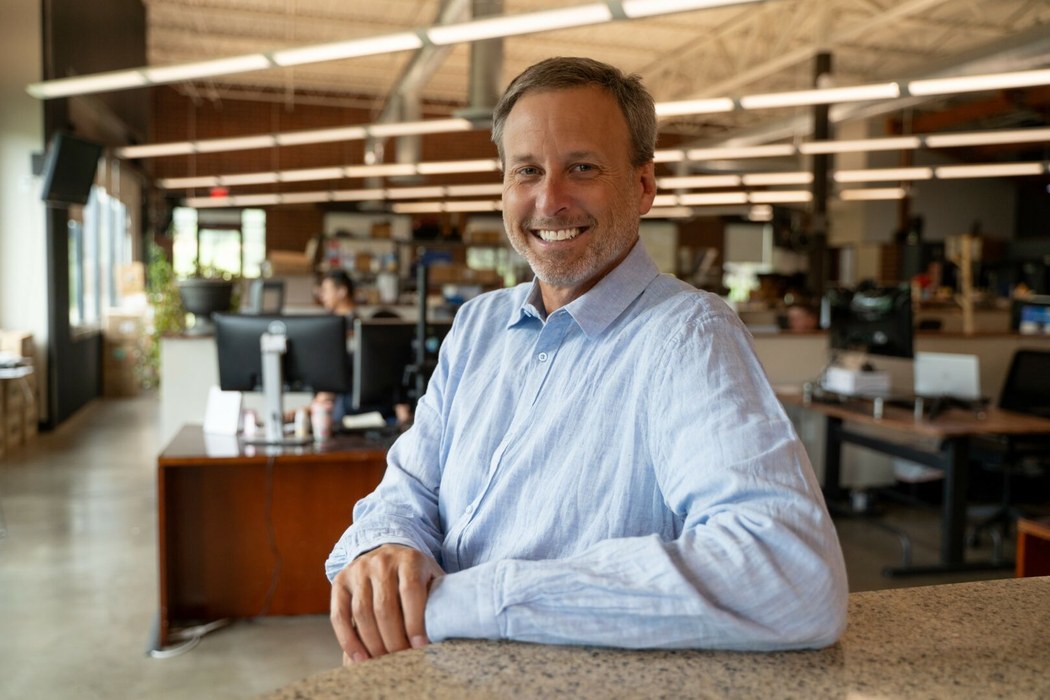
Chris Black is the CEO of GridX, Inc., an enterprise energy technology platform serving major US utilities. With nearly 30 years in technology and operations, he has been a central figure in the clean energy software sector - as CTO/COO at Tendril, he orchestrated the acquisitions that formed Uplight (now valued at $1.5B+), then invested via Huck Capital before taking the helm at GridX in April 2022 during its $40M Series C round. Under his leadership, GridX calculates 49 million bills daily, serves 40 million meters under contract, and models 1,000+ tariffs for utilities including PG&E, Southern California Edison, and ComEd.

Emily Gittins is the Co-founder and CEO of Archive, a B2B SaaS platform that powers branded resale programs for 50+ global fashion companies including The North Face, New Balance, and Oscar de la Renta. A Cambridge mathematics graduate turned Stanford MBA, Gittins built Archive after stints at BCG, Google X, and the Global Fashion Agenda, channeling her technical background and sustainability conviction into a company that has raised $76.9M - including a $30M Series B in February 2025 - and been named one of Fast Company's Most Innovative Companies of 2024.
Nicholas Flanders is the Co-Founder and CEO of Twelve, a carbon transformation company that converts CO2, water, and renewable electricity into sustainable aviation fuel and carbon-neutral chemicals. A Stanford MBA and former McKinsey consultant, Flanders co-founded Twelve (originally Opus 12) in 2015 alongside scientists Dr. Etosha Cave and Dr. Kendra Kuhl to commercialize breakthrough electrochemical CO2 conversion technology developed at Stanford. The company has raised over $790 million, including a $645 million financing round in 2024 led by TPG Rise Climate, and is building AirPlant One - the world's first commercial-scale e-fuels facility - in Moses Lake, Washington.
Raef Sully is the CEO of Lilac Solutions, an Oakland-based company pioneering direct lithium extraction (DLE) technology using ceramic ion exchange beads. A structural engineer turned management consultant turned industrial executive, Sully brings 30+ years spanning tall buildings, the Australian Army Reserve, Bain & Company, and a decade running Nutrien's $10 billion nitrogen and phosphate division. He joined Lilac as COO in mid-2023 and ascended to CEO in February 2024 - the same month the company closed a $145 million Series C. Under his leadership, Lilac has achieved 87% lithium recovery at the Great Salt Lake, unveiled Gen 5 technology with 20x higher production rates, and signed a binding 10-year offtake agreement with Traxys North America targeting 50,000 tonnes of lithium product.
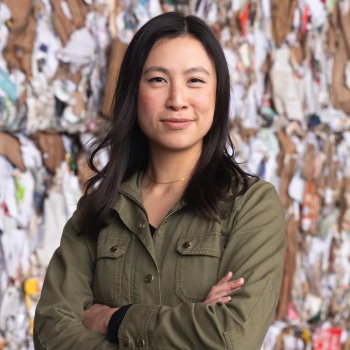
Rebecca Hu-Thrams is the co-founder and CEO of Glacier, a San Francisco-based company building AI-powered robotic arms that sort recyclables in material recovery facilities. Raised by Chinese immigrant parents who instilled a 'reduce, reuse, recycle' ethos, she channeled her Bain consulting background and Thumbtack operating experience into tackling what she calls 'the most demented form of manufacturing on the planet.' Glacier's robots, trained on 3.8 billion images of waste, sort 70+ material categories at 60 picks per minute - preventing roughly 10 million items per robot from reaching landfill annually. Named Fast Company's #1 Most Innovative Company in Robotics & Engineering for 2026, Glacier has raised $33.2 million including a $16M Series A extension in April 2025 backed by Amazon's Climate Pledge Fund and New Enterprise Associates.
Pano AI builds an integrated platform for early wildfire detection and situational awareness, combining 360-degree ultra-high-definition mountaintop cameras, satellite feeds, field sensors and AI models to spot fires within minutes of ignition. Used by fire agencies, electric utilities, governments and private landowners, Pano monitors nearly 30 million acres across the US, Canada and Australia from its San Francisco headquarters.
Pivot Bio engineers nitrogen-fixing microbes that live on crop roots and feed corn, wheat, sorghum and small grains directly, replacing a portion of synthetic fertilizer with a biological alternative that does not volatilize into the atmosphere or leach into groundwater.
Worldly is a sustainability and supply chain intelligence platform that helps brands, retailers and manufacturers measure the environmental and social impact of their products and supplier networks. The exclusive licensee of the Higg Index, Worldly aggregates primary data from more than 40,000 facilities and is used by hundreds of consumer goods companies to meet regulatory disclosure requirements and cut emissions.
Shashank Samala is the CEO and Co-Founder of Heirloom, the company operating America's first commercial direct air capture facility. A serial entrepreneur who previously co-founded Tempo Automation (raising $100M+ for aerospace-grade electronics manufacturing), he pivoted to carbon removal after a stint as Entrepreneur in Residence at Carbon180. At Heirloom, he's building limestone-based DAC technology to remove one billion tons of CO2 from the atmosphere by 2035, targeting a cost of $50 per ton. The company has raised $354M total, including a $150M Series B in December 2024, and is building two new DAC facilities in Louisiana with combined annual capacity of nearly 320,000 tons.

Zack Bloom is a co-founder of Heirloom Carbon Technologies, the company behind America's first commercial direct air capture facility in Tracy, California. A software engineer turned climate entrepreneur, Bloom previously co-founded Eager - a cloud app marketplace acquired by Cloudflare in 2016 - and served as Director of Product at Cloudflare overseeing Workers, Storage, and Tunnel. In 2020, he pivoted from internet infrastructure to atmospheric infrastructure, co-founding Heirloom alongside Shashank Samala and Noah McQueen. The company has since raised over $354M in total funding, opened its first facility, and secured contracts with Microsoft, Stripe, Shopify, Meta, and JPMorgan.
Aperia Technologies is a Hayward, California hardware-and-software company whose Halo Tire Inflator and Halo Connect platform keep commercial truck tires at the right pressure using only the wheel's rotation. Founded in 2010 by Stanford-trained engineers Josh Carter and Brandon Richardson, the company helps fleets cut fuel use, prevent blowouts, and reduce roadside breakdowns across billions of miles of freight.
Dimension is a San Francisco-based B2B waste management platform (formerly Trash Warrior) that uses software and an AI price quoter, Mirror Mirror, to coordinate hauling, recycling, and hazardous waste removal for enterprise customers like Amazon, Instacart, Home Depot, and the DEA - with the long-term aim of pulling the U.S. recycling rate from 35% to 75%.
Raptor Maps builds the operating system for utility-scale solar. Its cloud platform combines drone thermography, digital twins, AI anomaly detection, and asset-performance analytics so solar owners, operators, and OEMs can find faults, plan maintenance, and squeeze more energy out of every panel across hundreds of sites.
Swift Solar is a San Carlos, California startup building perovskite tandem solar cells that aim to beat silicon on both efficiency and cost. Spun out of Stanford, MIT, Oxford and NREL in 2017, the company is now scaling toward gigawatt manufacturing in the United States after a $27M Series A and the 2026 acquisition of Meyer Burger's HJT manufacturing assets and patents.
Darren Bonnstetter is the CEO of Conexiom, a Vancouver-based AI-native platform automating sales order processing for manufacturers and distributors. Appointed in August 2025, he brings a rare blend of mechanical engineering rigor (Iowa State, Stanford MS, Harvard MBA), turnaround consulting at AlixPartners, and climate-tech entrepreneurship - having co-founded and led 280 Earth, a Google X spinout that raised $50M to capture carbon using industrial waste heat. At Conexiom, he leads a 210-person company serving 16 of the top 20 distributors globally, with $170M in total funding backed by Warburg Pincus, Luminate Capital Partners, and ICONIQ Capital.
Mark Housley is the Chairman and CEO of Vigilent, an Oakland-based AI-powered cooling optimization company that serves over 1,500 data center and telecom facilities across 36 countries. A serial entrepreneur and seasoned technology executive, Housley has led multiple companies through turnarounds, acquisitions, and growth phases across optical networking, display technology, and enterprise software. At Vigilent, he oversees a platform backed by 52 patents in applied AI that has collectively reduced energy consumption by hundreds of millions of kilowatt hours and eliminated hundreds of thousands of tons of CO2 emissions globally.
Matt Schwartz is the CEO and co-founder of Afresh, a San Francisco-based AI company building the operating system for fresh food in grocery retail. A Stanford MBA alumnus with a lifelong obsession with food systems, he co-founded Afresh in 2017 after discovering that billion-dollar grocery chains were still managing produce orders with paper and pen. Under his leadership, Afresh has raised $181.8M in total funding, deployed across 12,500+ departments in 40 states, and prevented more than 200 million pounds of food waste - serving major chains including Albertsons, Meijer, and Wakefern.
Zach Robin is the CEO of Recurve, a San Francisco-based clean energy software company building the leading demand-side platform for utilities, aggregators, and implementers. A computer scientist turned energy entrepreneur, Zach has spent two decades at the intersection of software and grid modernization — from scaling product at EnerNOC through its Enel acquisition, to co-founding Hatch Data and growing it into North America's top real estate decarbonization platform (acquired by Measurabl), to now leading Recurve's FLEX platform, which manages 54 million meters nationwide and powers performance-based clean energy programs across the country.
Amit Narayan is the Co-Founder and CEO of GridCARE, a Redwood City-based generative AI company that unlocks hidden power grid capacity to slash data center connection timelines from 5-7 years to 6-12 months. A serial entrepreneur with a PhD from UC Berkeley and a B.Tech from IIT Kanpur, he previously founded AutoGrid (acquired by Schneider Electric in 2022) and Berkeley Design Automation (acquired by Mentor Graphics in 2014), and holds 7 U.S. patents across semiconductor design and energy software. GridCARE emerged from stealth in May 2025 with a $13.5M seed round led by Xora and backed by Tom Steyer, Ram Shriram, and Breakthrough Energy, targeting what Narayan calls the defining constraint on AI: immediate access to power.
Amrit Robbins is the CEO and co-founder of Axiom Cloud, a San Jose-based AI-powered refrigeration management software company serving grocery chains and cold storage operators. A Stanford-trained engineer and Forbes 30 Under 30 alumnus, Robbins previously co-founded Axiom Exergy — a hardware-first thermal energy storage company — before pivoting to software in 2020 with Axiom Cloud. His work addresses refrigerant leaks, which rank #4 on Project Drawdown's climate impact list, with a platform that requires no new hardware, deploys remotely, and earns payback in under a year.

Banks Hunter is the co-founder and CEO of Charge Robotics, a Berkeley-based startup building the world's first fully automated solar construction system. An MIT mechanical engineering alumnus and veteran of medical robotics startup Vicarious Surgical, Hunter co-founded Charge Robotics in 2021 with Max Justicz to solve one of clean energy's most stubborn bottlenecks: the physical, labor-intensive grunt work of assembling a utility-scale solar farm. His company's Sunrise system - a portable robotic assembly line shipped directly to job sites - autonomously puts together 800-pound solar bays and deploys them in the field, aiming to make solar installation as repeatable and scalable as factory production. Backed by Founders Fund, Lux Capital, Energy Impact Partners, and Y Combinator, Charge Robotics has raised over $39 million to accelerate the energy transition.

Hannes Boehning is the CEO and founder of Blumen Systems, a San Francisco-based AI company building environmental intelligence software that converts complex regulatory documents and geospatial datasets into permitting matrices, site layouts, and engineering documents for energy infrastructure developers. A Stanford-trained engineer and former Division I athlete, Boehning left roles at Rothschild & Co and Fortress Investment Group to found Blumen in 2023, raising $6.39M from Climate Capital to tackle one of the biggest bottlenecks in the clean energy transition: the permitting process.
Jane Ren is the Co-Founder and CEO of Atomiton, a Santa Clara-based industrial IoT and sustainability software company she co-founded in 2013. With a rare combination of a medical degree from Peking Union Medical College and an MBA from UC Berkeley Haas, she bridges the gap between operational technology and enterprise sustainability. At Atomiton, she leads a 33-person team building AI-powered platforms that help data centers, manufacturers, and buildings reduce energy costs, optimize water use, and hit their carbon targets - work that earned the company the 'Most Innovative Platform in Energy and Sustainability 2025' award from Energy Business Review Magazine.