remittances
(30)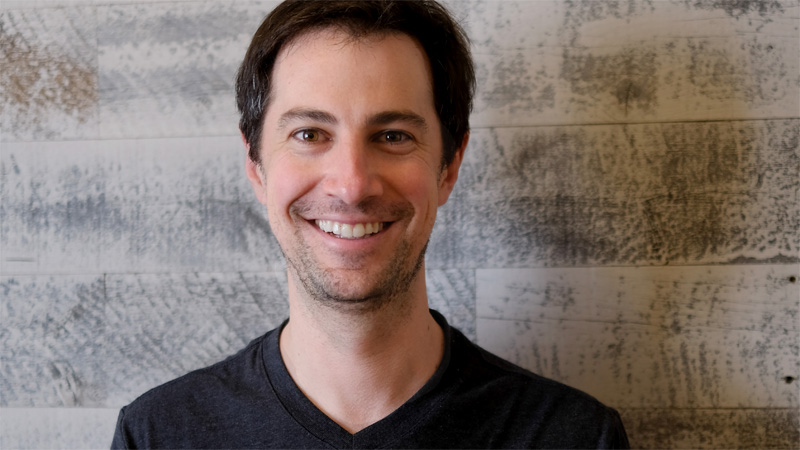
Michael Faye and the shortest distance between money and home
An economist with three ventures to his name keeps returning to one practical question: how do you get money into the hands of the people who need it? From GiveDirectly to Taptap Send, Michael Faye has made a career of working on the answer.
Bitso makes crypto disappear into payments
Bitso started with a place to buy bitcoin. Its more revealing business is helping money cross borders and land in a bank account, with the crypto machinery tucked between the two.

Flutterwave learned that the checkout was only the beginning
A payment button looks simple. Flutterwave’s decade of expansion, retreat, and reinvention shows how much machinery it takes to make that button work across Africa.
The Money You Send Home Has a Second Address
Kredete turns an immigrant’s regular transfer into a chance to build a U.S. credit record. Its first lending marketplace ran into a wall; the company found its way through by following the money people were already sending.

The App That Found Its Business in a Bank Transfer
Afriex’s founders tried a chatbot and a trivia game. The nuisance that survived both experiments - moving money between the US and Nigeria - became their company, then a much larger payments network.
The ATM Company That Learned to Move Everything Else
Euronet began by putting cash machines where banks had not. Thirty years later, the same company sits behind gift cards, remittances, card programs and real-time payment rails - a quiet lesson in making one expensive network do several jobs.
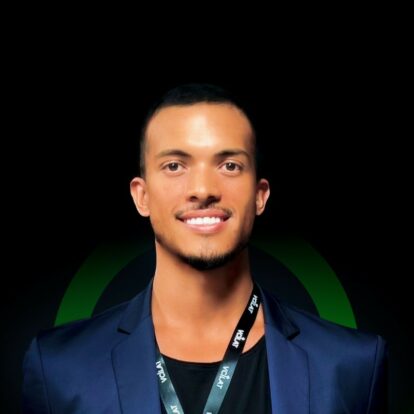
Kevin Charles Built a Wallet for the Distance Between Home and Home
A Venezuelan migrant turned an expensive ritual - sending help home - into a decade-long experiment in practical digital money. Coco Wallet is the latest chapter, but the story began with two brothers, a bolívar and an open-source exchange.

Stellar Development Foundation
The nonprofit behind Stellar wants to make moving money across borders as cheap as sending an email - and it has convinced MoneyGram, PayPal, and Franklin Templeton to help prove it.
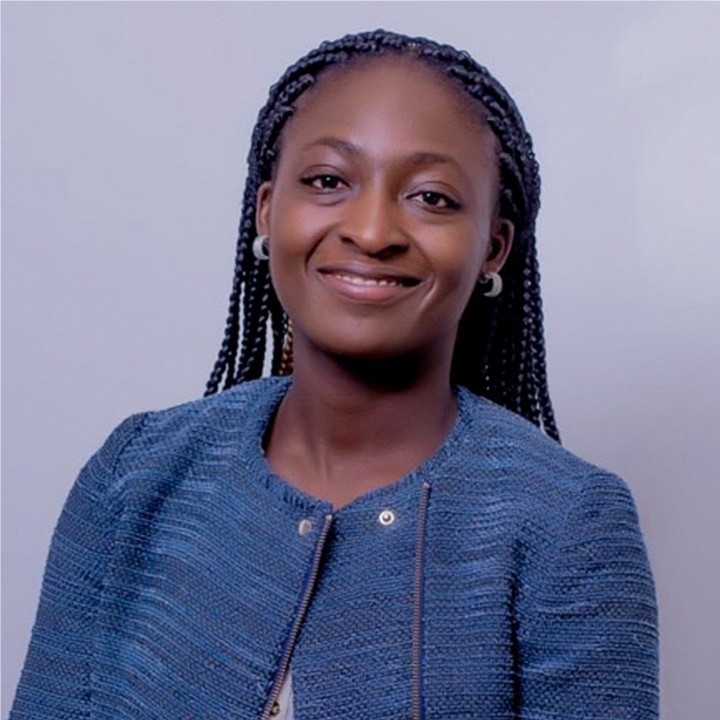
Tolu Alabi
Tolu Alabi is the co-founder and CEO of Cleva (YC W24), a USD banking platform that lets freelancers and businesses across Africa get paid in dollars and shield their earnings from local currency swings. Born and raised in Nigeria, she played competitive basketball before earning degrees at Grinnell College and Stanford GSB and building products at Stripe and Amazon. She also runs Next in Line Africa, a basketball nonprofit that teaches life skills to young athletes.

Sourav Choraria
Sourav Choraria is the co-founder and CEO of Infinity (YC W24), a Bengaluru business banking platform that helps cross-border SMBs and startups send and receive international payments with multi-currency accounts, flat fees, and no FX markup. He built it with his brother Sidharth after watching their family business lose money to slow, opaque international transfers. Before Infinity he was head of growth at Paytm Money, where he helped scale the wealth platform to 20 million monthly users and launched India's first fixed-deposit-backed credit card.
Cleva
Cleva is a USD banking platform that lets freelancers, remote workers and businesses in Africa - starting with Nigeria - open U.S. dollar accounts in their own name, receive international payments via ACH, wire, or stablecoins (USDC/USDT), and spend through a virtual dollar card. Founded in 2023 by Stripe and AWS alumni Tolu Alabi and Philip Abel, and backed by Y Combinator (W24), Cleva helps users get paid in dollars and hedge against local currency volatility.

Coco Wallet
Coco Wallet (YC S19) is a global dollar account powered by stablecoins. Founded by Venezuelan entrepreneur Kevin Charles and his co-founders, it lets Latin American migrants and their families send, spend, save, and earn in digital dollars from a mobile app - combining the simplicity of a neobank like Nubank or Revolut with the freedom of self-custodial Web3, so people can access stable, borderless money without a traditional bank.
Karsa
Karsa is a stablecoin neobank that gives people in emerging markets a global dollar account. Users can deposit local currency, save in dollar-denominated stablecoins, receive international payments, cash out to local banks, and spend abroad with a card - without needing a traditional US bank or any crypto knowledge. The product hides the complexity of self-custody wallets and a peer-to-peer stablecoin network behind a familiar banking interface, targeting the roughly one billion people who live under high inflation and capital controls.
Kontigo
Kontigo is a USDC-based neobank built for Latinos in the U.S. and Latin America. It pairs a self-custody stablecoin wallet with a card, no-fee cross-border transfers, yield on balances, and an AI banker over WhatsApp - aiming to give people in high-inflation economies a dollar account that works across borders. Founded in 2023 and part of Y Combinator's Summer 2024 batch, it reported roughly 1 million users and over $1 billion in payment volume before raising a $20 million seed round in December 2025.
Milio
Milio (YC W23) is a Colombian fintech building real-time, account-to-account payment infrastructure for Latin America. Through a single API, banks, fintechs, and enterprises can move money between accounts in seconds - handling collections, disbursements, cross-border transfers, and treasury automation while cutting transaction costs by up to 80%.
QUIK
QUIK is a Maracaibo-born super app that lets Venezuelans pay, save, shop and get food or groceries delivered in about 30 minutes, all from one phone. Its stablecoin-backed wallet lets users hold and spend in a currency that holds its value in a country long battered by inflation, while its QUIK Pro side gives merchants the software to run their storefront, inventory and logistics. Backed by Y Combinator in the Winter 2022 batch, it was the first startup from Maracaibo to be accepted into the accelerator.

Settle Network
Settle Network is a Buenos Aires-based fintech that builds the fiat-to-crypto rails Latin America runs on. Through its Latamex gateway and Stellar-based settlement infrastructure, it lets exchanges, businesses, and users convert local currencies like the Argentine peso and Brazilian real into crypto and stablecoins - and back again - in seconds. A Y Combinator S22 company backed by the Stellar Development Foundation, Settle became the on/off ramp behind global exchanges including Binance and OKX across the region.
Wallbit
Wallbit is a US-dollar neobank built for global remote workers and freelancers who earn in dollars but live outside the US. Through a single app, users open a US checking account, get an international Visa debit card, invest in US stocks, ETFs and Treasury bonds from as little as $1, and cash out to local currency in about five minutes. Founded in 2022 by four Argentine engineers and backed by Y Combinator (W23), it serves professionals across 20+ countries in Latin America and Europe.
TransFi
TransFi is a Dubai-headquartered payment infrastructure company that moves money across borders on stablecoin rails. Its platform lets businesses and Web3 apps collect, convert and pay out funds across fiat and stablecoins, spanning 100+ markets, 40+ currencies, 250+ local payment methods and 130+ digital assets. Founded in 2022 by former McKinsey payments partner Raj Kamal, TransFi targets high-friction emerging markets across Asia, the Middle East, Latin America and Africa, replacing slow correspondent-banking and SWIFT flows with near-instant settlement.
Pana
Pana is a Miami-based, Y Combinator-backed neobank building a stablecoin-native dollar account for Latinos and immigrants in the United States and their families across Latin America. It powers a closed-loop remittance network - borderless USD balances that move money instantly between users with zero fees, backed by USDC and settling to more than 5,000 banks across 27 countries. Founded in 2021 by Piero Nunez del Risco and Luis Pena, Pana pairs a consumer app (US checking-style accounts opened with a passport, a Mastercard debit card, direct deposit, and free peer transfers) with an emerging embedded-finance layer that lets banks and platforms serve the US diaspora.
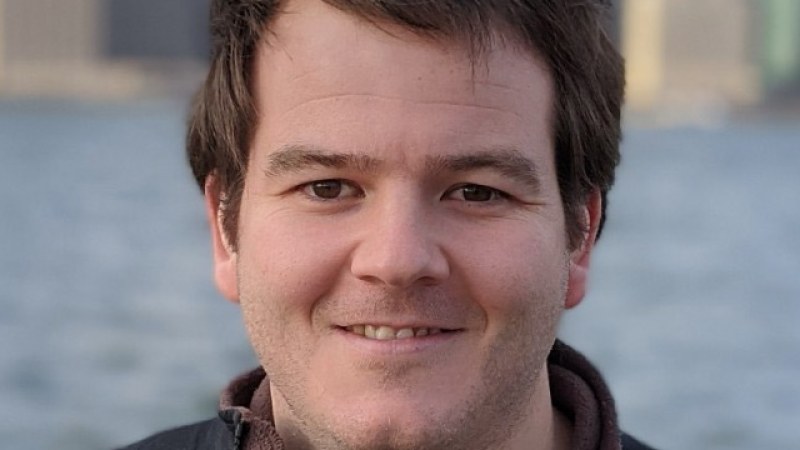
Nicolás Jaramillo
Nicolás Jaramillo is a Chilean engineer turned serial fintech founder who wants to be the BlackRock of web3. After helping build MACH, Chile's first widely adopted digital bank, and scaling the cross-border payments company Global66 across Latin America, he co-founded Arch in 2020 to make crypto investing as boring and accessible as an index fund. Arch packages the chaos of DeFi into tokenized, risk-rated portfolios, raised $5M in seed funding from Digital Currency Group and Upload Ventures, and aims to bring traditional-market discipline to the decentralized economy.

Piero Risco
Piero Núñez Del Risco is the founder and CEO of Pana (YC S22), a cross-border neobank building borderless USD accounts and a zero-fee remittance network for the 62 million Latinos living in the United States. A Dominican operator who spent more than a decade inside Caribbean banking - including leading a 130-person team that rebuilt Scotiabank's digital platform for 2 million customers across 11 countries - he left the corner office to attack the 6% fee that immigrants pay to send money home. Pana lets people open a US bank account with just a passport, and has grown into a 'global bank on chain' blending fiat and stablecoins across 125 countries.

Simanta Gautam
Simanta Gautam is the co-founder and CEO of Alpen Labs, a startup building zero-knowledge infrastructure to make Bitcoin scalable, private, and programmable. An MIT-trained engineer who earlier founded the airport-security computer-vision company Synapse Technology (acquired by Palantir, where he became AI Lead), he now leads a team turning Bitcoin's intentionally limited base layer into rails for global money. The mission traces to a personal detail: founders with roots in Nepal, where roughly a quarter of GDP arrives as remittances, saw firsthand how much money is lost to middlemen.

Sara Drakeley
Sara Drakeley is the CEO of Sentz (formerly MobileCoin), a privacy-focused stablecoin and global payments company based in Sacramento, California. An MIT-trained mathematician and computer scientist, she built animation pipelines at Walt Disney Animation Studios - the trees in Frozen, the water in Moana, the fur in Zootopia - then wrote trading infrastructure on Wall Street and joined SpaceX's simulation team before becoming the third engineering hire at MobileCoin in 2018. She rose from principal engineer to CTO to CEO, and now leads the company's push to make instant, low-cost, private cross-border payments accessible worldwide.
Sentz Global
Sentz (formerly MobileCoin) is a San Francisco-based fintech building a free, self-custodial mobile wallet that lets people send, save, receive and earn in stablecoins. Its dollar-pegged eUSD moves money across borders in seconds for a fraction of a cent, with end-to-end encryption and full user custody. Used in 180+ countries with deep traction in Nigeria, Sentz targets freelancers, remote workers and families sending remittances, and offers up to 8% yield through Sentz Earn.

Talal Naseem Janjua
Talal Naseem Janjua is a growth and product operator working at the seam where payments, analytics, and behavior meet. He is Head of Growth at Ace Money Transfer, a UK-regulated remittance company, after building growth and product functions at two of Pakistan's biggest digital-finance players, JazzCash and Zindigi. His specialty is turning channel planning, advanced analytics, and automation into measurable movement in the numbers that matter.

Común
Común is a New York-based digital bank built Spanish-first for immigrants in the United States. It offers an FDIC-insured checking account, a Visa debit card, low-cost cross-border remittances, Zelle access, and one of the largest cash-deposit networks in the country - all openable without a Social Security number. Founded in late 2021 by Mexican immigrants Andrés Santos and Abiel Gutiérrez, Común set out to fix the financial exclusion they experienced firsthand, and it has grown into one of the fastest-growing consumer fintechs serving the Latino community.

Andres Santos
Andres Santos is the co-founder and CEO of Comun, a Spanish-first digital bank built for Latino immigrants in the United States. A Mexican-born MIT Sloan MBA who once struggled to open a US bank account himself, Santos turned that friction into a fast-growing neobank that accepts more than 100 Latin American IDs, requires no Social Security Number, and sends remittances across Latin America. After a $4.5M seed round in late 2023, Comun raised a $21.5M Series A led by Redpoint Ventures in August 2024 - just months later - on the back of 52% month-over-month customer growth.
Félix
Félix (Félix Pago) is a Miami-based fintech that lets Latin Americans in the U.S. send money home through a WhatsApp chat. Under the hood, it routes transfers over stablecoin rails (USDC) and uses AI to handle compliance and customer service in Spanish. Founded in 2020 by Manuel Godoy and Bernardo García, the company has moved more than $1 billion across nine LatAm corridors and raised a $75M Series B led by QED Investors in April 2025.
Manuel Godoy
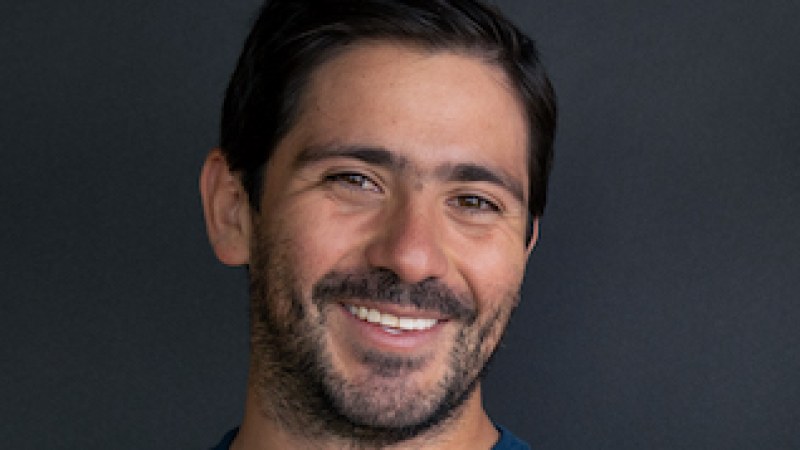
Manuel Godoy is the Co-Founder and CEO of Félix, a WhatsApp-native remittance platform that uses USDC stablecoins and AI to let Latino immigrants send money home in minutes for a fraction of traditional costs. Born in Venezuela and educated at Caltech and Wharton, Godoy turned his own immigrant experience into a company that has processed over $1 billion in remittances, serves 400,000+ active users across nine countries, and raised $90.5M including a $75M Series B in April 2025 led by QED Investors.