usdc
(36)
Coinbase Developer Platform wants crypto to lose its entrance exam
A wallet should not require a conversion experience. Coinbase Developer Platform turns crypto’s awkward preliminaries into infrastructure for apps, payments and machines with money to spend.
Polymer Labs wants your money to arrive whole
Nearly $2 billion moved through its USDC bridge in nine months, the company says. Behind the tidy transfers is a more interesting idea: let applications prove what happened elsewhere, then get on with business.

Eco Built the Wallet. Then It Found the Real Business Hiding Underneath
After raising roughly $95 million for a consumer money app, Eco discovered that the wallet was not the hardest part. Its new bet is the plumbing that lets stablecoins cross chains without making users think about bridges, gas or stranded transactions.

Jesus Castillo Is Turning Venezuela's Money Workarounds Into a Fintech Playbook
The Venezuelan founder behind Kontigo learned finance from the neighborhood san, built through microlending and AI, and now wants a stablecoin wallet simple enough for his grandmother.
The Ex-Coinbase Custody Boss Wants Your Business Bank Account to Run on Stablecoins
Dakota looks like a normal business bank account. Underneath, your dollars are stablecoins backed by Treasuries you actually control - and that quiet swap is the whole pitch.

The Chicago Startup That Wants to Make Waiting for Money Feel as Weird as Waiting for a Fax
Daniel Lev and Benjamin Meeder built a payment layer on stablecoins instead of the batch files banks still run on. Two years in, Pantera wrote a $25M check and revenue is up 23x.

Stellar Development Foundation
The nonprofit behind Stellar wants to make moving money across borders as cheap as sending an email - and it has convinced MoneyGram, PayPal, and Franklin Templeton to help prove it.

Polymarket
Polymarket turned the future into a constantly repriced feed. Its bigger wager is that a market price can become as familiar - and as useful - as a poll, a pundit or a breaking-news alert.

Coinbase
How a Y Combinator startup that let people buy $5 of Bitcoin became the first crypto company in the S&P 500 - and why it now wants to be the exchange for everything.

Cleva
Cleva is a USD banking platform that lets freelancers, remote workers and businesses in Africa - starting with Nigeria - open U.S. dollar accounts in their own name, receive international payments via ACH, wire, or stablecoins (USDC/USDT), and spend through a virtual dollar card. Founded in 2023 by Stripe and AWS alumni Tolu Alabi and Philip Abel, and backed by Y Combinator (W24), Cleva helps users get paid in dollars and hedge against local currency volatility.

Coco Wallet
Coco Wallet (YC S19) is a global dollar account powered by stablecoins. Founded by Venezuelan entrepreneur Kevin Charles and his co-founders, it lets Latin American migrants and their families send, spend, save, and earn in digital dollars from a mobile app - combining the simplicity of a neobank like Nubank or Revolut with the freedom of self-custodial Web3, so people can access stable, borderless money without a traditional bank.
Karsa
Karsa is a stablecoin neobank that gives people in emerging markets a global dollar account. Users can deposit local currency, save in dollar-denominated stablecoins, receive international payments, cash out to local banks, and spend abroad with a card - without needing a traditional US bank or any crypto knowledge. The product hides the complexity of self-custody wallets and a peer-to-peer stablecoin network behind a familiar banking interface, targeting the roughly one billion people who live under high inflation and capital controls.
Kontigo
Kontigo is a USDC-based neobank built for Latinos in the U.S. and Latin America. It pairs a self-custody stablecoin wallet with a card, no-fee cross-border transfers, yield on balances, and an AI banker over WhatsApp - aiming to give people in high-inflation economies a dollar account that works across borders. Founded in 2023 and part of Y Combinator's Summer 2024 batch, it reported roughly 1 million users and over $1 billion in payment volume before raising a $20 million seed round in December 2025.
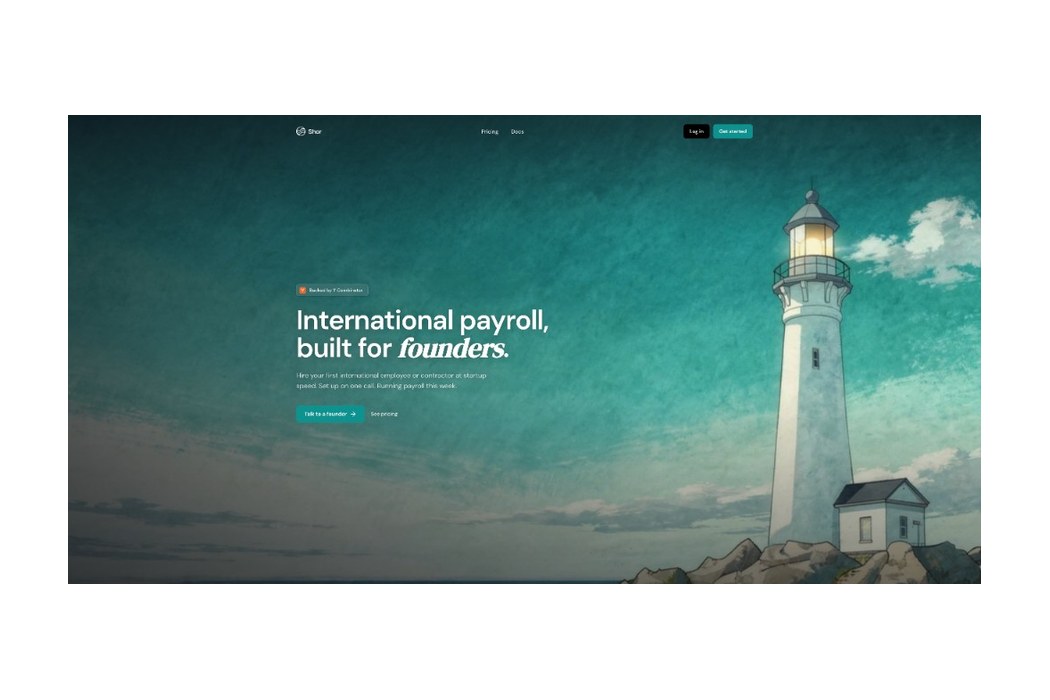
Shor
Shor is a San Francisco fintech (YC S25) that runs international payroll and Employer-of-Record services for startup founders. It pays contractors and full-time employees across 150+ countries by settling on stablecoin rails in the backend while customers transact in ordinary currencies - cutting the intermediary fees that make legacy providers like Deel and Rippling expensive. Setup happens on a single call, payroll runs within a week, and pricing starts at $19/month per contractor and $299/month per EOR employee.

Unifold
Unifold is a developer-first API and SDK that lets any app accept on-chain deposits across any blockchain and token in under 10 lines of code. It handles the full deposit flow - cross-chain routing, gas abstraction, compliance checks, and settlement - so users never have to think about chain IDs, bridging, or which version of USDC to use. Founded in 2026 by a team that previously built wallet infrastructure onboarding 30M+ users to apps like Phantom and Polymarket, Unifold is a Y Combinator Winter 2026 company based in New York City.
dtcpay
dtcpay is a Singapore-headquartered, regulated payments company that lets merchants, consumers and financial institutions move money in stablecoins as easily as in dollars. Founded in 2019 as Digital Treasures Center by Alice Liu and Band Zhao, it runs a real-time swap engine that converts stablecoins to fiat at the moment of payment, so a shopper can pay in USDC while a merchant is settled in Singapore dollars. The company holds a Major Payment Institution licence from the Monetary Authority of Singapore plus licences and registrations in Hong Kong, Australia, the United States, Canada and a Luxembourg EMI licence covering the European Economic Area. In January 2025 it dropped volatile cryptocurrencies entirely and became stablecoin-only. Its product line spans in-store POS+ terminals, online checkout, payment links, multi-currency wallets, a Visa Infinite "Digital Treasures Card", corporate cards and stablecoin-as-a-service APIs for institutions. dtcpay raised a US$10M Series A led by Vertex Ventures Southeast Asia & India in March 2026, bringing total disclosed funding to roughly US$26.5M.
KAST
KAST is a stablecoin-powered global money app that lets people store, earn, send and spend digital dollars. Founded by former Circle executive Raagulan Pathy and ex-Quona Capital partner Daniel Bertoli, the company issues Visa cards that convert USDC, USDT and other stablecoins into local currency at more than 150 million merchants across 170+ countries. KAST layers yield-bearing vaults, instant transfers, cashback and SOL staking rewards on top of a neobank-style account, positioning itself as a financial platform for globally mobile users and, increasingly, businesses.
TransFi
TransFi is a Dubai-headquartered payment infrastructure company that moves money across borders on stablecoin rails. Its platform lets businesses and Web3 apps collect, convert and pay out funds across fiat and stablecoins, spanning 100+ markets, 40+ currencies, 250+ local payment methods and 130+ digital assets. Founded in 2022 by former McKinsey payments partner Raj Kamal, TransFi targets high-friction emerging markets across Asia, the Middle East, Latin America and Africa, replacing slow correspondent-banking and SWIFT flows with near-instant settlement.
Triple-A
Triple-A is a Singapore-based, globally licensed payments institution that lets businesses accept and send money in stablecoins and local currencies without ever holding, converting, or managing crypto themselves. Founded by serial fintech entrepreneur Eric Barbier, it settles merchant payments in fiat (USD, EUR, and 30+ local currencies) with next-day bank settlement, handling custody, conversion, and compliance behind the scenes. It became the first digital-currency payment company licensed by the Monetary Authority of Singapore and serves merchants including Farfetch, Razer, Charles & Keith, Grab, and the Singapore Red Cross.

Wayex
Wayex is a Sydney-based fintech that lets people hold a single US dollar balance, fund it with bank transfers or stablecoins, and spend it worldwide on a Visa card. Founded in 2018 as CryptoSpend by two University of Technology Sydney students, it issued Australia's first crypto-linked Visa card in 2021, rebranded to Wayex in 2024, and in 2025 launched Wayex Global across 160+ countries. The platform supports USDC, USDT, DAI and PYUSD across 10+ blockchains, pays yield on stablecoin balances, and processes conversions in real time at checkout.
Blackbird Labs
Blackbird Labs is a New York-based restaurant technology company that pairs a consumer dining app with a blockchain-based payments and loyalty network. Founded in 2022 by Resy and Eater co-founder Ben Leventhal, Blackbird lets diners check in at participating restaurants, earn a rewards currency called $FLY, and pay their bill through the app, while giving restaurants lower payment-processing fees and direct ownership of their guest data. The company runs its own layer-2 network, Flynet, and operates in New York, San Francisco, and Charleston with roughly 1,000 restaurants on the platform.

Catena Labs
Catena Labs is a Boston-based fintech building what it calls the first AI-native financial institution - a regulated bank and governance platform designed for AI agents that autonomously send and receive money. Founded in 2025 by Circle co-founder and USDC co-creator Sean Neville, Catena pairs agent identity, deterministic spending policies, and audit trails with account management and stablecoin, card, ACH and wire payment rails. It also open-sourced the Agent Commerce Kit (ACK), a set of protocols for agent identity and payments built on W3C web standards.
Conduit
Conduit is a stablecoin-powered cross-border payments network for businesses. Through a single API it connects banks, local payment rails, and blockchains so companies can move money internationally faster and cheaper than legacy systems like SWIFT. Founded in 2021 by Kirill Gertman and Michael Gregson, the company processes more than $10 billion in annualized payment volume and raised a $36 million Series A in May 2025.
Fin
Fin is a New York-based stablecoin payments company building a mobile app for high-value, global, and instant money movement. Founded by ex-Citadel engineers Ian Krotinsky and Aashiq Dheeraj - the team behind TipLink - Fin unifies balances into USDC and lets users and businesses send millions of dollars in near real time to other Fin users, bank accounts, or crypto wallets. In December 2025 it raised a $17M Series A led by Pantera Capital, with Sequoia and Samsung Next participating, to launch a product aimed at import/export businesses and high-value transfers that traditional banks handle slowly and expensively.
Noble
Noble is a purpose-built blockchain for native asset issuance, focused on stablecoins and tokenized real-world assets. Built on the Cosmos SDK and connected through IBC, it is the canonical home of native USDC in the Cosmos ecosystem and the issuer of the yield-bearing Noble Dollar (USDN). Founded in 2022 by Jelena Djuric, Stefan Coolican and John Letey after the collapse of Terra's UST, Noble gives issuers such as Circle, Ondo Finance, Hashnote and Monerium a neutral, compliant rail to mint dollars and distribute them across dozens of connected chains - with no gas token required and fees paid in USDC.
VelaFi
VelaFi is a stablecoin-powered financial infrastructure platform that helps enterprises move money across borders quickly and at lower cost. Built out of TruBit Business, the B2B unit of Galactic Holdings, VelaFi connects local banking rails, cross-border networks and major stablecoin protocols to offer on/off-ramps, pay-ins and pay-outs, multi-currency accounts, FX and treasury tools - delivered directly or through developer-first APIs. With roots in Latin America and operations across the U.S., Hong Kong and Singapore, the company says it has served hundreds of institutional clients and processed billions of dollars in payment volume. In January 2026 it raised a $20M Series B led by XVC and Ikuyo.

Hugo Finkelstein
Hugo Finkelstein is the co-founder and CEO of Rise, a global payroll and compliance company that lets businesses pay contractors and employees across 190+ countries in local currency, stablecoins, or crypto. What started at Babson College as a campus buy-and-sell app turned into a career in crypto community-building and, eventually, a payroll platform that has processed more than $1 billion in payments. Rise raised a $6.3M Series A in November 2024 led by Draper Associates and Polymorphic Capital, and Finkelstein has become one of the clearest voices arguing that the real stablecoin use case is not trading, it is payroll.

Jelena Djuric
Jelena Djuric is the co-founder and CEO of Noble, a blockchain built for issuing and moving stablecoins natively across the interchain. She started Noble in early 2023 with Stefan Coolican and John Letey after years working across the Cosmos, Dfinity and Celo ecosystems, and after helping found the Canadian Web3 Council. Noble powers native USDC on Cosmos and now connects roughly 50 blockchains, has attracted hundreds of millions of dollars in assets, and raised a $15 million Series A led by Paradigm in late 2024. Djuric's stated ambition is to make stablecoins as easy to send as a Venmo payment.

Huma Finance
Huma Finance is the first PayFi (Payment Financing) network, a blockchain protocol that lets businesses and payment providers borrow stablecoin liquidity against real-world receivables and invoices, settling cross-border payments and card transactions in seconds instead of days. Liquidity providers deposit USDC and earn double-digit yield sourced from the fees borrowers pay for that instant settlement. Founded in 2022 and built natively on Solana, Huma has processed more than $4.5 billion in transaction volume and launched its HUMA governance token in May 2025.

Slingshot
Slingshot is a San Francisco-based crypto trading app that lets people buy, sell, and swap hundreds of thousands of tokens across multiple blockchains from a single USDC balance - hiding the usual friction of wallets, bridges, and gas fees behind a clean consumer interface. Founded in 2020 by Coinbase alum Clinton Bembry, it raised roughly $18M through a Ribbit Capital-led Series A and was acquired by NFT marketplace Magic Eden in April 2025.