new-york-startup
(508)
The Press Release Was Supposed to Be Cheap. EZ Newswire Made It Measurable Instead.
A $25 experiment in automated press releases grew into a premium distribution platform that charges up to $1,500 a release. The interesting part is not the markup - it is what EZ Newswire learned to sell instead of vague reach.
The Browser Company Built a Browser People Loved - Then Sold the Pivot for $610 Million
Arc made browser tabs feel new, then became too novel for the audience it needed. The company’s second act - a simpler AI browser called Dia - attracted Atlassian, a $610 million deal, and a harder test: turning taste into a business.

The Curiosity Machine: How SightX Turned Slow, Expensive Market Research Into Something You Can Finish Before Lunch
For a decade, SightX chased a stubborn idea: that testing a price, a package, or an ad should not require three vendors and a month of waiting. Then it taught an AI to do the asking.

Autonomous Started With a Standing Desk. Now It Wants Your Whole Office to Think.
A New York furniture startup shipped millions of desks and chairs to more than 30 countries, then bet its next act on a stranger idea: hardware that reasons. Here is how a Kickstarter desk turned into an AI hardware workshop.
The Agency That Sent 1,000 Micro-Influencers Into Battle and Never Took a Dime of Venture Money
Mae Karwowski bootstrapped Obviously out of a Lower East Side apartment, turned down a $25 million offer, and sold to the world's biggest ad holding company. The trick was treating influencers like a data problem, not a popularity contest.
A Sister's Wedding, a Quit Job, and the App That Won't Go Free
Sharmeen Mitha-Sehgal built Appy Couple after her sister's 500-guest Mumbai wedding turned into a logistics headache. More than a decade later, it still charges couples in a market that mostly gave the software away.
The Startup That Wants to Kill the Spreadsheet Running Your Warehouse
Selling online got easy. The part after the sale - knowing what to buy, when, and how much - is still run on 1950s math and Friday-night spreadsheets. Flieber is betting AI can finally do the boring part.

The Startup That Read the Fine Print So Risk Managers Don't Have To
Commercial insurance runs on documents nobody wants to read. LineSlip built the software that reads them - and handed risk managers back control of their own numbers.
The Startup That Turns Your Idle Credit Card Points Into a Business Class Seat
Adam Morvitz spent years booking other people's dream flights by hand. point.me is his attempt to fit a decade of points obsession into a search box - and to make banks pay for it.

The Company Betting Your Next Purchase Is Already Yours
Ordergroove sells brands a simple, expensive idea: the cheapest customer to acquire is the one who already bought. Here is how a company started in a Manhattan apartment built the plumbing behind the subscribe-and-save button.
The Company That Attacks You Before the Scammers Do
AI made it cheap to clone a CEO's voice and email 10,000 employees at once. Adaptive Security's answer is to run those attacks first - as a drill - and see who clicks.

The Startup That Made Insurance Paperwork Feel Like TurboTax
Broker Buddha replaced the PDF-and-fax ritual of commercial insurance with online smart forms - and squeezed renewals from months down to about three and a half days. Then Acturis bought it to plant a flag in America.

Alex Reynolds
He lined up ten customers for February 2020, then the events industry went dark overnight. Alex Reynolds kept building anyway - and turned the messy art of picking conferences into a data problem worth solving.

Albert Gozzi
He started Aleph in a pandemic apartment because every finance tool he'd used either felt ancient or tried to pull him out of the spreadsheet. Then he heard no 75 times - and raised a Series B anyway.
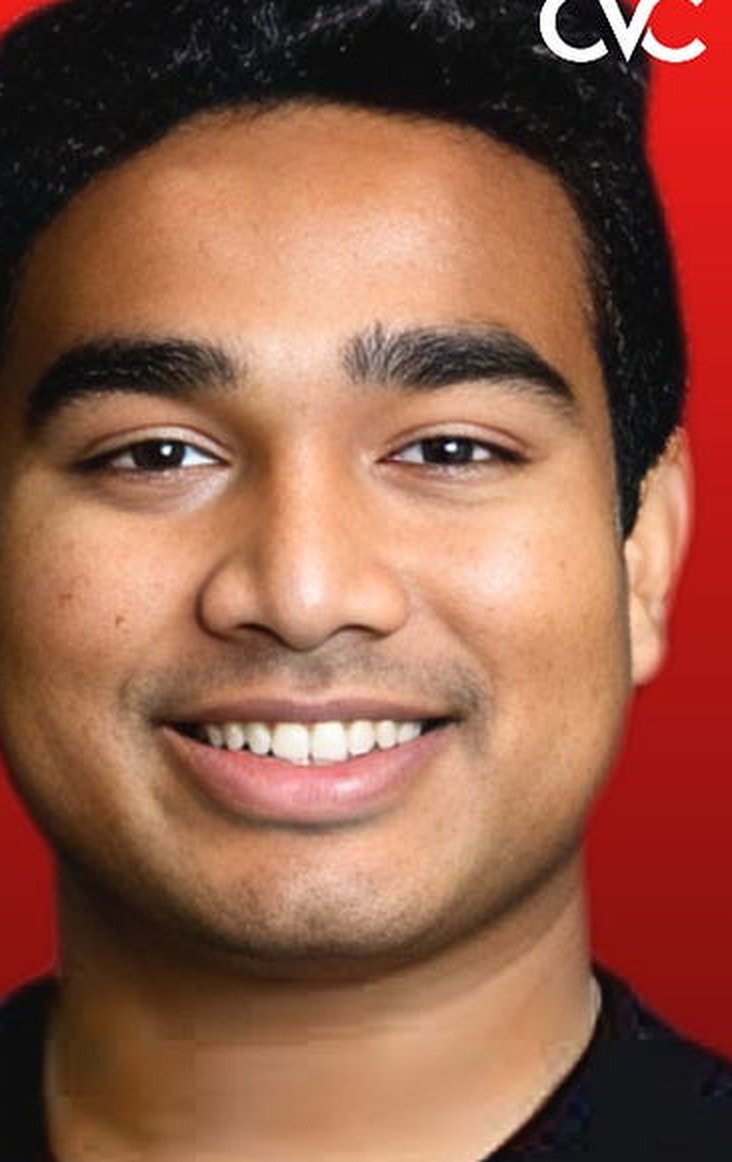
Akash Raju
He made Forbes 30 Under 30 for a company he then threw away. The second version of Glimpse - AI that fights retail's most boring, most expensive fee - just raised $35 million.

Akash Magoon
He learned how insurers deny claims from the inside. Then he built the machine that fights back for the doctors.

Adrien Menard
He noticed that half the internet's pages were invisible to Google. Then he built a company to fix it - and now he is betting it can do the same for the AI agents rewriting how the world searches.

Adam Fields
He left an art marketplace because nobody could figure out how to ship a painting. A decade later his software quietly runs the last mile for fine art, watches, and collectibles across 45 countries.

Abhinav Kapur
He spent his nights doing food deliveries and his days reading equity research. Then he built the software his mother-in-law never had - so every restaurant could remember its regulars.

Abdul Al-Asaad
He grew up in a refugee camp and learned finance at Goldman Sachs. Now Abdul Al-Asaad wants to hand ordinary savers the borrowing power that has always belonged to the wealthy.

Aaron Fessler
He built booking software for the tours-and-attractions world by first living inside it - running a 100-acre racetrack in the Nevada desert. Now Aaron Fessler wants to hand every operator the tools he wished he'd had.

Philip Odelfelt
He walked away from hedge fund money to help old-line manufacturers see what is really happening on the shelf. Now Philip Odelfelt is turning messy retail data into a $27 million bet on the building materials industry.

Ambral
Ambral is a New York-based Y Combinator (S25) company building AI Account Managers for post-sale revenue teams. Its product, Cortex, synthesizes signals from product telemetry, support tickets, emails and calls into a live model of every customer account, then detects expansion and churn signals and drafts or executes the outreach - giving mid-market and SMB accounts the kind of attention normally reserved for a company's largest customers.

Arctic Health
Arctic Health is a New York healthcare startup (YC P26) that automates provider credentialing and payer contracting. It pairs credentialing experts with an AI platform to get healthcare providers in-network across all 50 states and 300+ insurance networks, handling documentation, CAQH profiles, payer submissions, rate negotiation, and ongoing compliance so clinics and health systems can get paid faster.
Bezel
Bezel is a Y Combinator (W25) startup that generates studio-quality photos and videos of apparel on photorealistic AI human models. Fashion and e-commerce brands upload a clothing image, pick a preset model, and get shoot-ready stills and video in seconds - replacing shoots that cost thousands of dollars and take days. Founded in 2025 in New York by Kashyap Achar, the company positions itself as an on-demand content engine for brands that need constant creative variety for ad testing.

Caddy
Caddy is a personal AI for everyday work that lives in your text messages and responds to voice. Built by the team that led product and design for Loom's AI suite, it connects to the tools people already use - email, calendar, Slack, Linear, Notion - and gets work done without forcing anyone to open yet another app. You text or talk; Caddy handles the tickets, reminders, scheduling and follow-ups. The company is part of Y Combinator's Fall 2025 batch and is based in New York City.

Cohesion
Cohesion is a New York-based Y Combinator (P26) startup building AI agents that automate research for institutional investors. Its agentic teammate monitors the companies an analyst covers - tracking earnings, news, and non-traditional datasets like podcasts and X/Twitter - and surfaces differentiated insights purpose-built for public equity investing. Founded by ex-hedge-fund analyst Devon Krapcho with engineers from AWS and T. Rowe Price, Cohesion is already live with 10+ long/short and long-only fundamental funds managing a combined $10B+ in assets.

Datost
Datost is a Y Combinator (Spring 2026 / P26) startup founded by Maceo Cardinale Kwik and Jason Wang. It launched as 'the proactive AI data analyst' - a Slack-native agent with a semantic layer that scored 75.2% on the BIRD-Interact text-to-SQL benchmark versus 33% for a frontier model alone - and has since become an applied research lab building ED1TH, a 25-gram pair of AI AR smart glasses with no cameras, an in-lens display, and a companion smart ring. Backed by Y Combinator and OpenAI.

OneGrep
OneGrep (YC W24) is a New York-based developer-tools startup building AI agent infrastructure for DevOps. It began as a DevOps copilot that fine-tuned models on real-time telemetry to help engineers resolve incidents faster and cut observability costs, and has since expanded into tooling that lets AI agents discover, correlate, and safely operate the many SaaS and MCP-based tools engineering teams rely on. Founded by ex-Disney, Amazon, and Coinbase engineers Achintya Ashok and Brian Cripe, it went through Y Combinator's Winter 2024 batch.
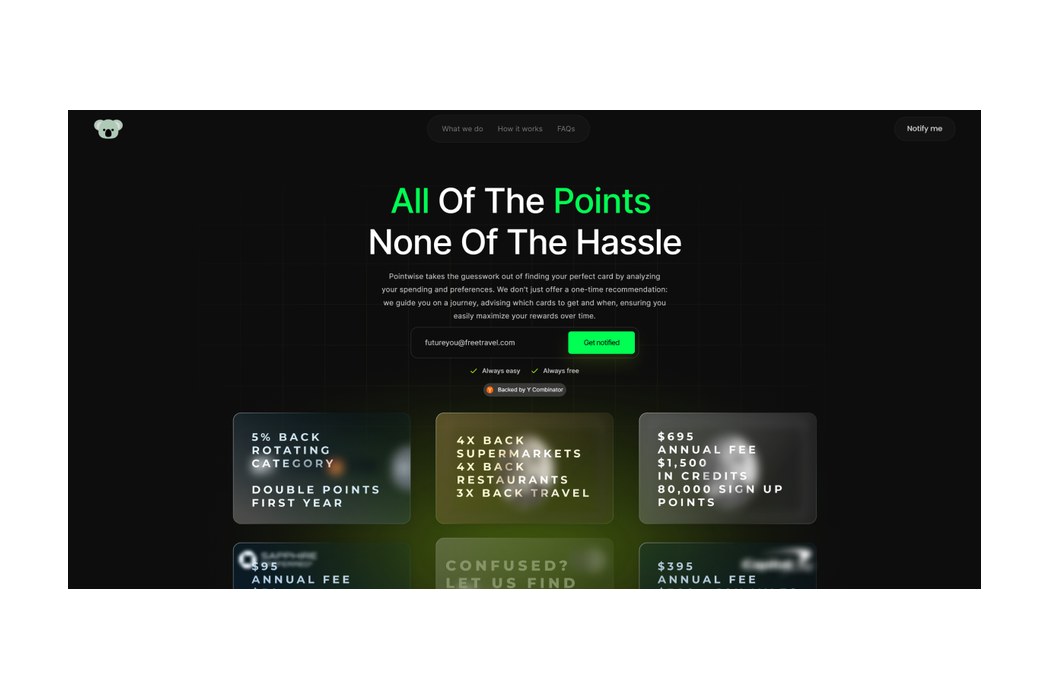
Pointwise
Pointwise is a New York fintech that tells you which credit cards to get and when, so you stop leaving rewards on the table. Founded by Ken Book and Ben Litvin and backed by Y Combinator (W23), the free app connects to a user's existing cards, analyzes their real spending, and runs it against a live database of nearly 4,000 credit cards to build a personalized, math-driven plan for maximizing cash back, points, and sign-up bonuses over time.