aiops
(45)
Datadog Put the Cloud on One Screen. Then the Meter Started Running.
Datadog made a large business out of ending one old argument: developers blamed operations, operations blamed developers, and neither side saw the same evidence. Its unified screen now watches everything from Kubernetes clusters to AI agents - while asking customers to watch the meter, too.

Shailesh Manjrekar Has Spent 30 Years Following the Data
From storage hardware to autonomous agents, the Fabrix.ai executive has built a career around one stubborn idea: intelligence is only as useful as the operational context beneath it.
Dynatrace Built a $2 Billion Answer Machine for When the Cloud Breaks
Most monitoring tools tell engineers that something is wrong. Dynatrace has spent 21 years - and is betting $915 million on Arize - trying to tell them what broke, why it matters, and what to do next.

PagerDuty Built the Fire Alarm for the Internet. Now It Wants to Put Out the Fire.
The software that made the right engineer's phone ring at 3 a.m. has grown into a $500 million-a-year operations business. Its harder assignment is teaching machines what to do before a human even answers.

Virtana Survived the Cloud by Learning to Watch Everything
It began by peering into storage networks most software ignored. After a funding shock, three deals and a cloud-era reinvention, Virtana is betting that the best way to manage AI infrastructure is still to start with better evidence.

LogicMonitor wants to turn your 1,000 daily alerts into a shorter night shift
The observability company spent 18 years learning how enterprise systems break. Now it is betting that Edwin AI can turn a wall of warnings into an explanation - and, carefully, an action.
Avi Bhagtani Is Making Enterprise AI Answer a Harder Question: Did It Work?
The Digitate CMO began in software engineering, learned the machinery of networks and product portfolios, and now markets autonomous IT with an engineer's allergy to vague promises. His useful idea is simple: make small bets, keep the feedback loop short, and let results earn the next investment.

Digitate Wants to Delete the IT Ticket - The Hard Part Is Teaching a Company to Let It
Its ignio platform promises to spot, explain and fix enterprise IT failures before a human opens a ticket. The interesting product is the closed loop; the real test is whether a cautious enterprise will allow software to close it.
Kentik Turned Network Guesswork Into a $4 Million Question
The network-observability company made billions of traffic records searchable in seconds, then taught the platform to reason across them. Now part of Infoblox, Kentik is betting that the next great network tool will give an answer, not another dashboard.
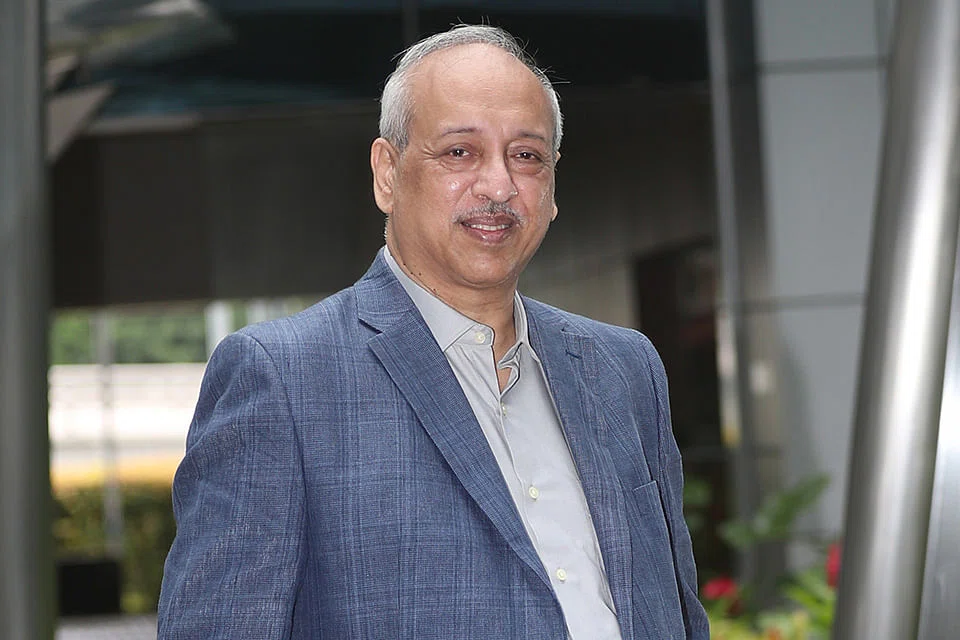
Bhargab Mitra Put a Clock on the Network’s Next Failure
The former Ericsson and Nokia executive spent a decade turning telecom maintenance from a reaction into a forecast, culminating in Accenture’s 2026 acquisition of Avanseus’s AI solution.

Cloudwise Wants AI to Take the 3 A.M. Pager
The Singapore-based enterprise software company spent years teaching large organizations to see their tangled IT systems. Its next act is teaching AI agents to diagnose the mess - and, increasingly, help clean it up.

Jim Gargan Has Spent 35 Years Turning Invisible Infrastructure Into a Story
From IBM server rooms to Oracle's cloud portfolio and Riverbed's push for practical AI, Jim Gargan has built a career around making complex technology legible - and tying it to the work people actually feel.

SolarWinds
The unglamorous software that keeps 300,000 networks from falling over - and the Austin company that learned to rebuild trust after the most talked-about hack of the decade.

USU
For nearly five decades, a quiet software company near Stuttgart has been helping big organizations tame the IT sprawl no one else wants to touch - and it just landed a Thoma Bravo backer to do more of it.

EasyVista
Inside the quiet French software company that has spent three decades making corporate IT support less painful - and is now betting on AI to do the boring parts.
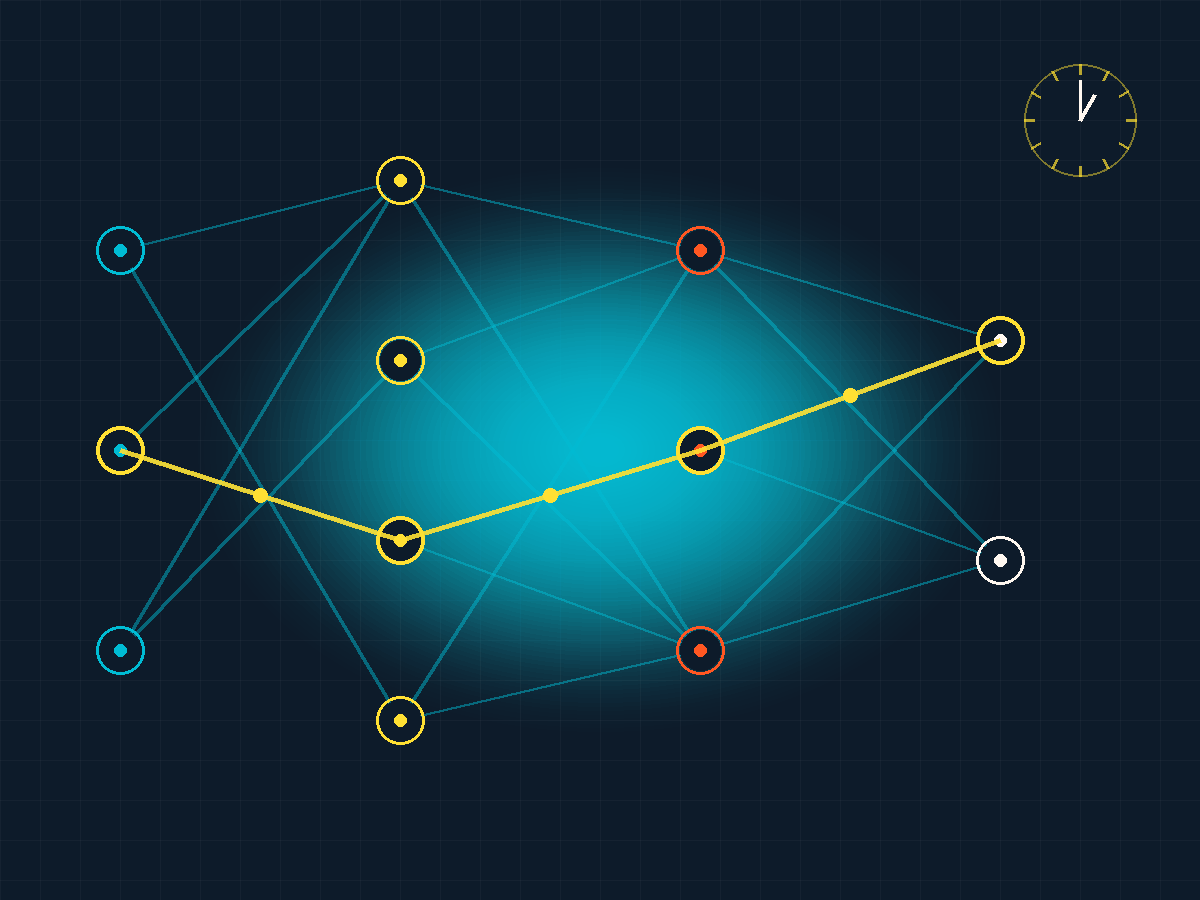
BMC Software Runs the World's Batch Jobs at 2am
For 45 years BMC has been the software running quietly behind banks, airlines and mainframes. Now, owned by KKR and split into two companies, it is betting that boring, dependable automation is exactly what agentic AI needs.

Amelia
The enterprise AI agent that answered phones before chatbots were cool - a 26-year-old New York company that became SoundHound's play for the voice-first future of customer service.
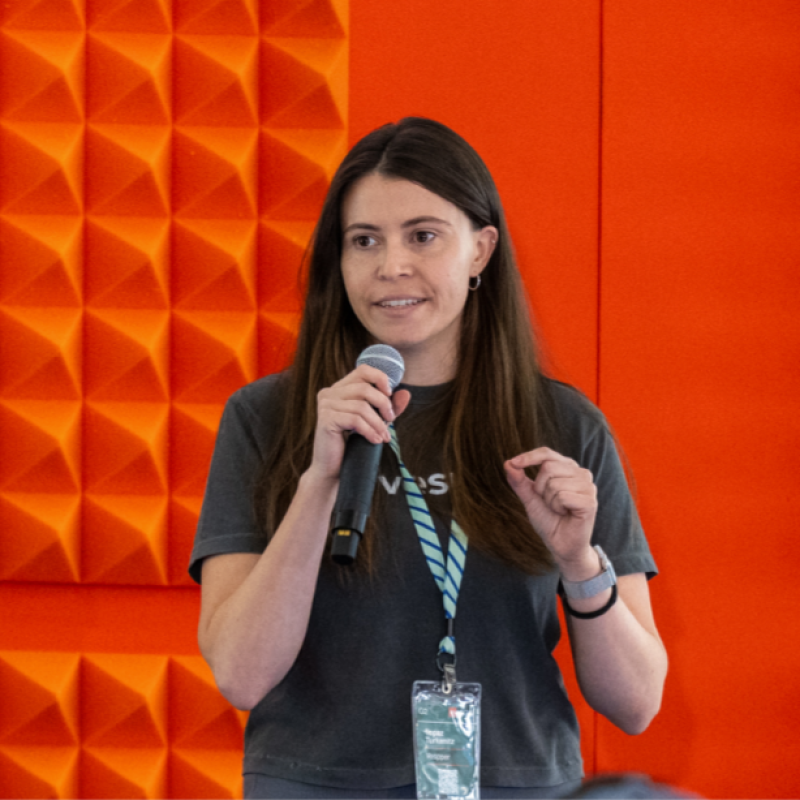
Topaz Turkenitz
Topaz Turkenitz is the co-founder and CEO of Vespper (YC F24), a multi-agent AI system that acts as a 24/7 on-call engineer, triaging alerts and troubleshooting incidents through Slack in seconds. A full-stack software engineer with a background in computer science and design, she spent years at the security unicorn Snyk building distributed systems at 99.9% uptime and running growth experiments before setting out to make on-call work stress-free.
Vespper
Vespper (YC F24) builds infrastructure that lets AI agents produce real Microsoft Word documents. Its product is a docx MCP (Model Context Protocol) server that turns raw agent output into clean, tracked, review-ready .docx files - aimed at regulated, legal, and compliance workflows where the final artifact has to be a Word doc with tracked changes, not a chat window. The two-person, Tel Aviv-based team originally launched an open-source, 24/7 AI on-call engineer for incident triage before pivoting into agent document infrastructure.
apiphani
apiphani is a Boston-based, AI-native managed services company that keeps mission-critical enterprise applications - especially complex SAP and Oracle environments - running without downtime. Instead of the labor-arbitrage model used by large global systems integrators, apiphani pairs small teams of senior engineers with its proprietary observability platform, luumen, and its Deep Automation technology to detect and resolve issues before users notice them. Founded in 2018 and led by CEO Justin Folkers, the company reports 100% production uptime across its clients for more than two years and raised a $25M Series A led by Insight Partners in October 2025.

Xiaodan Zhuang
Xiaodan Zhuang, who also goes by Dennis, is the co-founder and CEO of Greptime, a company building GreptimeDB, an open-source observability database written in Rust that unifies metrics, logs, and traces. Before starting Greptime in 2022, he spent roughly 18 years in software infrastructure, including leading the intelligent monitoring team at Ant Group where he built ultra-large-scale time-series platforms for AIOps, plus earlier stints at Taobao/Alibaba and LeanCloud. He is a long-time open-source contributor (GitHub handle killme2008) behind projects like Aviator and xmemcached, and a self-described car enthusiast who races on tracks.

Fabrix.ai
Fabrix.ai (formerly CloudFabrix) is a Pleasanton, California enterprise software company building an agentic operational intelligence platform. It lets organizations design, deploy, operate and observe AI agents across IT, network, security and business operations, anchored by a tri-fabric architecture of Data Fabric, AI Fabric and Automation Fabric. The company positions itself for the 'agentic AI era' with production-grade governance, explainability and human-in-the-loop controls.
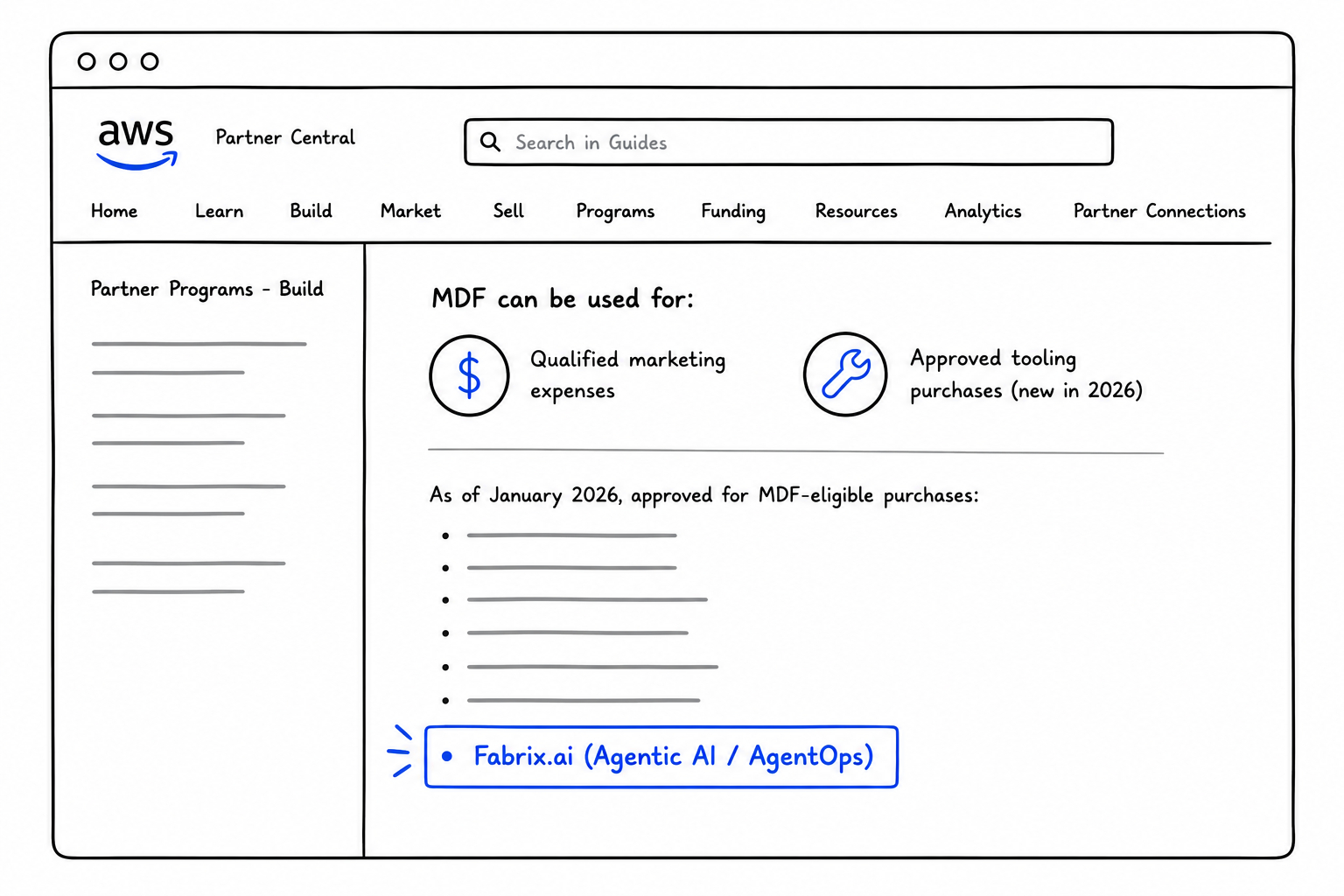
The Only Agent in the Room: Fabrix.ai Joins AWS's MSP Inner Circle
Fabrix.ai has been selected as the sole purpose-built agentic AI platform in the AWS Managed Service Provider (MSP) Recommended Toolkit, one of just ten approved solutions. The designation qualifies 295+ AWS Validated MSPs — including NTT Data, Capgemini, IBM, Wipro, Tech Mahindra, SHI, and Telefónica — to receive up to $50,000 annually in AWS Marketing and Tooling Development Funds to adopt the platform. Fabrix.ai gives MSPs an operational context layer to deploy, govern, and scale AI agents across hybrid multi-cloud environments, accelerating the industry's shift from reactive, labor-driven operations to autonomous, self-healing infrastructure.

Raju Datla
Raju Datla is a serial entrepreneur and CEO of Fabrix.ai (formerly CloudFabrix), an AI-native IT operations platform he founded in 2015. Before Fabrix.ai, he sold two companies to Cisco - Jahi Networks (~$16M, 2004) and Cloupia ($125M, 2012), the latter becoming the foundation of Cisco's UCS management suite. At Fabrix.ai, he is pioneering Agentic AI for enterprise IT operations through a Robotic Data Automation Fabric that unifies data ingestion, AI agent orchestration, and workflow automation at scale.

Justin Folkers
Justin Folkers is the co-founder and CEO of apiphani, a Boston-based technology-enabled managed services company that runs mission-critical enterprise applications such as SAP using a blend of expert engineers and AI-driven automation. He started the company around 2020 after more than two decades supporting enterprise clients at firms including Virtustream and Capgemini, betting that AI-powered automation would let people focus on meaningful work instead of routine operational tasks. In 2025 apiphani raised a $25 million round led by Insight Partners to expand Luumen, its AI-driven observability and automation platform.

Avanseus
Avanseus is a Singapore-based artificial intelligence company that builds predictive maintenance software for telecommunications and industrial IoT networks. Its flagship Cognitive Assistant for Networks uses a patented unsupervised learning algorithm to forecast network faults and degradations days in advance and to surface likely root causes, letting operators fix problems before customers feel them. Founded in 2015, the company was acquired by Accenture in February 2026 to strengthen Accenture's push toward autonomous telecom networks.

Cake
Cake is a New York-based startup that bundles the sprawling open-source AI stack into a single managed platform, so companies - especially in regulated industries like finance, insurance and healthcare - can deploy AI inside their own cloud without wiring together 100+ tools by hand. Founded in 2022 by Misha Herscu and Skyler Thomas and launched from stealth in December 2024 with a $13M seed led by Google's Gradient Ventures, Cake handles the integration, security, governance and cost-monitoring glue around open-source components like LangChain, Ray, MLflow and vector databases, all deployed inside a customer's own VPC so data never leaves.
James Rebesco
James (Jim) Rebesco is the co-founder and CEO of Striveworks, an Austin-based AI company that helps the U.S. defense and national-security community build, deploy, and monitor machine-learning models at scale through its Chariot platform. A physicist by training (Caltech) and a computational neuroscientist by doctorate (Northwestern), he spent seven years as a partner at high-frequency trading firm Virtu Financial before turning to operational AI. Under his leadership Striveworks has landed a $70M enterprise government agreement, raised a Series B led by Washington Harbour Partners, and become the first company to bridge the U.S. Army's two largest battlefield AI efforts.

Dev Nag
Dev Nag is the founder and CEO of QueryPal, a San Francisco AI company rebuilding the economics of customer support with agentic automation. A serial founder with deep machine-learning roots, he earlier created Wavefront, the real-time cloud monitoring platform acquired by VMware in 2017, where he went on to launch VMware's flagship AIOps product. He also founded the observability startup CtrlStack, backed by Sequoia Capital and Engineering Capital. Before founding companies he was an engineer at Google, PayPal, and eBay and the founding engineer at securities-trading platform GLMX. Stanford-trained in both mathematics and psychology, he holds more than a dozen AI and security patents and authored one of the most widely read beginner tutorials in deep learning, 'GANs in 50 lines of code.'

Netenrich
Netenrich is a San Jose-based security and digital operations company that helps enterprises run modern security operations on Google SecOps. Its Resolution Intelligence Cloud platform combines agentic AI, big-data analytics, and human expertise to power Adaptive MDR, Cyber Risk Operations, and threat detection - shifting security teams from chasing alerts toward what the company calls autonomic security operations.