James Rebesco
He once fought over microseconds on a trading desk. Now he fights over something slower and stranger: whether the models make it to the field, and whether anyone there trusts them.
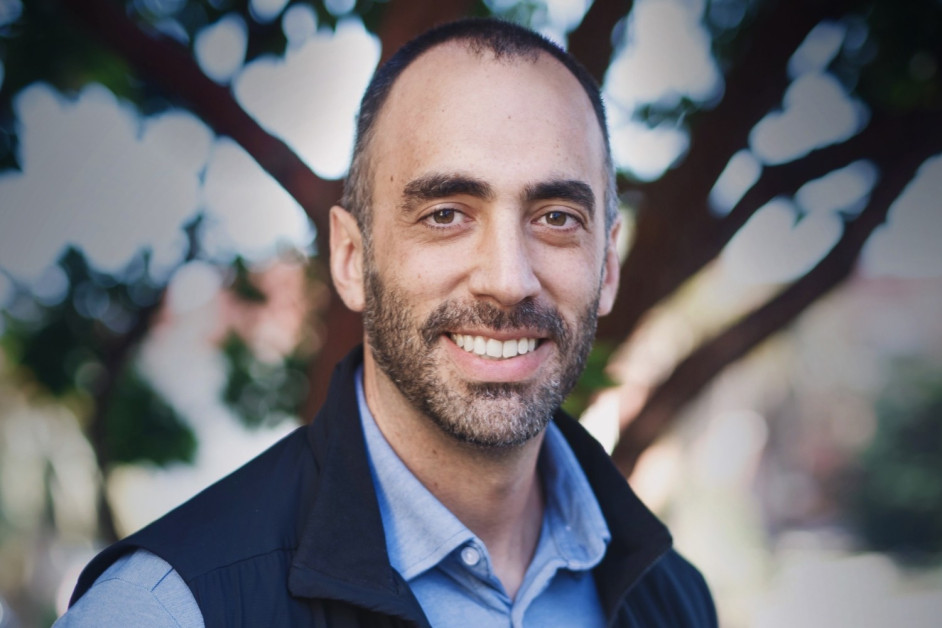
Jim Rebesco. Physicist. Neuroscientist. Quant. The order matters, and somehow it all points at the same job.
Making AI the military will actually rely on.
Most AI stories end at the demo. A model gets trained, it dazzles in a slide deck, and everyone claps. James Rebesco's whole company exists in the part after the clapping - the unglamorous stretch where a model meets the real world and slowly, quietly starts to be wrong.
Striveworks, the company he co-founded in 2017 and runs as CEO from Austin, is built for that stretch. Its flagship platform, Chariot, is an operational-AI system: it helps teams deploy machine-learning models, watch them for drift, retrain them, and keep an audit trail of what happened and why. The customers are not consumer apps. They are defense and national-security organizations, where a wrong prediction is not a bad movie recommendation.
That framing produces one of his sharpest lines. AI, he says, is not ranch dressing you sprinkle on top of a legacy system. It is a structural ingredient, and if you treat it as garnish you will get garnish results.
In 2026 the thesis paid off in public. The U.S. government awarded Striveworks a $70 million multi-year enterprise agreement to scale its technology across defense agencies, with access for up to roughly 950,000 eligible personnel. Weeks earlier, the company had closed a Series B led by Washington Harbour Partners. Chariot had been picked to support the Army's multi-billion-dollar Next Generation Command and Control effort. For a company most people have never heard of, that is a loud year.
You can't treat it as ranch dressing that you kind of sprinkle on top of everything. You actually have to take it as a fundamental element of design.
Physics, then brains, then money, then war.
Read his résumé backwards and it looks tidy. Read it forwards and it looks like a dare.
He started at Caltech with a B.S. in physics - the discipline of first principles, of refusing to accept a system you can't reason about from the ground up. Then came a Ph.D. in computational neuroscience at Northwestern, where the object of study was how a biological brain learns and, crucially, keeps learning. If you spend years modeling how living systems adapt to a changing world, the problem of a deployed AI model that slowly stops matching reality is not a new problem. It is the same problem, wearing a lab coat.
Then he did something that surprises people: he spent roughly seven years as a partner at Virtu Financial, the high-frequency trading firm, leading trading and data-science teams and helping build the capabilities behind its 2015 IPO. Trading at that speed is a brutal school for one lesson - a model that is right on average but wrong at the wrong moment can be catastrophically expensive. Latency, reliability, and trust stop being buzzwords and become the entire game.
Neuroscience taught him how learning drifts. Trading taught him what happens when a model fails under pressure. Striveworks is what you get when the same person refuses to forget either lesson.
The Dossier
A career, in nine beats.
- 2000-2004Studies physics at Caltech, earning a B.S.
- 2004-2009Completes a Ph.D. in computational neuroscience at Northwestern.
- 2009-2017Partner at Virtu Financial; leads trading and data-science teams, helps build toward the 2015 IPO.
- 2017Co-founds Striveworks and becomes CEO, betting on AI that survives contact with reality.
- 2019Joins the board of Sayari, an open-source threat-finance intelligence firm.
- 2019-2021Serves on the U.S. Army Science Board, advising senior military leaders.
- 2025Army expands its Striveworks partnership for force protection along the southern border.
- 2026 · MarCloses a Series B led by Washington Harbour Partners.
- 2026 · AprWins a $70M multi-year U.S. government enterprise agreement.
Every exponential is flat before it isn't. The question becomes: is this just a flat line, or is this an exponential curve?
Three ideas he keeps coming back to.
The Groan Test
He gauges whether a technology has really arrived by a feeling: the moment you sigh, "I have to type my credit card in? This is so antiquated," the old way is already dead. Friction is the tell.
Design It In
AI can't be sprinkled on a legacy system like a condiment. It has to be a fundamental element of the design, or the whole thing tastes like a workaround.
Trust, In Three Parts
His recipe for AI people will rely on: formal testing on the front, continuous monitoring in the middle, and deterministic guardrails in the back. Nothing ships on vibes.
"The cyberpunk era of war."
On a podcast bluntly titled We're Living Through the Cyberpunk Era of War, Rebesco laid out an uncomfortable argument. Directed-energy weapons, autonomous drones, combat AI - these are not features you bolt onto systems designed decades ago. They demand complete architectural redesigns.
It is the ranch-dressing principle scaled up to national defense. You cannot take a legacy platform, garnish it with a model, and call it modern. The speed advantage only materializes when the design assumes AI from the first line.
That is also why Striveworks became, by its own account, the first AI company to bridge the Army's two largest battlefield AI efforts - and found itself named alongside Anduril, Palantir, and Microsoft on the service's flagship initiative. The pitch is not "smarter models." It is speed you can trust: detect, decide, act, before the other side does.
What makes the position credible is the résumé underneath it. This is a person who has watched real money evaporate when a model was fast but wrong, and who spent a doctorate on why adaptive systems drift. When he says continuous monitoring matters, it is not a slide. It is a scar.
National security demands speed - the ability to detect, decide, and act before your adversary does.
Receipts.
- Won a $70M multi-year U.S. government enterprise agreement to scale AI across defense agencies.
- First AI company to bridge the U.S. Army's two largest battlefield AI efforts.
- Chariot selected to support the Army's Next Generation Command and Control (NGC2) initiative.
- Closed a Series B led by Washington Harbour Partners (2026).
- As a Virtu partner, helped build the capabilities behind the firm's 2015 IPO.
- Recognized AI subject-matter expert for the Federal Reserve, the DoD, and West Point.
- Striveworks named among North America's fastest-growing tech companies (Deloitte).