austin-tech
(33)
How Veronica Servantez Turned Beginner's Questions Into a Marketing Career
She entered cloud marketing unable to decode the meeting-room language. A printed operating-system manual, a highlighter and a habit of asking the obvious question became the unlikely toolkit for a career built on translating technology into customer value.

Liz Lilly Made an Invisible Risk Impossible to Ignore
At Flueid, Liz Lilly has the peculiar marketing job of making title risk understandable before it becomes expensive. Her route from agency communications to the C-suite is a study in translating complexity without sanding away the truth.

Juliette Rizkallah and the 48-Hour Rule for Building What Lasts
From a teenage exchange trip out of Paris to boardrooms in Austin, Kong's first CMO has made a career of trusting the evidence, challenging convention and giving ambitious ideas time to work.

When the Warning Bell Rings, John Yarbrough Wants the Message to Matter
After two decades spent turning complicated products into clear stories, AlertMedia's new chief marketing officer has arrived at the hardest brief in communications: earn attention before a crisis, then earn trust during one.

Brooke Cunningham Made Marketing Answer to the Spreadsheet
The LogicMonitor CMO has spent 27 years turning partner ecosystems into growth engines. Her latest move is to make AI useful, measurable and still unmistakably human.

Sarah Moore Has Spent Three Decades Giving Software a Heartbeat
Before every company wanted a growth engine, Sarah Moore was building one in Austin. Her career is a study in making complicated software matter to actual people.

Laura Hamilton Built a Career on the Click - Then Asked Search to Earn the Customer’s Trust
After decades spent turning data into demand, Algolia’s marketing chief has arrived at a more interesting question: can software make discovery feel useful without making the customer feel watched?

TPx Built the IT Sidekick for 25,000 Businesses. Then a $1.1 Billion Debt Load Became the Villain
TPx spent a quarter-century turning phone lines into an all-in-one technology service. Its 2026 restructuring reveals both the value of that model - and the price of financing growth with too much debt.

BigCommerce Built an Escape Hatch for Brands Too Complicated for a Template
The Austin software company spent years selling freedom from server maintenance. Now it is selling freedom from platform lock-in - while teaching product catalogs to show up wherever people, marketplaces, or AI agents decide to shop.

The Nearshore Software Firm Betting Its Next Act on Engineers Who Conduct AI
Growth Acceleration Partners spent years selling proximity: senior Latin American engineers working in the same hours as U.S. clients. Now it is selling leverage - using AI agents to compress expensive software work while keeping humans on the hook for what ships.

Julie Neumann Learned to Sell Software by First Learning to Find the Story
Before Julie Neumann marketed observability, she wrote poems, covered stories and trained herself to notice the telling detail. Now she is turning that editorial instinct toward a technical problem with human stakes: how to trust what software does in production when AI is writing more of it.

The Marketing Paratrooper Who Finally Chose to Stay
For a decade, Tanya White entered technology companies during their messiest chapters, steadied the marketing function, and handed it back. Then OpenSesame gave the self-described paratrooper a reason to unpack.

Muhammad Akif Malhi Is Building for the Part After the Demo
The Techling founder has built his public career around a plain but demanding idea: clever software only matters when it survives contact with a real business.

Brad Murdoch Is Betting the Help Desk’s Future Lives Behind Your Firewall
After two decades around B2B software and a string of acquired companies, Deskpro CEO Brad Murdoch is making a quieter AI pitch: useful automation, human judgment and infrastructure the security team can actually approve.

Andrew Busey Keeps Finding the Missing Layer
From Mosaic and web chat to social games and computational biology, Andrew Busey has spent three decades asking an unfashionably useful question: what essential piece is everyone else overlooking?

Ben Chapman Is Betting the Front Desk Can Run on Better Timing
At Vital Interaction, Ben Chapman is turning the overlooked mechanics of reminders, recalls and follow-up into a serious operating discipline - one carefully timed message at a time.

Christopher Hugman Turned the Site Walk’s Messy Minutes Into a Living Map
A customer’s awkward question exposed a failure hiding in plain sight. Hugman’s answer was to give cameras, doors, notes and decisions one visual place to live.

Steve Rafferty Built a Company Around the Internet's Least Glamorous Question
For more than two decades, the ActiveProspect founder has turned consent, provenance, and lead quality into working software. His wager is disarmingly practical: better marketing begins by respecting the person at the other end of the form.

Kevin Bombino Turned a Rock Tour Into an Operating System
Before Files.com moved billions of transactions each week, its founder learned logistics by booking 32 summer-camp gigs for a college rock band. The music stopped; the systems thinking stayed.

Alexander Khuda
A failed education startup left Alexander Khuda with a smaller question: how can one live feed travel everywhere? Restream grew from a $15 donation in Vinnytsia into the control room behind millions of broadcasts - and its next bet is on everything that happens after the stream ends.

Upland Software
The Austin roll-up that bought its way to two dozen software products now wants to be the trusted knowledge layer underneath every enterprise AI agent.

David Stout
David Stout is the co-founder and CEO of webAI, an Austin-based company building private, on-device artificial intelligence that runs on hardware people already own instead of centralized cloud data centers. Raised on a cattle ranch in northern Michigan, he taught himself to compress large AI models onto phones, laptops and edge hardware, and founded webAI in 2019 with Ethan Baird and Tyler Mauer. The company reached a $2.5 billion valuation in January 2026 on the thesis that the most valuable AI of the future will be sovereign, distributed and local rather than rented from Silicon Valley hyperscalers.

Denny LeCompte
Denny LeCompte is the CEO of Portnox, an Austin-based cybersecurity company that delivers cloud-native network access control and zero trust access for enterprises. A former cognitive psychology professor with a Ph.D. from Rice University, he spent two decades in product strategy at IT and security vendors including SolarWinds and AlienVault before taking the helm at Portnox in 2022. Under his leadership the company grew roughly 8x, and he was named a 2025 Cyber Leader of the Year. He writes the widely read 'Access Granted' LinkedIn column, arguing that cybersecurity is as much a human problem as a technical one.

Overhaul
Overhaul is an Austin-based supply chain risk management and visibility company that helps global shippers and logistics providers see, protect, and control high-value cargo in transit. Its device-agnostic software combines real-time monitoring, predictive risk intelligence, a 24/7 Global Security Operations Center, and insurance and recovery services to prevent theft, damage, spoilage, and compliance failures. Founded in 2016 by supply-chain-security veteran Barry Conlon, Overhaul serves Fortune 100 brands across pharmaceuticals, technology, automotive, and food and beverage, and raised a $105M Series C in August 2025.

Grant Miller
Grant Miller is the co-founder and CEO of Replicated, a platform that helps software companies ship their applications so enterprise customers can run them inside their own secure, self-managed environments. A self-taught programmer who started his career in technology M&A at Goldman Sachs, Grant first built and sold the mobile live-chat startup Look.io to LivePerson in just nine months, then set out to build a company he never wants to sell. Since founding Replicated in 2015 he has raised more than $80 million, made 'modern on-prem' a category worth taking seriously, and become a recognizable voice in enterprise software as host of the EnterpriseReady podcast.

Josh Knowles
Josh Knowles is the CEO of Code Climate, the New York software company whose Velocity platform gives engineering leaders at large organizations data on how their teams actually build software. A Ruby developer by training with more than two decades in the field, he spent years at Pivotal Labs and VMware building and running consulting and application-services teams across the US and Europe before joining Code Climate, rising from VP of Strategy and Operations to General Manager to CEO. He took the top job as Code Climate spun out its code-quality product into a separate company, Qlty Software, and refocused entirely on software engineering intelligence for large, complex enterprises.

Walter Rogers
Walter Rogers is the CEO of MontyCloud, a Redmond-based cloud operations platform that uses agentic AI to let IT teams manage AWS without writing scripts. Born in Rome, raised in Houston, and now based in Austin, he studied Italian and Economics at UT Austin before building and selling three software companies, two of them to VMware. He remains Chairman of Baker Communications, the sales-training firm he has run since 2003, and joined MontyCloud as CEO in April 2022.
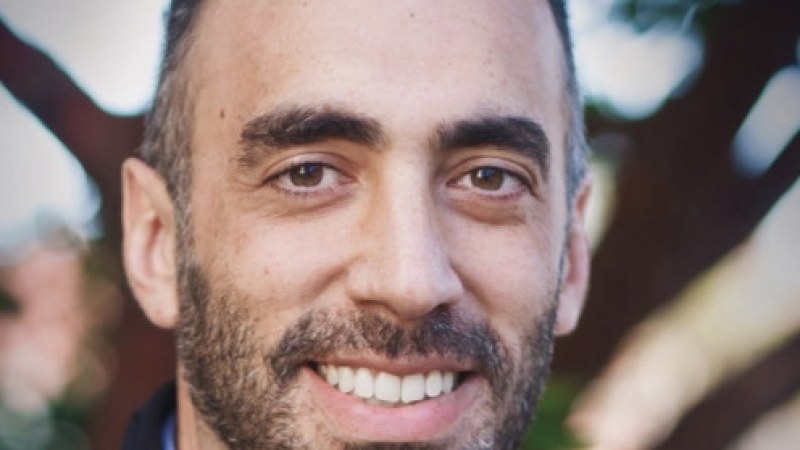
James Rebesco
James (Jim) Rebesco is the co-founder and CEO of Striveworks, an Austin-based AI company that helps the U.S. defense and national-security community build, deploy, and monitor machine-learning models at scale through its Chariot platform. A physicist by training (Caltech) and a computational neuroscientist by doctorate (Northwestern), he spent seven years as a partner at high-frequency trading firm Virtu Financial before turning to operational AI. Under his leadership Striveworks has landed a $70M enterprise government agreement, raised a Series B led by Washington Harbour Partners, and become the first company to bridge the U.S. Army's two largest battlefield AI efforts.

Malur Narayan
Malur Narayan is the CEO and co-founder of XTRIUM, an Austin-based B2B AI startup building an intelligence layer for materials that matches materials to real-world applications, surfaces sourcing risk, and turns supply chains from fragile to resilient. A computer engineer who was running machine-learning research and self-managed software teams in the early 1990s, he spent three decades scaling technology businesses across five continents at Nortel and Tata Consultancy Services before co-founding two AI startups. He frames XTRIUM around a single idea: making the search for a new application for any material as fast and easy as an internet search, compressing what used to take a year into days.

NinjaOne
NinjaOne is an Austin-based software company that makes an automated, cloud-native endpoint management platform used by IT teams and managed service providers to monitor, secure, patch, back up and control laptops, servers, mobile devices and SaaS data from a single console. Founded in 2013 as NinjaRMM, it now serves more than 30,000 customers and manages over 5 million endpoints, and in 2025 raised $500 million in Series C extensions at a $5 billion valuation while remaining founder-led and debt-free.