The Infrastructure Problem Everyone Ignores Until It Breaks
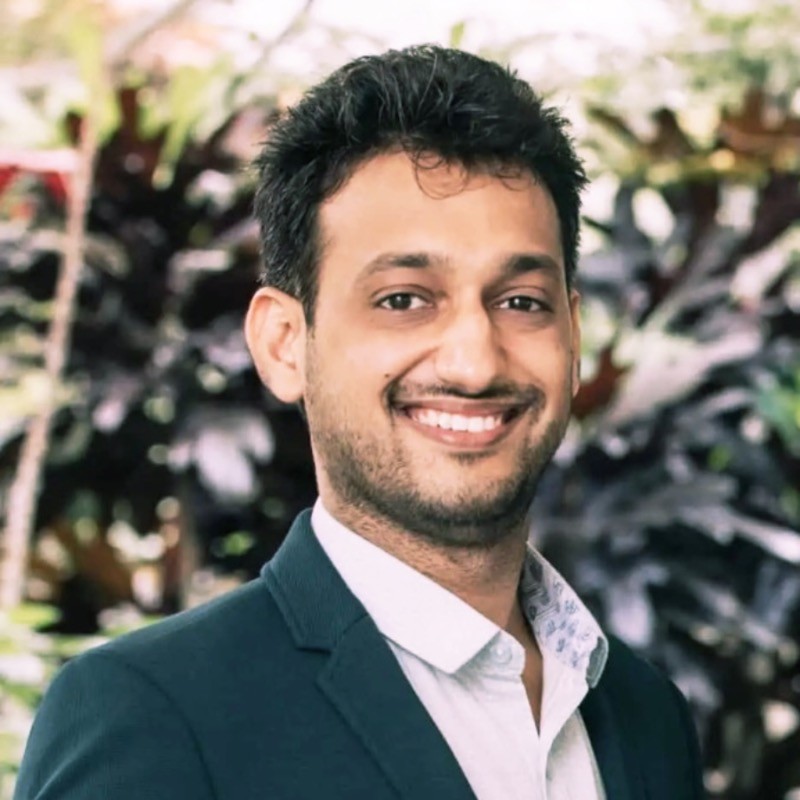
Anuraag Gutgutia's first company tried to solve hiring. His second one is solving something harder: getting artificial intelligence to actually run inside companies that aren't Meta.
That sounds mundane until you look at the numbers. Most Fortune 1000 companies - the ones with billions in revenue and decades of IT infrastructure - are not running AI in production. Not because they don't want to. Because deploying a language model inside a regulated enterprise is a different problem than deploying one in a research lab. Data stays inside your VPC or it doesn't ship. Governance gets audited or you get fined. Infrastructure costs spiral before anyone ships a model. These are the problems TrueFoundry was built for.
Anuraag co-founded TrueFoundry in September 2021 alongside Nikunj Bajaj and Abhishek Choudhary, two IIT Kharagpur batchmates who had spent time building ML infrastructure at Meta. They knew what it cost Meta to do this right. They also knew that almost no other company could afford to replicate it. That gap was the company.
"When we started, our primary target audience was enterprises. Because what we realized is - if you look at the Fortune 1000 and go into how each company is doing with AI, you'll be surprised that a lot of them aren't really using AI in production."
- Anuraag Gutgutia, Co-Founder, TrueFoundryBefore the Infrastructure Problem, There Was the Quant Problem
Anuraag graduated from IIT Kharagpur in 2013 with a B.Tech in Electrical Engineering - the same year he competed in the Hult Prize finals in San Francisco, pitching a social enterprise for food access in urban slums. He finished as a finalist. A few months later, he joined WorldQuant, one of the world's largest quantitative hedge funds, as a Senior Quantitative Analyst.
He spent seven years there. He moved from analyst to Vice President of Research, then to VP of Portfolio Management and a seat in the CEO's office. His specialty: currency markets, quantitative strategies, large-scale fund management. He also helped establish WorldQuant University, a tuition-free online institution in data science. The pattern was there from the beginning - systematic thinking, scalable systems, a preference for working on problems that compound.
In April 2020 - right as the world locked down - he left WorldQuant to co-found EntHire, a high-standards tech talent platform. The idea was simple: vetting should be harder and faster at the same time. EntHire was acquired by InfoEdge, rebranded as BigShyft, and the chapter closed. Sixteen months later, TrueFoundry opened.
What TrueFoundry Actually Does
TrueFoundry is an enterprise AI platform. Its core promise: build, scale, and deploy generative and agentic AI inside your own cloud - any cloud, any compute - without giving up data sovereignty or governance. The product sits at the intersection of three things enterprises actually need: infrastructure that doesn't lock them into one cloud vendor, governance that satisfies legal and compliance, and observability that shows you what your AI is doing.
The flagship product is an AI Gateway - a unified control plane for agentic AI that manages, observes, and governs AI agents running inside enterprise VPCs. TrueFoundry also ships TrueFailover, which keeps AI applications online when OpenAI has an outage, when a region goes down, or when API performance degrades. For enterprises running production AI, uptime is not a nice-to-have.
VPC-First Architecture
Deploy inside your own cloud. No data leaves your perimeter. Built for regulated industries where sovereignty isn't optional.
10x Deployment Speed
From experiment to production without the handoff bottleneck. Data scientists ship their own models. Platform teams govern the results.
40-50% Cost Reduction
GPU autoscaling, spot instance optimization, and intelligent routing cut infrastructure bills without sacrificing performance.
Enterprise Governance
Role-based access, model audit logs, policy enforcement, version control. The compliance layer that procurement actually needs.
The Long Game on Enterprise
Getting TrueFoundry's first enterprise customer took over a year. That's a fact Anuraag shares openly - not as a cautionary tale, but as a calibration. Enterprise sales is not a sprint. The first deal takes forever. The second takes less. By the time you have a handful, "working with enterprises helps product evolution to eventually sell to other enterprises."
His mental model for why this is worth it: one big enterprise is equivalent to about 50 seed companies. The economics are brutal on the way in and compelling once you're inside. TrueFoundry's 4x year-over-year customer base growth suggests they cracked it.
"Earlier, data scientists would only work with models and experiment with them, but a lot of the deployment was handed over to ML engineers. With our system, data scientists themselves can actually build this entire complex system and test it at scale before handing it over to the platform team for final deployments."
- Anuraag GutgutiaFunding and the Investors Who Believe It
TrueFoundry raised a $2.3M seed round in September 2022, co-led by Eniac Ventures and Sequoia India's Surge. In February 2025, Intel Capital led a $19M Series A - joined by Eniac, Peak XV's Surge, Jump Capital, and angels including Gokul Rajaram and Mohit Aron. Avi Bharadwaj, Investment Director at Intel Capital, took a board seat.
Intel's involvement is notable. The company doesn't lead rounds in MLOps startups for academic reasons. TrueFoundry's compute-agnostic architecture - run on AWS, Azure, GCP, or bare metal - is exactly what Intel wants in a portfolio company as the AI chip landscape fragments beyond Nvidia's dominance.
Funding Timeline
Sept 2022
Feb 2025
Total funding: $21.3M • Investors include Gokul Rajaram & Mohit Aron (angels)
Recognition That Counts
In February 2025, Gartner named TrueFoundry a Representative Vendor in its Market Guide for AI Gateways - the category report that enterprise CIOs hand to procurement. For a four-year-old startup, landing in a Gartner guide is a different kind of validation than any press mention. It means the analysts whose opinions shape nine-figure IT budgets know who you are.
The AI Gateway product launched on Product Hunt in December 2025 and hit top-5 with 135 comments. Community recognition and analyst recognition in the same quarter. Not common.
How the Company Thinks
Culture at TrueFoundry is deliberate about intellectual metabolism. There are weekly "Small ideas meetings" where team members share interesting reads - articles, papers, anything worth 10 minutes. Monthly, they run "Big ideas meetings": a deep dive on a research paper or podcast, followed by structured debate. For a company building AI infrastructure, this isn't a nice perk. It's operational. The people who deploy models need to understand the models.
Anuraag's operating thesis on agentic AI is worth understanding. He describes agentic systems as fundamentally different from APIs wrapped around a model. An agent has tools, memory, workflows, integrations, and governance layers. When you're running thousands of agents inside a Fortune 1000 company, each of those layers is a failure point, a compliance risk, and a cost center. TrueFoundry is built on the view that the control plane for agents is the real product - not the agents themselves.
"Trust closes enterprise deals."
- Anuraag Gutgutia, on what actually moves enterprise AI procurementThe Bigger Vision
The stated mission: eliminate the complexity of AI infrastructure by creating self-sustaining systems where AI manages AI. That's not marketing language for "we make deployment easier." It's a specific technical and product bet that the operational overhead of running AI at scale will itself become an AI problem - and that whoever builds the layer that manages model versions, monitors drift, reroutes traffic, and enforces governance will sit at the center of enterprise AI for the next decade.
Anuraag also invests. His angel portfolio spans 23+ startups - a side practice that keeps him wired into the earliest stages of the ecosystem he's building infrastructure for.
The arc from currency market quant to enterprise AI infrastructure founder isn't as strange as it looks. Both are fundamentally about finding systematic, scalable solutions to problems that compound - where the cost of getting it wrong isn't just one failed trade or one failed deployment, but a cascading series of consequences that grow with scale. Anuraag Gutgutia has been solving that kind of problem since 2013. TrueFoundry is the largest version of it so far.
From IIT to WorldQuant to Building AI Infrastructure
B.Tech Electrical Engineering, IIT Kharagpur. Student Representative on Undergraduate Advisory Committee. Hult Prize finalist in San Francisco - proposed social enterprise for urban food access at scale.
Joined WorldQuant LLC as Senior Quantitative Analyst. Developed currency market strategies; began building quantitative models for large-scale fund management.
Promoted to VP of Research at WorldQuant. Helped establish WorldQuant University, a tuition-free data science institution.
VP of Portfolio Management and seat in CEO's Office at WorldQuant. Managing large-scale multi-asset funds across international markets.
Co-founded EntHire - high-vetting tech talent acquisition platform. Team included alumni from Facebook, WorldQuant, UC Berkeley, IIT Kharagpur. Acquired by InfoEdge; rebranded as BigShyft.
Co-founded TrueFoundry with Nikunj Bajaj and Abhishek Choudhary. All three IIT Kharagpur batchmates; two with direct Meta ML infrastructure experience.
TrueFoundry closes $2.3M seed round from Eniac Ventures and Sequoia India's Surge.
$19M Series A led by Intel Capital. Named Representative Vendor in Gartner's 2025 Market Guide for AI Gateways. AI Gateway launches to top-5 Product Hunt with 135+ comments.
TrueFoundry scaling thousands of agents inside Fortune 1000 VPCs. Speaking at major enterprise AI conferences. 4x YoY customer growth.
What Anuraag Gutgutia Says About Building for Enterprise
TrueFoundry is an enterprise AI platform. Our goal is to enable enterprises to build, scale, and deploy gen AI and agentic applications in their enterprise and do it without any constraint of what compute they're running it on and within their VPC.
One big enterprise is equivalent to about 50 seed companies - and working with enterprises helps product evolution to eventually sell to other enterprises.
Earlier, data scientists would only work with models and experiment with them, but a lot of the deployment was handed over to ML engineers. With our system, what we are enabling is that data scientists themselves can actually build this entire complex system and test it at scale.
Trust closes enterprise deals.
Five Things Worth Knowing
His Twitter handle is @anuraag_kgp - the "KGP" a nod to IIT Kharagpur. He's been carrying it since 2009. Old enough to predate the company by twelve years.
Anuraag competed in the Hult Prize finals in San Francisco as a student in 2013 - the same city where he now runs a 110-person company. The challenge was feeding 200 million people in urban slums. He finished as a finalist.
TrueFoundry's "TrueFailover" product exists specifically because OpenAI has outages. When your agents go down because a model provider is unavailable, that's someone else's problem. TrueFailover makes it your infrastructure's problem instead - and solves it automatically.
Three co-founders, all IIT Kharagpur batchmates, two with Meta ML infrastructure backgrounds. The founding team insight: if you know exactly what it costs to build AI infrastructure at Meta's scale, you also know what everyone else is missing.
TrueFoundry runs structured "Big ideas meetings" monthly - team members debate a research paper or podcast in depth. For a company that competes on understanding AI better than its customers, this isn't optional. It's how the product roadmap gets built.