BREAKING
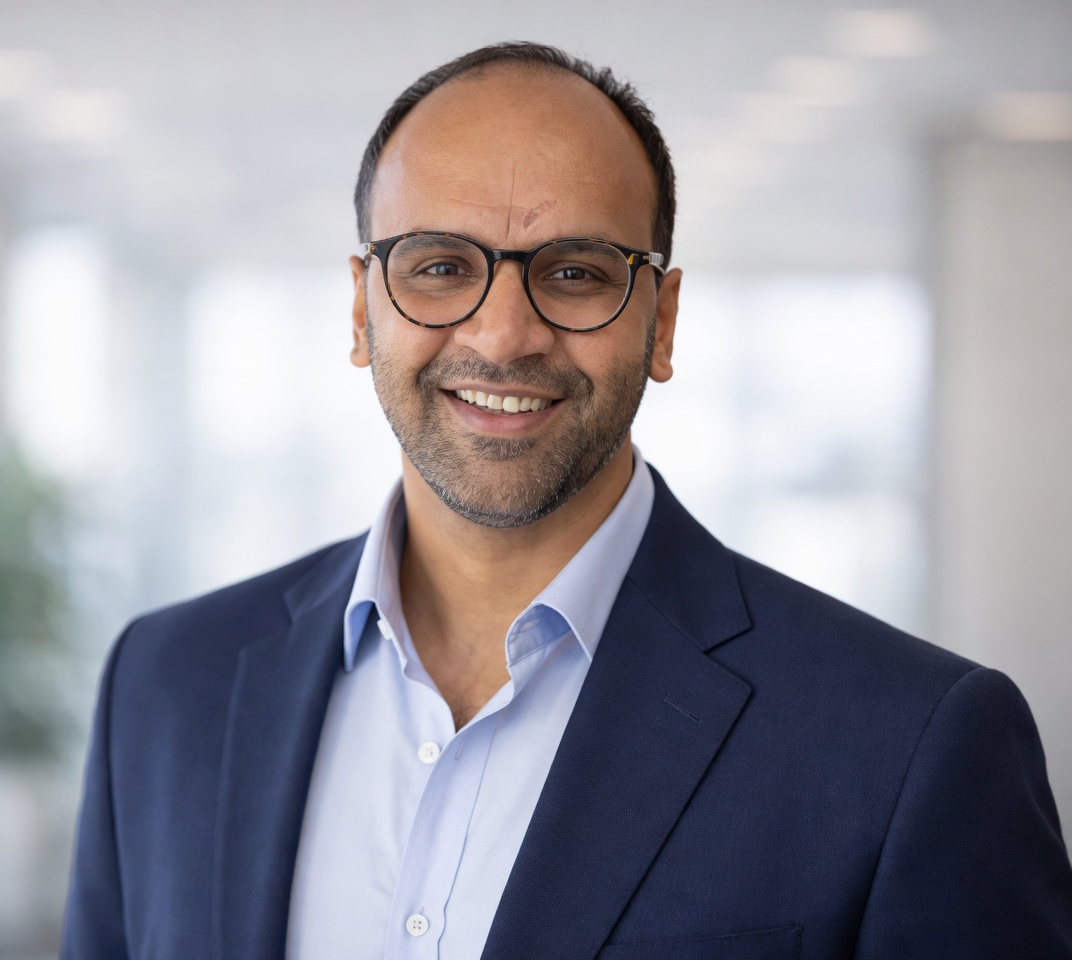
Nikunj Bajaj, Co-Founder and CEO of TrueFoundry
Founder Profile

Nikunj
Bajaj

The man who watched AI infrastructure fall apart at Facebook - and decided to fix it for everyone else.

Co-Founder & CEO of TrueFoundry. IIT Kharagpur. UC Berkeley. Built Facebook Messenger's first on-device AI model. Raised $21.3M. Now building the control plane enterprises need to deploy AI without the chaos.

AI Infrastructure MLOps Series A IIT Kharagpur '13 Ex-Facebook ML Kubernetes-Native
$21.3M
Total Raised
110+
Team Members
4x
Faster Deployment

The problem
was always the plumbing.

At Meta's Menlo Park campus, Nikunj Bajaj had a front-row seat to a kind of structured chaos that most AI teams never admit out loud. The machine learning infrastructure that ran some of the world's most sophisticated conversational AI - the models behind Facebook Messenger's Proactive Assistant, the on-device models he helped ship directly onto hundreds of millions of phones - ran on parallel stacks. One stack for software. One for machine learning. Another for GenAI. Each team rebuilt the same wheel, accumulated the same debt, hit the same walls.

He didn't leave Meta in 2020 to build something modest. He left because he'd spent years seeing exactly what breaks when AI moves from research to production - and he had a clear theory about why most companies hit the same wall. The fragmentation wasn't a technical accident. It was an organizational one. Nobody had built the unified platform that treated ML deployment the same way software engineering had treated CI/CD.

Most enterprises were deploying parallel stacks - separate infrastructure for software, machine learning, and GenAI. That fragmentation doesn't scale. It compounds.

- Nikunj Bajaj

Before TrueFoundry, there was a detour that mattered. Bajaj co-founded EntHire, an AI-powered tech recruitment platform. It got acquired by Info Edge. A full cycle - build, scale, exit - in under a year. That compressed experience taught him things about shipping product and selling to enterprises that no ML research role ever could have.

In June 2021, he called two people he'd known since they were all first-year students at IIT Kharagpur's Class of 2013. Abhishek Choudhary had become a Senior Staff Engineer at Meta's infrastructure team. Anuraag Gutgutia had run large-scale quantitative funds as VP of Portfolio Management at WorldQuant. Three engineers. Three different views of the problem. One shared conviction that the enterprise AI market was about to demand infrastructure that didn't yet exist.

TrueFoundry's founding premise was almost contrarian in its simplicity: AI deployment should not require a team of DevOps specialists running alongside every data science team. It should deploy to Kubernetes the same way any software service deploys. The platform they built handles model serving, fine-tuning, monitoring, autoscaling, cost management, and governance - from a single interface, on cloud, on-prem, or hybrid.

Agents need flexibility to act. Enterprises need a headquarters to control them.

- Nikunj Bajaj

The seed round came fast. Sequoia India's Surge led a $2.3M raise in September 2022, backed by Naval Ravikant, Anthony Goldbloom (the founder of Kaggle), and a constellation of engineering leaders from Deutsche Bank, GitHub, and Greenhouse Software. The timing was sharp - Bajaj had predicted an inflection point in enterprise ML adoption, and ChatGPT arrived in November 2022 to confirm it loudly.

By 2025, TrueFoundry had landed contracts with some of the world's most demanding enterprise environments - Siemens Healthineers, ResMed, Automation Anywhere, Games 24x7, NVIDIA. The $19M Series A, led by Intel Capital in February 2025, brought Avi Bharadwaj onto the board. Eniac Ventures, Peak XV (formerly Sequoia Capital India & SEA), and Jump Capital participated, alongside angels including Gokul Rajaram and Mohit Aron.

But numbers only tell part of it. What actually matters is the healthcare customer story Bajaj tells in interviews - a company processing real-time prescription data that started losing revenue the moment a model went down. Their recovery process was manual. That outage became TrueFoundry's TrueFailover product: an automated system that reroutes enterprise AI traffic around model outages without requiring human intervention, while simultaneously validating that prompt quality isn't degrading in the process.

When you move from one model to another, you also have to consider things like output quality, latency, and whether the prompt even works the same way. In many cases, the prompt needs to be adjusted in real-time to prevent results from degrading. That is not something most teams are set up to manage manually.

- Nikunj Bajaj, Unite.AI Interview Series, 2026

In 2025, TrueFoundry's net new revenue doubled quarter-over-quarter, every quarter. The team tripled. Fortune 500 POCs moved from kickoff to production in days rather than the months that had become an industry embarrassment. By Bajaj's count, TrueFoundry compresses the average enterprise AI deployment timeline from 14 months to under four - with companies reporting positive ROI within four months of launch.

He writes about the inflection in his 2025 year-end review with the metaphor of a gravitational slingshot: "If 2024 was ignition into orbit, 2025 was the year we caught a gravitational slingshot. In every great space mission, a slingshot depends on two things: a powerful external gravity source, and enough internal thrust to actually reach it." Both conditions, he argues, now exist for enterprise AI - and TrueFoundry spent 2025 providing the thrust.

His philosophy on AI reliability sounds deceptively simple: production-ready AI must be observable, controllable, and recoverable. All three. Not two out of three. The observation is more profound than it sounds - because "failures are no longer binary" in LLM systems. A model doesn't just go down. It degrades silently. It returns plausible-sounding wrong answers. It hallucinates in ways that pass automated checks but fail real users. The monitoring problem is orders of magnitude harder than it was for traditional software, and most enterprise teams are still using traditional software tooling.

The long-term vision is stated plainly on TrueFoundry's about page: AI managing AI. Not AI as a tool, but AI as infrastructure operator - self-sustaining systems where the platform itself uses intelligent agents to optimize, scale, and recover without waiting for a human to notice something is wrong. Bajaj frames it as the natural endpoint of what enterprise IT has always wanted: infrastructure that takes care of itself.

In May 2026, he weighed in on the Portkey acquisition - a move that reshuffled the AI gateway competitive landscape. He's been writing about industry signals consistently, positioning TrueFoundry not just as a vendor but as an analyst of where the enterprise AI market is going. That combination - deep technical architecture, enterprise sales instincts from EntHire, and market commentary from a platform vantage point - is the version of the job that makes TrueFoundry harder to replicate than any individual product feature.

Nikunj Bajaj is not the loudest voice in the AI infrastructure conversation. He doesn't chase trend cycles. He built his thesis before ChatGPT made it obvious, shipped infrastructure that handles the part nobody wants to talk about, and found customers willing to pay for reliability over novelty. The plumbing is still unglamorous. That's precisely why it's worth building.

What the platform
actually delivers.

$21.3M
Total Funding Raised
14mo → 4
AI Deployment Timeline Cut
350+
RPS on 1 vCPU (AI Gateway)
~10ms
AI Gateway Latency
110+
Team Members
2x
QoQ Net New Revenue (2025)

From Kharagpur
to San Francisco.

2009 - 2013
B.Tech, IIT Kharagpur - Electrical and Electronics Engineering. Met future co-founders Abhishek Choudhary and Anuraag Gutgutia in the same graduating class.
2013 - 2014
M.S. Computer Science, UC Berkeley - Graduate Student Researcher in Cyber Physical Systems design. Visiting researcher at Technion - Israel Institute of Technology.
2014 - 2018
ML Tech Lead, Reflektion - Built an AI platform consolidating all of Reflektion's machine learning. Launched a recommendation engine on the merchandising control center.
2018 - 2020
ML Tech Lead, Facebook / Meta - Led conversational AI for one of Facebook's flagship products. Launched Facebook Messenger's first on-device AI model. Built the Proactive Assistant.
2020 - 2021
Co-Founder & CEO, EntHire - AI-driven tech recruitment platform. Acquired by Info Edge. Full startup lifecycle in under 12 months.
2021
Co-founded TrueFoundry in June 2021 with Abhishek Choudhary (CTO, ex-Meta Senior Staff Engineer) and Anuraag Gutgutia (COO, ex-WorldQuant VP).
Sep 2022
Seed Round: $2.3M led by Sequoia India's Surge. Angels include Naval Ravikant and Anthony Goldbloom (Kaggle founder).
Feb 2025
Series A: $19M led by Intel Capital. Eniac Ventures, Peak XV, and Jump Capital participate. Angels: Gokul Rajaram, Mohit Aron. Avi Bharadwaj joins the board.
2025
Net new ARR doubles QoQ every quarter. Fortune 500 expansion: payments, semiconductors, telecom, pharma, healthcare. Team triples. TrueFailover launches.
2026
Agentic AI governance. TrueFoundry positions as AI control plane for agentic workloads. Bajaj publishes on Portkey acquisition implications for the AI gateway market.

On building AI
that doesn't break.

Production-ready AI systems should be observable, controllable, and recoverable. All three of these boxes need to be checked.

The stakes with Gen AI are significantly higher compared to traditional ML systems. Failures are no longer binary.

Agents need flexibility to act. Enterprises need a headquarters to control them.

New capabilities are visible and exciting. Continuity, by definition, is invisible when things are working well.

LLMs are fundamentally shared resources, and enterprises do not own them as they do traditional infrastructure.

2025 marked the moment our vision, execution, and market pull aligned, turning years of preparation into sustained forward momentum.

TrueFoundry: one stack
to govern them all.

TrueFoundry is a Kubernetes-native AI infrastructure platform that lets enterprises build, deploy, fine-tune, monitor, and govern machine learning and generative AI applications - on cloud, on-prem, or hybrid - from a single control plane. No separate DevOps team required. No parallel stacks.

  • AI Gateway
    Centralized control plane for all LLM, MCP, and Agent traffic. ~10ms latency, 350+ RPS on 1 vCPU. Handles routing, guardrails, usage tracking, and policy enforcement.
  • AI Deploy
    Deploy model inference, fine-tuning, MCP servers, and agents as standard Kubernetes applications on existing enterprise infrastructure. GPU autoscaling included.
  • TrueFailover
    Automatically reroutes AI traffic during model outages and regional failures. Validates prompt quality in real-time to prevent silent degradation during failover.
  • Model Registry + Monitoring
    Full model catalog, version control, experiment tracking, real-time metrics, and audit logs. Built on OpenTelemetry for enterprise observability standards.

Backed By

Intel Capital Sequoia / Peak XV Eniac Ventures Jump Capital Naval Ravikant Anthony Goldbloom Gokul Rajaram Mohit Aron
Seed Round - $2.3M (Sep 2022)
Series A - $19M (Feb 2025)
Enterprise Customers
Siemens Healthineers • NVIDIA • ResMed • Automation Anywhere • Games 24x7 • Fortune 500s across healthcare, payments, semiconductors, telecom, pharma

Built different,
trained right.

Undergraduate
IIT Kharagpur
B.Tech, Electrical & Electronics Engineering
2009 - 2013
Graduate
UC Berkeley
M.S., Computer Science - Cyber Physical Systems Research
2013 - 2014
Visiting Researcher
Technion - Israel
Visiting Student Researcher, Institute of Technology
2013 - 2014

The record
speaks plainly.

📱
Launched Facebook Messenger's first on-device AI model - running inference directly on user devices before it was an industry standard
🧠
Built Facebook's Proactive Assistant - one of the company's flagship conversational AI products at scale
📈
Co-founded EntHire (AI recruitment) and saw it through to acquisition by Info Edge - a complete startup lifecycle in under a year
💰
Raised $21.3M total for TrueFoundry including a $19M Series A led by Intel Capital in February 2025
TrueFoundry compresses enterprise AI deployments from the 14-month industry average to under 4 months, with ROI in under 4 months
🏆
Net new ARR doubled every quarter throughout 2025 - enterprise customers across Fortune 500 in healthcare, payments, semiconductors, and telecom
🛡
Built TrueFailover - automated AI traffic rerouting with real-time prompt quality validation during model outages
📊
TrueFoundry AI Gateway: 350+ requests per second on 1 vCPU at approximately 10ms latency - production-grade enterprise performance

The details
that don't fit elsewhere.

01
The entire TrueFoundry founding team - Nikunj, Abhishek Choudhary, and Anuraag Gutgutia - were classmates in the IIT Kharagpur Class of 2013. Same campus, same cohort, different departments.
02
He correctly predicted an enterprise ML adoption inflection point before ChatGPT launched - and started building for it in 2021. The thesis landed perfectly about 18 months later.
03
He was a visiting researcher at Technion in Israel during his graduate studies - uncommon for a CS student at Berkeley, and a hint at the cross-disciplinary curiosity that defines his engineering worldview.
04
TrueFoundry projects that AI gateway adoption will jump from 10% of enterprises today to nearly 70% within three years. They're building for where the market is going, not where it is.
05
Before TrueFoundry existed, Bajaj had already been through a full acquisition cycle at EntHire - selling to Info Edge and absorbing every lesson about enterprise sales that research labs don't teach.
06
His published research on Google Scholar in machine learning predates the current AI boom by years - evidence of a long technical foundation beneath the entrepreneurial track record.

Share this profile