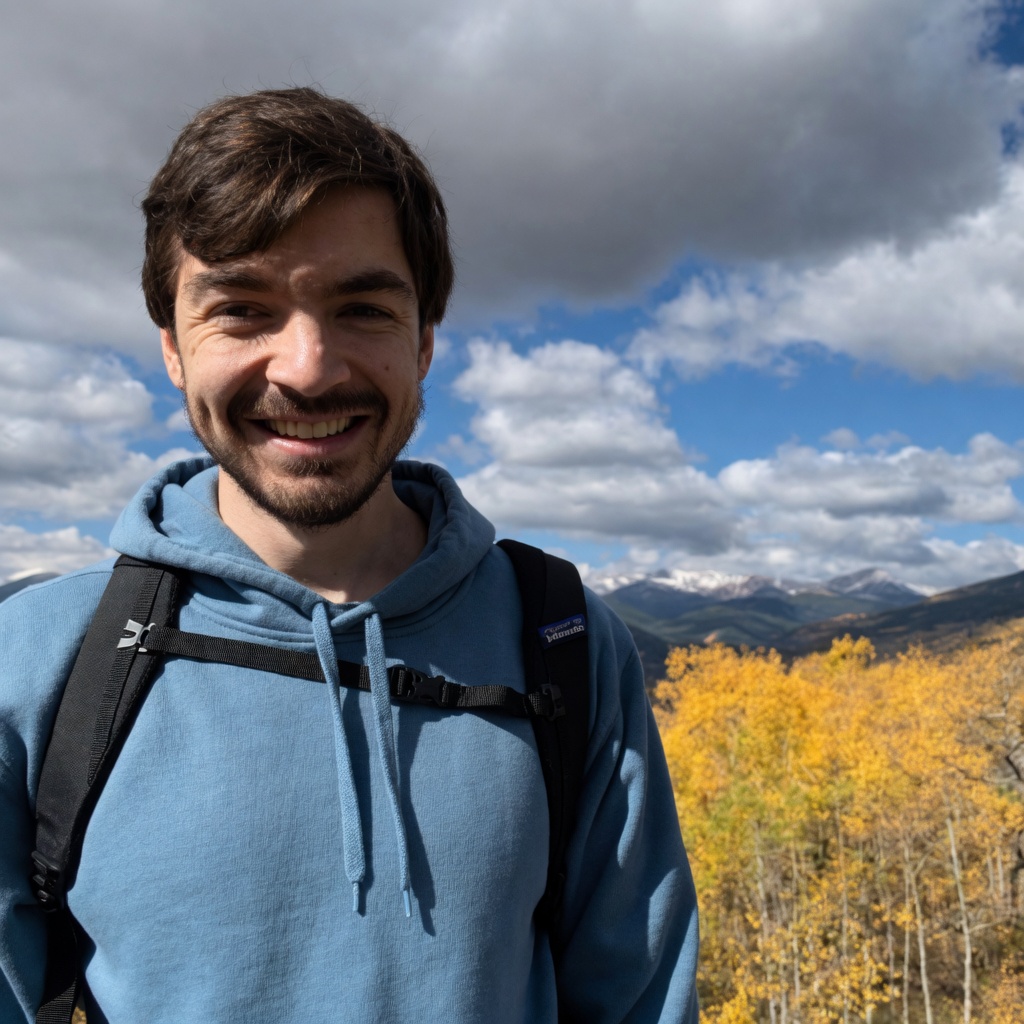
He Named It SeattleDataGuy.
He Lives in Denver Now.
The Access database was a favor for a friend. A few hours of work converting legacy records to SQL Server - the kind of thing a software engineer does for free on a Saturday. Benjamin Rogojan did it for free on a Saturday. Then someone paid him $500 to do it again. Then $1,000. And then, somewhere in the middle of working full-time at Facebook, he realized the side income had quietly outgrown the main one.
He handed in his notice on December 17, 2021. He remembers the date. That kind of specificity tells you something about how long he'd been counting down to it.
Rogojan grew up in Washington State and got an early start - enrolled in the Running Start program at sixteen, earning a culinary degree and a business associate's degree simultaneously while his classmates were still in high school. He worked in food service for four years before doing the math. The ceiling on culinary wages was visible from where he was standing. "Mathematically, this is not going to work out with the lifestyle I want." He went back to school, graduated with honors in Computer Science from the University of Washington, then earned a master's in Data Science from Colorado.
His first real tech job was at a hospital, hired as a financial analyst. The senior programmer left. Rogojan absorbed the role. A director saw it happen and started mentoring him. That pattern - stepping into a vacuum, building something where there was nothing - would repeat across his career.
At a healthcare startup, he moved from loading data to designing the systems that loaded data. At Facebook, he saw what a mature data infrastructure looked like from the inside: version-controlled workflows, DataSwarm pipelines, teams that had already solved problems he was just learning to ask. He was absorbing it all while running his consulting practice in the background.
The newsletter started on Medium, grew to ~58,000 followers, then migrated to Substack. An early article went viral on Hacker News. That's the moment the audience stopped growing incrementally and started growing in jumps. He crossed 30,000 subscribers in 2022, added 37,000 more in 2023, and hit 100,000 in 2024 - with an open rate hovering around 45-47%, which is the kind of number that makes email marketers nervous about their own metrics.
The YouTube channel launched in June 2021, just before he left Meta. He filmed 54 videos in 2022. Not a typo. In 2023 he ran two virtual data conferences with 4,000+ registrants each, launched the Technical Freelancer Academy, and still produced 25 videos and 29 live streams. The content output is relentless, but it reads like someone who has genuinely not run out of things to say about data engineering - which, in a field this fast-moving, is actually the rarest credential.
"My biggest goal long-term is figuring out how to become more scalable as a person."
What Rogojan figured out - before most people in technical content did - is that the audience for rigorous data engineering education is enormous and chronically underserved. Business school has a thousand podcasts. Data engineering had almost none. He built into the gap. The Technical Freelancer Academy takes the next step: teaching engineers not just how to do the work, but how to own it - build a client base, price their time, stop trading hours for dollars.
He now sits on advisory boards for Estuary, Mage, and Roe AI. He is writing a book on data team leadership. He is planning in-person dinners for data leaders. The Seattle name travels with him to Denver because rebranding at 100,000 subscribers is not a problem he has any interest in solving.
The Access database was a favor. The empire came later.