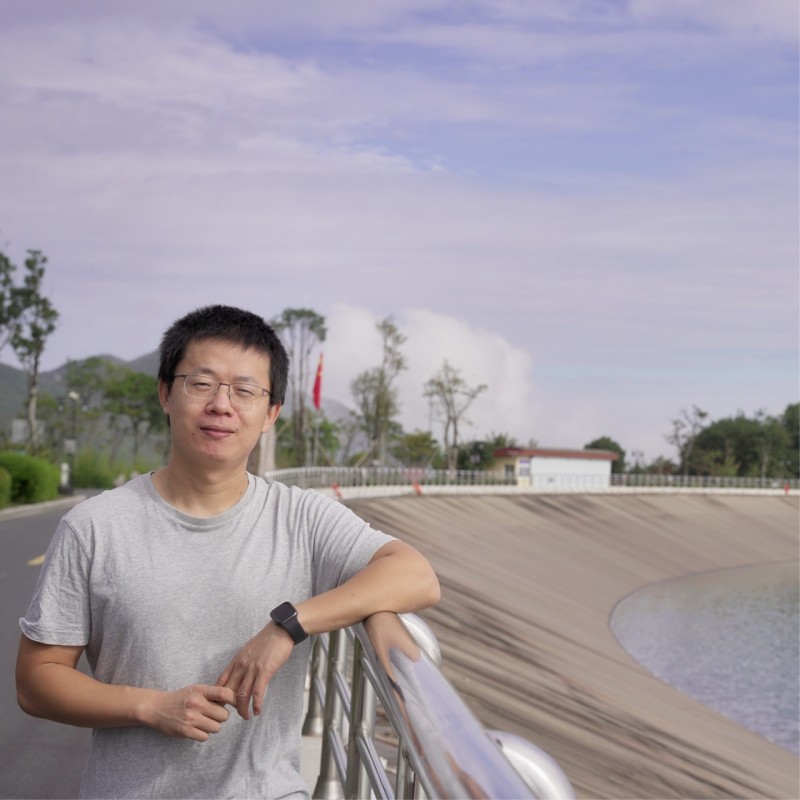
A database problem he could not stop thinking about
Xiaodan Zhuang had the kind of job that many engineers spend a career chasing. As a senior staff engineer at Ant Group, one of the largest payment platforms in the world, he led the intelligent monitoring team. His group built an ultra-large-scale time-series data platform to power AIOps, the practice of using machine analysis to keep enormous systems running. It was demanding, high-stakes work at the very center of the company's operations.
But there was a recurring frustration. Zhuang's teams were writing, querying, and analyzing trillions of real-time data points every day. The time-series databases available at the time kept falling short. They were not built for the volume, the speed, or the shape of the data that modern monitoring produces. Instead of accepting the limits of the tools, Zhuang started to imagine a different one.
"One of my dreams from the first day I joined the IT industry was to create world-class infrastructure software with passionate teammates sharing the same vision."
In April 2022, he acted on that dream. Together with two people who had fought the same battles at Alibaba, Ant Group, and DiDi - Ning Sun, who became CTO, and Jiachun Feng, who became technology vice president - Zhuang co-founded Greptime and took the role of CEO. The premise was direct. Metrics, logs, and traces are the three pillars of observability, and most companies store each of them in a separate system. Greptime would put them in one engine.
Observability systems are becoming more like real-time big data analytics platforms, not replacing traditional big data.
That thesis shaped the product. Zhuang has written that observability data has three defining traits: the volume is enormous, each individual data point carries relatively little value on its own, and real-time processing and availability matter more than almost anything else. Systems built for this reality often trade away strict consistency to stay fast and available. GreptimeDB was designed around those trade-offs from the start rather than bolted on afterward.
The team chose Rust, a language known for performance and memory safety, and they built in the open. In November 2022, GreptimeDB launched on GitHub. It climbed to number one on GitHub Global Trending and stayed there for several days. Contributors began showing up from more than ten countries, and the project attracted its first independent committer from outside the founding team. For a database started only months earlier, the traction was unusual.
Two decades of shipping open source
Zhuang did not arrive at databases by accident. He studied environmental science at Fuzhou University, graduating in 2006, and then spent nearly two decades writing infrastructure software. At Taobao and Alibaba he worked on middleware and open-sourced MetaQ, a messaging system considered a predecessor to Apache RocketMQ. He later joined LeanCloud, where he was responsible for backend architecture across its BaaS and SaaS products, before moving to Ant Group.
Along the way he built a reputation in open source under the handle killme2008. His projects include Aviator, a high-performance expression evaluator for Java, and xmemcached, a widely used memcached client. His GitHub bio is characteristically plain: "To be a good man. CEO & Founder of Greptime.com." There is no slogan, no pitch. The work is the statement.
What Greptime is building
- GreptimeDB, an open-source observability database in Rust
- One engine for metrics, logs, and traces
- Cloud-native, with compute and storage separated
- Support for SQL, PromQL, and common ingestion protocols
- Edge-to-cloud deployment for IoT and connected vehicles
Where he came from
- Taobao / Alibaba - middleware, open-sourced MetaQ
- LeanCloud - BaaS / SaaS backend architecture
- Ant Group - led intelligent monitoring, P9 staff engineer
- Open source - Aviator, xmemcached, and more
- Fuzhou University - environmental science, 2002-2006
Three lines that explain him
One of my dreams from the first day I joined the IT industry was to create world-class infrastructure software with passionate teammates.
Observability systems are becoming more like real-time big data analytics platforms, not replacing traditional big data.
To be a good man.
The weekend racer
There is a detail about Zhuang that fits the way he talks about software. He is a car enthusiast who modifies vehicles and races them on tracks. The same instinct that pushes a car to the edge of its limits shows up in how he thinks about database performance, where milliseconds and throughput are the whole game.
He is also unusually broad as a programmer. Over the years he has written Rust, Java, Clojure, Ruby, Elixir, and Erlang, a range that spans very different styles of thinking about software. He keeps a personal blog at blog.fnil.net and writes about observability and systems design on Medium. For someone running a company, he still spends a striking amount of time close to the code.
Focus of GreptimeDB, by weight
From monitoring to AI agents
Greptime raised a multi-million dollar angel round led by Glory Ventures, with Unity Ventures co-investing, and followed with a Series A in 2024. The money funds research, development, and a growing open-source community. More recently, Zhuang has been talking publicly about two directions: an edge-cloud integrated architecture aimed at IoT and connected vehicles, and a role for GreptimeDB in the emerging world of AI agents, which generate and depend on exactly the kind of high-volume, real-time data the database was built for.
The aspiration has stayed consistent since the first line of code. Build world-class, cost-effective, cloud-native infrastructure. Do it in the open. And make one database do the work that used to take three.