BMC Software Runs the World's Batch Jobs at 2am
For 45 years BMC has been the software running quietly behind banks, airlines and mainframes. Now, owned by KKR and split into two companies, it is betting that boring, dependable automation is exactly what agentic AI needs.
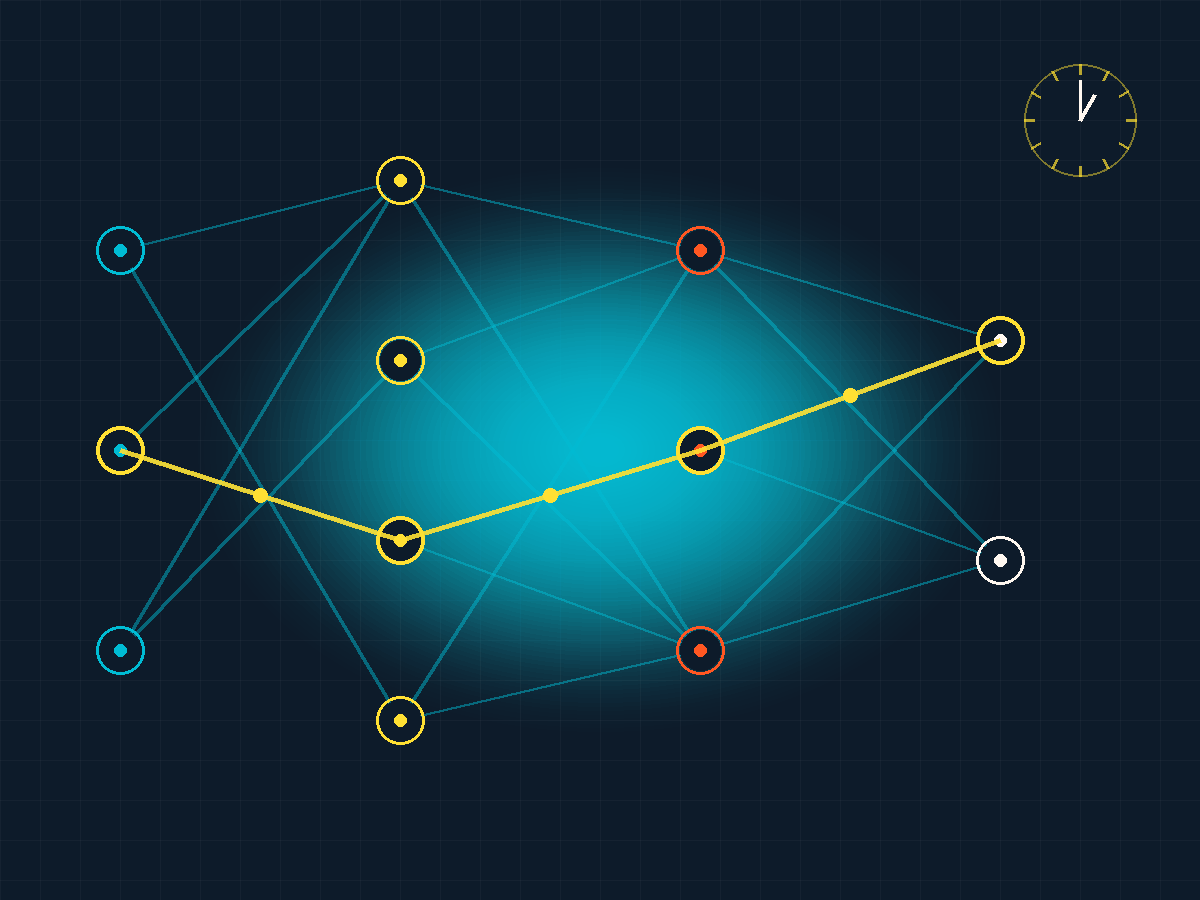
Somewhere tonight, while most of a city sleeps, a batch job kicks off. Payroll files get reconciled. A bank posts the day's transactions. An airline recalculates seat inventory. None of it trends. Nobody screenshots it. And a good chance exists that the software deciding what runs, in what order, and what happens when a step fails, was written by a Houston company most people have never heard of.
That company is BMC Software. It was founded in September 1980 by three former Shell employees - Scott Boulette, John Moores and Dan Cloer - who put their surname initials on the door and got to work. Forty-five years later BMC pulls in roughly $2.3 billion a year, serves more than 10,000 customers, and remains almost invisible to anyone who does not work inside an enterprise IT department. That invisibility is not a marketing failure. It is close to the whole business model.
The unglamorous layer of the stack
Most of the attention in software goes to the parts people can see - the apps, the feeds, the AI demos that make the rounds. BMC lives one or two layers below all of that, in the plumbing. Its flagship product, Control-M, is a workload automation and orchestration tool. In plain terms, it is the thing that decides which jobs run when, chains thousands of them together into dependencies, and reacts when one of them breaks at three in the morning. BMC says Control-M handles tens of millions of automations in a single day.
Then there is the mainframe. For decades, commentators have written the mainframe's obituary, and for decades the big iron has kept running the settlement systems of banks, insurers and governments. BMC turned that stubbornness into a franchise. Its BMC AMI line - Automated Mainframe Intelligence - layers machine learning on top of these systems to keep them tuned, monitored and cheaper to run. When your world quietly refuses to migrate off a platform from the 1970s, someone has to make that platform behave. BMC is one of the companies that does.
Public, private, public, private
BMC's ownership history reads like a case study in how enterprise software gets financed. It went public on Nasdaq in 1988. It spent the 1990s and 2000s buying its way into new categories - Marimba in 2004 for around $239 million, Tideway Systems in 2009. In 2013 a group of private equity investors took it private in a leveraged buyout valued at roughly $6.9 billion. In 2018 KKR agreed to acquire it, and BMC has sat inside the KKR portfolio since.
This matters because it explains the company's temperament. A business that has been optimized by private equity for over a decade does not chase headlines. It chases annual recurring revenue, renewal rates and margin. BMC's own scorecard - 18 consecutive quarters of ARR growth - is the kind of metric that thrills a boardroom and bores a timeline. That is the trade it has chosen.
- 1980Founded in Houston by three ex-Shell engineers.
- 1988IPO on Nasdaq under ticker BMCS.
- 2004Acquires Marimba for ~$239M.
- 2013Taken private in a ~$6.9B leveraged buyout.
- 2018KKR agrees to acquire BMC.
- 2019Ayman Sayed named president and CEO.
- 2024Reorganizes into IZOT and Digital Business Automation.
- 2025BMC Helix spun off as a standalone company.
The 2024 split, and the AIOps bet
The most recent chapter is a corporate reshuffle that, again, went largely unnoticed outside the industry. In 2024 BMC reorganized around two units: Intelligent Z Optimization and Transformation, or IZOT, which is the mainframe-and-optimization business, and Digital Business Automation, which is the Control-M side. Then in 2025 the service management platform, BMC Helix - the descendant of the old Remedy product - was spun off into its own standalone company, with Ali Siddiqui as president. Both BMC and BMC Helix remain owned by KKR.
The logic is straightforward once you see the market. IT service management and IT operations are converging into what the industry now calls AIOps - using AI to detect, diagnose and increasingly resolve operational problems without a human in the loop. Analysts peg that market growing at roughly 25 percent a year. Splitting Helix out gives it room to move fast against pure-play rivals, while the rest of BMC doubles down on the automation and mainframe estates that fund everything.
There is a genuine insight buried in the branding. BMC talks about the "Autonomous Digital Enterprise" - the idea that IT should increasingly run, heal and optimize itself. Strip the jargon and it is a bet that the interesting frontier of AI is not another chatbot but operations: the messy, high-stakes work of keeping thousands of interdependent jobs alive. Agentic AI needs somewhere to act. Orchestration and observability are exactly where the action is. BMC HelixGPT, the company's agentic AI layer for service and operations, is that thesis made product.
Figures are approximate, drawn from public company profiles and reporting.
What you can actually do with it
For a working IT team, the practical value of BMC is less abstract. Control-M lets an operations group model a complex chain of jobs - extract data here, transform it there, load it, validate it, alert someone if step nine fails - and run that chain reliably across cloud, on-premise and mainframe systems. Instead of a tangle of scripts and cron entries nobody fully understands, the workflow becomes something you can see, audit and hand to the next person. That is the difference between a batch process that quietly works and one that pages an engineer every other week.
On the mainframe side, BMC AMI gives teams a way to keep aging but essential systems observable and efficient, often reducing the compute costs that mainframe billing famously punishes. And on the Helix side, the pitch is a service desk and operations platform that increasingly resolves routine tickets and incidents with AI before a human ever sees them. For a large organization, the through-line is the same: fewer 2am phone calls, and more of the routine handled by software that does not sleep.
Five things worth knowing
- The name "BMC" is just the surname initials of its three founders - Boulette, Moores and Cloer.
- They all worked together at Shell before starting the company in 1980.
- Control-M can process tens of millions of automated jobs in a single day.
- The mainframe, often called legacy, is a core and growing part of BMC's business.
- BMC has gone public, private, public and private again over its history.
The lesson in being essential
There is a version of this story that treats BMC as a relic - old company, old platforms, private equity owner, no buzz. The more useful reading is the opposite. BMC is a working example of a business that decided to be essential instead of exciting, and then held that position for four and a half decades while flashier names came and went. If a company vanished overnight and no customer noticed for a week, it had a problem. If BMC vanished, a lot of banks would notice by morning. That is a moat you cannot fake, and you cannot buy it quickly - you accumulate it one dependable batch run at a time.
Whether the AIOps bet pays off is an open question, and the split into two companies is young enough that the results are not in. But the underlying wager is sound: the boring, load-bearing layer of enterprise IT is not going away, and whoever automates it well gets to keep collecting. BMC has been collecting since Jimmy Carter was in office. The 2am job still runs. Somebody still has to make sure of it.
Frequently asked
What does BMC Software actually do?
BMC builds software that helps large organizations run and automate their IT - scheduling and orchestrating workloads (Control-M), managing and optimizing mainframes (BMC AMI), and handling IT service and operations management (BMC Helix).
Who owns BMC Software?
BMC is privately held and owned by the private equity firm KKR, which acquired it in 2018. It was first taken private in a 2013 leveraged buyout worth about $6.9 billion.
What does the name BMC stand for?
BMC comes from the surname initials of its three founders - Scott Boulette, John Moores and Dan Cloer - who founded the company in Houston in 1980.
What is Control-M?
Control-M is BMC's flagship workload automation and application workflow orchestration product. It schedules and runs the batch jobs and data pipelines behind everyday services like banking, payroll and logistics, handling tens of millions of automations a day.
What is BMC Helix and why did it split off?
BMC Helix is BMC's IT service and operations management platform. In 2024-2025 it was spun off into a separate, independently run company focused on AIOps and agentic service management, while BMC Software kept its mainframe and business-automation units. Both are owned by KKR.