The least glamorous moment in enterprise computing arrives when a small red dot appears on a dashboard and nobody knows what it means. Maybe a payment service is slow. Maybe a database is choking. Maybe one container disappeared and another dozen are politely pretending not to notice. The alert is real, the cause is hidden, and the night-shift engineer has a great many windows open.
Cloudwise has built its business around that gap between signal and understanding. Founded in Beijing in 2009 and now selling internationally through its Singapore operation, the company provides the software layer that lets large organizations watch applications, infrastructure, logs, services and customer experience in one place. Its customers are not shopping for an attractive weather map of their servers. They are trying to shorten the expensive minutes between “something broke” and “we know why.”
That mission puts Cloudwise in the AIOps market - artificial intelligence for IT operations - alongside global observability firms, service-management incumbents and a busy field of regional vendors. Cloudwise's current pitch, though, stretches beyond monitoring. Its portfolio connects the data plane of metrics, logs and traces with the organizational plane of assets, tickets, owners and workflows. The newest layer is a group of AI agents led by Castrel, a digital site-reliability engineer designed to triage alarms, search operational knowledge and assist with root-cause analysis.
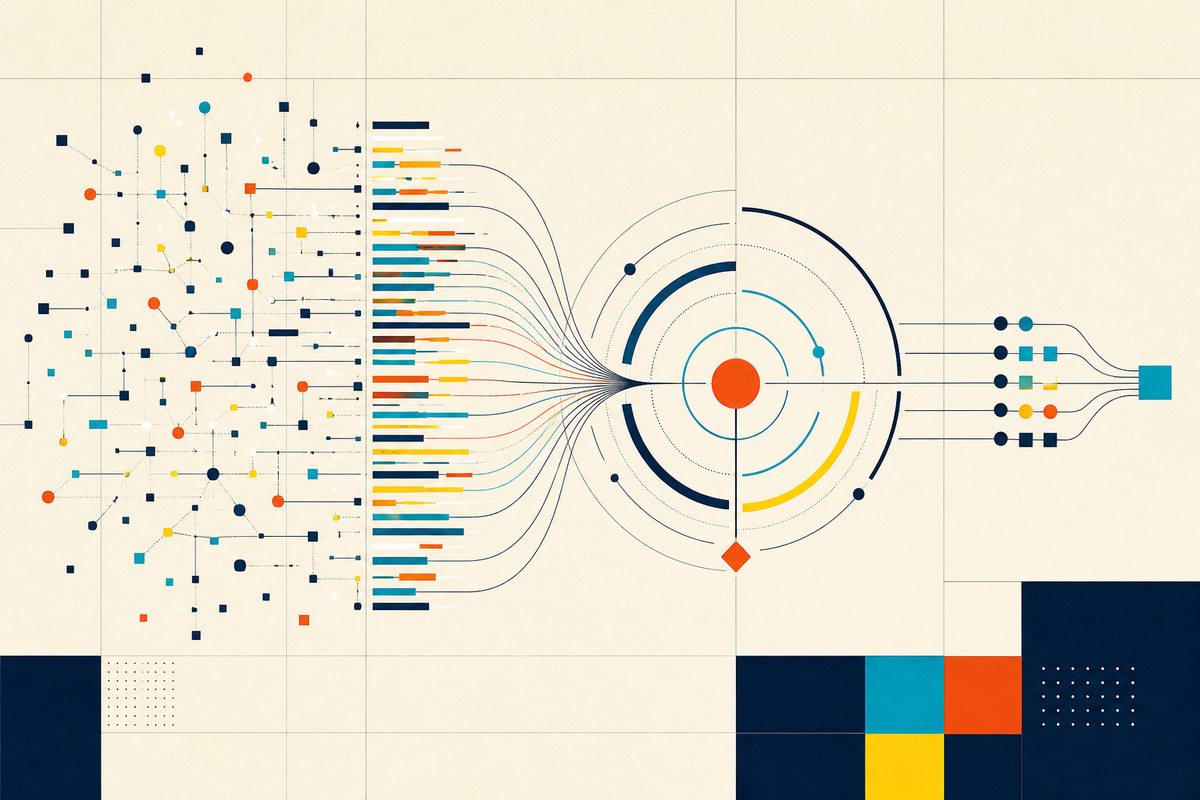
A control room, not one more gauge
Cloudwise's broadest product is the Digital Operations Observability Platform, mercifully shortened to DOOP. It ingests the familiar raw materials of modern infrastructure - metrics, logs, traces, topology and alerts - and organizes them around business services. A bank does not merely want to know that a host is hot; it wants to know whether card payments are at risk. An airline cares less about the philosophical state of a middleware process than whether operations staff can keep flights and passengers moving.
This business-centered view is paired with tools that can run across public clouds, private clouds, on-premise equipment, containers and microservices. For organizations that have accumulated technology over decades, that deployment range matters. Their infrastructure is rarely a neat greenfield stack. It is a geological record. Cloudwise sells itself as the map.
Around DOOP sits a shelf of specialist products. Hera handles centralized log analysis. Application Performance Monitoring follows transactions through server, browser and mobile software. Synthetic Monitoring sends automated probes to websites and APIs before an irritated customer can do the same manually. IT Service Management manages incidents, changes, requests and service catalogs. A configuration management database maps technical components to the services and people that depend on them. Flyfish gives teams a low-code way to build operational screens and applications.
A buyer can start with one need, but the architecture encourages a wider installation. The APM trace identifies a slow service; the topology shows what depends on it; the log product reveals a pattern; the CMDB supplies ownership; ITSM opens and routes the incident. Cloudwise's differentiation is less a single magic algorithm than the handoff between these stages.
“The difference between an alert and an answer is context.”
The AI agent has something to look at
Castrel is Cloudwise's attempt to turn that context into an operator. The company describes it as an SRE agent with two essential faculties: language-model reasoning and a live connection to observability data. In practical terms, it is meant to group noisy alerts, retrieve relevant knowledge, investigate likely causes and help engineers move toward remediation. Three related agents specialize in log analysis, continuous inspection and ticket assistance.
The distinction is important because a general chatbot knows nothing about last night's deployment, the dependency between two internal services or the peculiar warning that always precedes a database failure. An operations agent needs perception before eloquence. Cloudwise has spent years building the plumbing through which that perception arrives.
The commercial promise is measured in dull but valuable units: fewer duplicated alerts, lower mean time to resolution, fewer specialists pulled into every incident and less revenue lost while systems misbehave. Cloudwise says Castrel can find root causes in seconds and materially reduce resolution time. Those are company claims, not universal guarantees, but they define the test customers will apply. An enterprise agent does not get points for sounding confident. It gets points for being right, showing its work and escalating when it is not.
Who buys the night watch
Cloudwise's public customer stories cluster in sectors where outages are visible, regulated or physically consequential: finance, government, power, transportation, telecommunications and manufacturing. Named users include China Southern Airlines, chip designer Unisoc and State Grid subsidiaries. The company says it works with more than 2,000 enterprises worldwide.
One airline engagement produced more than 200 customized operational solutions, according to Cloudwise. A State Grid electric-vehicle-services project created a unified monitoring index and cut fault detection and resolution times by 60 percent. Those examples reveal the nature of the sale. This is not usually self-serve software bought on a credit card before lunch. It is enterprise infrastructure, configured around existing processes and supported by consultants, solution architects and channel partners.
Cloudwise makes money through enterprise subscriptions, local or private deployments, implementation and support. It does not publish a public price card. Regional distribution is part of the model: Wordtext Systems in the Philippines, CTT Innovation and Malaysia's Maxmulia are among the partners presented by the company. Daisy Zhang, who joined the senior leadership team in 2023 and is identified in supplied company information as global CEO, built a global business group spanning sales, architecture, marketing and channels, with expansion into Singapore, Malaysia, Thailand and the United Arab Emirates.
A crowded market with a regional seam
Cloudwise competes with focused observability companies such as Datadog, Dynatrace and New Relic; log and security platforms such as Splunk; application-monitoring products including Cisco AppDynamics and IBM Instana; and the vast workflow gravity of ServiceNow. It also faces Chinese AIOps companies that share its comfort with private deployment, domestic technology stacks and large state-linked customers.
Its answer is breadth plus locality. Global observability products are often strongest as developer tools. Cloudwise presents a more operations-heavy bundle: monitoring and analytics on one side, service management and asset context on the other, delivered with regional partners and support. Its products recognize the reality that many Asian enterprises run hybrid estates and need software to live inside controlled environments.
The tradeoff is familiar. A wide platform can reduce integration work, but it must keep each module competitive with sharper point products. AI agents raise the standard again. Root-cause analysis becomes convincing only when the underlying telemetry is clean, the dependency map is current and the suggested action is safe. Cloudwise's long product list is an advantage if those pieces genuinely reinforce one another. It is baggage if they do not.
Capital for the unphotogenic work
Investors have funded the bet generously. Cloudwise raised a reported $26 million Series C in 2017, several D-stage rounds between 2019 and 2020, and a $150 million Series E in July 2021 led by Sequoia Capital China. Other participants included CITIC PE, SIG, FutureX Capital and CR Capital. Public databases disagree on the precise lifetime total because they classify the D extensions differently, but the 2021 round itself is well documented.
At the time, the company said the money would support research, new industry customers, strategic partnerships and customer service. The Singapore push and regional distributor network look like the commercial half of that plan. Castrel is the product half - a way to reposition a mature monitoring stack for an era in which every enterprise software company is expected to explain what its AI can actually do.
The useful question is not whether an agent can chat. It is whether it can find the one broken service before the coffee arrives.
Where Cloudwise fits
Cloudwise sits between two software categories that have been converging for years. Observability products tell technical teams what systems are doing. Service-management products coordinate what people do next. AIOps promises to compress the distance between them. Add an agent, and the system can begin to interpret, recommend and eventually execute.
That makes Cloudwise most relevant to organizations whose infrastructure is too mixed for a narrow tool and too important for guesswork. A smaller cloud-native startup may prefer a simpler, developer-led product. A bank, utility or airline with old systems, new clouds, formal service processes and strict deployment rules is closer to Cloudwise's natural habitat.
The company's story is ultimately about accumulated context. Fifteen years of monitoring products, customer integrations and operational workflows are not as easy to demo as a new chat window. But if AI agents become credible coworkers in the operations center, that history may be the useful part. The pager rings. Castrel looks across the stack. A human gets an explanation instead of 400 alerts. In enterprise software, quiet can be the clearest proof that something works.