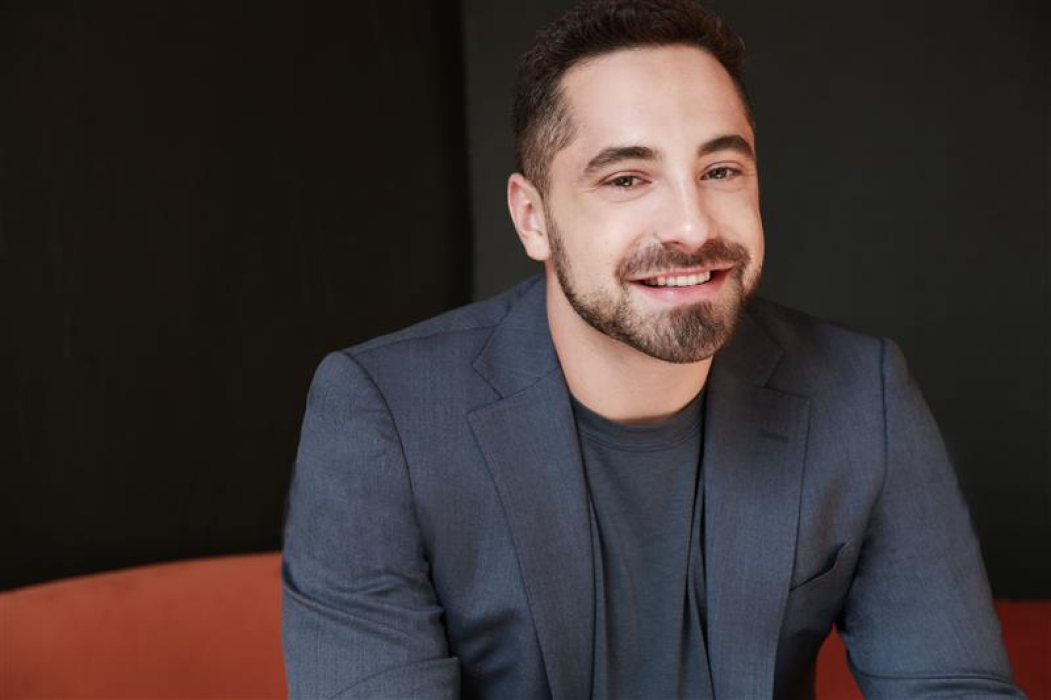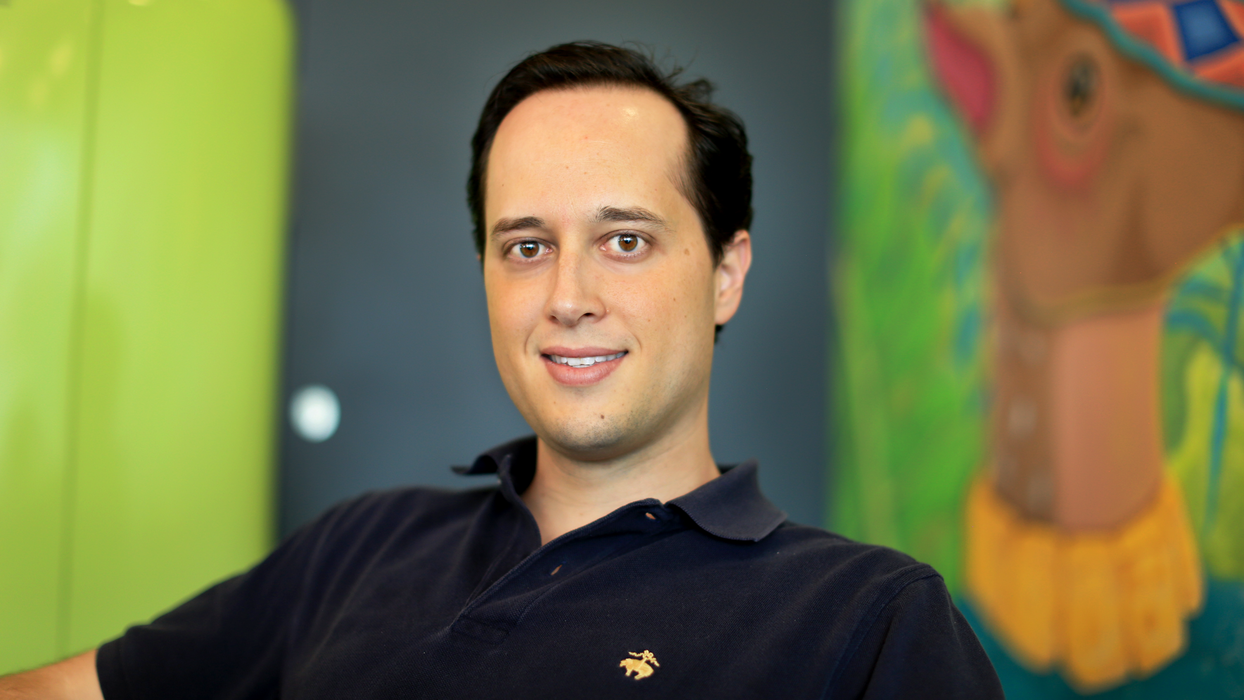
Christopher King is the founder and CEO of Eaglebrook, a crypto investment platform that gives registered investment advisors (RIAs) direct access to bitcoin and digital assets through tax-optimized separately managed accounts (SMAs). A Penn State finance graduate who began investing in digital assets in 2014, King started his career in crypto-focused venture capital at Morgan Creek Capital Management before launching Eaglebrook in 2019. The New York and Miami-based company has grown into one of the largest crypto SMA platforms serving wealth managers, backed by investors including Castle Island Ventures, Brewer Lane Ventures, and Franklin Templeton.
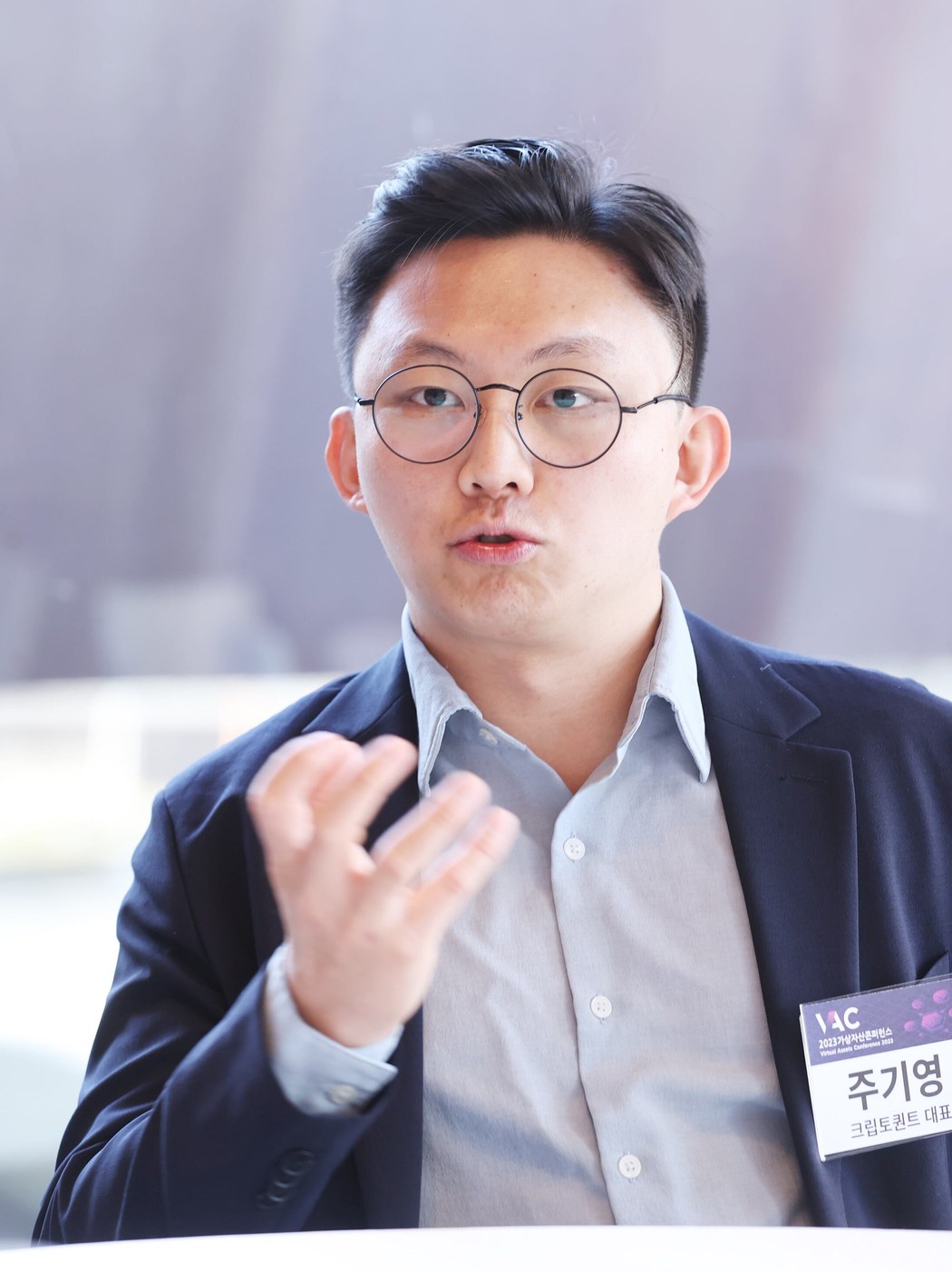
CryptoQuant is a crypto on-chain and market data analytics platform founded by Ki Young Ju that collects raw blockchain data, enriches it with exchange and entity labels, and delivers it as actionable metrics, charts, alerts and APIs. Often called 'the Bloomberg of crypto,' it serves professional traders, researchers and 200-plus institutional clients, and was the first on-chain data provider listed on CME Group's DataMine marketplace.
Eaglebrook is a New York-based crypto investment platform built for wealth managers. It gives registered investment advisors (RIAs) and their clients direct, tax-optimized exposure to Bitcoin, Ethereum, and other digital assets through separately managed accounts (SMAs) held at institutional qualified custodians. As an SEC-registered investment advisor, Eaglebrook operates one of the largest crypto SMA platforms in the market, integrating with advisors' existing portfolio-management and reporting systems so they can offer, trade, bill, and report on digital assets inside their normal workflow.
Block, Inc. is a global financial technology company that builds tools for economic empowerment. Founded in 2009 as Square by Jack Dorsey and Jim McKelvey, it renamed itself Block in 2021 to reflect a broader mission spanning commerce, consumer finance and bitcoin. The company operates a portfolio of ecosystems - Square for sellers, Cash App for individuals, Afterpay for buy-now-pay-later, plus TIDAL, Bitkey and Proto - and trades on the NYSE under the ticker XYZ.
Ki Young Ju is the founder and CEO of CryptoQuant, a blockchain analytics firm that turns raw on-chain data into market intelligence used by traders, funds, and institutions. A South Korean engineer who started the company in 2018 after stints in cybersecurity and the ICON blockchain project, he built CryptoQuant into one of the most cited sources for Bitcoin exchange flows, miner activity, and whale tracking. He is widely followed on X for data-driven market commentary, and became a talking point across crypto media in 2025 when he publicly reversed his earlier 'bull cycle is over' call and declared that the traditional Bitcoin cycle theory no longer holds in an ETF- and institution-driven market.
Prepaid2Cash is a Birmingham, Alabama fintech that turns network-branded prepaid cards and store gift cards into spendable cash. Users scan a card in the mobile app or online and receive funds by direct deposit, instant debit transfer, PayPal, Venmo, or Bitcoin, often within minutes. Founded in 2016 by Peter Vogt and John Gushman, the company set out to unlock the billions of dollars that sit trapped on plastic every year because prepaid and gift cards can't be deposited into a bank account.
Thesis* is a Bitcoin-focused venture production studio founded in 2014 that builds companies and protocols in-house rather than investing in outside teams. Operating under the banner "Money is power, Bitcoin is empowerment," it has incubated a portfolio spanning Bitcoin infrastructure and consumer finance - including tBTC (a decentralized, trust-minimized bridge that tokenizes Bitcoin on Ethereum), Mezo (an on-chain Bitcoin banking layer backed by the MUSD stablecoin), Fold (a Bitcoin rewards app), Acre (Bitcoin staking), and Taho (a community-owned web3 wallet). Led by CEO Matt Luongo, Thesis raised a $21 million Series A in 2021 and has become one of the most prolific studios building Bitcoin-native financial products.
Paul Snow is the inventor of the Factom protocol and the architect of the Accumulate blockchain, currently building tokenization and digital-identity infrastructure at DeFi Devs and IDD Labs. He co-founded the Texas Bitcoin Conference, testified before the U.S. Congress on blockchain, and is listed as inventor on more than 40 patents that now underpin Accumulate.
Alpen Labs is a Bitcoin infrastructure company building Strata, a zero-knowledge (ZK) validity rollup and bridge that lets people borrow, earn, and transact in dollars directly on Bitcoin - without wrapped tokens or custodians. Founded in 2022 by a team of MIT alumni, the company uses ZK cryptography to bring programmable smart contracts and DeFi-style financial products to Bitcoin while preserving its security and decentralization.
Simanta Gautam is the co-founder and CEO of Alpen Labs, a startup building zero-knowledge infrastructure to make Bitcoin scalable, private, and programmable. An MIT-trained engineer who earlier founded the airport-security computer-vision company Synapse Technology (acquired by Palantir, where he became AI Lead), he now leads a team turning Bitcoin's intentionally limited base layer into rails for global money. The mission traces to a personal detail: founders with roots in Nepal, where roughly a quarter of GDP arrives as remittances, saw firsthand how much money is lost to middlemen.
Edge is a San Diego company building a self-custody, privacy-first mobile wallet for buying, storing, swapping and spending more than 120 cryptocurrencies. Founded in 2014 as Airbitz and rebranded to Edge in 2018, it pioneered a username-and-password login model backed by client-side encryption and a zero-knowledge architecture, so private keys and account data never leave a user's device unencrypted. The same security layer is offered to developers as the Edge Login SDK.
OpenNode is a Bitcoin payment processor and infrastructure provider that lets businesses accept Bitcoin and send payouts globally, settling instantly over the Lightning Network with automatic conversion to local currencies. Founded in 2018 and headquartered in Los Angeles, the company powers checkout, payouts, in-person payments and a developer API for merchants ranging from McDonald's El Salvador to Substack, charging a flat 1% fee with built-in chargeback protection.
Matthew Fox is the CEO of OpenNode, a Bitcoin payments infrastructure company that lets businesses in 126 countries accept Bitcoin and send payouts over the Lightning Network with a few lines of code. A Dartmouth graduate who began his career in investment banking at Jefferies and later founded NGU Ventures, Fox took the helm of OpenNode in October 2022, months after the company closed a $20M Series A at a $220M valuation backed by Twitter, Tim Draper, Kingsway, and a Fidelity-affiliated fund.
Paul Puey is the CEO and co-founder of Edge, a San Diego-based self-custody crypto wallet and security platform. A UC Berkeley electrical engineering and computer science graduate who once shipped 3D graphics at Nvidia, he caught the Bitcoin bug in 2013 and launched Airbitz in 2014, rebranding it to Edge in 2017 as crypto moved beyond Bitcoin. His pitch is stubbornly simple: if you do not hold your keys, you do not own your coins, and security belongs on the edges of the network, in your hands, not on someone else's server.
Akash Sinha, who goes by 'Sky,' is a Web3 and DeFi commentator based in the San Francisco Bay Area. He builds an audience on LinkedIn around Bitcoin, decentralized finance, and the Solana and Ethereum ecosystems, posting frequently from crypto conferences like Solana Breakpoint and Token2049 and weighing in on tech-policy moments such as the TikTok ban debate.
Will O'Brien is a serial entrepreneur, angel investor, and the CEO and co-founder of NFT Oasis, the metaverse platform owned and operated by Provenonce, Inc. A blockchain and gaming veteran, he co-founded and led Bitcoin security pioneer BitGo (later acquired by Galaxy Digital for $1.2B) and was named Bitcoin industry 'CEO of the Year' in 2014. Before that he ran corporate development at Big Fish Games and held operating roles at Keen IO and TrialPay. He has backed 70-plus early-stage startups, holds a Harvard computer science degree and an MIT Sloan MBA, and moonlights as an improvisational pianist.
Ambre Soubiran is the CEO and chairman of Kaiko, the independent provider of institutional-grade, regulatory-compliant cryptocurrency market data and indices. After a decade structuring equity derivatives at HSBC in London and Paris, she walked away from traditional finance in 2016 to buy control of Kaiko - then a bright idea with no revenue and no staff - and built it into a global data business with roughly 130 people across New York, London, Paris and Singapore. She has raised over $80M and positions Kaiko as the trusted, neutral source of truth for crypto markets used by exchanges, asset managers and regulators.
Kraken is one of the oldest and largest cryptocurrency exchanges in the world, founded in 2011 and launched in 2013 by Jesse Powell after the Mt. Gox security failures convinced him crypto needed an exchange built on trust. Operated by parent company Payward, Inc., Kraken lets retail and institutional clients buy, sell, trade, stake, and self-custody dozens of digital assets, alongside crypto futures, margin, and index products. By late 2025 it served over 5 million funded accounts, held tens of billions in client assets, and was preparing for a public listing.
David 'Dave' Ripley is Co-CEO of Kraken, one of the world's largest and longest-running cryptocurrency exchanges. He joined via Kraken's 2016 acquisition of Glidera, a bitcoin wallet service he co-founded, and rose from COO to CEO to Co-CEO as Kraken expanded aggressively — completing $1.5B acquisitions, raising $800M in 2025, and filing confidentially for a U.S. IPO. A former BCG principal and electrical engineer turned crypto operator, Ripley has shepherded Kraken from a 50-person startup to a 2,600+ employee global exchange while navigating major SEC enforcement actions and a shifting regulatory landscape.
Alexander Leishman is the Founder, CEO, and CTO of River, a Bitcoin-only financial institution built to provide brokerage, custody, and mining services to individuals and institutions. With a background spanning aerospace engineering at the University of Maryland, computer science at Stanford, and security engineering at Airbnb, Leishman co-founded River in 2019 after stints at MaiCoin, Deloitte, and Polychain Capital. River has raised over $17.7 million in venture funding and became the first Bitcoin-only exchange to publicly release its financial statements in April 2025. Leishman also serves on the board of Brink, a Bitcoin research and development nonprofit.
Marshall Hayner is the Founder and CEO of Metallicus, a San Francisco-based blockchain infrastructure company building compliant, regulation-forward digital banking tools for credit unions and financial institutions. A Bitcoin miner since 2009, Hayner pioneered social crypto payments with QuickCoin (the first Facebook-integrated Bitcoin wallet) in 2014, then spent a decade building Metallicus into the only blockchain company certified as a service provider for the Federal Reserve's FedNow instant payment rail. His company's flagship products - Metal Pay, Metal Blockchain, and the Digital Banking Network - sit at the intersection of traditional finance and decentralized infrastructure.
River is a San Francisco-based, bitcoin-only financial services company offering brokerage, custody, mining, and Lightning Network infrastructure. Founded in 2019 by Alex Leishman and Andrew Benson, River serves individuals and businesses who want to buy, hold, earn yield on, and transact with bitcoin from a US-regulated, transparent, full-reserve institution.
Spencer Bogart is a General Partner at Blockchain Capital, one of the oldest and most active venture firms in the crypto industry. A CFA charter holder who started his crypto career writing Wall Street's first blockchain research report at Needham & Company, Bogart now leads research across Blockchain Capital's five funds and 85+ investments. Known on Twitter as @CremeDeLaCrypto, he made early bets on DeFi before the term existed and has been a consistent voice for Bitcoin fundamentals and crypto infrastructure since 2014.

Katie Haun is the founder and CEO of Haun Ventures, a $1.5 billion crypto and frontier technology venture firm she launched in 2022 after co-leading a16z Crypto. A former federal prosecutor who created the DOJ's first cryptocurrency task force, she is one of the most credible voices at the intersection of law, policy, and digital assets - a former skeptic turned crypto believer, converted by the very Silk Road case she was assigned to prosecute.

Tim Draper is a third-generation venture capitalist and founder of Draper Associates, the firm behind early bets on Hotmail, Baidu, Skype, Tesla, Coinbase, and Robinhood. He pioneered viral marketing with Hotmail's email footer tagline, bought 30,000 bitcoins at a U.S. Marshals auction in 2014 for $19 million, and has never sold. The founder of Draper University of Heroes in San Mateo, he frames entrepreneurship as a heroic calling - handing students superhero capes on day one. Twice tried to split California into multiple states. Consistently predicts Bitcoin will hit $250,000. Sings his own original songs at startup conferences. Backed 60+ unicorns from seed stage across four decades.

Chris Burniske is a partner and co-founder of Placeholder, a venture capital firm that has invested in over 75 blockchain companies and networks since 2017. He co-authored the influential book 'Cryptoassets: The Innovative Investor's Guide to Bitcoin and Beyond' and led ARK Invest to become the first public fund manager to offer bitcoin exposure in 2015. Known for his unconventional approach - famously rolling up barefoot on a skateboard to pitch Cathie Wood - Burniske combines deep technical knowledge with a surfer's mentality toward finding uncrowded opportunities in crypto markets.

Chris Dixon is the founder and managing partner of a16z crypto, the largest dedicated crypto venture fund in the world with over $7 billion in committed capital. A Columbia philosophy graduate turned software engineer turned serial entrepreneur (SiteAdvisor, Hunch), he joined Andreessen Horowitz in 2012 and has since become Silicon Valley's most prominent crypto bull, leading investments in Coinbase, Uniswap, and dozens of foundational web3 companies. His 2018 essay 'Why Decentralization Matters' became a manifesto for the open internet movement, and his 2024 book 'Read Write Own' extended that thesis into a New York Times-listed blueprint for the next era of the internet.

Jeremy Liew is a legendary consumer venture capitalist and Partner at Lightspeed Venture Partners, best known as the first institutional investor in Snapchat — turning an $8.1M bet into nearly $2 billion at the 2017 IPO. Born in Singapore and raised in Perth, Australia, Liew competed at the International Math Olympiad alongside future Fields Medalist Terence Tao before pivoting to business. After stints at McKinsey, IAC, and AOL, he joined Lightspeed in 2006 as its first consumer specialist, backing Affirm, Bonobos, GIPHY, and Epic Games along the way. A 9-time Forbes Midas List honoree, he stepped back from new investments in 2021 — just before turning 50 — to preserve the family time COVID had unexpectedly given him.

Dan Robinson is General Partner and Head of Research at Paradigm, one of crypto's most influential investment and research firms. A Harvard-trained lawyer turned protocol engineer, Robinson has co-authored landmark papers including the 'Ethereum is a Dark Forest' MEV essay, the Uniswap v3 whitepaper, and the Blend NFT lending protocol. His work sits at the intersection of mechanism design, mathematical finance, and open-source software - making him one of the rare figures who shapes both how DeFi protocols are built and how capital flows into them.

Fred Ehrsam (Frederick Ernest Ehrsam III) is a serial founder and investor who co-founded Coinbase in 2012 — the crypto exchange that went public on Nasdaq in 2021 — and Paradigm in 2018, the research-driven crypto VC firm that raised a $2.5 billion fund. Now he's chasing his next frontier: Nudge, a non-invasive brain-computer interface startup using focused ultrasound to modulate brain states, which raised $100 million in Series A funding in 2025. A Duke computer science graduate turned Goldman Sachs FX trader, Ehrsam discovered Bitcoin in 2011 and never looked back — quietly becoming one of the most influential architects of the crypto industry while building a reputation as a deep thinker obsessed with pushing the boundaries of human capability.