self-custody
(34)
Utila makes crypto answer to the finance department
The wallet company found a useful place between cryptography and office politics: deciding who can move digital money, under which rules, and at what cost.

Uniswap made a market out of a formula
A laid-off engineer turned a coding exercise into a way to trade without handing over your coins. Uniswap’s next experiment is making that open market pay for its own upkeep.
Exodus made crypto feel simple. Now comes the hard part: spending it.
A free wallet became a $121.6 million business by making crypto easier to handle. Its next wager is that digital dollars belong at the checkout, not just in a portfolio.

Chia Network is betting on boring money
Bram Cohen’s blockchain swaps the mining race for disk space. Its harder wager is that carbon registries, recoverable wallets, and financial paperwork can give crypto something useful to do.
BVNK and the price of a Saturday
Money can cross a blockchain in seconds. Getting it into somebody’s usable balance is the harder trick - and the business Mastercard bought BVNK to help solve.

Zerion and the ten-cent theory of crypto
A wallet company discovered that the cheapest route can be the wrong route. Its larger wager is that making crypto understandable is a business of its own.

Phantom’s $3 Billion Bet on Fewer Instructions
Crypto asked people to become their own bank. Phantom bet they would prefer an app. A friendly ghost, a Solana beachhead and $268 million in funding have turned that wager into a much bigger ambition.

Brandon Millman and the Trouble With Crypto's Front Door
A former Twitter and 0x engineer saw that crypto's first screen was often its hardest. With Phantom, he turned a wallet into an argument about how ordinary people should enter a complicated world.
Cogni Put a Crypto Wallet Where the Checking Account Was
The New York fintech began with no-fee banking and a debit card. Then it placed self-custody, NFTs and a human-readable crypto address inside the same financial story - a revealing bet on how ordinary people might enter Web3.
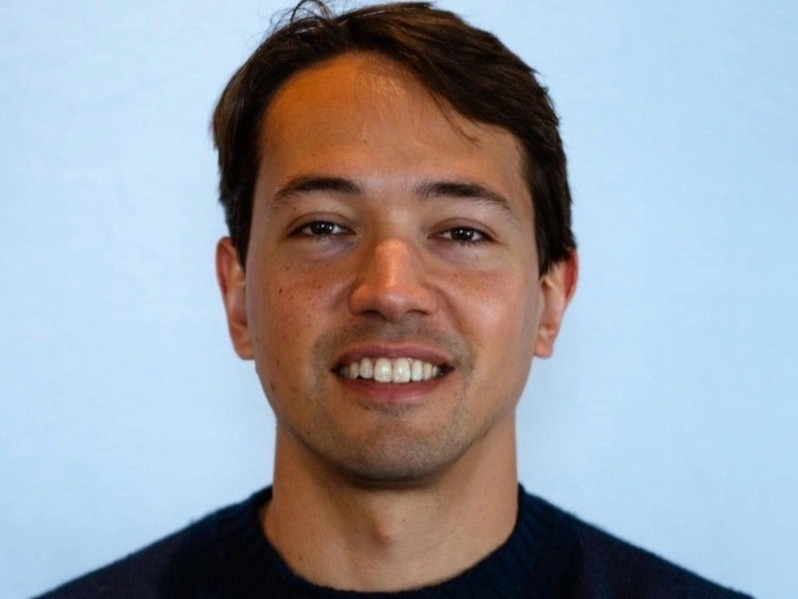
Francesco Agosti Is Making the Wallet Disappear
The Phantom co-founder has spent a decade turning complicated systems into ordinary software. His hardest trick is making crypto feel less like crypto - without taking control away from the user.
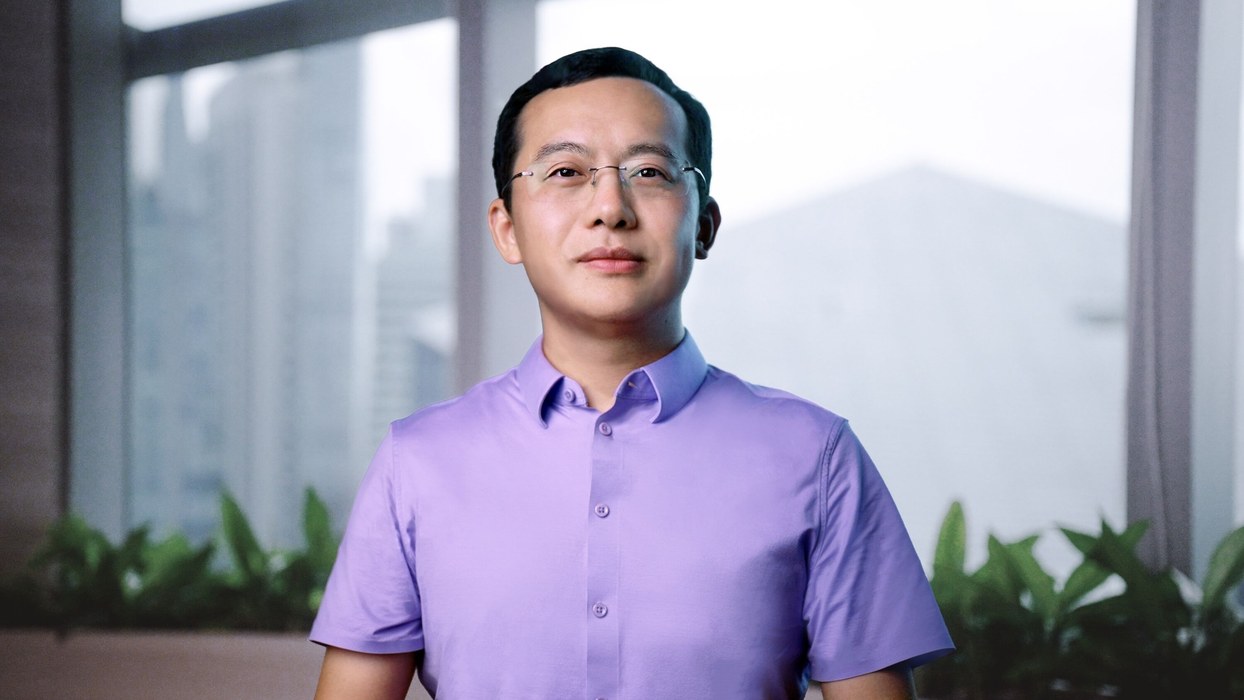
Star Xu Built an Exchange. Now He Wants the Exchange to Disappear.
The physicist-turned-founder spent a decade building one of crypto's large centralized exchanges. His next wager is a peculiar one: that trust will come from stronger rules, better machinery and giving customers less reason to leave their assets with him.
EMURGO built Cardano’s front door. Now it has to help users leave.
The company behind Yoroi spent years turning Cardano into something people could use. A wallet security incident has put that commercial mission through its hardest test.
Blockchain.com sold financial freedom. Then came a $270 million lesson.
A Bitcoin search tool grew into a wallet, a trading business and an institutional lender. Its journey toward a proposed IPO reveals how much changes when a company built around holding your own keys starts extending credit.
Milo Built a Mortgage for People Rich in Bitcoin and Poor on Paper
Traditional underwriting can look straight through a seven-figure wallet. Milo built a 30-year loan around that blind spot - and learned that the hard part was not crypto, but trust.
Ledger Put a Bank Vault in Your Pocket. Now It Wants to Guard Your AI.
The French hardware company made self-custody feel like a consumer product. Its next challenge is broader: becoming the human approval layer for money, identity and autonomous software.
The Exchange That Ripped Its Own Name Off the Wall
It dropped the "E," paid the fine, opened in San Jose, and put its reserves on a Merkle tree. Inside OKX's bet that self-custody - not the exchange - is the actual product.

The Company Betting the Future of Finance Runs on Bitcoin
Adam Back's hashcash sits inside the Bitcoin whitepaper. A decade later, the company he co-founded is trying to build the rails everyone else runs on - sidechains, Lightning nodes, hardware wallets, and a satellite that beams the blockchain to Earth.
OpenSea
The company that taught millions to browse NFTs is rebuilding itself as a front door to the entire onchain economy. Its second act stretches from digital art to tokens, perps and stock-linked assets - without taking custody of the wallet.

Unchained
The Austin company is betting that the people with the most bitcoin want to keep holding their own keys - and still borrow, retire, trade, and pass it on like everyone else.

Coinbase
How a Y Combinator startup that let people buy $5 of Bitcoin became the first crypto company in the S&P 500 - and why it now wants to be the exchange for everything.
Karsa
Karsa is a stablecoin neobank that gives people in emerging markets a global dollar account. Users can deposit local currency, save in dollar-denominated stablecoins, receive international payments, cash out to local banks, and spend abroad with a card - without needing a traditional US bank or any crypto knowledge. The product hides the complexity of self-custody wallets and a peer-to-peer stablecoin network behind a familiar banking interface, targeting the roughly one billion people who live under high inflation and capital controls.
Kontigo
Kontigo is a USDC-based neobank built for Latinos in the U.S. and Latin America. It pairs a self-custody stablecoin wallet with a card, no-fee cross-border transfers, yield on balances, and an AI banker over WhatsApp - aiming to give people in high-inflation economies a dollar account that works across borders. Founded in 2023 and part of Y Combinator's Summer 2024 batch, it reported roughly 1 million users and over $1 billion in payment volume before raising a $20 million seed round in December 2025.

Slingshot
Slingshot is a San Francisco-based crypto trading app that lets people buy, sell, and swap hundreds of thousands of tokens across multiple blockchains from a single USDC balance - hiding the usual friction of wallets, bridges, and gas fees behind a clean consumer interface. Founded in 2020 by Coinbase alum Clinton Bembry, it raised roughly $18M through a Ribbit Capital-led Series A and was acquired by NFT marketplace Magic Eden in April 2025.

Thesis*
Thesis* is a Bitcoin-focused venture production studio founded in 2014 that builds companies and protocols in-house rather than investing in outside teams. Operating under the banner "Money is power, Bitcoin is empowerment," it has incubated a portfolio spanning Bitcoin infrastructure and consumer finance - including tBTC (a decentralized, trust-minimized bridge that tokenizes Bitcoin on Ethereum), Mezo (an on-chain Bitcoin banking layer backed by the MUSD stablecoin), Fold (a Bitcoin rewards app), Acre (Bitcoin staking), and Taho (a community-owned web3 wallet). Led by CEO Matt Luongo, Thesis raised a $21 million Series A in 2021 and has become one of the most prolific studios building Bitcoin-native financial products.

Alpen Labs
Alpen Labs is a Bitcoin infrastructure company building Strata, a zero-knowledge (ZK) validity rollup and bridge that lets people borrow, earn, and transact in dollars directly on Bitcoin - without wrapped tokens or custodians. Founded in 2022 by a team of MIT alumni, the company uses ZK cryptography to bring programmable smart contracts and DeFi-style financial products to Bitcoin while preserving its security and decentralization.
Cubist
Cubist is a security-first Web3 infrastructure company that builds hardware-backed key management and confidential compute for digital assets. Its flagship platform, CubeSigner, keeps cryptographic keys sealed inside secure hardware (HSMs and AWS Nitro Enclaves) while giving developers low-latency signing through revocable sessions and a programmable policy engine - resolving the old tradeoff between cold-wallet security and hot-wallet speed. Founded by applied cryptographers and security researchers from Carnegie Mellon and UC San Diego who designed primitives underlying Ethereum and Avalanche, Cubist serves staking providers, DeFi protocols, bridges, and institutions building on internet capital markets.

Normal
Normal is a Chicago-based crypto company building a non-custodial wallet and investment protocol on the Stellar blockchain. Its app lets everyday users buy crypto, earn yield on USDC savings (routed through the Blend lending protocol), and swap assets with sub-second settlement and sub-cent fees. Beyond the wallet, Normal is building an on-chain 'investment layer' of diversified crypto index tokens - a Top 5 index, plus AI, DeFi, RWA and meme baskets - aiming to make holding a slice of the whole crypto market as simple as opening a savings account. The company's stated goal is blunt: 'make crypto normal.'

Riad Wahby
Riad Wahby is the co-founder and CEO of Cubist, a key management infrastructure company building hardware-backed, policy-driven signing for Web3. He is also an assistant professor of Electrical and Computer Engineering at Carnegie Mellon University and an applied cryptographer known for co-inventing the proof systems Lasso, Hyrax, and Brakedown and co-authoring the BLS signature standard (RFC 9380) used across Ethereum, Avalanche, and other chains. Before academia and entrepreneurship he spent a decade designing analog and mixed-signal chips at Silicon Labs and researched cryptography at Algorand.
Edge
Edge is a San Diego company building a self-custody, privacy-first mobile wallet for buying, storing, swapping and spending more than 120 cryptocurrencies. Founded in 2014 as Airbitz and rebranded to Edge in 2018, it pioneered a username-and-password login model backed by client-side encryption and a zero-knowledge architecture, so private keys and account data never leave a user's device unencrypted. The same security layer is offered to developers as the Edge Login SDK.

Ostium
Ostium is an onchain perpetuals exchange built on Arbitrum that lets anyone long or short real-world assets - stocks, commodities, indices, forex and crypto - directly from a self-custodial wallet, with up to 200x leverage and no broker in the middle. Founded by Harvard classmates and former Bridgewater hands Kaledora Kiernan-Linn and Marco Antonio Ribeiro, Ostium uses synthetic perpetuals and a custom oracle system to bring traditional markets onchain. It has processed tens of billions in cumulative trading volume and raised $27.8M total, including a $20M Series A co-led by General Catalyst and Jump Crypto in December 2025.