robotics-as-a-service
(19)
Rugged Robotics puts the blueprint under your boots
A robot that prints on concrete is an agreeable novelty. Rugged Robotics has built a business around the harder part: getting every trade to build from the same instructions.
Bossa Nova taught robots to read shelves. Walmart changed the assignment.
A shelf-scanning robot made the supermarket legible to software. Bossa Nova’s rise, Walmart reversal, and unusually candid afterlife reveal how quickly a customer can change the meaning of a good invention.
Nala Robotics and the problem of the last dirty plate
A robot can fry a wing. Nala Robotics wants it to sauce the wing, box the pizza and put away the dishes, too. The interesting part is what happens between those tasks.
The Parking Lot Changed the Robot
A college project meant to tend every yard found its real job in a parking lot. Viabot now sells the unglamorous pleasure of a clean commercial property, night after night.
The Empty Shelf Has a Witness
Zippedi sends robots down retail aisles to turn missing products and wrong prices into work a human can actually finish. A pilot in Japan shows both the promise and the unglamorous discipline required to make it useful.
The Robot That Found the Store's Missing Truth
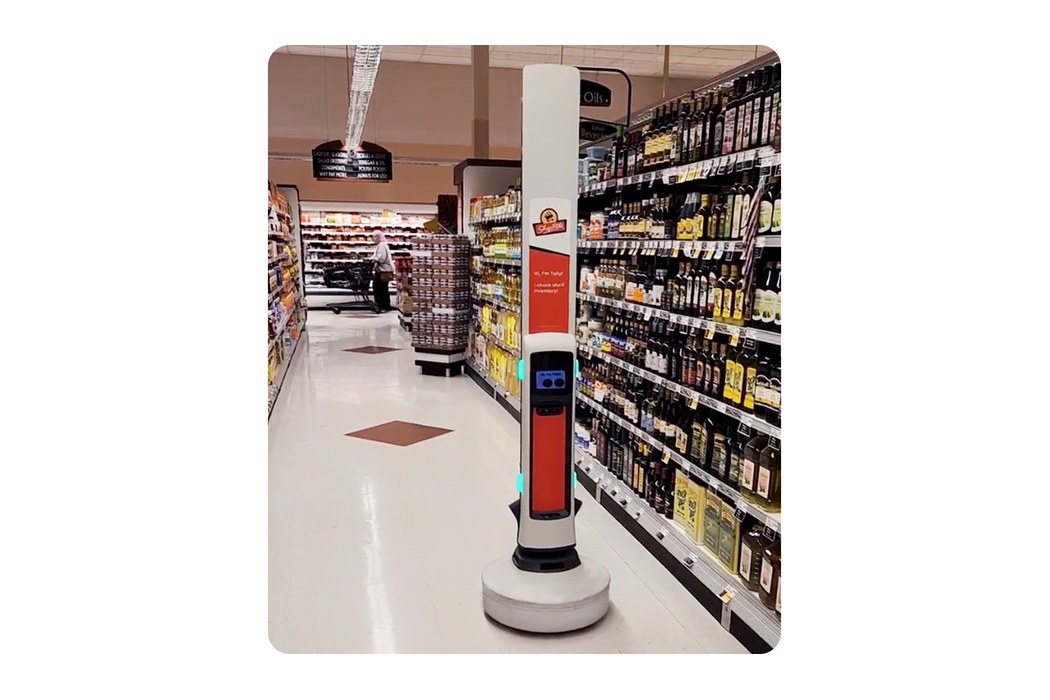
A polite machine named Tally patrols the cereal aisle. The interesting part is not the robot - it is what happens when a retailer can no longer pretend the shelf matches the spreadsheet.
The Robot That Learned to Take the Elevator
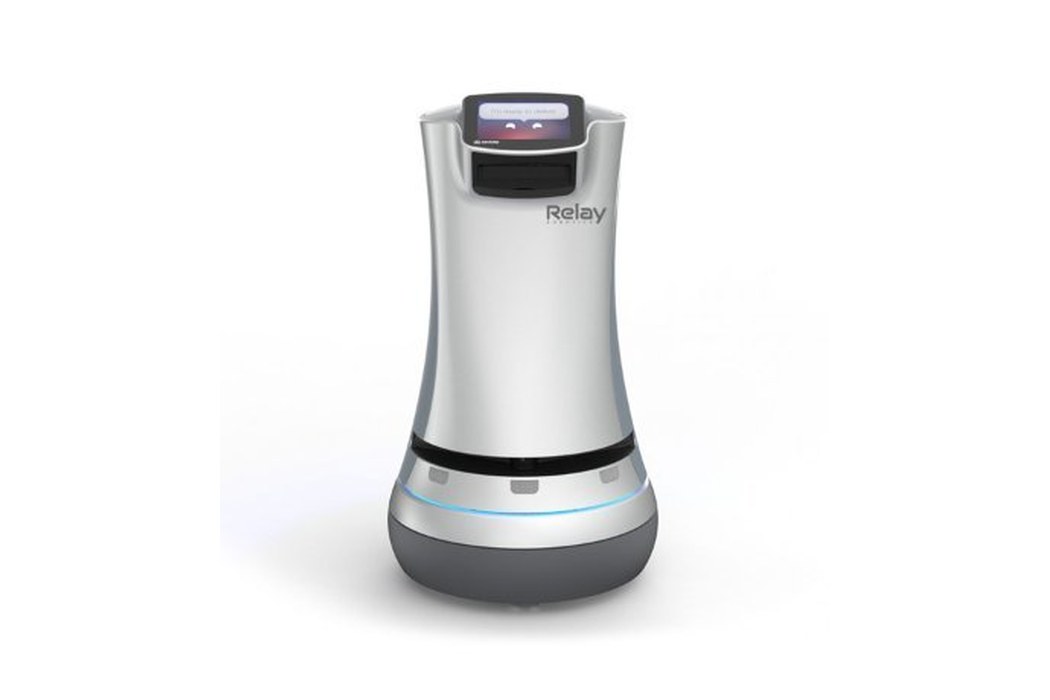
Relay Robotics discovered that the glamorous future of automation depends on a humble skill: getting a locked box from one floor to another, every time, without making the humans wait.

Gregory Penza Built a Robot for the Streets Nobody Wants Dug Up
A failed sewer robot gave the Long Island contractor a useful grievance. He answered with machines that work inside live utility pipes - and a company built around fewer holes, shorter closures and better Tuesdays above ground.
The Robot in the Gas Main: How ULC Turned Fewer Holes in the Street Into a $40 Million Business
Utilities do not buy robots because robots are charming. They buy fewer excavations, shorter closures and safer work - and ULC Technologies learned to sell exactly that outcome.
BeeX
The Singapore deeptech cutting the tether on underwater inspection - autonomous drones that survey ships, wind farms and seabeds without divers, ROV pilots or a support vessel overhead.
InLoop Robotics
InLoop Robotics deploys intelligent bimanual robotic arms into warehouses as a service - handling packing, kitting, and order fulfillment for a flat monthly fee with no upfront hardware cost. Instead of waiting for a perfect model, InLoop ships imperfect policies into real warehouses, detects failures in real time, recovers automatically when it can, and hands off to a remote human operator when it can't. Every intervention becomes training data, so the system keeps getting faster and cheaper with each order.
RoboDock
RoboDock is a San Francisco robotics startup (Y Combinator W26) building the physical automation layer for electric and autonomous vehicle depots. Its robots plug in chargers, align to charge ports with vision guidance, and run post-trip inspections using visual and thermal sensing - turning depots that still rely on people walking rows of vehicles into self-running infrastructure. Founded in 2025 by Stanford classmates Zinny Weli (CEO) and Celine Wang (CTO), the company offers its system as a retrofit that drops into existing facilities without layout changes.

GreyOrange
GreyOrange is a warehouse-automation company that builds AI software and mobile robots to run fulfillment operations for retailers, distributors and 3PLs. Its GreyMatter fulfillment operating system continuously optimizes decisions across a distribution center, orchestrating fleets of Ranger mobile robots, people and existing equipment to move goods, pick orders and manage inventory. Founded in India in 2011 and now headquartered in Atlanta, the company sells its technology outright or as a monthly robotics-as-a-service subscription, and has raised more than half a billion dollars from investors including Mithril Capital, Tiger Global and Blackstone-adjacent funds.
Verdant Robotics
Verdant Robotics is a Hayward, California agtech company building AI-driven precision farming robots. Its flagship SharpShooter is a tractor-pulled implement that uses computer vision and a bank of aiming nozzles to treat individual plants - weeding, thinning, fertilizing and spraying with millimeter accuracy - instead of blanketing whole fields. The pitch to growers of high-value specialty crops like carrots, lettuce and onions: cut chemical inputs by more than 96%, reduce hand-weeding costs, and collect plant-level data along the way. Founded in 2018 and led by roboticist Gabe Sibley, the company raised a $46.5M Series A in 2022 and commercially launched the SharpShooter in 2024.
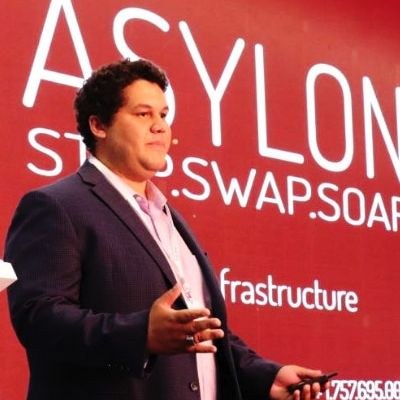
Damon Henry
Damon Henry is the CEO and co-founder of Asylon Robotics, a Philadelphia-area company building an American-made robotic perimeter security platform that pairs autonomous aerial drones, robot dogs, and human-in-the-loop AI into a Robotics-as-a-Service offering. An MIT-trained aeronautical engineer who worked at GE, Boeing, and Johns Hopkins APL before founding the company in 2015 with two dorm roommates, Henry has grown Asylon into a company that has flown more than 100,000 security missions for Fortune 500 firms and the Department of Defense, and raised a $26M Series B led by Insight Partners in 2025.
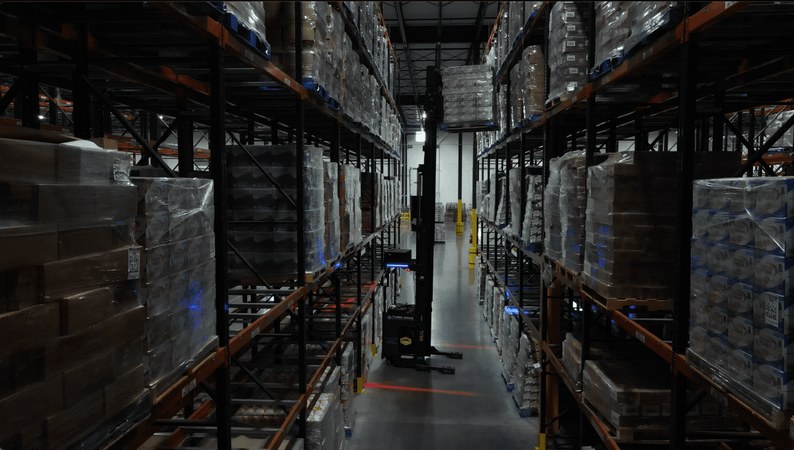
Third Wave Automation
Third Wave Automation builds autonomous high-reach forklifts powered by its Shared Autonomy Platform, which lets a single warehouse vehicle switch between fully autonomous, remote-assist, remote-operated, and manual modes. Founded by robotics veterans from Toyota Research Institute and Google, the Union City, California company pairs AI-driven reach trucks with its Armada fleet management software so one remote operator can supervise up to ten machines - helping 3PLs and warehouse operators address labor shortages, improve safety, and reach payback in under a year.
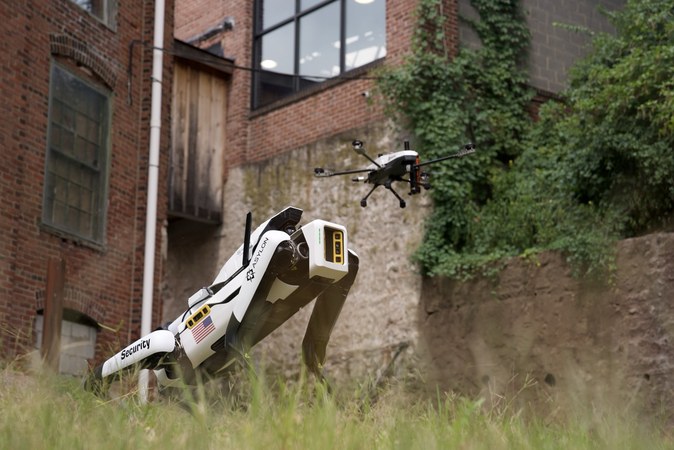
Asylon Robotics
Asylon Robotics builds US-made robotic security systems that pair autonomous aerial drones with ground robots (its Spot-based DroneDog) and AI command software to automate perimeter patrols for corporate campuses, logistics hubs, and critical infrastructure. Sold as Robotic Security as a Service and backed by a 24/7 Robotic Security Operations Center, the platform has run more than 250,000 missions across deployments in 15 U.S. states for customers including Ford, Bayer, GXO, Kia, and Mercedes-Benz Stadium.
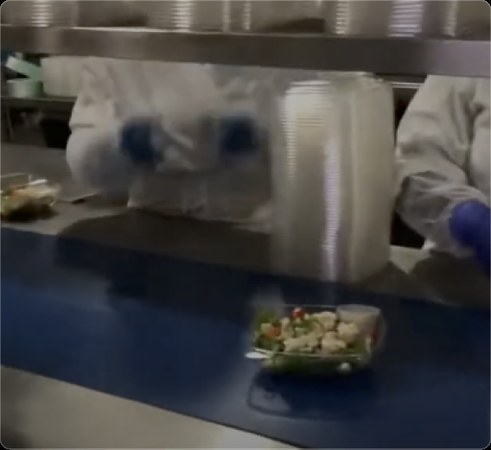
Chef Robotics
Chef Robotics builds AI-powered robotic arms that assemble meals in food production plants. Its ChefOS platform powers Robotics-as-a-Service deployments at customers like Amy's Kitchen, Sunbasket, Chef Bombay, and Cafe Spice, having helped produce 70+ million servings across North America.
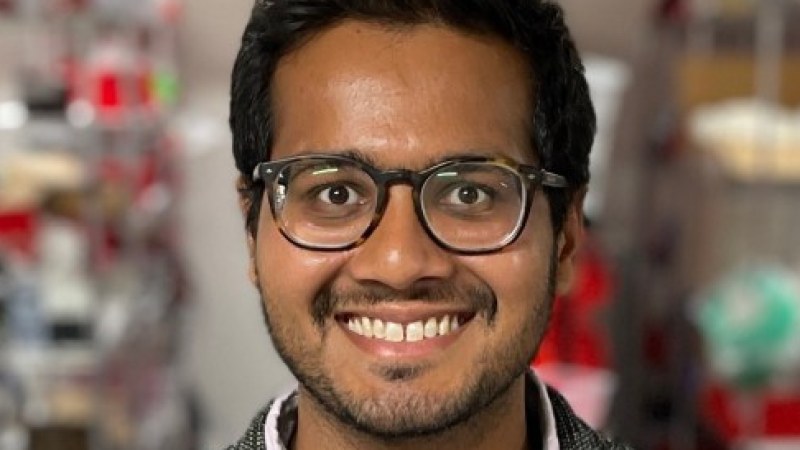
Rajat Bhageria
Rajat Bhageria is the founder and CEO of Chef Robotics, a San Francisco-based company building AI-enabled robotic systems for flexible food assembly automation. After founding accessibility tech startup ThirdEye (acquired 2017) and co-founding pre-seed VC fund Prototype Capital, Bhageria launched Chef Robotics in 2019 to tackle the labor crisis in food manufacturing. The company has deployed robots across 12+ facilities in the US, Canada, and Europe, completing over 100 million food servings as of April 2026, backed by $72.7M in total funding. A Forbes 30 Under 30 honoree (2022), Bhageria is also a published scientist, author, and prolific writer with bylines in Forbes, TechCrunch, and HuffPost.