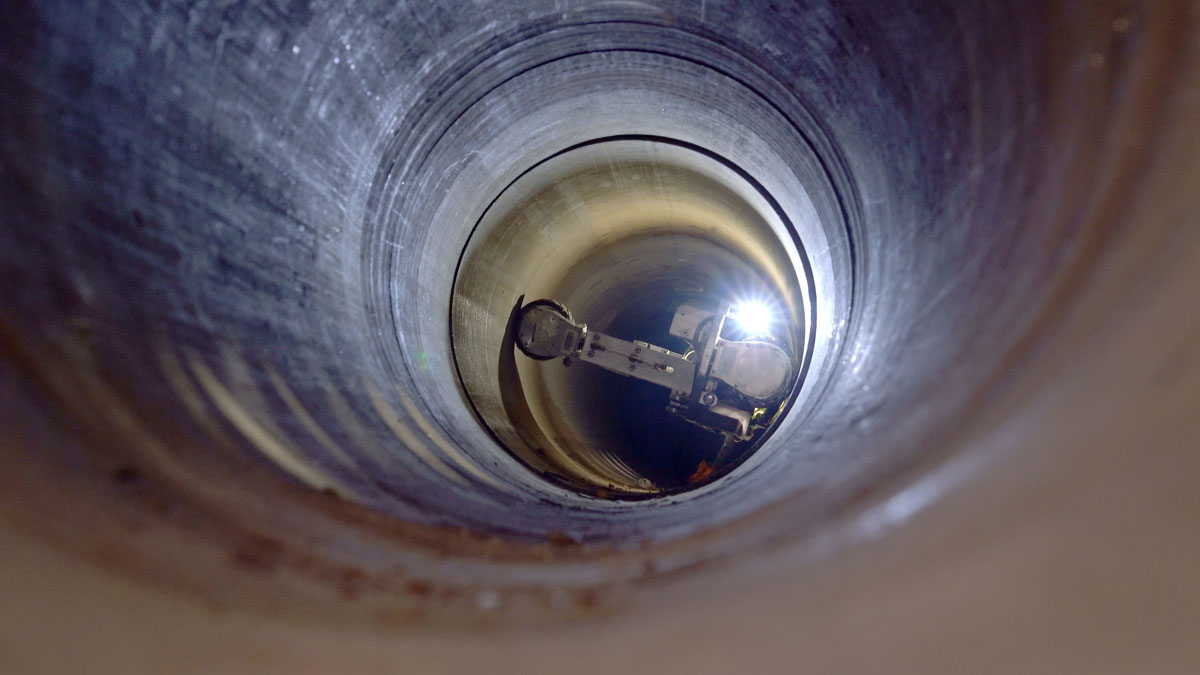
The most revealing photograph of ULC Technologies is not a sleek robot posing on a white floor. It is a view down a cast-iron gas main: damp metal, hard shadows and a machine staring back with one bright eye. This is where the Hauppauge, New York, company has built its reputation. Its robots inspect and repair infrastructure while the pipe remains live, sparing a utility from digging up every suspect joint and sparing everyone else from the barricades, noise and traffic that follow.
Founded by Gregory Penza in 2001 as ULC Robotics, the company sits in a less theatrical corner of automation. Its customers are gas and electric utilities, renewable-energy operators, construction companies and industrial owners. They do not need a robot that can dance. They need one that can cross an old seal in a pressurized main, locate a plastic service line from inside the pipe, scan for buried cables, or recover gas that would otherwise be vented.
ULC's portfolio now stretches from pipeline crawlers and CISBOT joint-repair crews to ground-penetrating radar, drawdown compressors, aerial inspection, robotic excavation and bespoke engineering. The range looks unruly until the common thread appears: expensive physical work in places where access is difficult, mistakes are dangerous and public patience is short.
The product is the hole you never dig
CISBOT is the center of the story. The system enters live cast-iron distribution mains and renews leaking or vulnerable jute and mechanical joints from inside. ULC says a deployment can seal up to 110 joints from one small excavation, and that its field teams have sealed more than 66,000 joints since commercial work began in 2010. Gas service stays on. A street that might have been opened repeatedly can remain largely intact.
This changes the purchasing conversation. ULC is not asking a utility manager to admire a machine. It is asking them to compare two work plans. A testimonial published by the company quotes a Con Edison representative putting a CISBOT job on West End Avenue at $400,000. The same work by the previous method was estimated at $1.5 million to $1.8 million. Even using the low end, that is roughly a 73 percent reduction.
“CISBOT enables us to keep the roads open, have the gas on the entire time, and it massively reduces the duration of the work.”J. Rowing / Westminster Council UK
The harder-to-copy decision was to operate this technology as a service. SPX, which acquired ULC in 2020, explicitly described CISBOT as a recurring robotics-as-a-service business. Specialist ULC crews bring the robot, run it and deliver the result. That removes a common hard-tech sales problem: asking a customer to buy expensive equipment it will use irregularly, train people to operate, maintain and persuade regulators to accept.
From strange prototype to ordinary work order
ULC's other business is custom research and development. Engineers in mechanics, electronics, sensors, software and machine learning work with customers on systems that do not yet exist. The company's stated promise is a path from R&D to “business-as-usual.” That phrase is more important than it sounds. Industrial innovation dies constantly in the gap between a successful trial and a process that procurement, operations and safety teams will repeat.
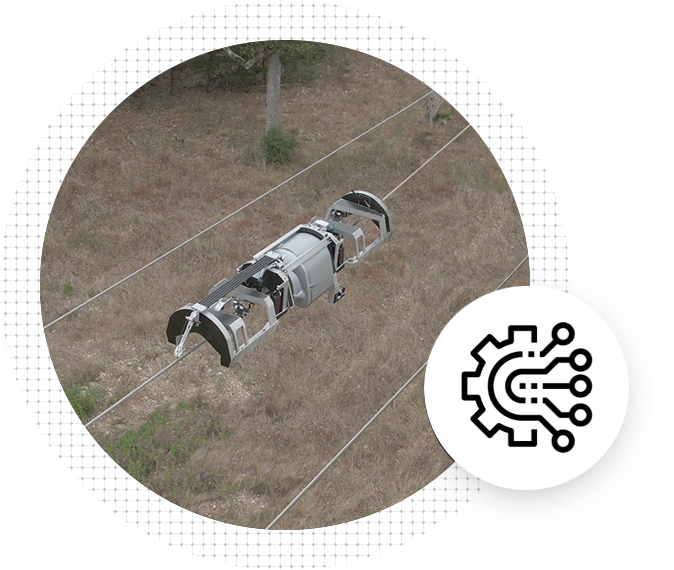
Consider Bombyx, the fiber-installation robot developed for Meta. The brief was peculiar: travel along energized medium-voltage conductors, carry fiber, balance, and cross obstacles such as pin and post insulators. Meta said it selected ULC after evaluating concepts because of the company's design and decade-plus of experience with high-reliability utility robots. The proposed machine could install about one kilometer of fiber in 90 minutes while two utility workers monitored it below. It used grippers, machine vision, thruster fans and separate drive, lift and rotation systems - part tightrope walker, part mechanical silkworm.
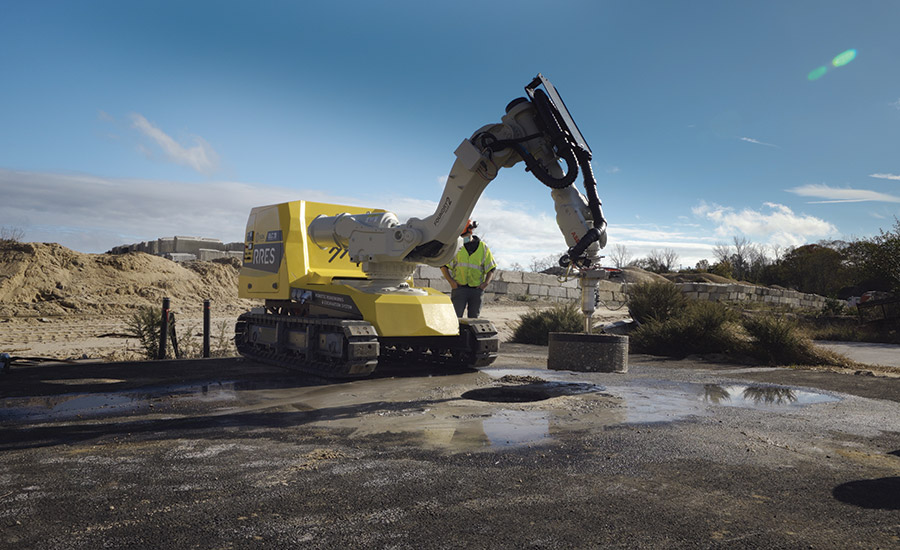
The same pattern appears in RRES, an all-electric robotic roadworks system developed with the British gas network SGN using £7.2 million of Ofgem project funding. Sensors first map what lies underground. A robotic arm then cuts the surface, lifts a core, excavates with softer tools, and replaces the road section. During UK field trials, the scanner found crossing pipes despite limited site records and the system exposed the target through a keyhole. The project also generated narrower products, including the AUSMOS mapping robot. A giant system can be valuable even when its most commercial children leave home first.
This outdoor emphasis explains why ULC's expertise travels across apparently unrelated products. A pipeline crawler, a drone and a tracked excavator share few parts, but they share ugly operating conditions. Rain interferes. Maps lie. Communications drop. Operators wear gloves. Equipment must travel, pass safety reviews and recover gracefully when a sensor disagrees with reality. ULC has described its engineers working alongside field technicians and robot operators, a feedback loop that a laboratory-only competitor must manufacture later. The lesson is not to own every technology. It is to own the place where technologies become dependable enough for a crew with a schedule.
The acquisition, and the forecast that broke
By September 2020, ULC had about 160 employees and approximately $40 million in revenue over the preceding 12 months. SPX paid $89.2 million net of $4 million in acquired cash. The sellers could receive up to another $45 million if operating and financial milestones were achieved. SPX liked the recurring CISBOT revenue, the utility customer base and an R&D team that could strengthen its broader location-and-inspection portfolio.
Then the plan missed. In the third quarter of 2021, SPX concluded the contingent-payment milestones would not be reached. It reversed a $24.3 million earnout liability and recorded a matching impairment, citing the missed targets and lower anticipated cash flows. In 2022, SPX recorded another $12.9 million impairment related to ULC goodwill and trademarks.
ULC built recurring field revenue, reached meaningful scale and kept commercializing utility products.
Post-acquisition milestones failed, forecast cash flows fell and SPX impaired part of the purchase value.
That is not evidence that the robots failed first. It is evidence that a credible product can coexist with an overconfident growth model. Hard-tech forecasts stack assumptions: project timing, utility budgets, field utilization, regulatory approval, hiring and manufacturing. Delay any two and a spreadsheet can age faster than a cast-iron main.
What changed minds in the market was more concrete. CISBOT accumulated deployments. Customers could measure avoided excavation and disruption. PSEG Long Island expanded drone work after a pilot. SGN took robotic roadworks into field trials. In 2025, ULC announced the first commercial contract for its X-ID acoustic cross-bore system, launched a smaller drawdown compressor and disclosed a solar-construction project with Rosendin. In 2026, it announced a CISBOT operator qualification with the Northeast Gas Association. The company kept turning experiments into named jobs.
What to steal - and where it breaks
Founders can copy the sequence without building a pipe robot. Start with a problem whose current cost can be written on one line. Choose a customer sophisticated enough to co-develop and demanding enough to expose weak assumptions. Sell the result as a service while the equipment is scarce and the workflow still needs specialists. Capture field data. Standardize training. Only then decide which components deserve to become products.
The positioning matters too. ULC talks about fewer excavations, shorter road occupation, lower emissions and safer crews. Artificial intelligence appears as a means - for recognizing underground assets or processing inspection data - rather than a category in search of a buyer. The customer can defend the purchase in a rate case because the benefit resembles an operating outcome, not an innovation trophy.
The model has boundaries. It works best where the installed infrastructure is dense, digging is costly, customers have repeat work and regulation permits internal intervention. It weakens when excavation is cheap, the pipe is too degraded to rehabilitate, project volume cannot support specialized crews, or a utility insists on owning equipment it rarely uses. Custom R&D also becomes a trap if every contract remains a one-off and reusable software, tooling and operating knowledge never accumulate.
ULC is different from a pure equipment maker because it carries inventions into the street. It is different from an ordinary contractor because it designs proprietary machines and sensors. And it is different from a general robotics lab because its field is unusually specific: infrastructure that society notices most when it leaks, breaks or blocks traffic.
There is a charming mismatch in that proposition. The machines are novel; the pitch is almost boring. Keep the gas on. Make one hole instead of twenty. Send fewer people into danger. Finish sooner. After two decades, ULC's most defensible technology may be knowing that a utility will pay for the future only when it behaves like a better Tuesday morning.