RoboDock and the Last Manual Job in a Driverless World
The cars learned to drive themselves. The depot didn't. RoboDock, a Y Combinator W26 startup, builds robots that plug in, inspect, and manage electric and autonomous fleets - closing the gap where a person still walks the rows with a cable.
Picture a depot at two in the morning. A fleet of electric cars rolls in from a day of driving with no one behind the wheel. They parked themselves. They navigated traffic, merged, braked, and idled at lights, all without a human touching the controls. Then they stop. And someone in a reflective vest walks down the row with a charging cable, bends over each vehicle, and plugs it in by hand.
That image is the entire pitch for RoboDock. The company, part of Y Combinator's Winter 2026 batch, noticed that the autonomy industry automated the glamorous half of the problem and left the other half to people with clipboards. Cars can drive themselves. Depots cannot yet run themselves. RoboDock builds the robots that close that gap.
Its one-line description - "the robotics layer powering autonomous EV and AV depots" - sounds abstract until you count the vehicles. A fleet of a thousand cars needs a thousand plug-ins a night, every night, plus inspections, plus the shuffle of moving vehicles on and off chargers. At that scale, the person with the cable is not a line item. They are the bottleneck.
01 / The ProblemThe parking lot autonomy forgot
Self-driving development pours money into the road: perception, planning, the long tail of edge cases a car might meet at an intersection. Comparatively little goes into what happens after the shift ends. And the after-shift work is expensive in ways that do not show up in a demo video.
RoboDock puts numbers to it. By its own accounting, a single depot burns roughly $900,000 a year in labor just to plug vehicles in and unplug them. Missed or delayed maintenance - a tire, a sensor, a fault a human inspector didn't catch at 2am - can cost up to $650,000 a year in vehicle downtime. And building a brand-new charging depot from scratch runs past $8 million in capital and two to three years of construction.
Put those together and you get a strange contradiction: fleets of self-driving cars that still depend on human hands the moment they come home. The more a fleet scales, the worse the math gets. RoboDock's bet is that the depot, not the car, is where the next real cost is hiding.
02 / What It DoesA robot that takes care of robots
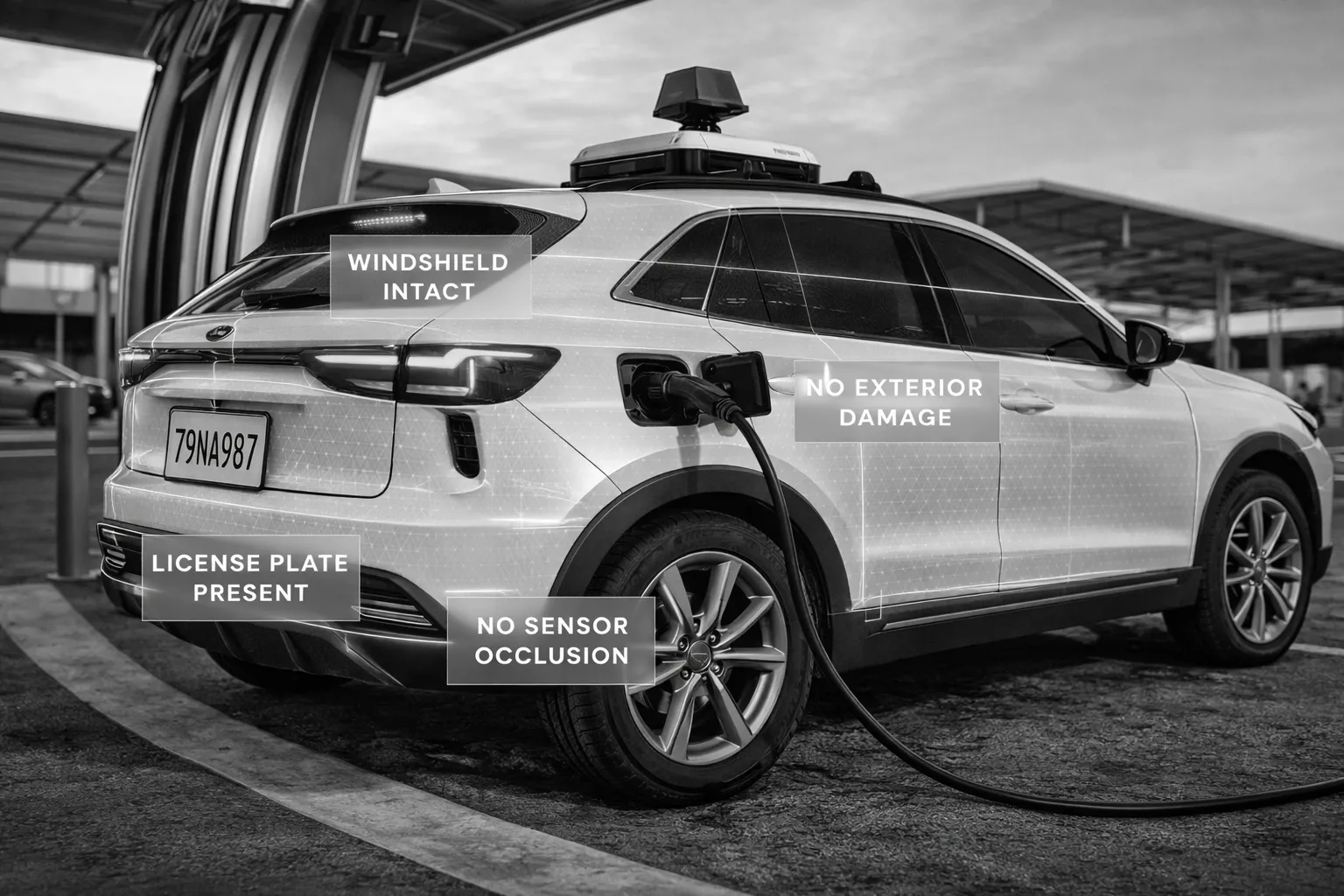
The RoboDock system does four things in sequence, and it is easiest to follow as a loop. A vehicle arrives. The system identifies it, finds the charge port, aligns a robotic connector with vision guidance, and plugs in - then verifies that power is actually flowing before it walks away. While the vehicle is docked, cameras and thermal sensors run a post-trip inspection to flag anything that looks off. Every event feeds back into the model, so the next alignment is a little sharper than the last.
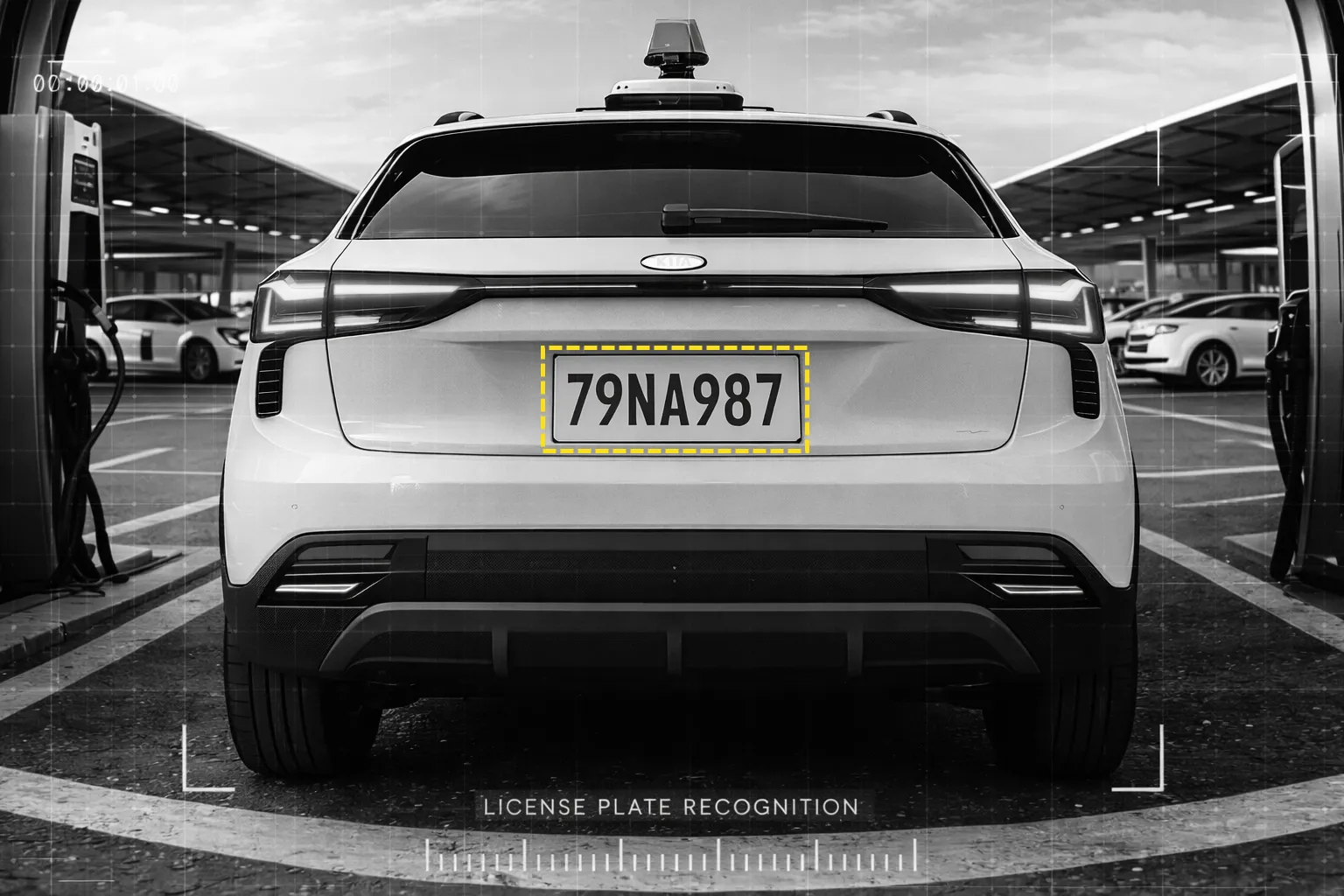
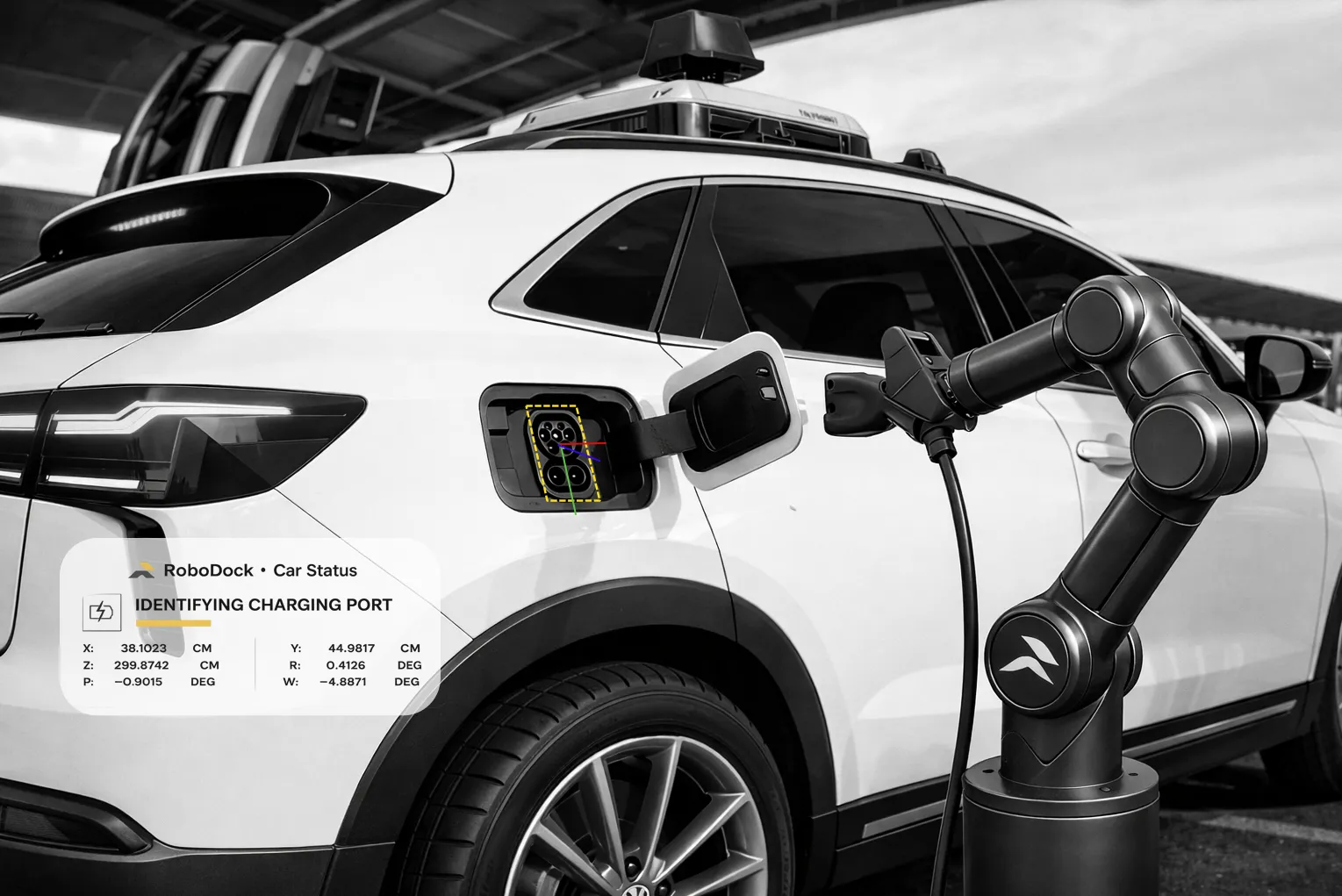
The whole thing is presented back to operators through a real-time fleet dashboard: which cars charged, which flagged an issue, how fast the depot is turning vehicles around. It is, in the company's phrase, an attempt at "turning manual cost centers into self-running infrastructure."
03 / The DifferenceChange nothing, add a robot
The most telling thing about RoboDock is what it does not ask of a customer. It works with existing depots, existing chargers, and existing vehicle types. No new construction. No layout changes. No pausing operations to rip out a facility and rebuild it around a robot. The system is designed as a retrofit that drops into a live site.
That single constraint - fit into what's already there - is what separates a science project from a business a fleet operator can actually say yes to. Weighed against the $8 million and multi-year timeline of a new depot, "we install into the one you have" is not a feature. It is the pitch.
Why the retrofit matters
Robotic and wireless charging efforts often assume a purpose-built site. RoboDock's design assumption is the opposite: the depot already exists, the chargers are already installed, and the vehicles are already parked there tonight. The robot adapts to the yard, not the other way around.
04 / The FoundersFrom drones and home robots to depots
RoboDock's two founders both spent years on the exact problem the company now sells: getting autonomous machines to power themselves reliably. They met at Stanford about seven years ago.
Zinny Weli, the CEO, designed charging systems for Amazon's home robot at Lab126, then led the autonomous charging tower for Zipline's delivery drones from concept to multi-city deployment in the US. Two very different machines - one that rolls around a living room, one that flies medicine across a region - that both had to dock and recharge without a human helping. Celine Wang, the CTO, worked at Plus as a mechatronics engineer retrofitting autonomy onto semi-trucks: sensor integration, drive-by-wire, fleet maintenance, field testing.
It is a tidy fit between resume and company. The hard, unglamorous knowledge of how a robot physically connects to power - and how it fails in the field - is exactly the knowledge a depot-automation company lives or dies on.
05 / Business ModelRobotics you rent, not buy
RoboDock sells its system as Robotics-as-a-Service. Rather than asking a fleet to make a large hardware purchase, it deploys the robots into a depot and charges a subscription, with a referenced entry point of $99 a month. The heavier value story sits on the savings: labor that no longer walks the rows, downtime avoided by catching problems early, and better use of the vehicles and chargers a fleet already owns.
On the company's own dashboard of claimed outcomes, the pitch reads like this:
Figures as stated by RoboDock; independent verification pending as pilots roll out.
The subscription framing does two things at once. It lowers the barrier for a fleet to try the system without a capital commitment, and it aligns RoboDock's revenue with the robots staying deployed and working - which only happens if the reliability is real.
06 / The MarketWhere a depot robot fits
RoboDock is aiming at operators of electric and autonomous fleets: robotaxi companies, delivery and logistics fleets, ports, and logistics yards - anywhere vehicles come home to a depot at scale. As of early 2026, with a team of three, the company is onboarding early pilot partners rather than shipping at volume.
There is company in the broader space. Robotic charging arms (Rocsys), wireless and inductive charging (WiTricity), and various automaker pilots all circle the problem of charging a car without a person. RoboDock's angle is to bundle charging, inspection, and fleet management into one retrofit layer built specifically for depots - and to let each charge event make the next one better through closed-loop learning. Its real competition, for now, is the status quo: the vest, the cable, and the walk down the row.
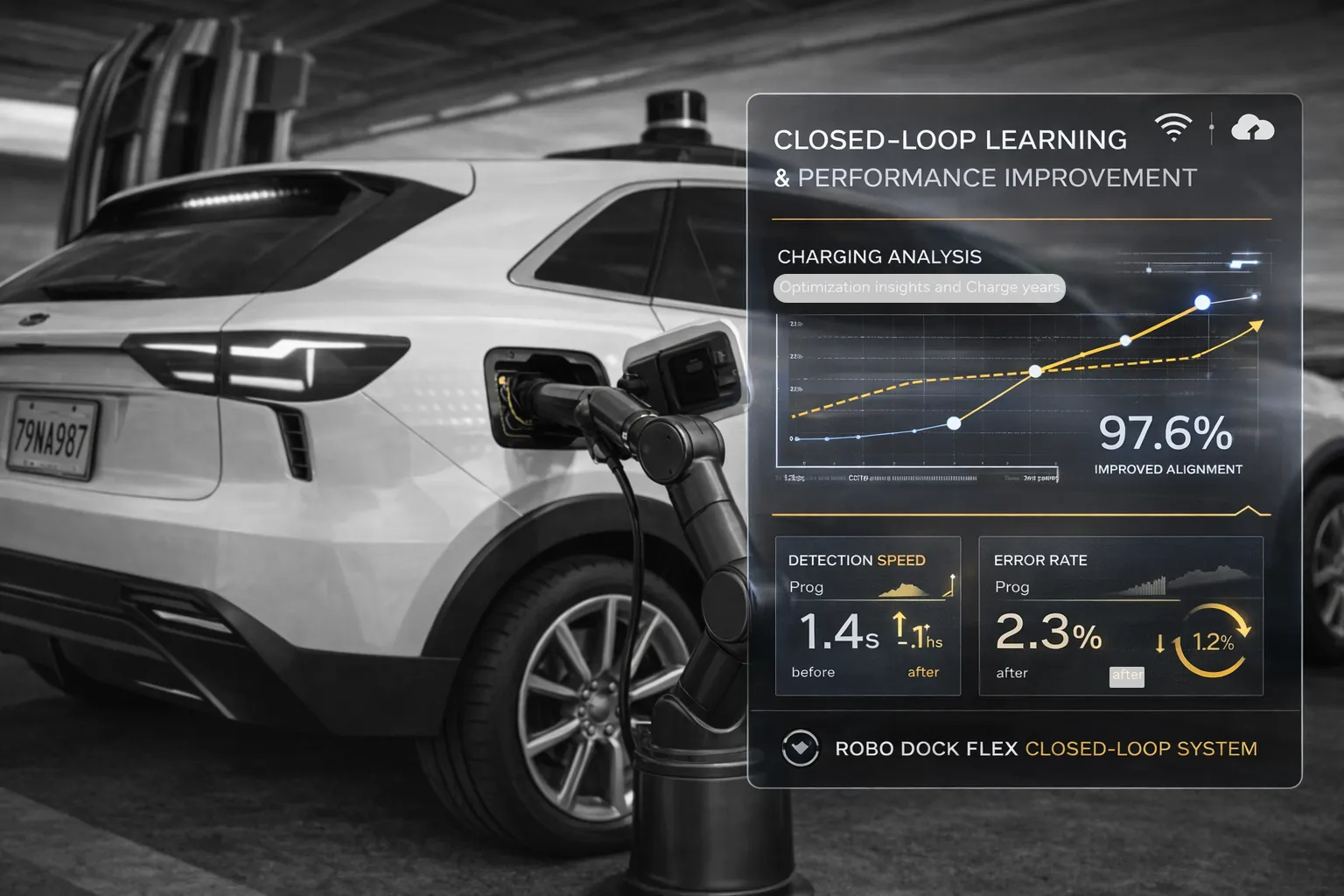
Whether RoboDock becomes the standard depot layer or one option among several will come down to something unglamorous: does the robot plug in correctly the ten-thousandth time, on a cold night, on a car it has never seen? That is the question the whole company is built to answer. The founders have spent their careers on exactly that kind of question. Now they get to answer it in public.