ios
(40)
ForeFlight made room for the pilot.
A weather tool for the first iPhone grew into a connected flight bag. Its useful trick was bringing the pilot’s scattered decisions onto the same screen.

Blake Watters and the work between the screens
Before Baselayer, Blake Watters created RestKit, helping iPhone developers turn web data into working apps. His career follows the often overlooked engineering that makes other people’s work possible.

Citizen puts the sirens on your screen
A banned app called Vigilante became a live map of neighborhood emergencies. Now Citizen is selling the same street-level awareness to the people paid to keep others safe.

Superfans.io wants your best customers to skip the queue
The company formerly known as Vajro turns Shopify stores into mobile apps for repeat buyers. Its wager: early access, live shopping, and a little recognition can give customers a reason to return.

Thunkable and the $65,000 app you can build yourself
A designer’s unaffordable quote reveals the wager behind Thunkable: give the person with the problem the tools to build the solution. Native mobile apps, visual blocks and AI prompts make that wager increasingly practical.
ArcTouch found the money in free apps
When App Store prices collapsed, two former college roommates changed who they charged. Their company now builds the apps behind airline journeys, fashion loyalty programs, and connected machines.

AppMakers USA and the App That Has to Work on Monday
A math game, a plumber’s payroll and a crashing video player reveal what this Los Angeles software shop actually sells: the engineering that starts where the demo ends.
Guardsquare makes your app harder to take apart
A free Java tool grew into a Belgian security business built around an awkward fact: your app runs on someone else’s phone. Guardsquare wants to make that a much less comfortable place for attackers.

Apple Sells You a Smaller World, and You Keep Buying It
It started in a garage and now runs on custom silicon, a services machine, and a billion-plus devices that all talk to each other. Here is how the walled garden actually works - and why leaving it feels like moving countries.
Adalo
Adalo is a no-code platform that lets anyone design, build, and publish database-driven native mobile apps and web apps - straight to the Apple App Store and Google Play - using a drag-and-drop visual canvas and AI-assisted building, without writing code. Founded in 2018 by David Adkin, Ben Haefele, and Jeremy Blalock and based in St. Louis, Missouri, Adalo has grown to hundreds of thousands of registered makers and now offers flat-rate pricing that stays fixed regardless of app usage.
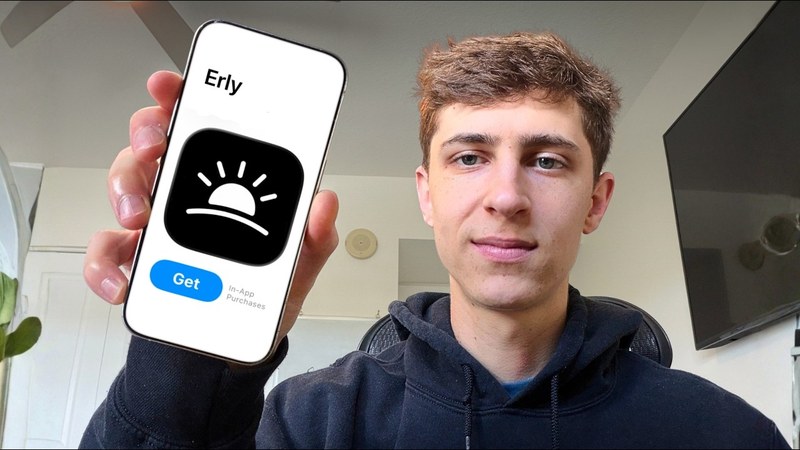
How Jake Built 'Early,' the Push-Up Alarm App Making $50,000 a Month
In this Starter Story episode, host Pat Walls interviews Jake, a 24-year-old self-taught developer and former accountant who built 'Early,' an iPhone alarm clock app where you must do push-ups to turn off your alarm. Launched at the end of 2025, the app went from zero to over $50,000 a month in just four months, racking up more than 200,000 downloads. Jake breaks down how he found and validated the idea, why he shipped an MVP in 19 days, how iOS 26's AlarmKit API made a reliable alarm app possible, and why influencer marketing and top-of-funnel views were the true secret to his growth.
Keepsafe
Keepsafe is a San Francisco privacy-software company that builds simple consumer apps for locking down personal data on phones. Its flagship Photo Vault - an encrypted locker for private photos and videos - grew to more than 75 million users, and the company has since expanded into a suite that includes App Lock, a private Browser with built-in VPN, and Unlisted burner phone numbers. Founded in 2012 by Zouhair Belkoura and Philipp Berner, Keepsafe's premise is that digital privacy should be as easy as closing a drawer.

Sekai
Sekai is a San Francisco Bay Area consumer platform where anyone can build software just by describing it. Users type a prompt and get a playable, shareable mini-app - a game, quiz, utility, poll or interactive story - in seconds, then play, remix and share what others make. Founded in 2024 by serial entrepreneur Lucky Zhang, Sekai (Japanese for 'world') began as an AI anime fan-fiction tool and pivoted into general-purpose app creation as AI coding models improved. By mid-2026 users had created more than 15 million mini-apps, with roughly 200,000 new ones a day, and the company had raised about $26 million across Seed and Series A rounds from Khosla Ventures, Connect Ventures, a16z speedrun, Mayfield and others.

Ad Hoc Labs (makers of Burner + Dialed)
Ad Hoc Labs is a Los Angeles-based independent mobile software company that builds communication tools giving people control over how they can be reached. Its flagship app, Burner, launched in 2012 as the original disposable second phone number - a privacy layer that lets users spin up, use, and delete alias numbers on demand. Its second product, Dialed, packages a business phone line, contact management, and marketing tools into one app for solopreneurs and micro-businesses. Founded by Greg Cohn and Will Carter, the company remains independent and remote, focused on utility and reliability over feature volume.

MixerBox
MixerBox is a Palo Alto-based super-apps company building a constellation of daily-essential mobile apps - from OnePlayer and FreecableTV to AlarmTunes, NewsDash and a suite of AI tools that became the largest single developer on the ChatGPT Plugin Store. Founded in 2012 by Taiwanese-Australian Harvard alum John Lai and backed by Y Combinator, the company has crossed 300 million downloads worldwide.

Raw Engineering
Raw Engineering is a San Francisco software products-and-services firm founded in 2007 that builds custom mobile apps, websites, SaaS products and cloud infrastructure for Fortune 500 enterprises, sports teams and startups. Best known as the lab that incubated and spun out the headless CMS pioneer Contentstack and the enterprise mobile platform Built.io (acquired by Software AG in 2018), the company today runs five centers of excellence and powers personalized Digital Fan Experience platforms for clients including the Sacramento Kings, Miami Heat and the NBA.
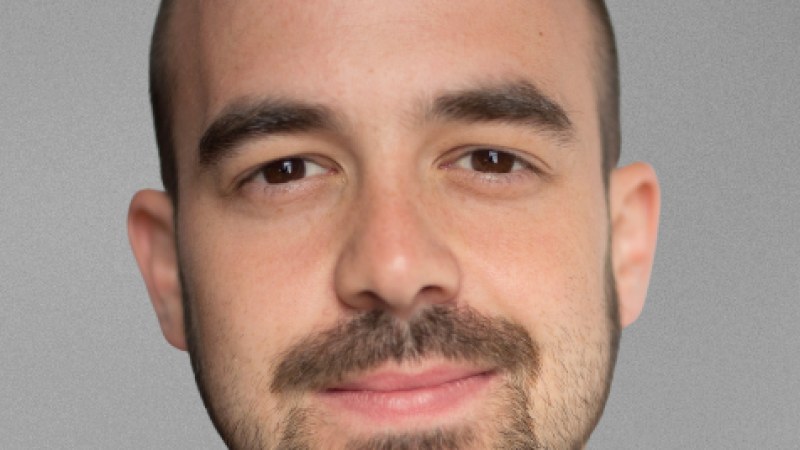
Benjamin Encz
Benjamin Encz is the CEO and Co-Founder of Ashby, a San Francisco-based AI-native recruiting platform used by companies like OpenAI, Shopify, and Snowflake. A German-born software engineer turned recruiting-infrastructure builder, he spent 80% of his time on recruiting operations as Director of Engineering at PlanGrid before co-founding Ashby in 2018. Under his leadership, Ashby has grown to 2,700+ customers, 380 employees, and $142.5M in total funding including a $50M Series D in 2025.

Fitbod
Fitbod is a San Francisco fitness company whose app builds personalized strength-training workouts using machine learning. It analyzes your training history, available equipment, and muscle recovery to generate a fresh, adaptive plan every time you walk into the gym - effectively a data-driven personal trainer in your pocket. Founded in 2015 by Allen Chen and Jesse Venticinque, Fitbod has grown to more than 5 million downloads, over 40 million logged workouts, and surpassed $20M in annual recurring revenue while remaining profitable.

Dave DeLong
Dave DeLong is a software craftsman with fifteen years of building iOS and macOS apps that ship on billions of devices - and, he likes to point out, some that run in outer space. A seven-year Apple veteran who worked on Siri, UIKit, Apple Maps, and Developer Evangelism, he led the WWDC app from 2013 to 2015 and helped ship the first releases of Swift, WatchKit, HomeKit, and HealthKit. He is among the top contributors of all time on Stack Overflow, a fixture of the Swift Evolution process, and the author of widely cited open-source libraries on calendrical math. He blogs at davedelong.com, speaks at conferences worldwide, and is currently building a stealth startup.
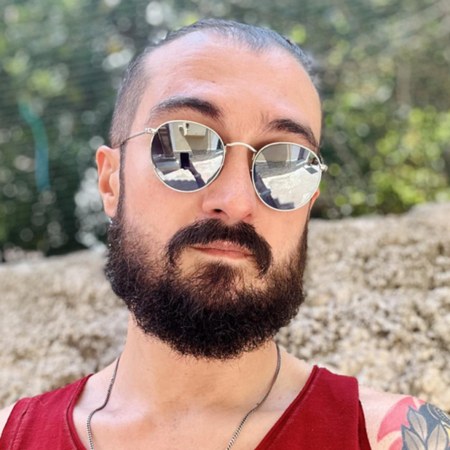
Federico Viticci
Federico Viticci is the founder and Editor-in-Chief of MacStories, the Italy-based Apple publication he started in 2009 at age 21. He is best known for his book-length annual iOS and iPadOS reviews, his pioneering, almost evangelical insistence on using the iPad as his primary computer, and his deep work on Apple's Shortcuts automation. He co-hosts the AppStories podcast and several Relay FM shows including Connected, and runs the membership community Club MacStories.

John Sundell
John Sundell is a Swift and Rust developer, writer and podcaster who runs Swift by Sundell, a weekly publication of articles, tips, podcasts and videos read in well over a hundred countries. A former lead iOS developer at Spotify, he went indie to build apps, games and a stack of widely used open-source developer tools - including the static site generator Publish, the type-safe HTML DSL Plot, the Markdown parser Ink and the syntax highlighter Splash. He is based in Gdansk, Poland.

Ben Springwater
Ben Springwater is the Co-Founder and CEO of Matter, a beautifully designed reading app that consolidates articles, newsletters, and emails into one distraction-free experience. A Stanford MBA and former Nextdoor product lead, Ben built Matter through Y Combinator's Summer 2020 batch and raised $9.15M from Google Ventures and others. Known for his philosophy that 'the details add up,' he steers Matter toward slow, steady growth for discerning readers rather than chasing scale - a conviction tested and hardened by personal health challenges in 2024 that led him to reimagine both his company and his life.

Luciq
Luciq (formerly Instabug, pronounced LOO-sik) is the San Francisco-based mobile observability company that pivoted in September 2025 from passive bug reporting to what it calls Agentic Mobile Observability - autonomous AI agents that detect, triage, and resolve issues across the mobile app lifecycle. The Y Combinator-backed company powers apps for DoorDash, T-Mobile, Verizon, and Decathlon, with more than 25,000 teams on its SDKs.

Ankit Kumar
Ankit Kumar is a software engineer and technical leader at Modern Treasury, the San Francisco-based fintech building payment operations infrastructure for companies moving money at scale. With a Master's in Computer Science from Syracuse University, he built the foundations of Modern Treasury's full-stack Payments product - an integrated payment service provider (PSP) handling fiat and stablecoin payments across ACH, RTP, FedNow, and wire rails. Before payments, his career ranged from AR helmet prototypes for BMW's CES 2016 showcase to Android apps that earned the title 'The Ultimate Camera App' from the tech press.
The Mind Company
The Mind Company is the San Francisco-based mental fitness studio formerly known as Elevate Labs. It makes science-backed mobile apps - Elevate for cognitive training, Balance for personalized meditation, and the new Spark puzzle app - that have together crossed 80 million downloads and collected Apple's and Google's App of the Year honors.

Pocket Gems
Pocket Gems is a San Francisco mobile-games studio behind hits like War Dragons and Episode - Choose Your Story. Founded in 2009 by Daniel Terry and Harlan Crystal above a pizza shop while Terry was still at Stanford, the company builds AAA-quality mobile games and a Hollywood-grade interactive storytelling platform, powered by its proprietary mobile-first Mantis Engine and backed by Sequoia Capital and Tencent.

Polycam
Polycam is a cross-platform 3D scanning and spatial AI company that turns iPhones, Android phones, and drones into professional reality-capture tools. Used by architects, game studios, forensics teams, and millions of hobbyists, it combines LiDAR, photogrammetry, and Gaussian splatting to make 3D capture as easy as taking a photo.
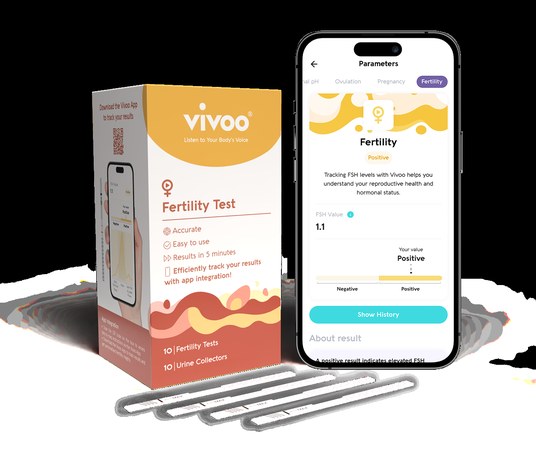
Vivoo
Vivoo is a San Francisco-based health tech company that makes at-home urine test strips analyzed via smartphone camera. Founded in 2017, the company offers a wellness platform that measures 8+ biomarkers — including hydration, vitamins, minerals, pH, ketones, and oxidative stress — and delivers personalized nutrition and lifestyle recommendations through a free mobile app. Backed by $19.4M in funding led by Tim Draper, Vivoo is sold at Target, Walmart, and Sam's Club, and has expanded to 100+ countries with a focus on making lab-grade health insights accessible to everyday consumers.

Luke Kim
Luke Jinu Kim is the Founder and CEO of Liner, a San Francisco-based AI search engine used by over 12 million people across 220+ countries. Starting with $50,000 in seed money and a month on a Silicon Valley Airbnb, he turned a Chrome highlighter into the world's #2 AI search product — ranked four consecutive times on a16z's Top 100 Gen AI Consumer Apps list, with 2024 revenue up 341% year-over-year and $32M raised to date, including a $29M Series B backed by Samsung Venture Investment.

Raphael Schaad
Raphael Schaad is a Swiss designer-engineer and Visiting Partner at Y Combinator who built three generation-defining products: iA Writer (the minimalist writing app), Flipboard (the original social magazine), and Cron (acquired by Notion in 2022). Raised in the Swiss Alps, trained at MIT Media Lab, he brings a rare combination of technical depth and design taste that has made him a go-to mentor for founders navigating the AI era.